Quick Answer
Can Dogs Take Antibiotics on an Empty Stomach? Some dogs can take certain antibiotics on an empty stomach, but many antibiotics are better tolerated when given with food. Giving antibiotics without food may increase the risk of nausea, vomiting, stomach irritation, acid reflux, appetite loss, and digestive upset in sensitive dogs. However, a few antibiotics are actually absorbed better on an empty stomach. Always follow your veterinarian’s instructions because the “best way” depends on the specific antibiotic your dog is taking.
One of the most common questions dog owners ask after starting antibiotics is:
“Should I give this with food or on an empty stomach?”
And honestly, it’s an important question.
Giving antibiotics incorrectly can sometimes lead to:
- Vomiting
- Nausea
- Refusing food
- Diarrhea
- Acid reflux
- Poor medication absorption
- Reduced treatment effectiveness
Some dogs tolerate antibiotics perfectly fine on an empty stomach.
Others become sick within hours.
The tricky part is that:
- Different antibiotics behave differently
- Some need food
- Some absorb better without food
- Some become irritating if given incorrectly
This guide explains:
- Which antibiotics should be given with food
- Which may work better on an empty stomach
- Why stomach upset happens
- When vomiting becomes dangerous
- How food affects antibiotic absorption
- How to reduce digestive side effects
- What veterinarians usually recommend
Related articles:
- Why Is My Dog Vomiting After Antibiotics?
- Why Does My Dog Refuse Food After Antibiotics?
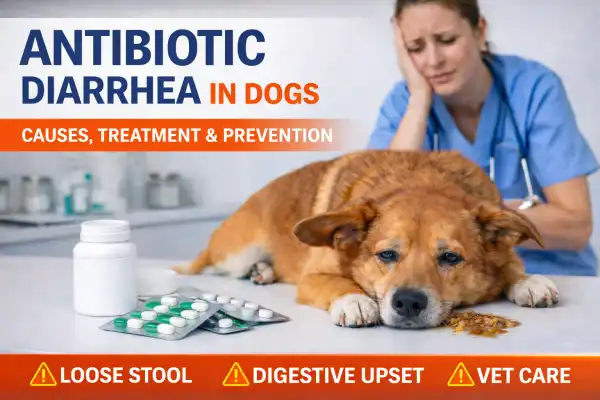
- Antibiotic Diarrhea in Dogs
- Can Antibiotics Cause Weakness in Dogs?
- Why Is My Dog Worse After Starting Antibiotics?
- Probiotics for Dogs: Do They Help with Antibiotic Side Effects?
For broader guidance:
- Antibiotics for Dogs: Uses, Types, Dosage, Side Effects & Safety Guide
- Best Antibiotics for Dogs
- Safest Antibiotics for Dogs: Vet Comparison Guide
Can Dogs Take Antibiotics on an Empty Stomach?
Is It Safe to Give Antibiotics on an Empty Stomach?
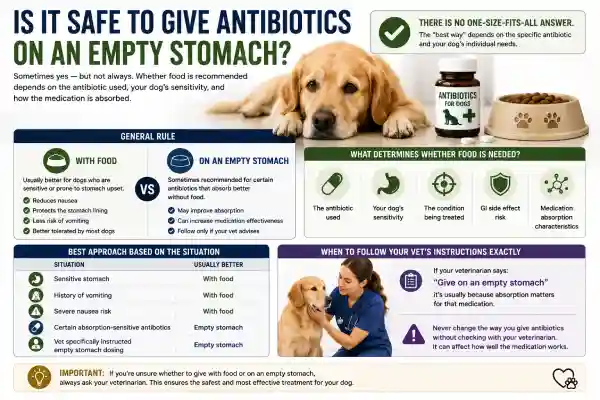
Sometimes yes — but not always.
Whether food is recommended depends on:
- The antibiotic used
- Your dog’s sensitivity
- The condition being treated
- GI side effect risk
- Medication absorption characteristics
General Rule
| Situation | Usually Better |
|---|---|
| Sensitive stomach | With food |
| History of vomiting | With food |
| Severe nausea risk | With food |
| Certain absorption-sensitive antibiotics | Empty stomach |
| Vet specifically instructed empty stomach dosing | Empty stomach |
If your veterinarian specifically says:
“Give on an empty stomach”
it’s usually because absorption matters for that medication.
Why Do Some Antibiotics Cause Stomach Problems?
Antibiotics can irritate the digestive tract in several ways.
Common Mechanisms
| Cause | Effect |
|---|---|
| Stomach irritation | Nausea |
| Gut bacteria disruption | Diarrhea |
| Acid production changes | Acid reflux |
| Intestinal inflammation | Digestive upset |
| Bitter medication taste | Drooling or nausea |
Some dogs are naturally more sensitive than others.
Which Antibiotics Are More Likely to Cause Nausea on an Empty Stomach?
Certain antibiotics are especially known for GI side effects.
Antibiotics Commonly Associated With Stomach Upset
| Antibiotic | Common GI Effects |
|---|---|
| Doxycycline | Nausea, vomiting |
| Clindamycin | Stomach irritation |
| Metronidazole | Nausea, appetite loss |
| Clavamox | Diarrhea, vomiting |
| Trimethoprim-sulfa | Reduced appetite |
Related:
- Doxycycline and Vomiting in Dogs
- Can Clindamycin Cause Vomiting in Dogs?
- Metronidazole Side Effects in Dogs
- Clavamox Side Effects in Dogs
- Trimethoprim-Sulfa Side Effects in Dogs
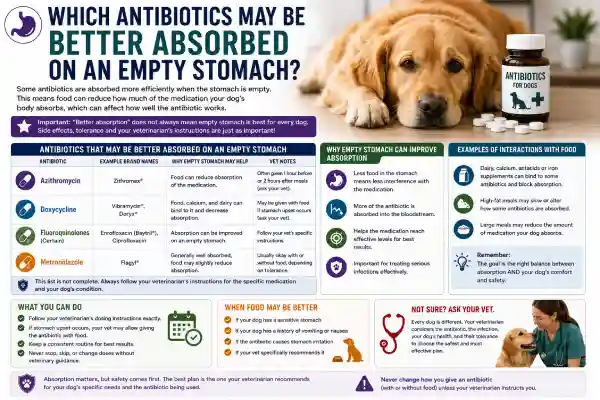
Which Antibiotics May Be Better Absorbed on an Empty Stomach?
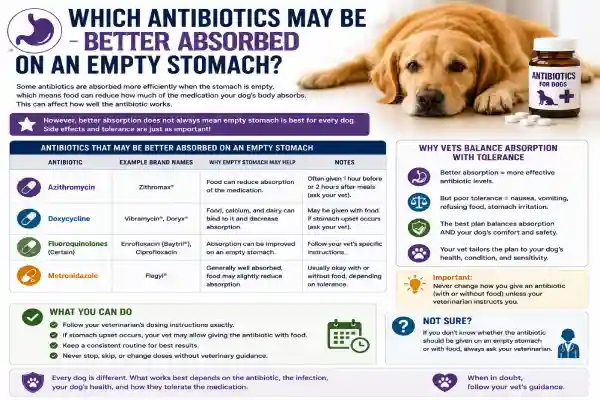
Some antibiotics absorb more efficiently when the stomach is empty.
However, veterinarians often balance:
- Absorption quality
vs - Side effect risk
Examples
| Antibiotic | Empty Stomach Often Recommended? |
|---|---|
| Azithromycin | Sometimes |
| Doxycycline | Sometimes |
| Certain fluoroquinolones | Sometimes |
But if severe nausea occurs, vets may still recommend food.
Never change dosing instructions without veterinary guidance.
Can Giving Antibiotics With Food Reduce Side Effects?
Very often, yes.
Food can help by:
- Protecting the stomach lining
- Reducing acid irritation
- Slowing absorption slightly
- Decreasing nausea
- Improving tolerance
Benefits of Giving With Food
| Benefit | Why It Helps |
|---|---|
| Less nausea | Stomach buffered |
| Less vomiting | Reduced irritation |
| Better appetite | Lower GI stress |
| Less acid reflux | Reduced stomach irritation |
Related:
What Foods Are Safest to Give With Antibiotics?
Usually bland, simple foods work best.
Good Options
| Food | Why It Helps |
|---|---|
| Plain boiled chicken | Easy digestion |
| White rice | Gentle on stomach |
| Prescription GI diets | Low irritation |
| Small meal portions | Reduce nausea |
| Low-fat foods | Easier digestion |
Avoid:
- Greasy foods
- Dairy products (unless vet-approved)
- Heavy treats
- Rich table scraps
Can Giving Antibiotics Without Food Cause Vomiting?
Yes — very commonly.
Some dogs vomit because:
- The medication directly irritates the stomach
- Acid levels increase
- The medication has a bitter taste
- The GI tract becomes inflamed
Signs of Antibiotic-Related GI Irritation
| Symptom | Common? |
|---|---|
| Lip licking | Yes |
| Drooling | Yes |
| Vomiting | Common |
| Refusing food | Common |
| Hunched posture | Sometimes |
| Panting | Sometimes |
Related:
Can Empty Stomach Antibiotics Cause Acid Reflux?
Absolutely.
This is especially true with doxycycline and similar medications.
Acid reflux may cause:
- Lip licking
- Swallowing repeatedly
- Burping
- Drooling
- Refusing food
- Restlessness
- Gagging
Related:
What If My Dog Refuses Food But Needs Antibiotics?
This becomes tricky.
If your dog refuses food:
- Ask your veterinarian before forcing medication
- Some antibiotics should NOT be skipped
- Some medications may need switching
- Anti-nausea medications may help
Never stop antibiotics abruptly unless instructed.
Can Antibiotics Be Hidden in Treats?
Usually yes.
Many owners successfully use:
- Pill pockets
- Soft treats
- Small food balls
- Peanut butter (xylitol-free only)
- Wet dog food
But some dogs become suspicious after repeated medication experiences.
Related:
Which Dogs Are More Sensitive to Empty-Stomach Antibiotics?
Some dogs tolerate stomach irritation poorly.
Higher-Risk Dogs
| Higher-Risk Group | Why Risk Increases |
|---|---|
| Puppies | Sensitive GI tract |
| Senior dogs | Slower recovery |
| Small breeds | Faster dehydration |
| Dogs with GI disease | Existing stomach sensitivity |
| Dogs with anxiety | Stress worsens nausea |
| Dogs with acid reflux history | Higher irritation risk |
When Should You Call the Vet?
Contact your veterinarian if your dog develops:
- Repeated vomiting
- Refusal to eat for over 24 hours
- Severe diarrhea
- Weakness
- Tremors
- Facial swelling
- Trouble breathing
- Severe lethargy
These symptoms may indicate:
- Severe intolerance
- Allergic reaction
- Toxicity
- Dehydration
- Worsening infection
How Veterinarians Decide Whether Food Is Needed
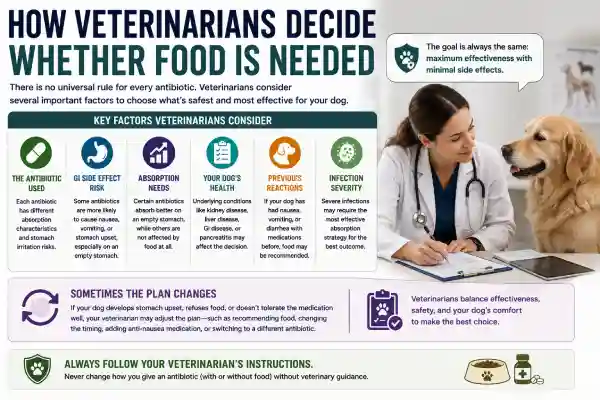
Veterinarians consider:
- The antibiotic
- GI side effect risk
- Absorption needs
- Previous medication reactions
- Underlying health problems
- Infection severity
Sometimes the plan changes if side effects develop.
How to Reduce Stomach Side Effects From Antibiotics
Prevention Tips
| Tip | Why It Helps |
|---|---|
| Follow dosing instructions carefully | Prevent complications |
| Use food if vet-approved | Reduce irritation |
| Keep your dog hydrated | Protect GI tract |
| Use probiotics if recommended | Gut support |
| Avoid rich foods | Reduce GI stress |
| Monitor appetite closely | Detect problems early |
Related:
FAQ – Can Dogs Take Antibiotics on an Empty Stomach?
Can dogs take antibiotics without food?
Some can, but many tolerate antibiotics better with food.
Why does my dog vomit after antibiotics on an empty stomach?
The medication may irritate the stomach lining or increase acid irritation.
Should doxycycline be given with food?
Often yes in sensitive dogs, although absorption may sometimes be slightly better on an empty stomach.
Can food make antibiotics less effective?
Sometimes slightly, depending on the antibiotic, but reducing severe side effects is often more important.
What if my dog refuses food but still needs antibiotics?
Contact your veterinarian for guidance before skipping doses or changing medications.
Medical Disclaimer
This article is for educational purposes only and does not replace professional veterinary advice, diagnosis, or treatment. The content is written with pharmacist-reviewed medication safety research to help dog owners better understand veterinary medications, digestive side effects, toxicity risks, and drug interactions. Always consult your veterinarian before starting, stopping, or changing any medication for your dog.
Sources
- Merck Veterinary Manual
- VIN Veterinary Partner
- American Veterinary Medical Association (AVMA)
- FDA Center for Veterinary Medicine
- WSAVA Global Veterinary Guidelines