Can Dog Medications Be Given Together? Yes—many dogs safely take multiple medications at the same time under veterinary supervision. However, some medication combinations can increase the risk of side effects, dangerous interactions, excessive sedation, stomach damage, neurological problems, or even life-threatening emergencies.
This is one of the most important medication safety topics for dog owners.
Many dogs—especially seniors—take multiple medications daily for conditions like:
- arthritis
- anxiety
- infections
- seizures
- allergies
- chronic pain
- heart disease
Over time, owners naturally begin wondering:
👉 “Are all these medications safe together?”
Sometimes the answer is yes.
But other times, medication combinations may quietly create problems that are difficult to recognize early.
This is why veterinarians evaluate medication combinations very carefully.
Quick Answer
Many dog medications can be given together safely, but some combinations increase the risk of sedation, stomach ulcers, neurological side effects, liver stress, or dangerous drug interactions. Always ask your veterinarian before combining medications, supplements, or human products.
Why Medication Interactions Matter So Much
Every medication affects the body differently.
Some medications:
- slow nervous system activity
- increase serotonin
- affect liver metabolism
- irritate the stomach
- alter blood pressure
- change kidney function
When multiple medications interact, these effects may become amplified.
Sometimes interactions are mild.
Other times, they may become extremely dangerous.
Can Dog Medications Be Given Together?
The Hidden Reality: More Medications = More Complexity
Many owners assume:
👉 “If each medication is safe individually, they must be safe together.”
Unfortunately, this is not always true.
A medication combination may create:
- stronger sedation
- breathing suppression
- stomach bleeding risk
- serotonin syndrome
- liver stress
- coordination problems
This becomes especially important in:
- senior dogs
- small breeds
- dogs with liver disease
- dogs with kidney disease
- dogs taking long-term medications
Why Senior Dogs Are at Higher Risk
Older dogs metabolize medications differently.
As dogs age:
- liver processing slows
- kidney clearance decreases
- nervous system sensitivity increases
Senior dogs also commonly receive:
- pain medications
- anxiety medications
- seizure medications
- antibiotics simultaneously
This dramatically increases interaction risk.
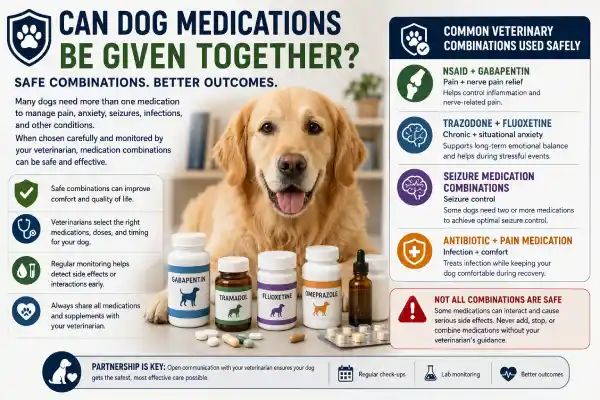
Common Medication Combinations Veterinarians Use Safely
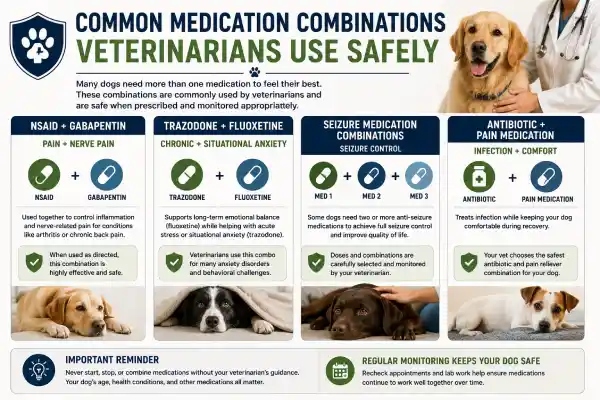
Not all medication combinations are dangerous.
In fact, many combinations are intentionally used together to improve treatment results.
Common Veterinary Medication Combinations
| Combination | Why It’s Used |
|---|---|
| NSAID + gabapentin | pain + nerve pain |
| trazodone + fluoxetine | chronic + situational anxiety |
| seizure medication combinations | seizure control |
| antibiotics + pain medication | infection + comfort |
These combinations are carefully selected and monitored professionally.
Why Pain Management Often Requires Multiple Medications
Modern veterinary medicine increasingly uses:
Multimodal pain management
This means targeting different pain pathways simultaneously.
For example:
- inflammation
- nerve pain
- chronic sensitization
- muscle tension
may all contribute to discomfort at the same time.
This naturally connects with:
- Why Is My Dog Still in Pain After Medication?
- When to Switch Dog Medication (Signs to Watch)
- What to Do If Dog Medication Is Not Working
because chronic pain rarely involves only one biological mechanism.
Dangerous Medication Combinations Owners Should Never Create Alone
This is extremely important.
Some owners accidentally combine medications because they:
- use leftover prescriptions
- add human medications
- mix supplements randomly
- double-dose accidentally
This can become extremely dangerous.
High-Risk Medication Combinations
| Combination Risk | Possible Danger |
|---|---|
| multiple sedatives | breathing suppression |
| NSAID + human painkillers | stomach bleeding |
| serotonin medications together | serotonin syndrome |
| duplicate medications | overdose risk |
This is why owners should NEVER adjust medication combinations independently.
Why Human Medications Create Massive Risk
Many emergency veterinary visits happen because owners combine:
- veterinary medications
- human painkillers
- human anxiety medications
- over-the-counter products
without realizing the interaction risks.
This connects directly with:
because interaction toxicity is one of the most common causes of medication emergencies.
The Hidden Danger: Sedation Stacking
One of the most overlooked risks is cumulative sedation.
Several mildly sedating medications together may create:
- collapse
- breathing difficulty
- confusion
- inability to stand
- severe lethargy
This is especially common when combining:
- anxiety medications
- seizure medications
- pain medications
- sedatives
Signs Sedation May Be Becoming Dangerous
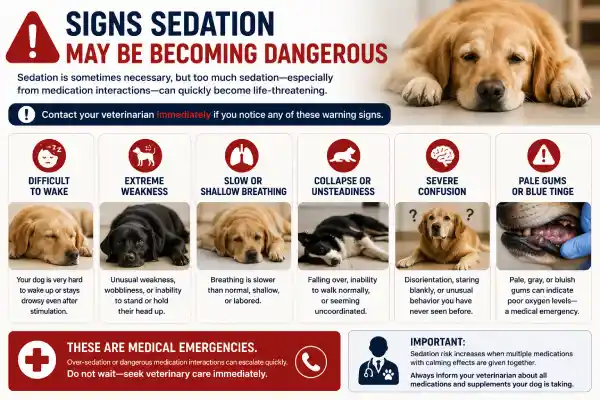
Warning Signs
- difficult to wake
- extreme weakness
- slow breathing
- collapse
- severe confusion
- inability to walk normally
These symptoms require immediate veterinary attention.
Why Some Interactions Are Difficult to Detect
Not all interactions happen immediately.
Some develop slowly over time.
Examples include:
- liver stress
- kidney strain
- appetite suppression
- chronic lethargy
- emotional changes
Owners may mistakenly believe:
👉 “my dog is just getting older.”
when the issue may actually involve medication interactions.
Supplements Can Also Interact With Medications
This surprises many owners.
Even “natural” supplements may interact with medications.
Examples include:
- calming supplements
- CBD products
- herbal products
- antihistamines
Some supplements affect:
- sedation levels
- serotonin
- liver metabolism
This is why veterinarians should know about EVERYTHING the dog receives.
Why Medication Timing Sometimes Matters
Some medications should be separated because they may interfere with:
- absorption
- stomach tolerance
- effectiveness
Others work better together.
This depends entirely on the medications involved.
Why Dogs With Chronic Disease Need Extra Monitoring
Dogs with chronic illness are especially vulnerable.
This includes dogs with:
- epilepsy
- arthritis
- liver disease
- kidney disease
- heart disease
These dogs often require:
- bloodwork monitoring
- dosage adjustments
- interaction reassessment
- long-term safety evaluation
This is becoming increasingly important in modern veterinary medicine.
Behavior Changes Can Be a Clue
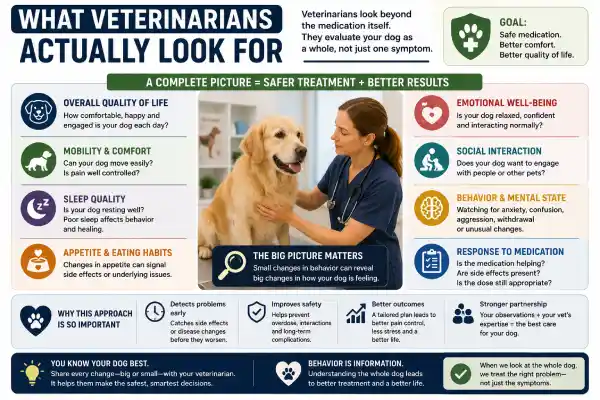
Medication interactions sometimes appear first as behavioral changes.
Examples include:
- pacing
- agitation
- confusion
- clinginess
- emotional withdrawal
This connects naturally with:
because neurological side effects often appear behaviorally first.
Why Medication Interactions Become More Dangerous Over Time
This is another hidden reality.
As dogs age or diseases progress:
- metabolism changes
- hydration changes
- appetite changes
- organ function changes
A medication combination that was previously tolerated may later become unsafe.
This is one reason veterinarians regularly reassess long-term treatment plans.
What Veterinarians Actually Evaluate
Veterinarians look at far more than just the medication names.
They evaluate:
- dosage
- age
- body weight
- liver function
- kidney function
- nervous system sensitivity
- current symptoms
- emotional behavior
- overall quality of life
This helps identify hidden risks before severe complications develop.
Signs You Should Contact Your Veterinarian Immediately
Some symptoms should never be ignored.
Serious Warning Signs
| Symptom | Why It Matters |
|---|---|
| collapse | dangerous nervous system suppression |
| severe vomiting | possible toxicity |
| tremors or seizures | neurological emergency |
| breathing difficulty | possible overdose |
| sudden confusion | medication interaction concern |
These symptoms require urgent medical evaluation.
Real-Life Example
Dog A
- arthritis
- gabapentin + NSAID prescribed professionally
- monitored regularly
Result:
✔ improved comfort
✔ safe long-term management
Dog B
- owner adds human sleep medication
- already taking anxiety medication
Result:
❌ severe sedation develops
❌ emergency hospitalization required
This type of emergency is extremely common in veterinary medicine.
The Future of Veterinary Medication Safety
Modern veterinary medicine increasingly focuses on:
- individualized dosing
- medication interaction databases
- precision medicine
- neurological monitoring
- multimodal therapy safety
This is helping veterinarians reduce side effects and improve long-term outcomes significantly.
Conclusion
Many dog medications can safely be given together, but medication combinations should never be created casually at home. Interactions may affect the nervous system, stomach, liver, kidneys, or emotional behavior in ways that are sometimes difficult to recognize early.
The safest approach is always discussing all medications, supplements, and over-the-counter products with your veterinarian before combining them.
Successful long-term treatment depends not only on choosing effective medications—but also on making sure they work safely together.
FAQ – Can Dog Medications Be Given Together?
Can dogs safely take multiple medications?
Yes, many dogs safely take several medications under veterinary supervision.
What medication combinations are dangerous for dogs?
Combining sedatives, human painkillers, or serotonin-affecting medications may become dangerous.
Can supplements interact with dog medications?
Yes. Some supplements affect sedation, liver metabolism, or neurological function.
Why is my dog suddenly weak after taking multiple medications?
This may indicate excessive sedation or medication interaction.
Should I give human medications together with veterinary medications?
Never without veterinary approval.
Sources & Scientific References
- Merck Veterinary Manual
- Veterinary Information Network (VIN)
- American Animal Hospital Association (AAHA) Pain Management Guidelines
- American College of Veterinary Behaviorists (ACVB)
- Pet Poison Helpline
Medical Disclaimer
This article is for educational purposes only and does not replace professional veterinary advice. Always consult your veterinarian before combining, stopping, or adjusting any medication, supplement, or over-the-counter product for your dog.Can Dog Medications Be Given Together?