
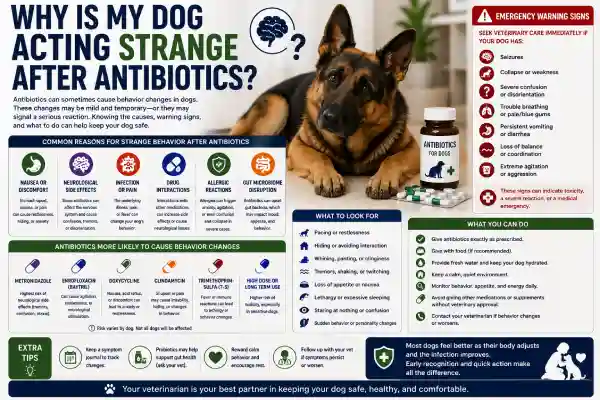
Quick Answer
Why Is My Dog Acting Strange After Antibiotics? – If your dog is acting strange after antibiotics, the cause may range from mild digestive discomfort and fatigue to neurological side effects, medication interactions, allergic reactions, or antibiotic toxicity. Strange behavior can include pacing, confusion, shaking, hiding, aggression, whining, panting, restlessness, disorientation, loss of balance, or sudden personality changes. Some reactions are mild and temporary, while others require immediate veterinary attention.
Starting antibiotics can sometimes change a dog’s behavior in ways that worry owners. Many people expect side effects like vomiting or diarrhea, but they are often surprised when their dog suddenly begins acting anxious, confused, restless, clingy, aggressive, or “not like themselves.”
Behavioral changes after antibiotics are more common than many owners realize.
Sometimes the behavior change happens because:
- The dog feels nauseous or uncomfortable
- The medication affects the nervous system
- Pain or infection is worsening
- The dog is dehydrated
- Drug interactions occur
- Toxicity develops
In severe cases, strange behavior may signal a medical emergency.
This guide explains:
- Why dogs act strange after antibiotics
- Which antibiotics are most likely to cause behavioral changes
- Neurological warning signs
- When to call the vet
- What treatment may be needed
- How to reduce the risk of serious reactions
If your dog is also showing physical symptoms, read:
- Why Is My Dog Panting After Antibiotics?
- Can Antibiotics Cause Shaking in Dogs?
- Why Is My Dog Vomiting After Antibiotics?
- Why Does My Dog Refuse Food After Antibiotics?
You should also review:
- Antibiotics for Dogs: Uses, Types, Dosage, Side Effects & Safety Guide
- Best Antibiotics for Dogs: When to Use Each
- Safest Antibiotics for Dogs: Vet Comparison Guide
Why Is My Dog Acting Strange After Antibiotics?
What Does “Acting Strange” Mean in Dogs?
Owners describe strange behavior in many different ways.
Common Behavioral Changes After Antibiotics
| Strange Behavior | What Owners Often Notice |
|---|---|
| Restlessness | Pacing, inability to settle |
| Confusion | Appearing “lost” or disoriented |
| Excessive panting | Stress or discomfort signs |
| Trembling | Shaking or muscle twitching |
| Aggression | Snapping or irritability |
| Hiding | Avoiding people or dark corners |
| Clinginess | Unusual attachment behavior |
| Lethargy | Acting weak or withdrawn |
| Hyperactivity | Overstimulation or agitation |
| Loss of coordination | Walking strangely or stumbling |
Some dogs only experience mild temporary changes. Others may develop severe neurological symptoms requiring emergency treatment.
Can Antibiotics Really Affect Behavior?
Yes.
Antibiotics may affect behavior both directly and indirectly.
Direct Causes
Some antibiotics can:
- Affect the nervous system
- Trigger neurological side effects
- Cause dizziness or confusion
- Lead to agitation or tremors
Indirect Causes
Behavior changes may also happen because the dog:
- Feels nauseous
- Has stomach pain
- Is dehydrated
- Has a fever
- Is stressed from illness
- Is reacting to medication interactions
Dogs cannot explain discomfort verbally, so behavioral changes become one of the clearest warning signs.
Which Antibiotics Most Commonly Cause Strange Behavior?
Certain antibiotics are more likely to trigger neurological or behavioral symptoms.
Antibiotics Most Associated With Behavioral Changes
| Antibiotic | Possible Behavioral Effects |
|---|---|
| Metronidazole | Tremors, confusion, stumbling, agitation |
| Enrofloxacin (Baytril) | Hyperactivity, neurological stimulation |
| Doxycycline | Restlessness from nausea or reflux |
| Clindamycin | Irritability due to GI discomfort |
| Trimethoprim-Sulfa | Fever-related lethargy or weakness |
| High-dose antibiotics | Toxicity-related neurological symptoms |
Dogs with liver disease, kidney disease, or advanced age may be more sensitive.
Related internal links:
- Metronidazole Side Effects in Dogs
- Enrofloxacin Side Effects in Dogs
- Doxycycline Side Effects in Dogs
- Clindamycin Side Effects in Dogs
- Trimethoprim-Sulfa Side Effects in Dogs
Metronidazole Toxicity: One of the Biggest Concerns
Metronidazole deserves special attention because it is one of the antibiotics most strongly associated with neurological reactions in dogs.
Signs of Metronidazole Toxicity
Dogs may develop:
- Confusion
- Tremors
- Head tilting
- Rapid eye movements
- Loss of coordination
- Weakness
- Strange staring behavior
- Seizures
- Severe restlessness
- Personality changes
Many owners describe affected dogs as:
- “Drunk”
- “Scared”
- “Not acting normal”
- “Zombie-like”
- “Disoriented”
This condition can become serious quickly.
Related articles:
Can Antibiotics Cause Anxiety-Like Behavior?
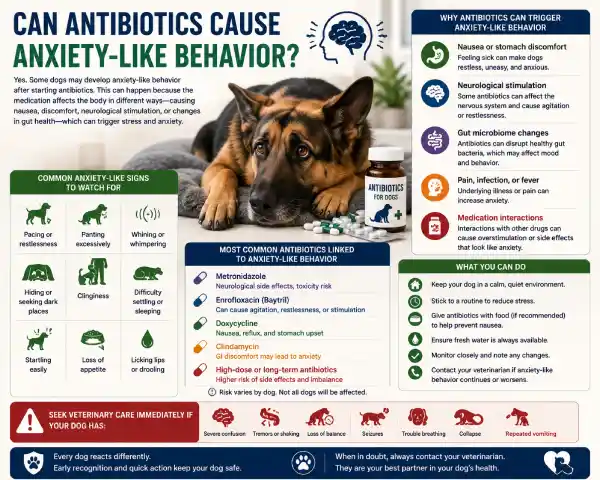
Yes.
Dogs may appear anxious after antibiotics because they:
- Feel nauseous
- Have stomach discomfort
- Feel weak
- Are stressed by illness
- Experience medication-induced agitation
Common anxiety-like behaviors include:
- Pacing
- Panting
- Whining
- Clinginess
- Hiding
- Restlessness
- Sleeping poorly
Sensitive dogs may react more strongly.
You may also enjoy:
- Can Dog Medications Cause Behavior Changes?
- Why Is My Dog Still Anxious After Medication?
- What Can I Give My Dog for Anxiety?
Can Pain or Infection Cause Strange Behavior?
Absolutely.
Sometimes the antibiotic is not the main problem.
Dogs with:
- Severe infections
- Fever
- Pain
- Internal inflammation
- Ear infections
- Neurological disease
may behave strangely because they feel physically ill.
This is especially common in dogs that:
- Were already weak before treatment
- Have severe infections
- Have high fevers
- Are dehydrated
Related articles:
Can Allergic Reactions Cause Behavioral Changes?
Yes.
An allergic reaction can make dogs:
- Panic
- Pant heavily
- Become restless
- Act fearful
- Collapse
- Become weak or confused
Some dogs react suddenly after starting a new antibiotic.
Emergency Allergy Warning Signs
Seek immediate veterinary care if your dog develops:
| Emergency Sign | Why It Matters |
|---|---|
| Facial swelling | Possible allergic reaction |
| Difficulty breathing | Airway involvement |
| Collapse | Shock risk |
| Pale gums | Poor oxygenation |
| Severe vomiting | Dangerous reaction |
| Seizures | Neurological emergency |
Can Antibiotics Interact With Other Medications?
Yes — and this is extremely important.
Interactions can increase the risk of:
- Sedation
- Neurological symptoms
- Agitation
- Tremors
- Confusion
- Toxicity
Risk increases if your dog also takes:
- Gabapentin
- Trazodone
- Fluoxetine
- NSAIDs
- Seizure medications
- Steroids
Related internal links:
- Can Dog Medications Be Given Together?
- Signs of Medication Overdose in Dogs
- Can Gabapentin Be Given With Other Dog Medications?
- When to Switch Dog Medication
Can Gut Bacteria Changes Affect Behavior?
Surprisingly, yes.
Antibiotics can disrupt the gut microbiome, and modern veterinary medicine increasingly recognizes a connection between gut health and behavior.
When healthy gut bacteria are disrupted, some dogs may develop:
- Reduced appetite
- Lethargy
- Irritability
- Stress behaviors
- Digestive discomfort
This does NOT mean antibiotics are dangerous overall — but it explains why some dogs feel “off” during treatment.
Related:
Why Is My Dog Acting Hyper After Antibiotics?
Hyperactivity can happen when:
- Dogs feel agitated
- Neurological stimulation occurs
- Anxiety increases
- Certain antibiotics affect the nervous system
This is more likely with:
- Enrofloxacin
- Metronidazole toxicity
- Medication interactions
Dogs may:
- Pace nonstop
- Refuse sleep
- Bark excessively
- Act panicked
- Seem overstimulated
Why Is My Dog Hiding After Antibiotics?
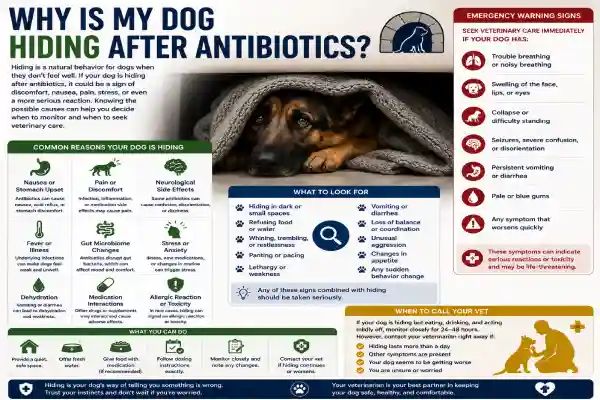
Hiding usually signals discomfort.
Dogs may hide because of:
- Nausea
- Pain
- Fever
- Anxiety
- Neurological confusion
- Weakness
This behavior is especially concerning if paired with:
- Tremors
- Vomiting
- Refusal to eat
- Loss of balance
Read:
When Is Strange Behavior an Emergency?
Some behavior changes are mild.
Others are emergencies.
Go to the Vet Immediately If Your Dog Has:
| Emergency Symptom | Possible Cause |
|---|---|
| Seizures | Neurological toxicity |
| Collapse | Severe reaction |
| Continuous trembling | Toxicity or fever |
| Trouble walking | Neurological damage |
| Severe confusion | Toxicity |
| Blue or pale gums | Breathing emergency |
| Aggression with disorientation | Brain involvement |
| Persistent vomiting | Severe GI reaction |
How Veterinarians Diagnose Behavioral Side Effects
Veterinarians may evaluate:
- Medication history
- Dosages
- Neurological signs
- Temperature
- Hydration
- Blood sugar
- Liver and kidney function
- Drug interactions
Diagnostic tests may include:
- Bloodwork
- Neurological exams
- Imaging
- Toxicity evaluation
How Is Strange Behavior After Antibiotics Treated?
Treatment depends on the underlying cause.
Possible Treatments
| Cause | Treatment |
|---|---|
| Nausea | Anti-nausea medication |
| Toxicity | Stop/change antibiotic |
| Dehydration | IV fluids |
| Neurological reaction | Hospitalization/supportive care |
| Allergic reaction | Emergency medications |
| Pain | Additional pain management |
| Anxiety/stress | Calm supportive care |
In some cases, symptoms improve quickly after changing medications.
How to Reduce the Risk of Behavioral Reactions
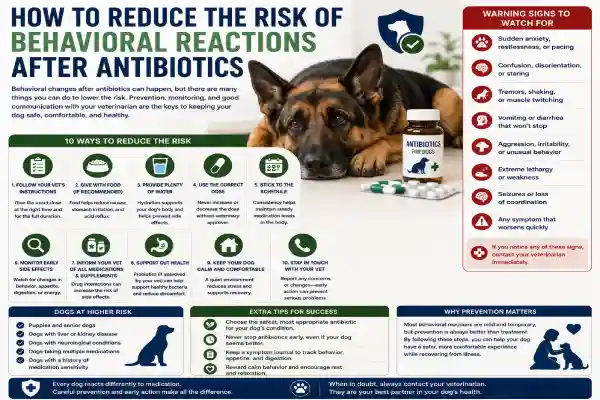
You can lower risk by:
- Giving exact prescribed doses
- Never double dosing
- Giving food when recommended
- Monitoring early symptoms
- Reporting side effects quickly
- Keeping your dog hydrated
- Informing your vet about ALL medications and supplements
Dogs with:
- Liver disease
- Kidney disease
- Neurological conditions
- Advanced age
should be monitored especially closely.
Long-Term Outlook
Most mild behavioral changes improve once:
- The body adjusts
- The infection improves
- The medication course ends
- The antibiotic is changed
However, neurological toxicity should NEVER be ignored because it can worsen rapidly without treatment.
Early veterinary care usually leads to much better outcomes.
FAQ
Can antibiotics make dogs confused?
Yes. Certain antibiotics — especially metronidazole — can cause neurological side effects including confusion or disorientation.
Why is my dog restless after antibiotics?
Restlessness may be caused by nausea, discomfort, acid reflux, fever, anxiety, or medication side effects.
Can antibiotics cause aggression in dogs?
Indirectly, yes. Pain, fear, neurological effects, or severe discomfort may trigger unusual aggression.
Should I stop antibiotics if my dog acts strange?
Never stop medications without veterinary guidance unless your dog is experiencing a severe emergency reaction.
Which antibiotic is most likely to cause neurological symptoms?
Metronidazole is one of the most well-known antibiotics associated with neurological side effects in dogs.
Medical Disclaimer
This article is for educational purposes only and does not replace professional veterinary advice, diagnosis, or treatment. Contact your veterinarian immediately if your dog develops unusual behavior, tremors, breathing changes, confusion, seizures, or severe weakness after starting antibiotics.