Quick Answer
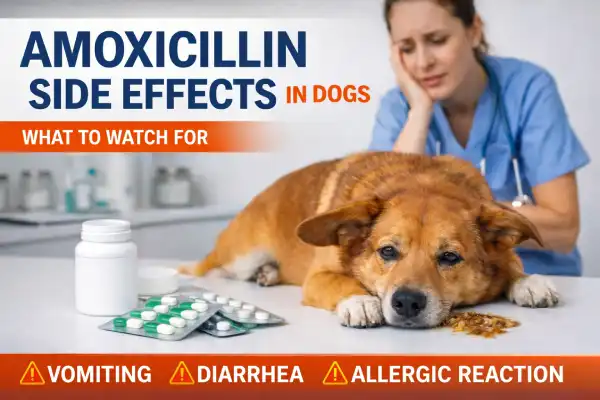
Can Dogs Have Allergic Reactions to Antibiotics? Yes dogs can have allergic reactions to antibiotics, and some reactions may become life-threatening emergencies. Mild allergic reactions may include itching, hives, facial swelling, or redness, while severe reactions can cause vomiting, breathing difficulty, collapse, or anaphylaxis. Antibiotics most commonly associated with allergic reactions in dogs include penicillins, sulfa drugs, cephalosporins, and some fluoroquinolones.
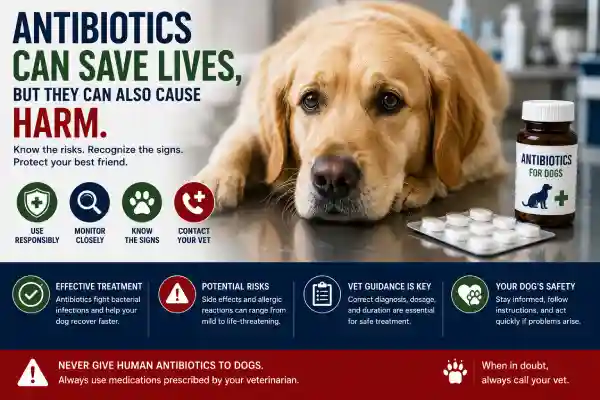
Antibiotics save countless dogs every year.
However, like all medications, they can occasionally trigger allergic reactions.
Some dogs experience only mild symptoms such as:
- Itching
- Red skin
- Mild swelling
- Digestive upset
Others may develop dangerous reactions requiring immediate emergency treatment.
Many owners panic when they suddenly notice:
- Swollen eyes
- Facial puffiness
- Hives
- Difficulty breathing
- Tremors
- Vomiting
- Sudden weakness
This guide explains:
- What antibiotic allergies look like in dogs
- Which antibiotics most commonly cause reactions
- The difference between side effects and allergies
- Emergency warning signs
- What anaphylaxis looks like
- How veterinarians diagnose allergic reactions
- What treatment usually involves
You should also read:
- Amoxicillin Side Effects in Dogs
- Clindamycin Side Effects in Dogs
- Doxycycline Side Effects in Dogs
- Cephalexin Side Effects in Dogs
- Signs of Medication Overdose in Dogs
- Can Dog Medications Cause Behavior Changes?
For broader antibiotic safety:
- Antibiotics for Dogs: Uses, Types, Dosage, Side Effects & Safety Guide
- Best Antibiotics for Dogs: When to Use Each
- Safest Antibiotics for Dogs: Vet Comparison Guide
Can Dogs Have Allergic Reactions to Antibiotics?
What Is an Allergic Reaction in Dogs?

An allergic reaction happens when the immune system overreacts to a medication.
Instead of simply processing the drug normally, the body treats it as a threat.
This immune response may release:
- Histamine
- Inflammatory chemicals
- Immune mediators
These chemicals can affect:
- Skin
- Airways
- Digestive tract
- Blood vessels
- Nervous system
Some reactions stay mild.
Others can progress rapidly.
What Are the Most Common Signs of Antibiotic Allergies in Dogs?
Symptoms may appear:
- Within minutes
- A few hours later
- After several doses
- Occasionally days into treatment
Common Allergic Reaction Symptoms
| Symptom | What Owners Notice |
|---|---|
| Itching | Constant scratching |
| Hives | Raised bumps on skin |
| Facial swelling | Puffy eyes or muzzle |
| Red skin | Inflamed appearance |
| Ear swelling | Warm swollen ears |
| Vomiting | Sudden GI upset |
| Diarrhea | Loose stool |
| Restlessness | Anxiety or pacing |
| Hiding | Feeling unwell |
| Excess drooling | Nausea or irritation |
Related:
- Why Is My Dog Vomiting After Antibiotics?
- Why Does My Dog Hide After Taking Antibiotics?
- Can Antibiotics Cause Shaking in Dogs?
Which Antibiotics Most Commonly Cause Allergic Reactions?
Any antibiotic can potentially cause an allergy.
However, some are more commonly associated with immune reactions.
Antibiotics More Commonly Linked to Allergic Reactions
| Antibiotic Type | Examples |
|---|---|
| Penicillins | Amoxicillin, Clavamox |
| Cephalosporins | Cephalexin |
| Sulfa drugs | Trimethoprim-Sulfa |
| Fluoroquinolones | Enrofloxacin (Baytril) |
| Lincosamides | Clindamycin |
| Tetracyclines | Doxycycline |
Dogs allergic to one penicillin may react to related medications too.
Related articles:
- Amoxicillin for Dogs
- Clavamox Side Effects in Dogs
- Cephalexin for Dogs
- Trimethoprim-Sulfa Side Effects in Dogs
- Enrofloxacin Side Effects in Dogs
What Does a Mild Allergic Reaction Look Like?
Mild reactions are usually limited to:
- Skin
- Mild GI symptoms
- Temporary discomfort
Mild Allergy Signs
| Mild Sign | Severity |
|---|---|
| Mild itching | Common |
| Small hives | Usually manageable |
| Mild redness | Often temporary |
| Soft stool | Mild |
| Mild swelling | Needs monitoring |
Even mild reactions should still be reported to a veterinarian.
What Is Anaphylaxis in Dogs?
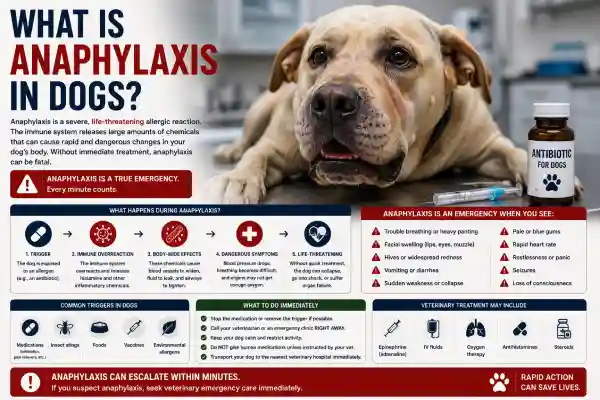
Anaphylaxis is a severe life-threatening allergic reaction.
This is a true emergency.
The immune system releases massive amounts of inflammatory chemicals that can affect:
- Breathing
- Blood pressure
- Circulation
- Oxygen delivery
Without treatment, dogs can rapidly collapse.
Signs of Anaphylaxis in Dogs
Emergency Symptoms
| Emergency Sign | Why It Matters |
|---|---|
| Trouble breathing | Airway swelling |
| Collapse | Dangerous blood pressure drop |
| Pale gums | Poor circulation |
| Severe vomiting | Systemic reaction |
| Sudden weakness | Shock |
| Rapid swelling | Serious immune response |
| Seizures | Severe oxygen compromise |
| Blue gums | Critical emergency |
This requires immediate emergency veterinary care.
How Quickly Can Allergic Reactions Happen?
Timing varies.
Some dogs react:
- Within minutes
- After the first dose
- After several doses
- Near the end of treatment
A dog may tolerate an antibiotic previously and still react later in life.
Are Side Effects the Same as Allergies?
No — and this is very important.
Many antibiotic side effects are NOT true allergies.
Side Effects vs Allergic Reactions
| Side Effect | Allergy |
|---|---|
| Nausea | Immune reaction |
| Mild diarrhea | Hives |
| Temporary appetite loss | Facial swelling |
| Mild fatigue | Breathing problems |
| GI upset | Anaphylaxis |
For example:
- Mild vomiting after doxycycline may be irritation
- Facial swelling after amoxicillin is more concerning for allergy
Related:
- Antibiotic Diarrhea in Dogs
- Can Clindamycin Cause Vomiting in Dogs?
- Doxycycline and Vomiting in Dogs
Can Allergic Reactions Cause Strange Behavior?
Yes.
Dogs experiencing allergic reactions may:
- Hide
- Shake
- Panic
- Pant
- Become restless
- Act confused
This often happens because:
- They feel physically distressed
- Breathing feels uncomfortable
- Histamine release affects the body
- Swelling or nausea creates fear
Related:
- Why Is My Dog Panting After Antibiotics?
- Can Antibiotics Cause Depression in Dogs?
- Why Is My Dog Acting Strange After Antibiotics?
Can Dogs Develop Rashes From Antibiotics?
Yes.
Skin reactions are among the most common allergy signs.
Skin Symptoms
| Skin Reaction | Appearance |
|---|---|
| Hives | Raised bumps |
| Red patches | Inflamed skin |
| Ear swelling | Puffy warm ears |
| Facial swelling | Puffy muzzle or eyes |
| Itching | Constant scratching |
Short-haired dogs may show reactions more visibly.
What Should You Do If You Suspect an Allergy?
Contact your veterinarian immediately.
Do NOT continue giving medication if:
- Facial swelling develops
- Breathing changes occur
- Severe hives appear
- Collapse happens
- Neurological symptoms appear
Immediate Steps
| Step | Why It Helps |
|---|---|
| Stop the medication | Prevent worsening exposure |
| Call your vet | Get guidance quickly |
| Monitor breathing | Airway reactions can worsen fast |
| Take photos of swelling | Helpful for diagnosis |
| Keep your dog calm | Reduces stress |
Never give human allergy medication unless your veterinarian specifically instructs you to.
How Veterinarians Diagnose Antibiotic Allergies
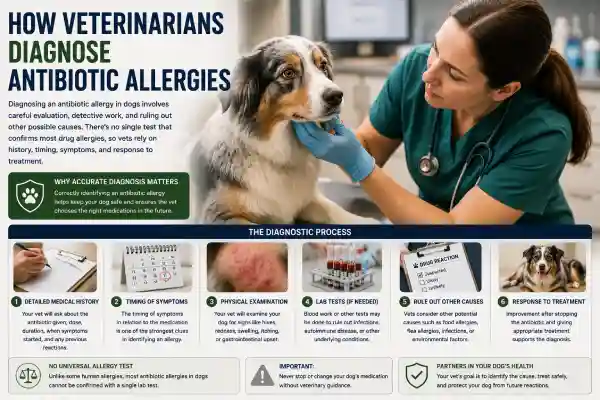
Diagnosis usually involves:
- Medication history
- Timing of symptoms
- Physical examination
- Skin evaluation
- Bloodwork if needed
- Reviewing all medications
Sometimes veterinarians diagnose based mainly on:
- Sudden onset
- Characteristic swelling
- Rapid improvement after stopping the drug
How Are Allergic Reactions Treated?
Treatment depends on severity.
Common Treatments
| Severity | Possible Treatment |
|---|---|
| Mild itching | Antihistamines |
| Hives | Steroids |
| GI symptoms | Supportive care |
| Facial swelling | Injectable medications |
| Severe reactions | Emergency hospitalization |
| Anaphylaxis | Oxygen, IV fluids, emergency drugs |
Most dogs recover well when treated early.
Can Dogs Take That Antibiotic Again Later?
Usually veterinarians avoid re-exposure if:
- True allergy occurred
- Swelling developed
- Anaphylaxis happened
Future exposure could trigger a more severe reaction.
Your veterinarian may note the allergy permanently in your dog’s medical record.
Long-Term Outlook
Most dogs recover completely after:
- Stopping the offending medication
- Receiving treatment
- Avoiding future exposure
Serious complications are uncommon when treated quickly.
FAQ – Can Dogs Have Allergic Reactions to Antibiotics?
Can dogs be allergic to antibiotics?
Yes. Dogs can develop mild or severe allergic reactions to antibiotics.
What antibiotic allergies look like in dogs?
Common signs include itching, hives, facial swelling, vomiting, diarrhea, or breathing problems.
How fast do allergic reactions happen?
Some reactions occur within minutes, while others develop after multiple doses.
Is facial swelling in dogs an emergency?
Yes. Facial swelling after antibiotics should always be treated seriously.
Can antibiotics cause anaphylaxis in dogs?
Yes. Although uncommon, severe allergic reactions can become life-threatening emergencies.
Medical Disclaimer
This article is for educational purposes only and does not replace professional veterinary advice, diagnosis, or treatment. Seek immediate veterinary care if your dog develops facial swelling, breathing difficulty, collapse, seizures, blue gums, or severe weakness after taking antibiotics.Can Dogs Have Allergic Reactions to Antibiotics?
Sources
- American Veterinary Medical Association (AVMA)
- Merck Veterinary Manual
- VIN Veterinary Partner
- FDA Center for Veterinary Medicine
- WSAVA Global Veterinary Guidelines
Images are created with AI – Can Dogs Have Allergic Reactions to Antibiotics?