

Quick Answer
Can antibiotics cause anxiety in dogs? Yes some dogs may develop anxiety-like behavior during antibiotic treatment because of nausea, stomach discomfort, gut microbiome disruption, weakness, neurological side effects, sleep disruption, or stress from illness. Dogs may appear restless, clingy, nervous, shaky, hyper-alert, or unable to settle. Severe anxiety accompanied by tremors, confusion, wobbling, seizures, or collapse may indicate a dangerous neurological reaction and requires immediate veterinary care.
Many dog owners become worried when their dog suddenly:
- Starts pacing
- Seems nervous
- Cannot settle down
- Acts clingy
- Pants excessively
- Looks frightened
- Whines at night
- Becomes restless after antibiotics
And honestly?
This is one of the MOST common “something feels wrong” medication concerns owners notice.
The difficult part is that dogs cannot explain:
- nausea
- dizziness
- neurological discomfort
- GI pain
- anxiety
- weakness
- strange sensations
So instead, they show behavioral changes.
Some anxiety-like behavior is temporary and mild.
But in other cases, it may signal:
- medication intolerance
- neurological side effects
- metronidazole toxicity
- worsening illness
- severe discomfort
- dangerous reactions
This guide explains:
- why antibiotics may cause anxiety-like behavior
- which antibiotics are more associated with nervous behavior
- why dogs pace or act clingy
- when anxiety symptoms become emergencies
- how long anxiety may last
- when owners should contact the veterinarian immediately
Related articles:
- Can Antibiotics Affect Dog Behavior?
- Why Is My Dog Restless at Night After Antibiotics?
- Why Does My Dog Shake After Metronidazole?
- Can Antibiotics Cause Hyperactivity in Dogs?
- How Long Do Antibiotic Side Effects Last in Dogs?
- Can Dogs Take Probiotics With Antibiotics?
For broader guidance:
Can Antibiotics Cause Anxiety in Dogs?
Can Antibiotics Really Cause Anxiety in Dogs?
Yes — in some dogs, antibiotics may contribute to anxiety-like behavior.
This does NOT necessarily mean the medication directly causes emotional anxiety the same way humans experience anxiety disorders.
Instead, dogs may feel:
- physically uncomfortable
- nauseous
- weak
- neurologically abnormal
- overstimulated
- unable to rest comfortably
Owners may notice:
- pacing
- clinginess
- whining
- nervousness
- hyper-alert behavior
- shaking
- restlessness
Why Do Dogs Become Nervous After Antibiotics?

This is one of the biggest owner questions.
Dogs may act nervous because they feel:
- sick
- dizzy
- nauseous
- weak
- bloated
- uncomfortable
- neurologically “off”
Common Causes of Anxiety-Like Behavior
| Cause | Possible Behavioral Changes |
|---|---|
| Nausea | Pacing, restlessness |
| GI discomfort | Whining, inability to settle |
| Neurological side effects | Confusion, panic |
| Sleep disruption | Night anxiety |
| Weakness | Clinginess |
| Fever or illness | Hyper-alert behavior |
Related:
Can Nausea Cause Anxiety-Like Behavior?
Absolutely.
This is actually VERY common.
Dogs experiencing nausea often:
- pace
- refuse to lie down
- pant
- drool
- appear distressed
- constantly reposition themselves
- seek reassurance from owners
Signs Nausea May Be Contributing
| Symptom | Common? |
|---|---|
| Lip licking | Very common |
| Drooling | Common |
| Pacing | Common |
| Grass eating | Sometimes |
| Restlessness | Very common |
| Appetite loss | Common |
Many owners mistake nausea-related discomfort for:
“sudden anxiety.”
Related:
Can Metronidazole Cause Anxiety?
Yes — metronidazole is one of the antibiotics most associated with:
- neurological symptoms
- strange behavior
- restlessness
- disorientation
- tremors
- confusion
Some dogs may appear:
- panicked
- hyper-alert
- unable to relax
- mentally altered
- unusually fearful
Possible Neurological Signs
| Symptom | Serious? |
|---|---|
| Tremors | Serious |
| Wobbling | Serious |
| Eye twitching | Serious |
| Severe agitation | Serious |
| Confusion | Serious |
| Seizures | Emergency |
Related:
Can Gut Bacteria Affect Mood and Anxiety?
This is a HUGE modern veterinary medicine topic.
The gut and brain communicate through what researchers often call:
the gut-brain axis.
Antibiotics may temporarily disrupt:
- healthy gut bacteria
- digestion
- GI signaling
- stress response pathways
Some researchers believe microbiome disruption may affect:
- stress behavior
- anxiety-like responses
- sleep
- mood
- energy level
This is one reason veterinarians may recommend:
- probiotics
- bland diets
- gut support
Related:
Why Do Dogs Pace or Whine After Antibiotics?
Pacing and whining are VERY important owner observations.
Dogs may pace because they:
- feel nauseous
- cannot settle comfortably
- feel weak
- experience GI discomfort
- feel neurologically abnormal
- become overstimulated
Common Reasons Dogs Pace
| Cause | Possible Clues |
|---|---|
| Nausea | Lip licking, drooling |
| Abdominal discomfort | Stretching, whining |
| Neurological effects | Wobbling, confusion |
| Fever | Panting, warmth |
| Anxiety | Clinginess, restlessness |
Related:
Can Antibiotics Cause Panic-Like Behavior?
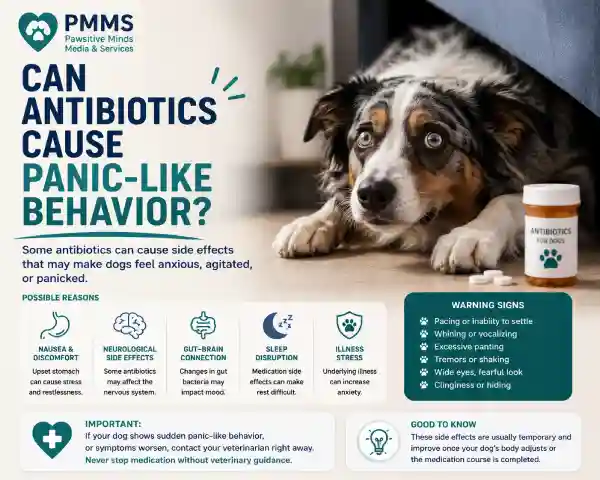
Sometimes.
Dogs experiencing:
- neurological stimulation
- confusion
- severe discomfort
- dizziness
may appear: - frightened
- panicked
- unusually reactive
This is especially concerning if combined with:
- tremors
- loss of coordination
- collapse
- seizures
Which Dogs Are More Sensitive to Anxiety Side Effects?
Some dogs may react more strongly to:
- medication changes
- GI disruption
- neurological stimulation
- stress from illness
Higher Risk Dogs
| Dog Type | Why Risk Increases |
|---|---|
| Senior dogs | Slower drug metabolism |
| Small dogs | Higher medication sensitivity |
| Dogs with GI disease | Increased discomfort |
| Dogs with neurological disease | Higher neurological risk |
| Dogs on high doses | Greater side effect risk |
What Anxiety Symptoms Are Emergencies?
This section is CRITICAL.
Some “anxiety” symptoms may actually indicate:
- neurological toxicity
- dangerous medication reactions
- severe illness progression
Emergency Warning Signs
| Symptom | Emergency? |
|---|---|
| Seizures | YES |
| Collapse | YES |
| Severe tremors | YES |
| Unresponsiveness | YES |
| Severe confusion | YES |
| Trouble standing | Serious |
| Continuous panic behavior | Serious |
Related:
Why Is My Dog Clingy After Antibiotics?
Clinginess is surprisingly common.
Dogs may seek reassurance because they:
- feel weak
- feel nauseous
- feel uncomfortable
- feel vulnerable
- are stressed by illness
This is often temporary.
However:
sudden clinginess with neurological symptoms should be taken seriously.
Can Antibiotics Affect Sleep?
Absolutely.
Some dogs may:
- wake repeatedly
- pace at night
- refuse to settle
- sleep excessively
- appear hyper-alert
Possible causes include:
- nausea
- GI discomfort
- fever
- neurological stimulation
- anxiety-like reactions
How Long Can Anxiety Last After Antibiotics?
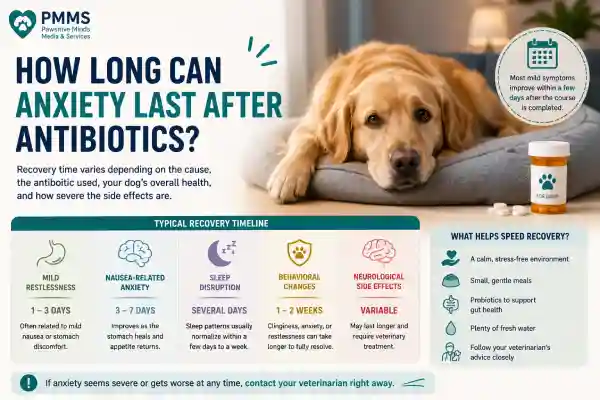
This depends on:
- the antibiotic used
- dose size
- duration of treatment
- neurological involvement
- overall health
- severity of side effects
Typical Recovery Timeline
| Symptom | Possible Duration |
|---|---|
| Mild restlessness | 1–3 days |
| Nausea-related pacing | Several days |
| Sleep disruption | Variable |
| Neurological symptoms | Potentially longer |
| Severe toxicity | Veterinary treatment required |
Related:
What Should Owners Do If Their Dog Seems Anxious?
Important Steps
| Step | Why It Helps |
|---|---|
| Monitor symptoms carefully | Detect worsening signs |
| Keep your dog calm | Reduce stress |
| Watch appetite and hydration | Evaluate illness severity |
| Contact your veterinarian | Important guidance |
| Watch for neurological symptoms | Detect emergencies |
Do NOT:
- give human anxiety medications
- double medication doses
- ignore worsening symptoms
- delay emergency care
How Veterinarians Evaluate Anxiety-Like Behavior
Veterinarians may evaluate:
- medication history
- neurological signs
- GI symptoms
- hydration
- infection severity
- liver function
- timing of symptoms
Possible testing may include:
- bloodwork
- neurological examination
- medication review
- hydration assessment
When Should Owners Contact the Vet Immediately?
Seek veterinary care immediately if your dog develops:
- seizures
- collapse
- severe tremors
- severe confusion
- inability to stand
- repeated vomiting
- breathing difficulty
- severe neurological symptoms
These may indicate:
- metronidazole toxicity
- neurological reaction
- severe medication intolerance
- dangerous illness progression
FAQ – Can Antibiotics Cause Anxiety in Dogs?
Can antibiotics cause anxiety in dogs?
Yes some dogs may show anxiety-like behavior because of nausea, discomfort, neurological effects, or gut microbiome disruption.
Why is my dog restless after antibiotics?
Possible causes include nausea, GI discomfort, weakness, sleep disruption, fever, or neurological side effects.
Can metronidazole cause anxiety?
Yes metronidazole may cause neurological side effects that can look like anxiety, agitation, confusion, or panic behavior.
Why is my dog pacing after antibiotics?
Pacing may happen because the dog feels nauseous, uncomfortable, restless, or neurologically abnormal.
Can antibiotics affect dog behavior?
Absolutely. Some dogs may become clingy, restless, anxious, hyperactive, or unusually tired during treatment.
What anxiety symptoms are emergencies?
Seizures, collapse, severe tremors, confusion, trouble standing, or unresponsiveness require immediate veterinary care.
Should I stop antibiotics if my dog seems anxious?
Never stop prescription medication without veterinary guidance unless instructed during an emergency.
Can probiotics help anxiety-related GI discomfort?
In some cases, probiotics may help support gut health and digestive recovery.
Medical Disclaimer
This article is for educational purposes only and does not replace professional veterinary advice, diagnosis, or treatment. The content is written and pharmacist-reviewed to improve medication safety awareness and help dog owners better understand anxiety-like behavior associated with antibiotics, neurological side effects, gut-brain interactions, nausea-related pacing, medication intolerance, and veterinary medication safety considerations. Always contact your veterinarian if your dog develops unusual behavioral or neurological symptoms during antibiotic treatment.Can Antibiotics Cause Anxiety in Dogs?