
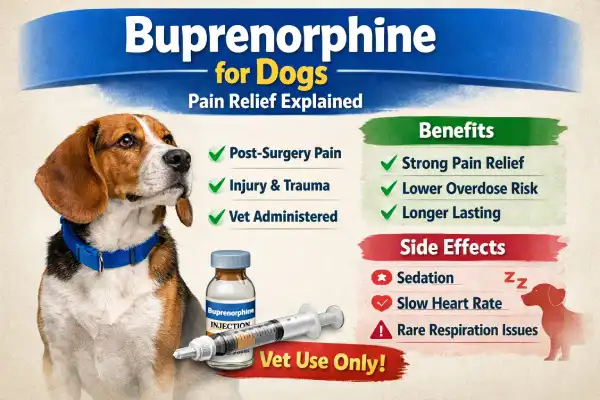
Buprenorphine for Dogs – Buprenorphine is a powerful opioid pain medication used in dogs, mainly for moderate to severe pain. It is commonly used in veterinary clinics for post-surgical pain and acute injuries. Compared to traditional opioids, it has a better safety profile and lower risk of respiratory depression, but it must always be administered under veterinary supervision.
What Is Buprenorphine?
Buprenorphine is a partial opioid agonist, meaning it activates opioid receptors but with a ceiling effect that reduces the risk of overdose.
👉 It is widely used in veterinary medicine for:
- Post-surgical pain
- Trauma and injury
- Severe acute pain
- Sometimes chronic pain management
Is Buprenorphine Safe for Dogs?
Yes — when used correctly, buprenorphine is considered one of the safer opioids in veterinary medicine.
Why vets prefer it:
- ✔️ Strong pain relief
- ✔️ Lower risk of respiratory depression
- ✔️ Longer duration than many opioids
- ✔️ Less sedation compared to full opioids
👉 Compared to older opioids like Codeine, it is more reliable and effective.
Buprenorphine for Dogs: Pain Relief Explained
When Do Veterinarians Use Buprenorphine?
1. Post-Surgical Pain
Very commonly used after procedures like:
- Spaying/neutering
- Dental surgery
- Orthopedic surgery
2. Acute Injuries
- Trauma
- Bite wounds
- Severe inflammation
3. Hospital Pain Management
Often used in clinics where close monitoring is possible.
👉 For comparison with other options, see our guide on tramadol for dogs and how it differs.
Buprenorphine Dosage for Dogs
⚠️ Administered only by a veterinarian
Typical range:
- 0.005–0.02 mg/kg every 6–12 hours
👉 Often given:
- Injection (most common)
- Oral (absorbed through gums, not swallowed)

Table 1: Buprenorphine for Dogs — Quick Overview
| Topic | Key Information |
|---|---|
| Drug class | Partial opioid agonist |
| Pain strength | Moderate to strong |
| Common use | Surgery, trauma, acute pain |
| Administration | Injection or oral (transmucosal) |
| Duration | 6–12 hours |
| Safety | High (with vet supervision) |
| Key advantage | Lower overdose risk |
How Buprenorphine Is Given to Dogs
Unlike many medications, buprenorphine is not typically given as a standard tablet.
👉 Common forms include:
- Injectable solution (vet clinic)
- Oral transmucosal liquid (absorbed through gums)
⚠️ Swallowing reduces effectiveness — it must be absorbed through the mouth lining.
Table 2: Buprenorphine vs Other Pain Medications
| Medication | Strength | Use Case | Safety |
|---|---|---|---|
| Buprenorphine | High | Surgery, trauma | Very good |
| Tramadol | Moderate | Chronic pain | Good |
| Gabapentin | Moderate | Nerve pain | Very good |
| Codeine | Low | Mild pain, cough | Moderate |
👉 Learn more about safer alternatives like gabapentin for dogs in our full guide.
Side Effects of Buprenorphine in Dogs
Common:
- Mild sedation 😴
- Slower heart rate
- Slight behavioral changes
Less common:
- Nausea
- Decreased appetite
Rare but serious:
- Respiratory depression (much less common than other opioids)
When Buprenorphine Should NOT Be Used
Use caution in dogs with:
- Severe liver disease
- Respiratory disorders
- Extremely weak or elderly dogs
Why Buprenorphine Is Different From Other Opioids
Buprenorphine has a “ceiling effect”:
👉 After a certain dose:
- Effects plateau
- Risk of overdose does NOT increase significantly
👉 This makes it:
- Safer than full opioids
- More predictable
Buprenorphine vs Other Dog Pain Medications
Veterinarians often combine buprenorphine with:
- NSAIDs (Carprofen, Meloxicam)
- Gabapentin
👉 This is called multimodal pain management, improving results while reducing risks.
Veterinary Insight
Buprenorphine is considered a gold standard opioid in veterinary practice for:
- Acute pain
- Surgical recovery
- Controlled hospital use
👉 It offers a balance between effectiveness and safety.
Can You Give Your Dog Buprenorphine at Home?
🚫 Only if prescribed and instructed by a veterinarian
Reasons:
- Requires correct administration technique
- Controlled substance
- Precise dosing needed
Final Verdict: Should Dogs Use Buprenorphine?
👉 Yes — when prescribed by a vet.
✔️ Strong pain relief
✔️ Safer than many opioids
✔️ Widely used in clinics
❌ Not for unsupervised home use
👉 For general pain management options, read our full guide on what pain medications dogs can take.
FAQ Section – Buprenorphine for Dogs
Is buprenorphine safe for dogs?
Yes, when used under veterinary supervision.
How is buprenorphine given to dogs?
Usually by injection or absorbed through the gums.
Is buprenorphine stronger than tramadol?
Yes, it is generally stronger and more effective for acute pain.
Can I give my dog buprenorphine at home?
Only if your veterinarian prescribes it and shows you how to use it.
Medical Disclaimer
The information provided in this article is for educational and informational purposes only and is not intended as a substitute for professional veterinary advice, diagnosis, or treatment. Always consult a licensed veterinarian before giving your dog any medication, including Codeine or other pain relievers.
Dosages, safety, and suitability can vary depending on your dog’s age, weight, health condition, and medical history. Never use human medications in pets unless specifically prescribed by a veterinarian.
If you suspect your dog has received an incorrect dose or is experiencing adverse effects, seek immediate veterinary care. – Buprenorphine for Dogs
Sources & Scientific References
- American Veterinary Medical Association – Guidelines on veterinary pain management and responsible medication use
- Merck Veterinary Manual – Pharmacology and antitussive drug use in animals
- FDA Center for Veterinary Medicine – Extra-label drug use and medication safety in animals
- VCA Animal Hospitals – Codeine use, side effects, and safety in pets
- PetMD – Codeine overview, dosing considerations, and warnings
All images for the article : Buprenorphine for Dogs, are generated wth AI