
Probiotics for Dogs: Do They Help with Antibiotic Side Effects? – Yes, probiotics can help dogs recover from antibiotic side effects by restoring healthy gut bacteria, reducing diarrhea, and improving digestion. They are commonly recommended during and after antibiotic treatment to support gut health and speed up recovery.
What Are Probiotics for Dogs?
Probiotics are live beneficial microorganisms that support your dog’s digestive system and overall health.
They work by:
- Restoring the natural balance of gut bacteria
- Supporting digestion and nutrient absorption
- Strengthening immune function
When dogs take antibiotics such as Amoxicillin, their gut microbiome is disrupted — which is why probiotics are often recommended.
👉 For a complete antibiotic for dogs breakdown, see:
Antibiotics for Dogs: Uses, Types, Dosage, Side Effects & Safety Guide
Probiotics for Dogs
Why Dogs Need Probiotics During Antibiotic Treatment
Antibiotics are designed to eliminate harmful bacteria, but they also affect beneficial bacteria in the gut.
This imbalance can lead to:
- Diarrhea
- Digestive upset
- Reduced appetite
- Weakened gut health
👉 For a complete breakdown, see:
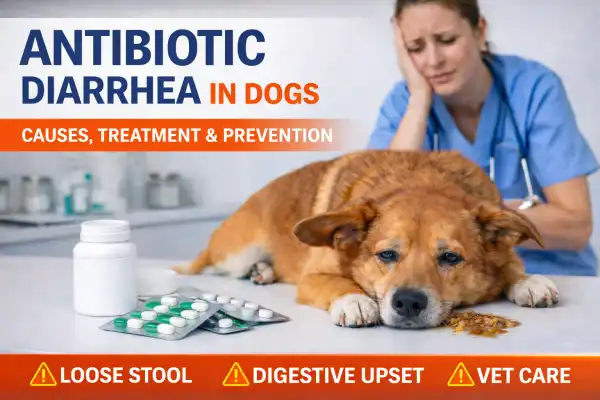
Antibiotic Diarrhea in Dogs: Causes, Treatment & Prevention
How Probiotics Work in Dogs
Probiotics help re-establish a healthy gut environment by:
- Replenishing beneficial bacteria
- Supporting intestinal barrier function
- Reducing inflammation in the digestive tract
In simple terms, probiotics help your dog’s digestive system recover faster after antibiotic use.
Antibiotics vs Probiotics
| Function | Antibiotics | Probiotics |
|---|---|---|
| Kill bacteria | Yes | No |
| Restore gut flora | No | Yes |
| Cause digestive upset | Sometimes | Help reduce it |
| Improve digestion | No | Yes |
Common Antibiotic Side Effects in Dogs
Dogs taking antibiotics like Amoxicillin may experience:
- Diarrhea
- Vomiting
- Loss of appetite
- Lethargy
👉 Learn more here:
Amoxicillin Side Effects in Dogs
Do Probiotics Help with Antibiotic-Related Diarrhea?
👉 Yes — this is one of their most important benefits.
Probiotics can:
- Reduce the severity of diarrhea
- Shorten recovery time
- Improve stool consistency
This is especially relevant in cases like:
Can Amoxicillin Cause Diarrhea in Dogs?
Additional Benefits of Probiotics
Beyond antibiotic recovery, probiotics offer several additional benefits:
🐾 1. Immune System Support
A healthy gut plays a major role in immune defense.
🐾 2. Improved Nutrient Absorption
Better digestion leads to better absorption of vitamins and minerals.
🐾 3. Reduced Gut Inflammation
Helpful in dogs with sensitive stomachs.
🐾 4. Better Stool Quality
More consistent and healthier bowel movements.
🐾 5. Support During Stress
Useful during travel, dietary changes, or illness.
When Should You Give Probiotics to Dogs?
Probiotics can be used:
- During antibiotic treatment
- After completing antibiotics
- At the first sign of digestive upset
💡 Important Tip:
Give probiotics 2–3 hours apart from antibiotics for best effectiveness.
Table 2: When to Use Probiotics
| Situation | Recommended |
|---|---|
| During antibiotics | Yes |
| After antibiotics | Yes |
| Mild diarrhea | Yes |
| Severe illness | Consult a vet |
Are Probiotics Safe for Dogs?
👉 Generally, yes.
Probiotics are considered safe for most dogs.
Possible mild side effects:
- Temporary gas
- Mild bloating
These effects are usually short-lived.
Can Probiotics Replace Antibiotics?
👉 No.
- Antibiotics treat bacterial infections
- Probiotics support gut recovery
They should be used together, not as substitutes.
When to Contact a Veterinarian
Seek veterinary advice if your dog experiences:
- Diarrhea lasting more than 48 hours
- Blood in stool
- Severe lethargy
- Vomiting along with diarrhea
- Refusal to eat
👉 These may indicate a more serious reaction or complication.
FAQ – Probiotics for Dogs
Do probiotics help dogs on antibiotics?
Yes, they help restore gut balance and reduce side effects.
How long should dogs take probiotics after antibiotics?
Typically for several days to a few weeks, depending on the case.
Are probiotics safe for puppies?
Yes, but always consult a veterinarian first.
Can probiotics improve digestion long-term?
Yes, especially in dogs with chronic digestive issues.
Medical Disclaimer
This article is for informational purposes only and does not replace professional veterinary advice. Always consult a licensed veterinarian before giving supplements or medications to your dog.
Sources & References
- American Veterinary Medical Association
- Merck Veterinary Manual
- FDA Center for Veterinary Medicine
- Journal of Veterinary Internal Medicine
Images are created with AI – Probiotics for Dogs