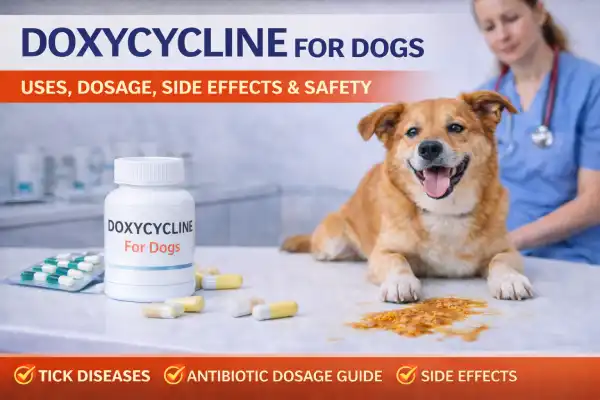
Doxycycline for Dogs – Doxycycline is a commonly prescribed antibiotic for dogs used to treat bacterial infections, especially tick-borne diseases such as Lyme disease and ehrlichiosis. It is generally safe when used correctly, but may cause side effects like vomiting, diarrhea, and loss of appetite.
What Is Doxycycline for Dogs?
Doxycycline is a tetracycline antibiotic that works by inhibiting bacterial protein synthesis, preventing bacteria from multiplying.
It is widely used in veterinary medicine because:
- It is highly effective against intracellular bacteria
- It treats tick-borne diseases
- It has anti-inflammatory properties
👉 For a broader understanding of antibiotics, see:
Antibiotics for Dogs: Uses, Types, Dosage, Side Effects & Safety Guide
What Is Doxycycline Used for in Dogs?
Doxycycline is one of the most versatile antibiotics in veterinary medicine.
Common Uses:
Tick-Borne Diseases (Most Important)
- Lyme disease
- Ehrlichiosis
- Anaplasmosis
Respiratory Infections
- Kennel cough
- Pneumonia
Urinary Tract Infections
Skin Infections (select cases)
Doxycycline for Dogs
Doxycycline Dosage for Dogs
Dosage depends on the condition and severity.
Table 1: Doxycycline Dosage Guide
| Condition | Typical Dose | Frequency |
|---|---|---|
| General infections | 5 mg/kg | Every 12 hours |
| Tick-borne diseases | 10 mg/kg | Once daily |
📌 Important:
- Always follow veterinary instructions
- Give with food to reduce irritation
- Ensure access to water
How Long Does Doxycycline Take to Work?
- Improvement: 24–72 hours
- Full treatment: 7–28 days (longer for tick diseases)
Doxycycline Side Effects in Dogs
Most dogs tolerate doxycycline well, but side effects can occur.
Common Side Effects:
- Vomiting
- Diarrhea
- Loss of appetite
- Drooling
Table 2: Side Effects Severity
| Severity | Symptoms | Action |
|---|---|---|
| Mild | Soft stool, nausea | Monitor |
| Moderate | Vomiting, appetite loss | Contact vet |
| Severe | Difficulty swallowing | Emergency |
Why Does Doxycycline Cause Vomiting?
Doxycycline is known to:
- Irritate the esophagus
- Cause stomach discomfort
👉 This is why it should:
- Always be given with food
- Followed by water
Can Doxycycline Cause Diarrhea?
Yes — like most antibiotics, Doxycycline can disrupt gut bacteria.
👉 Related reading:
Can Cephalexin Cause Diarrhea in Dogs?
👉 Full mechanism:
Antibiotic Diarrhea in Dogs: Causes, Treatment & Prevention

Doxycycline vs Other Antibiotics
Compared to Amoxicillin:
- Better for tick diseases
- Less effective for skin infections
Compared to Cephalexin:
- Different spectrum (intracellular vs skin bacteria)
👉 Learn more:
Cephalexin for Dogs: Uses, Dosage, Side Effects & Safety
How to Reduce Side Effects
Practical Tips:
- Give with food
- Provide water after dosing
- Avoid dry swallowing (very important)
- Monitor closely
👉 Gut support:
Probiotics for Dogs: Do They Help with Antibiotic Side Effects?
When to Call a Veterinarian
Contact your vet if:
- Persistent vomiting
- Refusal to eat
- Severe diarrhea
- Difficulty swallowing
- Lethargy
Can Dogs Take Human Doxycycline?
👉 Only under veterinary guidance.
Reasons:
- Dose differences
- Formulation differences
- Risk of misuse
Special Warning
Doxycycline can cause esophageal irritation or ulcers if:
- Given dry
- Not followed by water
👉 This is one of the most important safety points.
Antibiotic Resistance
Improper use of Doxycycline can lead to resistance.
To prevent:
- Complete full course
- Follow dosage exactly
Advanced Safety Considerations for Doxycycline in Dogs
While doxycycline is generally considered safe, there are several important safety considerations that dog owners should understand to ensure proper use and minimize risks.
Esophageal Irritation Risk
One of the most important and often overlooked risks of doxycycline is esophageal irritation or ulceration.
This can happen when:
- The tablet or capsule gets stuck in the esophagus
- The medication is given without enough water
- The dog lies down immediately after taking it
👉 To prevent this:
- Always give doxycycline with food
- Follow with a small amount of water
- Avoid dry swallowing
This is especially important in small breeds and older dogs.
Drug Interactions to Be Aware Of
Doxycycline can interact with certain medications and supplements.
Common interactions include:
- Calcium supplements
- Iron supplements
- Antacids
- Dairy products (can reduce absorption)
👉 These substances can bind to doxycycline and reduce its effectiveness.
💡 Tip:
Administer doxycycline at least 2 hours apart from these substances.
Special Considerations for Puppies
Doxycycline should be used cautiously in young dogs.
Why?
Tetracycline antibiotics may:
- Affect bone development
- Cause tooth discoloration (in growing puppies)
👉 However:
Modern veterinary use of Doxycycline is generally considered safer than older tetracyclines.
Still, always:
➡️ follow veterinary guidance strictly
Long-Term Use of Doxycycline – Doxycycline for Dogs
In some cases (especially tick-borne diseases), dogs may require longer treatment.
Potential concerns with long-term use:
- Gastrointestinal irritation
- Altered gut microbiome
- Reduced appetite
👉 This is why monitoring is critical.
Supporting Your Dog During Treatment
You can take steps to help your dog tolerate doxycycline better.
Practical Tips:
- Provide easily digestible food
- Maintain hydration
- Monitor stool consistency
- Observe behavior changes
👉 Gut support can be beneficial:
Probiotics for Dogs: Do They Help with Antibiotic Side Effects?
How Doxycycline Affects the Gut Microbiome
Like all antibiotics, Doxycycline alters the balance of gut bacteria.
This can lead to:
- Mild diarrhea
- Digestive upset
- Reduced nutrient absorption
👉 This mechanism is explained in detail in:
Antibiotic Diarrhea in Dogs: Causes, Treatment & Prevention
FAQ – Doxycycline for Dogs
Is doxycycline safe for dogs?
Yes, when used under veterinary supervision.
Can doxycycline make dogs vomit?
Yes, especially if given on an empty stomach.
How long do dogs take doxycycline?
Usually 7–28 days depending on condition.
Can doxycycline cause diarrhea?
Yes, mild diarrhea is possible.
Should doxycycline be given with food?
Yes, to reduce stomach irritation.
Medical Disclaimer
This article is for informational purposes only and does not replace professional veterinary advice. Always consult a licensed veterinarian before giving your dog any medication.Doxycycline for Dogs
Sources & References
- American Veterinary Medical Association
- Merck Veterinary Manual
- FDA Center for Veterinary Medicine
- Plumb’s Veterinary Drug Handbook
Images are created with AI – Doxycycline for Dogs