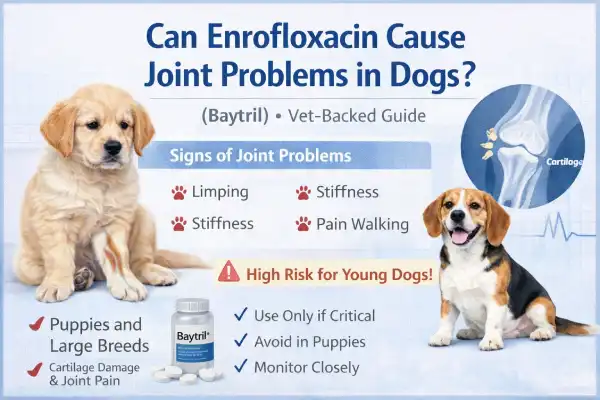
Can Enrofloxacin Cause Joint Problems in Dogs? – Yes — Enrofloxacin (Baytril) can cause joint and cartilage problems in dogs, especially in puppies and growing dogs.
👉 This happens because fluoroquinolone antibiotics can affect developing cartilage.
👉 In most adult dogs:
- Risk is low
👉 In young dogs: - Risk is significantly higher
⚠️ This is why enrofloxacin is not recommended for growing puppies unless absolutely necessary.
Can Enrofloxacin Cause Joint Problems in Dogs
Why Can Enrofloxacin Cause Joint Problems in Dogs?
Enrofloxacin belongs to the fluoroquinolone class, which is known to affect cartilage development.
What happens inside the body:
- Cartilage cells become damaged
- Joint development is disrupted
- Inflammation may occur
👉 Result:
- Joint pain
- Limping
- Difficulty walking
Table 1: How Enrofloxacin Affects Joints
| Effect | Result |
|---|---|
| Cartilage damage | Joint weakness |
| Growth interference | Development issues |
| Inflammation | Pain and stiffness |
Which Dogs Are at Highest Risk?
Not all dogs are equally affected.
High-Risk Groups
👉 Puppies (MOST IMPORTANT)
- Rapid growth phase
- Cartilage still developing
👉 Large breeds
- Labrador
- German Shepherd
- Golden Retriever
👉 Dogs under 12–18 months
Table 2: Risk by Age
| Age Group | Risk Level |
|---|---|
| Puppies | High |
| Young dogs | Moderate |
| Adult dogs | Low |
Signs of Joint Problems from Enrofloxacin
👉 Watch for:
- Limping
- Stiffness
- Difficulty standing
- Reluctance to move
- Pain when walking
👉 These signs may appear:
- Within a few days
- During treatment
How Common Are Joint Side Effects?
👉 Rare — but important
Most dogs:
- Do NOT develop joint problems
👉 However:
- Risk is well documented in young animals
Enrofloxacin vs Other Antibiotics (Joint Risk)
👉 Compared to other antibiotics:
- Amoxicillin for Dogs → No joint risk
- Cephalexin for Dogs → No joint risk
- Doxycycline for Dogs → No joint risk
👉 Enrofloxacin stands out because:
- It affects cartilage development
Table 3: Joint Risk Comparison
| Antibiotic | Joint Risk |
|---|---|
| Enrofloxacin | YES |
| Amoxicillin | No |
| Cephalexin | No |
| Doxycycline | No |
When Do Joint Problems Start?
Symptoms may appear:
- Within 2–5 days
- During treatment
- Rarely after treatment
Are the Effects Permanent?
👉 Depends on severity
Mild cases
- Reversible
- Temporary discomfort
Severe cases
- Possible long-term joint issues
👉 Early detection is critical
What Increases the Risk?
- High dosage
- Long treatment duration
- Young age
- Large breed dogs
How to Reduce the Risk
✔️ Avoid use in puppies
✔️ Use only when necessary
✔️ Follow exact dosage
✔️ Monitor closely
Pro Tip
👉 As a pharmacist-level insight:
Fluoroquinolones like Enrofloxacin should be considered last-line antibiotics in young dogs due to cartilage toxicity risk.
What Should You Do If Symptoms Appear?
👉 Immediately:
- Stop medication (if severe)
- Contact veterinarian
- Restrict activity
When to Worry
👉 Contact vet if:
- Limping appears
- Dog avoids movement
- Pain increases
👉 Emergency if:
- Dog cannot walk
- Severe pain
- Rapid worsening
Should You Avoid Enrofloxacin Completely?
👉 Not always
It is still:
- Very effective
- Life-saving in some infections
👉 But:
- Use carefully in young dogs
👉Read for Enrofloxacin Side Effects in Dogs: What to Watch For (Vet-Backed Guide)
Why This Matters
Understanding this risk helps:
- Prevent long-term damage
- Choose safer alternatives
- Improve treatment decisions
FAQ – Can Enrofloxacin Cause Joint Problems in Dogs?
Can enrofloxacin damage joints in dogs?
Yes, especially in puppies.
Is it safe for adult dogs?
Generally yes, with low risk.
Are joint problems reversible?
Often yes, if detected early.
Should puppies take enrofloxacin?
Only if absolutely necessary.
What are the first signs?
Limping and stiffness.
Medical Disclaimer
This article is for informational purposes only and does not replace veterinary advice. Always consult a licensed veterinarian.
Sources & References
Plumb’s Veterinary Drug HandbookYes — Enrofloxacin (Baytril) can cause joint and cartilage problems in dogs, especially in puppies and growing dogs.