Can Clavamox Cause Diarrhea in Dogs?
Yes — Clavamox can cause diarrhea in dogs.
This happens because the antibiotic disrupts the natural balance of gut bacteria.
👉 In most cases:
- Mild
- Temporary
- Self-limiting
👉 However:
- Severe or persistent diarrhea requires veterinary attention
Why Does Clavamox Cause Diarrhea in Dogs?
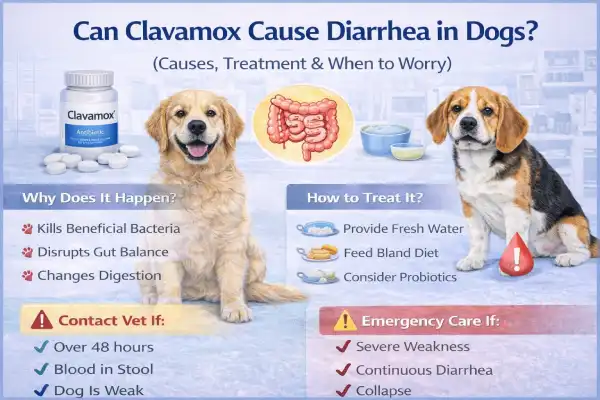
Clavamox is a broad-spectrum antibiotic, meaning it kills both:
- Harmful bacteria
- Beneficial gut bacteria
👉 Learn more:
Can Clavamox Cause Diarrhea in Dogs?
What happens inside the body:
- Gut microbiome is disrupted
- Digestive balance is altered
- Intestinal lining becomes sensitive
👉 Result:
- Loose stool
- Diarrhea
- Digestive discomfort
Table 1: How Clavamox Affects the Gut
| Effect | Result |
|---|---|
| Kills harmful bacteria | Treats infection |
| Reduces beneficial bacteria | Digestive imbalance |
| Alters gut function | Diarrhea or soft stool |
How Common Is Diarrhea with Clavamox?
👉 Relatively common
Most cases are:
- Mild
- Temporary
- Self-limiting
👉 Similar to:
Types of Diarrhea You May See
1. Mild Diarrhea
- Soft stool
- Slight increase in frequency
- Dog otherwise normal
👉 Usually not dangerous
2. Moderate Diarrhea
- Frequent loose stool
- Mild lethargy
- Reduced appetite
👉 Monitor closely
3. Severe Diarrhea
- Watery stool
- Blood or mucus
- Dehydration
- Weakness
👉 Requires veterinary care
Table 2: Mild vs Severe Diarrhea
| Severity | Symptoms | Action |
|---|---|---|
| Mild | Soft stool | Monitor |
| Moderate | Frequent diarrhea | Call vet |
| Severe | Blood, dehydration | Emergency |
Other Symptoms That May Appear
Diarrhea often occurs with:
- Vomiting
- Loss of appetite
- Drooling
- Lethargy
👉 Learn more:
Clavamox vs Other Antibiotics (Diarrhea Risk)
👉 Compared to:
- Amoxicillin → similar
- Cephalexin → similar
- Clindamycin → slightly higher diarrhea risk
- Enrofloxacin (Baytril) for Dogs → more serious risks
Table 3: Diarrhea Risk Comparison
| Antibiotic | Diarrhea Risk |
|---|---|
| Clavamox | Moderate |
| Amoxicillin | Moderate |
| Cephalexin | Moderate |
| Clindamycin | Higher |
| Enrofloxacin | Moderate |
When Does Diarrhea Start?
Diarrhea may begin:
- Within 24–72 hours
- After first doses
- During treatment
How Long Does It Last?
- Mild → 1–3 days
- Moderate → several days
- Severe → until treated
What Increases the Risk?
- High dosage
- Long treatment
- Sensitive stomach
- Small dogs
- Previous antibiotic reactions
How to Treat Clavamox Diarrhea at Home
👉 For mild cases only
✔️ Provide fresh water
✔️ Feed bland diet (rice + chicken)
✔️ Monitor closely
Pro Tip: Probiotics
👉 One of the best solutions:
- Restore gut bacteria
- Reduce diarrhea duration
- Improve digestion
👉 Read:
When to Worry
👉 Contact your vet if:
- Diarrhea lasts more than 48 hours
- Blood appears in stool
- Vomiting occurs
- Dog becomes lethargic
👉 Emergency if:
- Severe weakness
- Continuous diarrhea
- Collapse
Can Diarrhea Be Mistaken for Pain?
👉 Yes
Dogs may appear:
- Restless
- Weak
- Uncomfortable
👉 Check:
Should You Stop Clavamox?
👉 Depends:
- Mild → continue
- Moderate → consult vet
- Severe → stop immediately
⚠️ Stopping early may cause:
- Infection relapse
- Treatment failure
How to Prevent Diarrhea
✔️ Give with food
✔️ Use correct dosage
✔️ Avoid overuse
✔️ Consider probiotics
Why This Matters
Diarrhea is one of the most common antibiotic side effects.
👉 Understanding it:
- Prevents panic
- Helps early action
- Improves recovery
FAQ – Can Clavamox Cause Diarrhea in Dogs?
Can Clavamox cause diarrhea in dogs?
Yes, due to gut bacteria disruption.
Is this dangerous?
Usually mild, but can become serious.
How long does it last?
Typically 1–3 days.
Should I stop the medication?
Only if severe symptoms appear.
Can probiotics help?
Yes, they support gut recovery.
Medical Disclaimer
This article is for informational purposes only and does not replace veterinary advice.
Sources & References
Images are created with AI – Can Clavamox Cause Diarrhea in Dogs?