
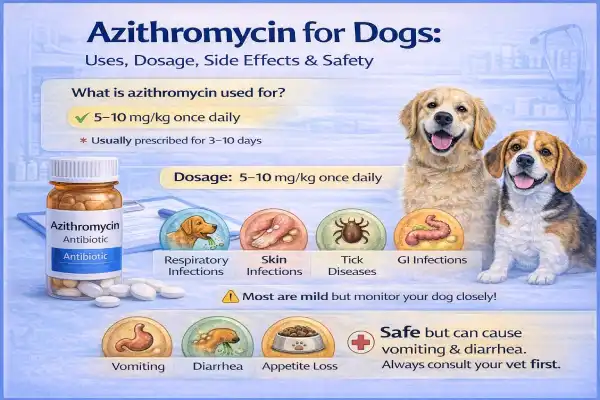
Azithromycin for Dogs
Azithromycin is an antibiotic used in dogs to treat respiratory infections, certain bacterial infections, and some chronic conditions.
👉 It is:
- Well tolerated
- Long-acting
- Effective against specific bacteria
👉 However, it may cause:
- Vomiting
- Diarrhea
- Loss of appetite
What Is Azithromycin for Dogs?
Azithromycin belongs to the macrolide class of antibiotics.
👉 It works by:
- Stopping bacterial protein synthesis
- Preventing bacterial growth
👉 Unique feature:
- Long half-life → less frequent dosing
Azithromycin for Dogs
What Is Azithromycin Used for in Dogs?
Veterinarians commonly prescribe it for:
1. Respiratory Infections (MOST COMMON)
👉 Especially effective for:
- Chronic bronchitis
- Bacterial pneumonia
- Kennel cough (bacterial cases)
👉 Related:
2. Skin Infections
- Bacterial skin issues
- Wounds
👉 Alternative:
3. Tick-Borne Diseases
👉 Sometimes used for:
- Certain intracellular infections
👉 Compare:
4. Gastrointestinal Infections
👉 In selected cases:
- Bacterial diarrhea
👉 Related:
Table 1: Common Uses of Azithromycin
| Condition | Use |
|---|---|
| Respiratory infections | Very common |
| Skin infections | Common |
| GI infections | Occasional |
| Chronic infections | Important |
Azithromycin Dosage for Dogs
👉 Typical dosage:
- 5–10 mg/kg once daily
👉 Duration:
- 3–10 days (depends on condition)
👉 Advantage:
- Less frequent dosing vs other antibiotics

Table 2: Dosage Overview
| Dog Size | Typical Dose |
|---|---|
| Small dogs | 5 mg/kg |
| Medium dogs | 5–10 mg/kg |
| Severe infections | Vet-adjusted |
How Long Does It Take to Work?
- Improvement: 24–48 hours
- Full recovery: several days
Side Effects of Azithromycin in Dogs
Common Side Effects
- Vomiting
- Diarrhea
- Loss of appetite
👉 These are typical antibiotic effects
👉 Related:
Table 3: Common Side Effects
| Side Effect | Frequency | Severity |
|---|---|---|
| Vomiting | Common | Mild |
| Diarrhea | Common | Mild |
| Appetite loss | Common | Mild |
Moderate Side Effects
- Lethargy
- Digestive upset
Rare Side Effects
- Liver enzyme changes
- Allergic reactions
Does Azithromycin Cause Diarrhea in Dogs?
👉 Yes — possible
👉 Why:
- Disruption of gut bacteria
👉 Compare:
Azithromycin vs Other Antibiotics
👉 Compared to:
- Amoxicillin → broader use
- Cephalexin → skin-focused
- Doxycycline → tick diseases
- Enrofloxacin → stronger but riskier
👉 Azithromycin stands out for:
- Respiratory infections
- Long half-life
Table 4: Comparison
| Antibiotic | Best Use | Risk Level |
|---|---|---|
| Azithromycin | Respiratory | Low |
| Amoxicillin | General | Low |
| Cephalexin | Skin | Low |
| Doxycycline | Tick diseases | Moderate |
| Enrofloxacin | Severe infections | Higher |
What Increases Side Effect Risk?
- High dose
- Sensitive stomach
- Long treatment
How to Reduce Side Effects
✔️ Give with food
✔️ Monitor appetite
✔️ Use probiotics
✔️ Ensure hydration
Pro Tip
👉 Azithromycin is often better tolerated than many antibiotics — making it a good choice for dogs with sensitive stomachs.
When to Worry
👉 Contact your vet if:
- Vomiting persists
- Diarrhea lasts > 48 hours
- Dog becomes lethargic
👉 Emergency if:
- Severe weakness
- Allergic reaction
Should You Stop Azithromycin?
👉 Depends:
- Mild → continue
- Moderate → consult vet
- Severe → stop
Why This Matters
Choosing the right antibiotic:
- Improves recovery
- Reduces risks
- Protects long-term health

FAQ – Azithromycin for Dogs
Is azithromycin safe for dogs?
Yes, when used properly.
What is it used for?
Respiratory and bacterial infections.
Can it cause diarrhea?
Yes, but usually mild.
How fast does it work?
Within 24–48 hours.
Is it better than other antibiotics?
Depends on the infection.
Medical Disclaimer
This article is for informational purposes only and does not replace veterinary advice.
Sources & References
Images from pixabay – Azithromycin for Dogs