
Keppra dosage for dogs is not always enough—some dogs require additional seizure control with medications like potassium bromide.
Quick Answer
Potassium bromide (KBr) is a long-term seizure control medication for dogs, typically used when other treatments like phenobarbital or levetiracetam (Keppra) are not sufficient. It is given once daily, but it takes weeks to reach full effect and requires careful monitoring.
Introduction
If your dog continues to have seizures despite treatment, your veterinarian may recommend potassium bromide as part of a long-term management plan.
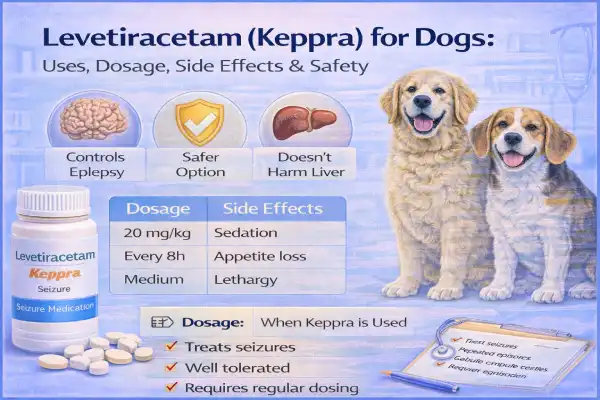
Unlike fast-acting medications such as Levetiracetam (Keppra) for Dogs: Uses, Dosage, Side Effects & Safety, potassium bromide works slowly but provides stable, long-term seizure control.
For a full overview of all available treatments, see
👉 Seizure Medications for Dogs: Complete Guide (Uses, Safety, Dosage & Treatment Options)
Potassium Bromide for Dogs
What Is Potassium Bromide for Dogs?
Potassium bromide (KBr) is an anticonvulsant medication used to:
- Control chronic seizures
- Reduce seizure frequency
- Support other medications like phenobarbital
It works by:
- stabilizing nerve activity in the brain
- reducing excessive neuronal firing
👉 It is especially useful in:
- dogs with refractory epilepsy
- dogs that cannot tolerate strong liver-metabolized drugs
When Do Vets Prescribe Potassium Bromide?
Veterinarians typically prescribe KBr when:
- Seizures are not controlled by one drug alone
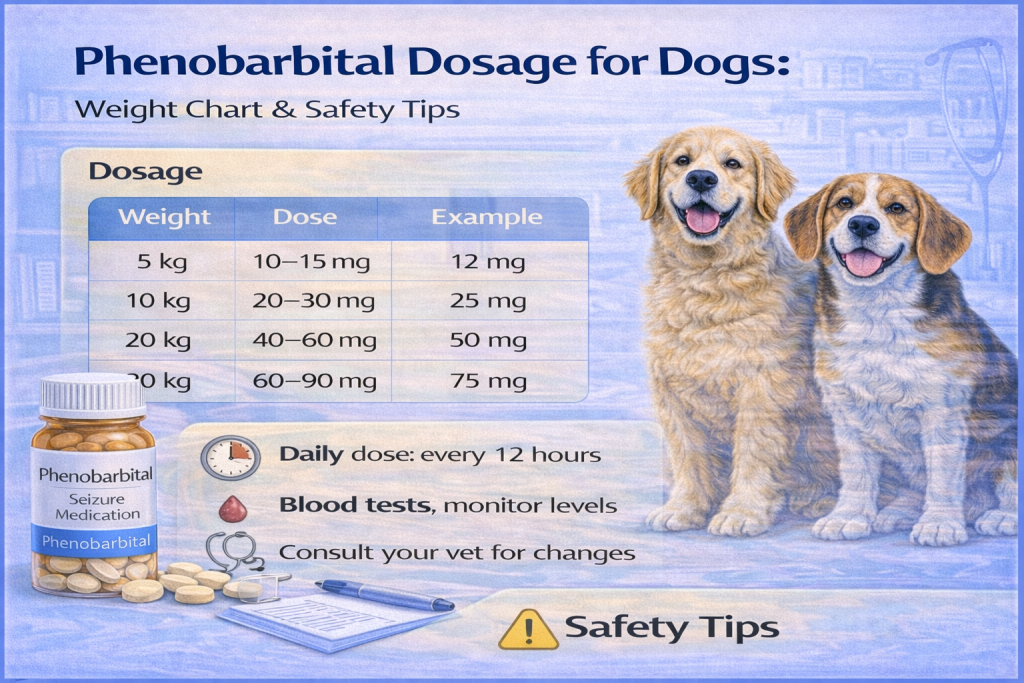
- Dogs experience side effects from Phenobarbital for Dogs: Uses, Dosage, Side Effects & Safety
- Long-term seizure stabilization is needed
- Liver disease limits medication choices
👉 It is often used in combination therapy.
Potassium Bromide Dosage for Dogs

Typical dosing:
- Maintenance dose: 20–40 mg/kg once daily
- Loading dose (in some cases): higher doses over several days
- Administration: usually with food
Potassium Bromide Dosage Chart for Dogs
| Dog Weight | Low Dose (20 mg/kg) | High Dose (40 mg/kg) |
|---|---|---|
| 5 kg | 100 mg | 200 mg |
| 10 kg | 200 mg | 400 mg |
| 20 kg | 400 mg | 800 mg |
| 30 kg | 600 mg | 1200 mg |
| 40 kg | 800 mg | 1600 mg |
⚠️ Always follow your vet’s instructions for exact dosing.
How Long Does Potassium Bromide Take to Work?
This is one of the most important things owners need to understand:
| Factor | Time |
|---|---|
| Initial effect | 1–2 weeks |
| Full effect | 2–3 months |
| Steady blood levels | Up to 4 months |
👉 This is VERY different from fast-acting drugs like
Keppra Side Effects in Dogs: What to Watch For (Vet-Backed Guide)
Common Side Effects of Potassium Bromide in Dogs
Common (usually temporary):
- Sedation
- Weakness
- Increased thirst
- Increased appetite
Moderate:
- Wobbliness (ataxia)
- Behavioral changes
Serious (rare):
- Severe lethargy
- Vomiting
- Pancreatitis (rare but important)
👉 Compare with:
Phenobarbital Side Effects in Dogs: What to Watch For (Vet-Backed Guide)
Potassium Bromide vs Other Seizure Medications
| Medication | Speed | Monitoring | Best Use |
|---|---|---|---|
| Keppra | Fast | Minimal | Acute + add-on |
| Phenobarbital | Medium | Blood tests | Strong control |
| Potassium Bromide | Slow | Blood levels | Long-term stabilization |
👉 Learn more here:
Seizure Medications for Dogs: Complete Guide (Uses, Safety, Dosage & Treatment Options)
Important Safety Considerations
⚠️ Diet matters
High salt intake can:
- reduce effectiveness
- lower bromide levels
⚠️ Not for cats
KBr can cause severe lung disease in cats
⚠️ Long half-life
- stays in the body for weeks
- dose changes take time to show effect
When to Contact Your Veterinarian
Call your vet if:
- seizures continue or worsen
- your dog becomes extremely weak
- vomiting or severe sedation occurs
- coordination is significantly impaired
Also review seizure warning signs here:
👉 Dog Seizure Symptoms: Signs, Causes & When to Act (Vet-Backed Guide)

FAQ – Potassium Bromide for Dogs
Is potassium bromide safe for dogs?
Yes, when properly monitored, it is safe and widely used for long-term seizure control.
Can potassium bromide be used with Keppra?
Yes, combination therapy is very common in dogs with difficult-to-control seizures.
Why does potassium bromide take so long to work?
Because it builds up slowly in the bloodstream due to its long half-life.
Does potassium bromide affect the liver?
No, which makes it a good alternative for dogs with liver issues.
Does potassium bromide affect the liver?
No, which makes it a good alternative for dogs with liver issues.
Can I stop potassium bromide suddenly?
No. Stopping suddenly can trigger seizures.
Conclusion
Potassium bromide is a powerful tool for long-term seizure control in dogs, especially when other medications alone are not enough. While it works slowly, it provides stable and reliable seizure management when used correctly.
When combined with medications like Keppra or phenobarbital, it can significantly improve a dog’s quality of life.
Medical Disclaimer
This article is for informational purposes only and does not replace professional veterinary advice. Always consult your veterinarian before starting or adjusting any medication.
Sources & References
- Plumb’s Veterinary Drug Handbook
- American Veterinary Medical Association
- Veterinary Information Network