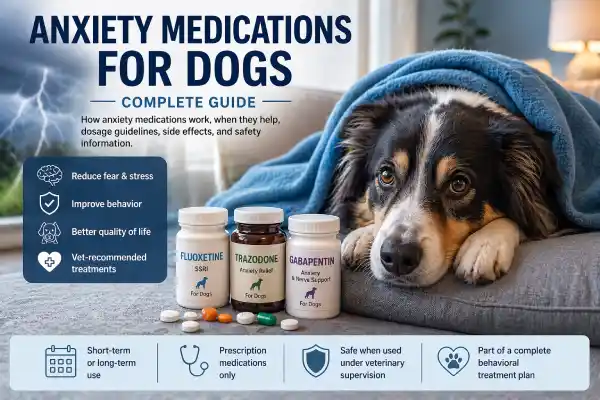
Anxiety medications for dogs are prescription or supportive treatments used to reduce stress, fear, and behavioral issues in dogs caused by separation anxiety, noise phobia, or chronic stress.
Quick Answer
Anxiety medications for dogs help manage fear, stress, and behavioral disorders by affecting brain neurotransmitters like serotonin and GABA. Common options include fluoxetine, trazodone, gabapentin, and alprazolam, and they are often combined with behavioral training for best results.
Introduction
Anxiety in dogs is one of the most underestimated conditions in veterinary medicine — yet it directly impacts quality of life, behavior, and even physical health.
Dogs can suffer from:
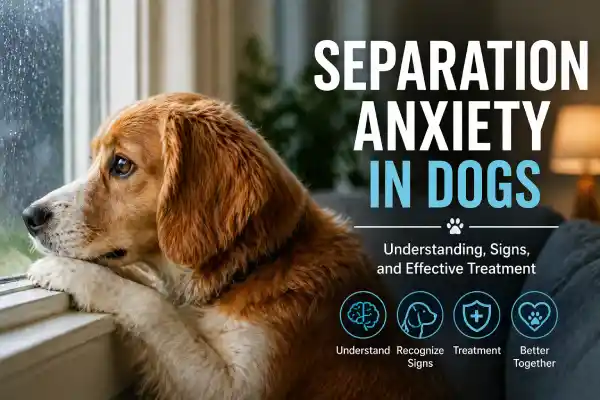
- Separation anxiety
- Noise phobia (fireworks, storms)
- Travel anxiety
- Generalized anxiety
Left untreated, anxiety can lead to:
- Destructive behavior
- Aggression
- Self-harm
- Chronic stress-related illness
That’s why understanding anxiety medications for dogs is critical — not just for treatment, but for prevention and long-term management.
- Seizure Medications for Dogs (Gabapentin overlap)
- Pain Medications for Dogs (Tramadol, Gabapentin cross-use)
Anxiety Medications for Dogs
What Are Anxiety Medications for Dogs?
Anxiety medications are drugs that:
- Calm the nervous system
- Reduce fear responses
- Stabilize mood
- Improve behavioral control
They work on neurotransmitters like:
- Serotonin
- Dopamine
- GABA
Core Overview
| Feature | Value |
|---|---|
| Purpose | Reduce anxiety & stress |
| Common Uses | Separation anxiety, noise phobia |
| Onset | Fast (minutes) to slow (weeks) |
| Types | SSRIs, sedatives, benzodiazepines |
| Prescription Required | Usually YES |
| Long-Term Use | Some medications only |
Types of Anxiety Medications for Dogs
1. SSRIs (Selective Serotonin Reuptake Inhibitors)
👉 Long-term control
Examples:
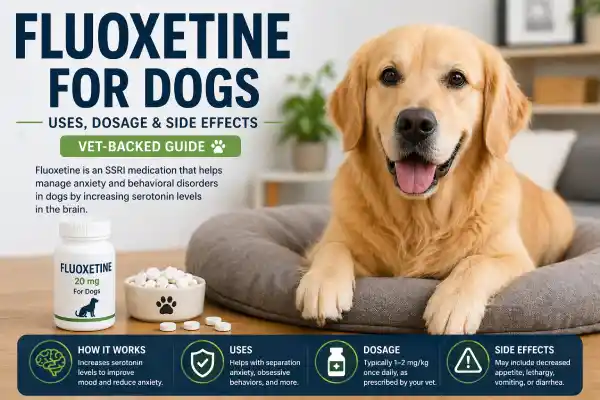
- Fluoxetine
- Sertraline
✔ Best for:
- Chronic anxiety
- Separation anxiety
2. Sedatives / Short-Term Calming Drugs
Examples:
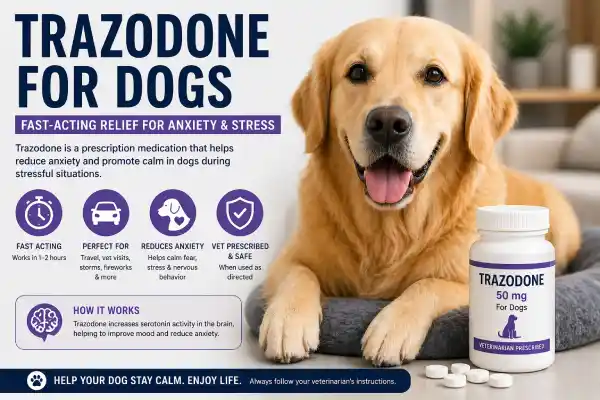
- Trazodone
- Gabapentin
✔ Best for:
- Vet visits
- Travel
- Fireworks
3. Benzodiazepines
Examples:
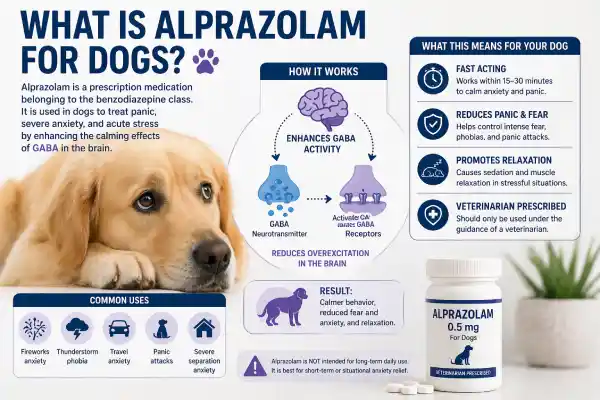
- Alprazolam
- Diazepam
✔ Best for:
- Acute panic
- Thunderstorms
⚠ Risk: dependence + sedation
4. Atypical Medications
Examples:
- Clomipramine
- Buspirone
✔ Used in complex behavioral cases
Dosage Guidelines
⚠ IMPORTANT: Dosage varies by:
- Weight
- Condition
- Drug type
- Vet prescription
Common Anxiety Medications Comparison
| Medication | Type | Use Case | Onset | Common Side Effects |
|---|---|---|---|---|
| Fluoxetine | SSRI | Chronic anxiety | 2–4 weeks | Appetite loss |
| Trazodone | Sedative | Short-term stress | 1–2 hours | Sedation |
| Gabapentin | Neuromodulator | Anxiety + pain | 1–2 hours | Drowsiness |
| Alprazolam | Benzodiazepine | Panic attacks | 30–60 min | Weakness |
| Clomipramine | TCA | Behavioral disorders | 2–4 weeks | Dry mouth |
How These Medications Work
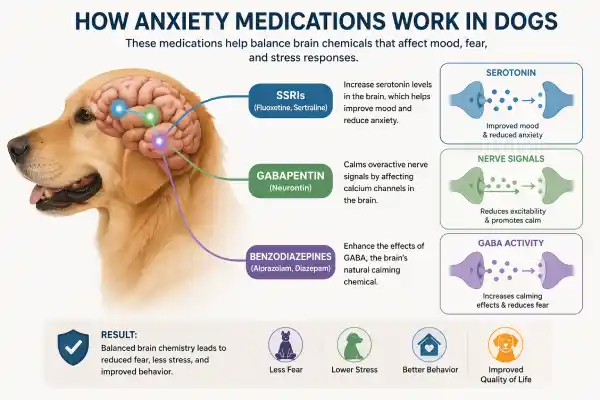
Different drugs target different pathways:
- SSRIs → increase serotonin → mood stabilization
- Gabapentin → calms nerve signals
- Benzodiazepines → enhance GABA → sedation
👉 Result:
- Reduced fear response
- Improved coping behavior
- Lower stress hormones
Effectiveness
✔ Most effective when combined with:
- Behavioral training
- Environmental control
- Routine stability
✔ Success rate:
- Mild anxiety → 70–80% improvement
- Severe cases → require combination therapy
Side Effects of Anxiety Medications
Common side effects:
- Sedation
- Appetite changes
- Vomiting
- Diarrhea
More serious:
- Behavioral changes
- Weakness
- Paradoxical excitement
- Can Gabapentin Cause Vomiting in Dogs?
- Trazodone Side Effects in Dogs
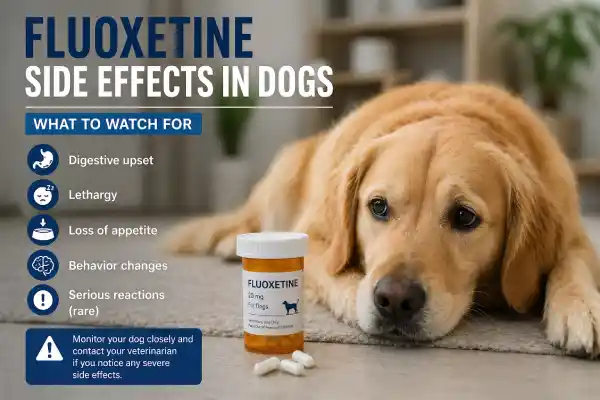
- Fluoxetine Side Effects
When to Contact Your Veterinarian
Contact your vet immediately if you notice:
- Severe lethargy
- Collapse
- Uncontrolled aggression
- Vomiting + diarrhea
- Seizures
- No improvement after weeks
Common Mistakes Owners Make
❌ Using human medications
❌ Wrong dosage
❌ Stopping meds suddenly
❌ Expecting instant results from SSRIs
❌ Ignoring behavioral therapy
Pro Tips
✔ Combine medication + training
✔ Track behavior changes daily
✔ Use calming routines
✔ Start with lowest effective dose
FAQ Section – Anxiety Medications for Dogs
What is the best anxiety medication for dogs?
The best anxiety medication depends on the condition. Fluoxetine is best for long-term anxiety, while trazodone works well for short-term stress.
Can dogs take anxiety medication daily?
Yes, some medications like SSRIs are designed for daily use under veterinary supervision.
Is gabapentin used for anxiety in dogs?
Yes, gabapentin is commonly used for anxiety, especially in stressful situations like vet visits or travel.
How fast do anxiety medications work?
Some work within hours (trazodone), while others take weeks (fluoxetine).
Are anxiety medications safe for dogs?
When prescribed correctly, most anxiety medications are safe, but monitoring is essential.
Conclusion
Anxiety medications for dogs are powerful tools that can dramatically improve a dog’s quality of life when used correctly. The key is choosing the right medication based on the type of anxiety and combining it with behavioral support.
👉 Your decision:
- Mild anxiety → short-term meds
- Chronic anxiety → SSRIs
- Severe cases → combination therapy
Medical Disclaimer
This article is for informational purposes only and does not replace professional veterinary advice. Always consult a licensed veterinarian before starting, stopping, or adjusting any medication for your dog.