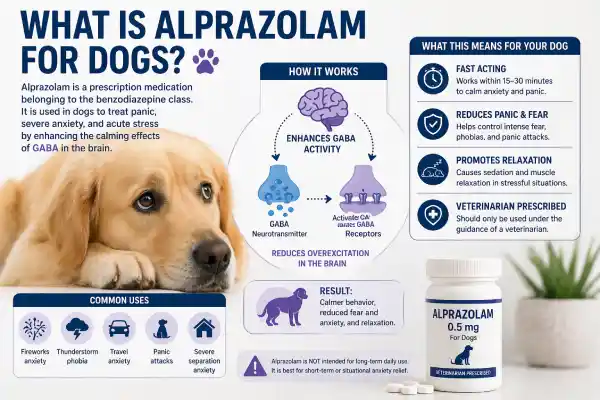

Fluoxetine for dogs is a prescription medication used to treat anxiety, behavioral disorders, and stress-related conditions by increasing serotonin levels in the brain.
Quick Answer
Fluoxetine for dogs is commonly prescribed for separation anxiety and behavioral issues. It works by increasing serotonin levels and typically takes 2–4 weeks to show full effects. It is safe when used under veterinary supervision but may cause side effects like decreased appetite or lethargy.
Introduction
Anxiety in dogs is more common than most owners realize — and when it becomes chronic, it can seriously affect your dog’s behavior, health, and overall quality of life.
One of the most widely prescribed medications for long-term anxiety management is fluoxetine, a member of the SSRI (Selective Serotonin Reuptake Inhibitor) class.
Fluoxetine is especially effective for:
- Separation anxiety
- Compulsive behaviors
- Fear-based aggression
- Chronic stress
👉 Start here for the full overview:
➡️ Anxiety Medications for Dogs: Complete Guide (Uses, Dosage, Side Effects & Safety)
Unlike fast-acting medications, fluoxetine is designed for long-term emotional stability, not immediate calming.
What Is Fluoxetine for Dogs?
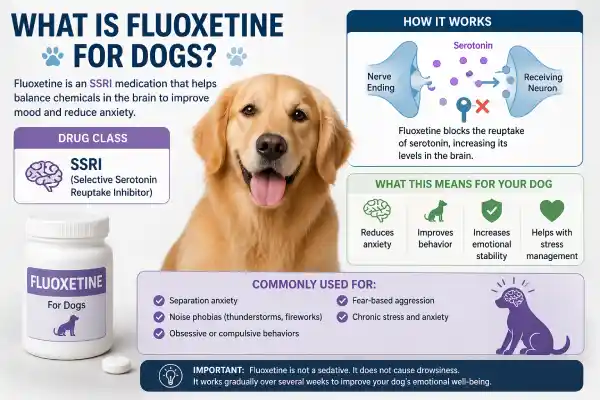
Drug Class and Mechanism
Fluoxetine belongs to the SSRI class of medications.
It works by:
- Blocking serotonin reuptake
- Increasing serotonin levels
- Stabilizing mood and behavior
What This Means for Your Dog
- Reduced anxiety
- Improved behavior
- Better stress tolerance
Fluoxetine Overview
| Feature | Value |
|---|---|
| Drug Class | SSRI |
| Primary Use | Anxiety & behavior disorders |
| Onset Time | 2–4 weeks |
| Duration | Long-term |
| Prescription Required | Yes |
| Sedation Level | Low |
Uses of Fluoxetine in Dogs
Primary Uses
- Separation anxiety
- Noise phobia (storms, fireworks)
- Obsessive behaviors (licking, chewing)
- Fear-based aggression
- Generalized anxiety
Important Note
Fluoxetine is not used for immediate calming — it is intended for long-term treatment.
Dosage of Fluoxetine for Dogs
Typical Dosage
1–2 mg/kg once daily
Factors That Affect Dosage
- Dog weight
- Severity of anxiety
- Individual response
- Veterinary guidance
Dosage Chart
| Dog Weight | Low Dose | Typical Dose | Max Dose |
|---|---|---|---|
| 5 kg | 5 mg | 5–10 mg | 10 mg |
| 10 kg | 10 mg | 10–20 mg | 20 mg |
| 20 kg | 20 mg | 20–40 mg | 40 mg |
| 30 kg | 30 mg | 30–60 mg | 60 mg |
How Fluoxetine Works
Brain Chemistry Effects
Fluoxetine increases serotonin levels, which helps regulate:
- Mood
- Emotional response
- Stress levels
Behavioral Impact
Over time, dogs become:
- Less reactive
- More stable emotionally
- Better able to handle stress
Effectiveness
Timeline
- Week 1–2 → little to no change
- Week 3–4 → noticeable improvement
- Week 6+ → full effect
Best Results When Combined With
- Behavioral training
- Routine structure
- Environmental management
Side Effects of Fluoxetine in Dogs
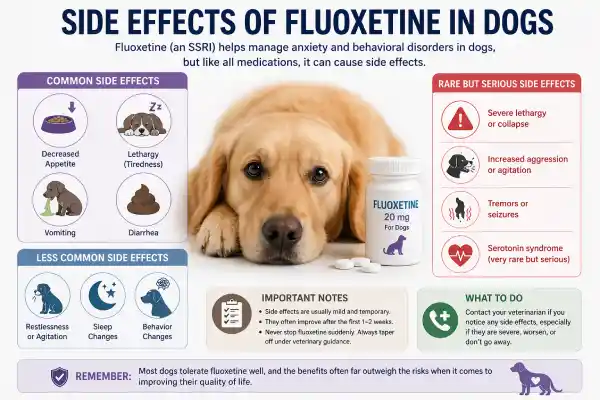
Common Side Effects
- Decreased appetite
- Lethargy
- Vomiting
- Diarrhea
Less Common
- Restlessness
- Sleep changes
- Mild agitation
Serious Side Effects
- Severe lethargy
- Aggression
- Tremors
- Seizures
When to Contact Your Veterinarian
- Refusal to eat for more than 48 hours
- Severe lethargy
- Persistent vomiting or diarrhea
- Behavioral worsening
- Tremors or seizures
Comparison with Other Anxiety Medications
| Medication | Type | Onset | Best Use | Sedation |
|---|---|---|---|---|
| Fluoxetine | SSRI | 2–4 weeks | Chronic anxiety | Low |
| Trazodone | Sedative | 1–2 hours | Short-term stress | Moderate |
| Gabapentin | Neuromodulator | 1–2 hours | Anxiety + pain | Moderate |
| Alprazolam | Benzodiazepine | 30–60 min | Panic attacks | High |
Common Mistakes Owners Make
- Expecting immediate results
- Stopping medication too early
- Skipping doses
- Not combining with training
- Self-medicating without vet advice
Pro Tips
- Give at the same time daily
- Be consistent
- Monitor behavior weekly
- Combine with training
- Be patient
FAQ – Fluoxetine for Dogs
How long does fluoxetine take to work in dogs?
Fluoxetine usually takes 2–4 weeks to start working, with full effects after 6–8 weeks.
Can dogs take fluoxetine long-term?
Yes, it is designed for long-term use under veterinary supervision.
Does fluoxetine make dogs sleepy?
No, it is not a sedative, but mild lethargy can occur initially.
Can I stop fluoxetine suddenly?
No, it should be gradually tapered.
Is fluoxetine safe for dogs?
Yes, when prescribed and monitored by a veterinarian.
Conclusion
Fluoxetine for dogs is one of the most effective long-term treatments for anxiety and behavioral disorders. While it requires patience, it provides stable and lasting improvement when used correctly.
Medical Disclaimer
This article is for informational purposes only and does not replace professional veterinary advice. Always consult a licensed veterinarian before starting, stopping, or adjusting any medication for your dog.