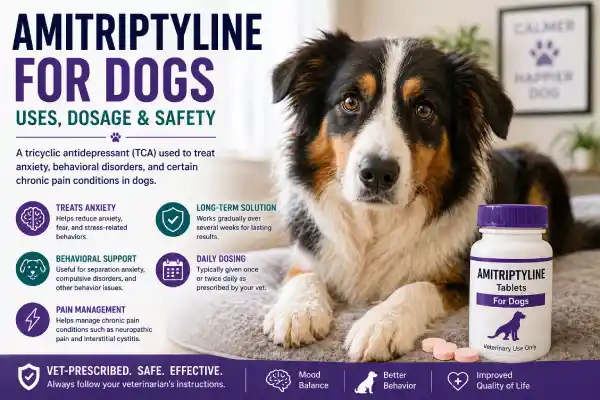
Amitriptyline for dogs is a tricyclic antidepressant (TCA) used to treat anxiety, behavioral disorders, and certain chronic pain conditions.
Quick Answer
Amitriptyline for dogs is used for long-term management of anxiety and behavioral issues. It works by increasing serotonin and norepinephrine levels and is typically given daily, with effects developing over several weeks.
Amitriptyline for Dogs (Quick Overview)
Amitriptyline is:
- A tricyclic antidepressant (TCA)
- Used for anxiety + chronic pain conditions
- Taken once or twice daily
- Moderate sedation compared to SSRIs
Introduction
Not all anxiety medications for dogs are the same.
While SSRIs like:
👉 Sertraline for Dogs: Uses, Dosage & Safety
👉 Fluoxetine for Dogs: Uses, Dosage & Side Effects
focus mainly on serotonin, amitriptyline works on multiple neurotransmitters.
👉 Start here:
➡️ Anxiety Medications for Dogs: Complete Guide (Uses, Dosage, Side Effects & Safety)
👉 Compare alternatives:
➡️ Paroxetine for Dogs: Uses & Anxiety Treatment
➡️ Buspirone for Dogs: Anxiety Treatment Explained
This makes it useful for more complex cases.
Amitriptyline for Dogs
What Is Amitriptyline for Dogs?
Amitriptyline is a tricyclic antidepressant (TCA) that:
- Increases serotonin and norepinephrine
- Reduces anxiety signals
- Helps regulate mood and behavior
It is also used for certain pain-related conditions.
Uses of Amitriptyline in Dogs
Anxiety Disorders
- Chronic anxiety
- General nervous behavior
Separation Anxiety
- Destructive behavior
- Excessive vocalization
Compulsive Disorders
- Excessive licking
- Tail chasing
Chronic Pain Conditions
- Neuropathic pain
- Interstitial cystitis
👉 Compare with pain meds:
➡️ Gabapentin for Dogs: Uses, Dosage & Safety
How Amitriptyline Works
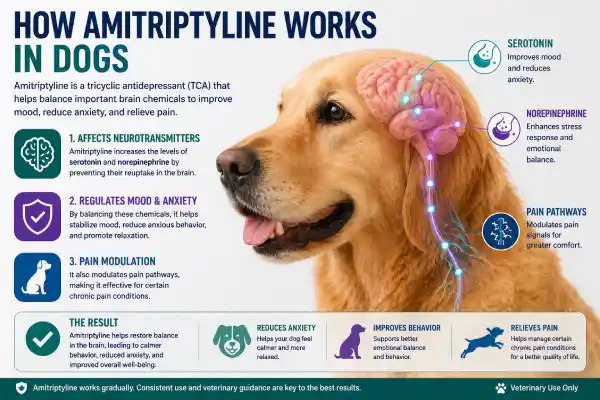
Amitriptyline affects multiple neurotransmitters:
- Serotonin → mood stabilization
- Norepinephrine → stress response regulation
👉 Result:
- Reduced anxiety
- Improved emotional stability
- Pain modulation
Effectiveness of Amitriptyline
| Feature | Rating |
|---|---|
| Speed | Slow |
| Sedation | Moderate |
| Best Use | Anxiety + pain |
| Panic control | Poor |
Amitriptyline Dosage for Dogs
Amitriptyline dosage for dogs typically ranges:
👉 1–4 mg/kg per day
- Divided into 1–2 doses
- Adjusted based on response
Amitriptyline Dosage Chart for Dogs
| Dog Weight | Low Dose | Typical Dose | Max Dose |
|---|---|---|---|
| 5 kg | 5 mg | 5–10 mg | 20 mg |
| 10 kg | 10 mg | 10–20 mg | 40 mg |
| 20 kg | 20 mg | 20–40 mg | 80 mg |
| 30 kg | 30 mg | 30–60 mg | 120 mg |
| 40 kg | 40 mg | 40–80 mg | 160 mg |
⚠️ Always follow veterinary guidance.
How Long Does Amitriptyline Take to Work?
Timeline
- Week 1–2 → mild sedation
- Week 2–4 → behavioral improvement
- Week 4–6 → full effect
👉 Need faster relief?
➡️ Trazodone for Dogs: Uses, Dosage & Safety
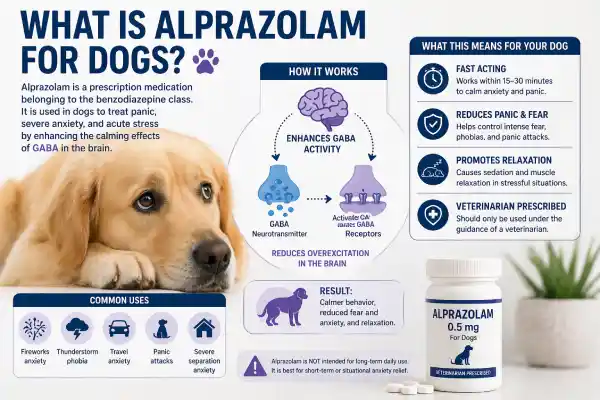
➡️ Alprazolam Dosage for Dogs
Amitriptyline vs Other Anxiety Medications
| Medication | Type | Sedation | Best Use |
|---|---|---|---|
| Amitriptyline | TCA | Moderate | Anxiety + pain |
| Sertraline | SSRI | Low | Chronic anxiety |
| Fluoxetine | SSRI | Low | Chronic anxiety |
| Buspirone | Anxiolytic | Low | Mild anxiety |
| Alprazolam | Benzodiazepine | High | Panic |
Side Effects of Amitriptyline in Dogs
Common:
- Sedation
- Dry mouth
- Constipation
- Increased appetite
Less common:
- Urinary retention
- Behavioral changes
Serious (rare):
- Cardiac effects
- Severe lethargy
When to Contact Your Veterinarian
- Excessive sedation
- No improvement after 6 weeks
- Behavioral worsening
- Signs of overdose
Common Mistakes Owners Make
- Expecting fast results
- Using incorrect dosing
- Stopping medication early
- Ignoring side effects
- Not combining with training
Pro Tips
- Give consistently
- Monitor sedation levels
- Combine with behavior therapy
- Track weekly changes
- Follow vet guidance
Related Guides
- Anxiety Medications for Dogs: Complete Guide
- Sertraline for Dogs
- Fluoxetine for Dogs
- Paroxetine for Dogs
- Buspirone for Dogs
- Gabapentin for Dogs
FAQ
Is amitriptyline safe for dogs?
Yes, when used under veterinary supervision.
Does amitriptyline cause sedation?
Yes, moderate sedation is common.
How long does it take to work?
Usually 2–4 weeks.
Can it treat pain?
Yes, especially neuropathic pain.
Is it better than SSRIs?
Depends on the condition.
Conclusion
Amitriptyline is a versatile medication used for both anxiety and chronic pain in dogs, making it valuable in complex cases.
👉 The key:
✔ Proper dosing
✔ Monitoring
✔ Patience
Medical Disclaimer
This article is for informational purposes only and does not replace professional veterinary advice.