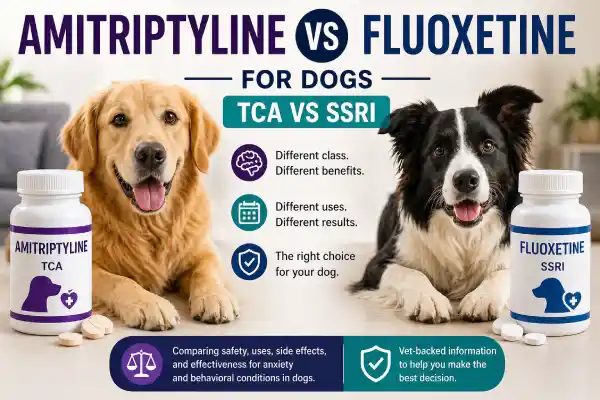
When treating anxiety and behavioral issues in dogs, veterinarians often choose between two major classes:
👉 Tricyclic antidepressants (TCAs) like Amitriptyline
👉 SSRIs like fluoxetine
But which one is better?
Quick Answer
- First-line treatment: Fluoxetine
- Alternative option: Amitriptyline
- Best for chronic anxiety: Fluoxetine
- Best for mixed pain + anxiety: Amitriptyline
👉 Fluoxetine is usually the preferred long-term anxiety medication
👉 Amitriptyline is useful in complex cases (pain + behavior)
Overview: Amitriptyline vs Fluoxetine
| Feature | Amitriptyline | Fluoxetine |
|---|---|---|
| Class | TCA | SSRI |
| Use in dogs | Moderate | High |
| Onset | 2–4 weeks | 3–6 weeks |
| Sedation | Moderate | Low |
| Best use | Pain + anxiety | Anxiety disorders |
| First-line | No | Yes |
Amitriptyline vs Fluoxetine for Dogs
What Is Amitriptyline for Dogs?
Amitriptyline is used for:
- Anxiety
- Chronic pain
- Behavioral issues
- Compulsive disorders
👉 It affects serotonin + norepinephrine + other pathways
Read:
➡️ Amitriptyline for Dogs: Uses, Dosage & Safety (Vet-Backed Guide)
➡️ Amitriptyline Dosage for Dogs: Weight Chart & Safety Guide (Vet-Backed)
➡️ Amitriptyline Side Effects in Dogs: What to Watch For (Vet-Backed Guide)
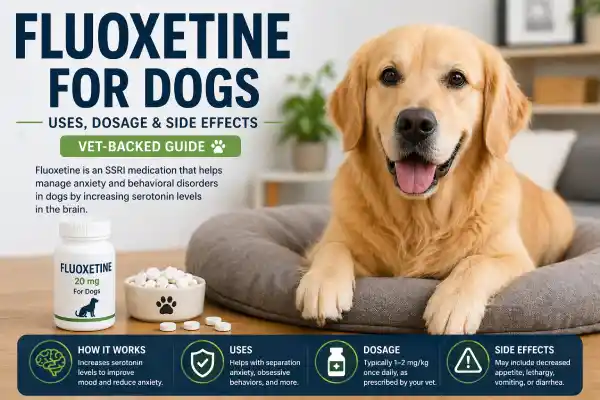
What Is Fluoxetine for Dogs?
Fluoxetine is the most widely used SSRI for:
- Separation anxiety
- Chronic anxiety
- Behavioral problems
👉 It specifically targets serotonin → cleaner, more predictable
Read:
➡️ Fluoxetine for Dogs: Uses, Dosage & Side Effects (Vet-Backed Guide)
➡️ Fluoxetine Dosage for Dogs: Weight Chart & Safety Guide (Vet-Backed)
➡️ Fluoxetine Side Effects in Dogs: What to Watch For (Vet-Backed Guide)
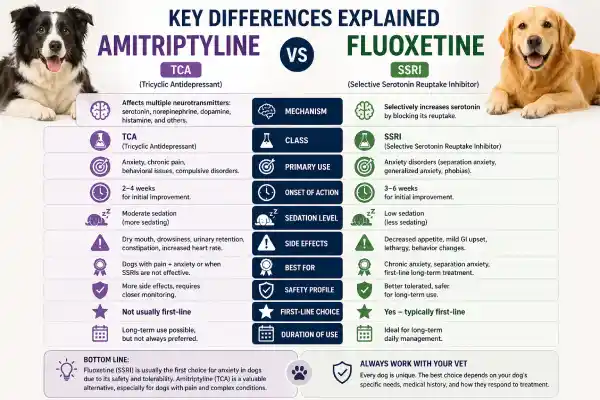
Key Differences Explained
1) Mechanism
👉 Amitriptyline:
- Affects multiple neurotransmitters
- Broader but less targeted
👉 Fluoxetine:
- Selective serotonin effect
- Cleaner and more predictable
✔ Winner: Fluoxetine
2) Safety Profile
👉 Fluoxetine:
- Better tolerated
- Fewer systemic effects
👉 Amitriptyline:
- More side effects
- Stronger sedation
✔ Winner: Fluoxetine
3) Use Case
| Condition | Best Option |
|---|---|
| Separation anxiety | Fluoxetine |
| Chronic anxiety | Fluoxetine |
| Pain + anxiety | Amitriptyline |
| Behavioral complexity | Amitriptyline |
Which Is Better for Long-Term Anxiety?
🥇 Winner: Fluoxetine
✔ Most studied
✔ First-line therapy
✔ Best long-term results
👉 Deep comparison:
➡️ Sertraline vs Fluoxetine for Dogs: Which Is Better Long-Term?
When Amitriptyline Can Be Better
Amitriptyline may be preferred when:
- Dog has chronic pain
- Anxiety is combined with physical discomfort
- SSRIs are not effective
- Sedation is beneficial
How Long Do They Take to Work?
| Medication | Onset |
|---|---|
| Amitriptyline | 2–4 weeks |
| Fluoxetine | 3–6 weeks |
👉 Full effect: 6–8 weeks
Real-Life Treatment Strategy
Typical veterinary approach:
- Start with fluoxetine
- Add situational meds if needed
- Switch or add amitriptyline if complex case
Combination example:
- Daily → Fluoxetine
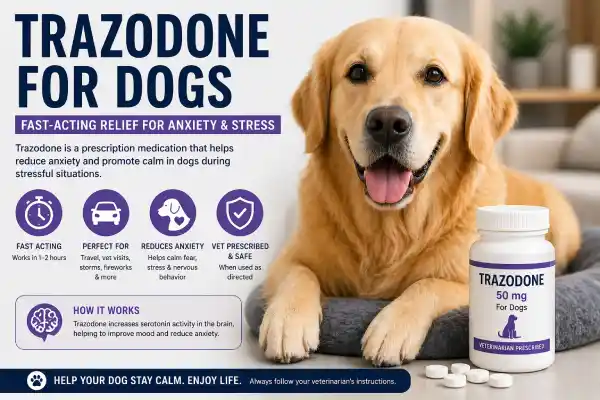
- Events → Trazodone
- Pain + anxiety → Amitriptyline
See:
➡️ Hydroxyzine vs Trazodone for Dogs: Mild vs Strong Anxiety Relief
Full guide:
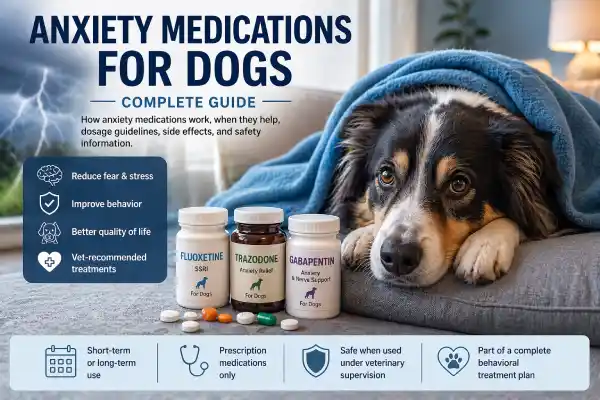
➡️ Anxiety Medications for Dogs: Complete Guide (Uses, Dosage, Side Effects & Safety)
Side Effects Comparison
Amitriptyline
- Sedation
- Dry mouth
- Urinary retention
- GI upset
Fluoxetine
- Appetite loss
- Mild GI upset
- Behavior changes
✔ Safer overall: Fluoxetine
Decision Tree
👉 Use this:
- Need first-line anxiety → Fluoxetine
- Need pain + anxiety → Amitriptyline
- Dog sensitive → Fluoxetine
- SSRI failed → Amitriptyline
How Vets Choose Between Them
Factors:
- Severity of anxiety
- Presence of pain
- Previous medication response
- Side effect tolerance
Typical flow:
- Fluoxetine
- Sertraline
- Amitriptyline
See:
➡️ Paroxetine vs Sertraline for Dogs: Key Differences Explained
Common Mistakes Owners Make
- Choosing TCA first-line
- Expecting fast results
- Ignoring side effects
- Not combining with training
Pro Tips
- Start low, go slow
- Monitor behavior
- Combine with training
- Track appetite and energy
Switching Between TCA and SSRI in Dogs
Switching between medications like Amitriptyline and Fluoxetine is possible, but requires careful planning.
Veterinarians may:
- Gradually taper one medication
- Introduce the new one slowly
- Monitor for serotonin-related effects
👉 Direct switching without guidance can increase risk of side effects.
Related Guides
➡️ Amitriptyline for Dogs
➡️ Fluoxetine for Dogs
➡️ Best Anxiety Medication for Dogs: Comparison Guide
➡️ Anxiety Medications for Dogs: Complete Guide
FAQ – Amitriptyline vs Fluoxetine for Dogs
Which is better: amitriptyline or fluoxetine?
Fluoxetine is usually preferred for anxiety.
When is amitriptyline used?
When pain + anxiety coexist.
Are TCAs safe for dogs?
Yes, but they have more side effects than SSRIs.
Can they be combined?
Sometimes, but only under vet supervision.
Conclusion
When comparing amitriptyline vs fluoxetine for dogs:
👉 Fluoxetine = first-line anxiety treatment
👉 Amitriptyline = specialized alternative (pain + behavior)
✔ The best option depends on your dog’s condition.
Medical Disclaimer
This content is provided for informational and educational purposes only and should not be considered veterinary medical advice.
While the information is based on current veterinary knowledge and clinical practices, it is not intended to replace consultation with a qualified veterinarian. Individual dogs may respond differently to medications, and treatment decisions must always be tailored to the specific patient.
👉 Always consult a licensed veterinarian before administering, changing, or discontinuing any medication.
In case of emergency, severe side effects, or sudden behavioral changes, seek immediate veterinary assistance.
By using this website, you acknowledge that you are responsible for your own decisions regarding your pet’s health. Amitriptyline vs Fluoxetine for Dogs