Doxycycline vs Amoxicillin for dogs is a critical comparison because these two antibiotics are used for completely different types of infections.
Choosing the wrong one can:
❌ Delay recovery
❌ Worsen infection
❌ Increase resistance risk
👉 These are NOT interchangeable antibiotics.
Quick Answer
Doxycycline is best for:
✔ Tick-borne diseases
✔ Respiratory infections
✔ Intracellular bacteria
Amoxicillin is best for:
✔ Mild bacterial infections
✔ UTIs
✔ Dental infections
✔ Soft tissue infections
👉 Doxycycline is stronger for specific infections (like Lyme disease)
👉 Amoxicillin is a gentler first-line antibiotic
Start here:
➡️ Antibiotics for Dogs: Uses, Types, Dosage, Side Effects & Safety Guide
Doxycycline vs Amoxicillin for Dogs
Doxycycline vs Amoxicillin for Dogs
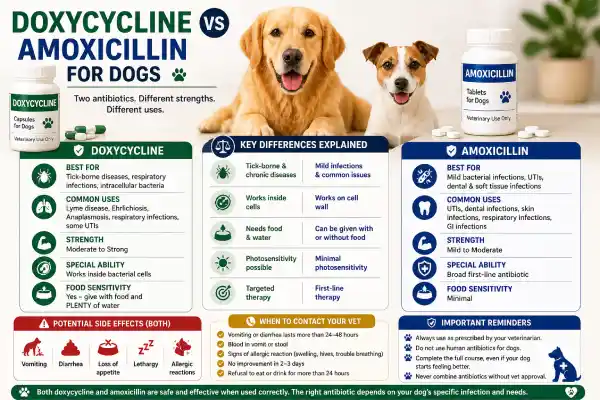
Quick Comparison Table
| Feature | Doxycycline | Amoxicillin |
|---|---|---|
| Drug class | Tetracycline | Penicillin |
| Best use | Tick-borne, respiratory | Mild infections, UTIs |
| Strength | Moderate–Strong | Mild–Moderate |
| Special ability | Works inside cells | Broad first-line antibiotic |
| Common side effects | GI upset, vomiting | GI upset, diarrhea |
| Food sensitivity | Yes | Minimal |
| Best role | Targeted therapy | First-line therapy |
What Is Doxycycline for Dogs?
Doxycycline for dogs is a tetracycline antibiotic that works inside bacterial cells, making it highly effective against infections that other antibiotics may not treat well.
Common Uses of Doxycycline
✔ Lyme disease
✔ Ehrlichiosis
✔ Anaplasmosis
✔ Respiratory infections
✔ Tick-borne diseases
✔ Some urinary infections
✔ Certain chronic infections
👉 This makes doxycycline one of the most important antibiotics for vector-borne diseases.
➡️ Internal links:
- Doxycycline for Dogs: Uses, Dosage, Side Effects & Safety
- Doxycycline Side Effects in Dogs: What to Watch For
- Doxycycline and Vomiting in Dogs: Causes & Treatment
- Best Antibiotics for Dogs: When to Use Each
What Is Amoxicillin for Dogs?
Amoxicillin for dogs is a penicillin-type antibiotic used as a first-line treatment for many common bacterial infections.
It is widely used because:
✔ It is well tolerated
✔ It is effective for many common infections
✔ It is often the first choice
Common Uses of Amoxicillin
✔ UTIs
✔ Respiratory infections
✔ Dental infections
✔ GI infections
✔ Soft tissue infections
➡️ Internal links:
- Amoxicillin for Dogs: Uses, Dosage & Side Effects
- Amoxicillin Side Effects in Dogs: What to Watch For
- Amoxicillin Diarrhea in Dogs? Causes, Treatment & When to Worry
- Antibiotic Diarrhea in Dogs: Causes, Treatment & Prevention
Key Differences Explained
1. Type of Infection
| Infection Type | Better Choice |
|---|---|
| Tick-borne disease | Doxycycline |
| Respiratory infection | Doxycycline |
| UTI | Amoxicillin |
| Dental infection | Amoxicillin |
| Mild infection | Amoxicillin |
| Chronic infection | Doxycycline |
| Unknown infection | Depends on vet |
👉 Doxycycline is specialized
👉 Amoxicillin is general-use
2. Mechanism of Action
- Doxycycline → Works inside cells → targets intracellular bacteria
- Amoxicillin → Breaks bacterial cell wall
👉 This is why doxycycline works for diseases like Lyme, but amoxicillin may not.
3. Strength & Coverage
- Doxycycline → More targeted but powerful for specific infections
- Amoxicillin → Broad but weaker against resistant bacteria
👉 Stronger ≠ better — correct match is everything
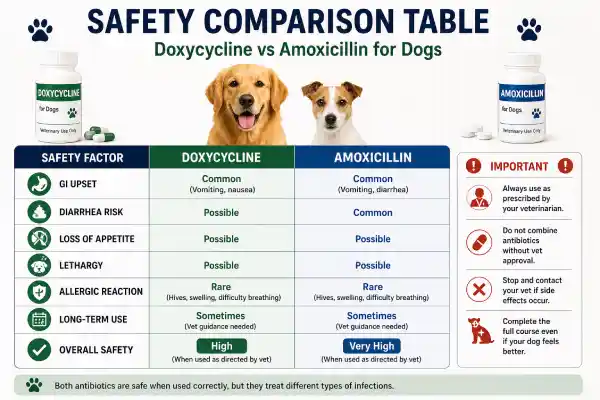
Safety Comparison Table
| Safety Factor | Doxycycline | Amoxicillin |
|---|---|---|
| GI upset | Common | Common |
| Vomiting | More likely | Possible |
| Diarrhea | Possible | Common |
| Appetite loss | Possible | Possible |
| Long-term use | Sometimes | Sometimes |
| Overall safety | High (vet-guided) | Very high |
Side Effects: Doxycycline vs Amoxicillin
Common Side Effects
✔ Vomiting
✔ Diarrhea
✔ Loss of appetite
✔ Lethargy
Doxycycline-Specific Risks
❌ Esophageal irritation (VERY important)
❌ Vomiting if given on empty stomach
❌ Sensitivity in some dogs
Amoxicillin-Specific Risks
❌ Diarrhea (more common)
❌ Allergic reactions (rare)
➡️ Internal links:
- Doxycycline Side Effects in Dogs
- Amoxicillin Side Effects in Dogs
- Antibiotic Diarrhea in Dogs
- Probiotics for Dogs: Do They Help with Antibiotic Side Effects?
Which Works Faster?
Neither antibiotic is “faster” by default.
👉 Speed depends on:
✔ Correct diagnosis
✔ Bacteria type
✔ Infection severity
✔ Dog’s immune system
Signs it’s working
✔ Improved energy
✔ Reduced symptoms
✔ Better appetite
✔ Less inflammation
Signs it’s NOT working
❌ No improvement after 48–72 hours
❌ Symptoms worsening
❌ New symptoms appear
➡️ Internal link:
When Does a Dog Need Antibiotics?
Decision Tree: Which Should You Choose?
Tick bite or tick disease symptoms
👉 Doxycycline
Respiratory infection
👉 Often doxycycline
UTI
👉 Often amoxicillin
Dental infection
👉 Amoxicillin
Mild infection
👉 Amoxicillin
Chronic or unclear infection
👉 Vet testing needed
Advanced Antibiotic Strategy
Step 1 – Identify Infection Type
👉 Not all infections are bacterial.
Some are:
- Viral
- Fungal
- Allergic
- Inflammatory
Step 2 – Choose Targeted Antibiotic
- Doxycycline → targeted infections
- Amoxicillin → general infections
Step 3 – Monitor Closely
Watch:
✔ Appetite
✔ Stool
✔ Energy
✔ Vomiting
✔ Pain
Step 4 – Complete Full Course
Stopping early → resistance risk
Step 5 – Use Culture When Needed
Especially for:
✔ Chronic infections
✔ Recurrent UTIs
✔ Failed treatment
Common Mistakes
❌ Using wrong antibiotic
❌ Stopping early
❌ Mixing antibiotics
❌ Ignoring side effects
❌ Using human meds
Which Is Safer?
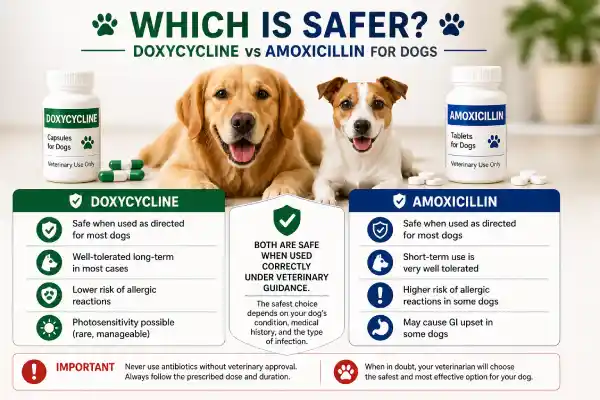
Amoxicillin
✔ Gentler
✔ Better tolerated
✔ First-line option
Doxycycline
✔ Safe when used correctly
✔ More targeted
✔ Requires careful administration
👉 Amoxicillin is generally safer for everyday use
👉 Doxycycline is safer for the RIGHT infection
FAQ
Is doxycycline stronger than amoxicillin?
Yes, but only for specific infections like tick-borne diseases.
Can I give doxycycline instead of amoxicillin?
No — they treat different infections.
Which is better for Lyme disease?
Doxycycline is the standard treatment.
Which is better for UTIs?
Amoxicillin is often used, but depends on bacteria.
Can dogs take both together?
Usually no, unless prescribed by a vet.
Conclusion
✔ Doxycycline = best for tick-borne & respiratory infections
✔ Amoxicillin = best for mild common infections
✔ Both are effective — but only when used correctly
👉 The best antibiotic is the one that matches the infection.
Medical Disclaimer
This content is for informational purposes only and does not replace professional veterinary advice. Always consult a licensed veterinarian before giving your dog antibiotics.