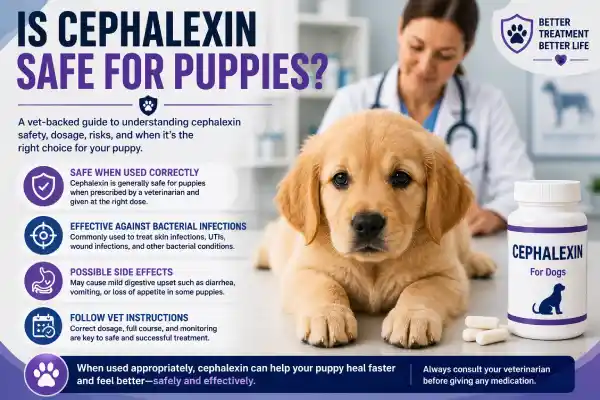
Is cephalexin safe for puppies? Yes—cephalexin is generally considered safe for puppies when prescribed by a veterinarian and used at the correct dose. However, because puppies have developing organs and sensitive digestive systems, careful dosing and monitoring are essential.
Quick Answer
Cephalexin is safe for puppies in most cases, but only when used under veterinary guidance. Incorrect dosing, unnecessary use, or underlying health issues can increase the risk of side effects.
Why This Question Matters More for Puppies
Puppies are not just “small dogs.”
Their bodies are still developing, which means medications affect them differently compared to adult dogs.
Their:
- liver is still maturing
- kidneys are not fully efficient
- immune system is developing
👉 This makes antibiotic safety significantly more important.
Is Cephalexin Safe for Puppies?
What Is Cephalexin and How Does It Work?
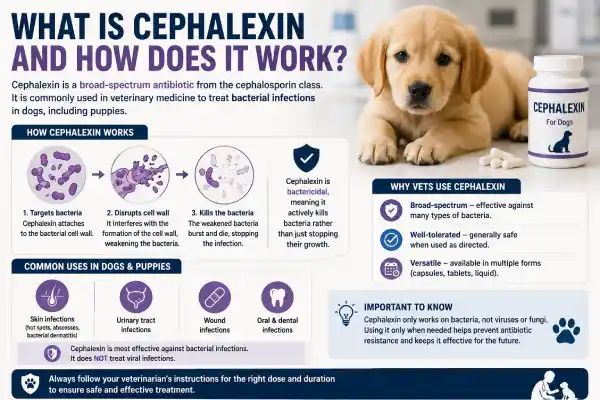
Cephalexin is a broad-spectrum antibiotic commonly used in veterinary medicine to treat bacterial infections. It belongs to the cephalosporin class and works by disrupting the bacterial cell wall, ultimately killing the bacteria.
Unlike some antibiotics that only stop bacterial growth, cephalexin is bactericidal, meaning it actively eliminates the infection rather than slowing it down.
Because of this, it is frequently prescribed for:
- skin infections
- urinary tract infections
- soft tissue infections
- wound infections
👉 You can see a broader comparison of antibiotic choices in
Best Antibiotics for Dogs: When to Use Each (Complete Guide)
Is Cephalexin Safe for Puppies?
In most cases, yes—but with important conditions.
Veterinarians consider cephalexin one of the safer first-line antibiotics for young dogs because:
- it has a well-established safety profile
- it is widely studied
- dosing can be adjusted precisely
However, “safe” does not mean risk-free.
The key factors that determine safety include:
- correct diagnosis
- accurate dosing
- proper duration of treatment
- monitoring for side effects
Why Puppies Are More Sensitive to Antibiotics
Puppies process medications differently.
Their bodies:
- absorb drugs faster or unpredictably
- may have immature detoxification systems
- are more prone to gastrointestinal upset
This means even a standard medication like cephalexin can:
- cause stronger side effects
- affect appetite more quickly
- lead to dehydration if vomiting occurs
👉 This is especially important when compared to adult dosing strategies discussed in
Cephalexin for Dogs: Uses, Dosage, Side Effects & Safety
When Do Vets Prescribe Cephalexin for Puppies?
Veterinarians don’t prescribe antibiotics lightly.
Cephalexin is typically used when there is a confirmed or strongly suspected bacterial infection.
Common Puppy Conditions Treated
| Condition | Why Cephalexin Is Used |
|---|---|
| Skin infections | highly effective against staph bacteria |
| Bite wounds | prevents infection spread |
| UTIs | targets common urinary pathogens |
| Abscesses | penetrates soft tissue well |
In puppies, skin infections are one of the most common reasons for prescribing cephalexin, especially when caused by bacterial overgrowth.
Proper Dosage in Puppies
Dosage is always calculated based on body weight.
However, puppies require even more careful calculation because:
- small errors = large impact
- growth changes weight quickly
- metabolism differs from adults
👉 Typical dosing ranges are similar to adult dogs but must always be adjusted by a vet.
Why You Should NEVER Guess the Dose
Incorrect dosing can lead to:
- treatment failure
- bacterial resistance
- toxicity
👉 This is why dosing must always follow veterinary guidance—not internet estimates.
Side Effects of Cephalexin in Puppies
Even though cephalexin is considered safe, side effects can still occur.
Most Common Side Effects
- mild diarrhea
- vomiting
- reduced appetite
These occur because antibiotics affect not only harmful bacteria but also beneficial gut bacteria.
👉 This is closely related to issues discussed in
Antibiotic Diarrhea in Dogs: Causes, Treatment & Prevention
Less Common but Serious Effects
- allergic reactions
- severe lethargy
- persistent vomiting
👉 These require immediate veterinary attention.
Why Digestive Issues Are More Common in Puppies

Puppies have:
- less stable gut microbiome
- higher sensitivity to antibiotics
- faster dehydration risk
This means even mild diarrhea can escalate quickly.
Antibiotics and the Puppy Gut
Antibiotics disrupt gut bacteria balance.
In puppies, this can lead to:
- diarrhea
- nutrient absorption issues
- slower recovery
👉 This is why many vets recommend probiotics alongside antibiotics, similar to approaches explained in
Probiotics for Dogs: Do They Help with Antibiotic Side Effects?
When Cephalexin Should NOT Be Used
Cephalexin is not always the right choice.
Situations to Avoid It
- viral infections (it won’t work)
- incorrect diagnosis
- known allergy to cephalosporins
👉 Misuse of antibiotics is one of the biggest problems in veterinary medicine today.
Antibiotic Resistance (CRITICAL TOPIC)
Using antibiotics incorrectly can lead to resistance.
This means:
- the drug stops working
- infections become harder to treat
- stronger antibiotics are needed
👉 This is why completing the full course is essential.
Common Mistakes Puppy Owners Make
1. Stopping Treatment Early
Dog improves → owner stops medication.
Result:
- infection returns
- stronger infection develops
2. Using Leftover Antibiotics
Dangerous and ineffective.
3. Ignoring Side Effects
Especially appetite loss or vomiting.
Real-World Example
A puppy with a mild skin infection:
- receives cephalexin
- improves in 3 days
Owner stops medication early.
Result:
- infection returns worse
- requires longer treatment
👉 This is extremely common.
How Fast Does Cephalexin Work in Puppies?
Most puppies show improvement within:
👉 24–72 hours
But full recovery can take:
👉 5–10 days or more
👉 Similar timelines are seen with other antibiotics like Doxycycline in dogs, especially for systemic infections.
Vet Perspective: Why Cephalexin Is Still Widely Used
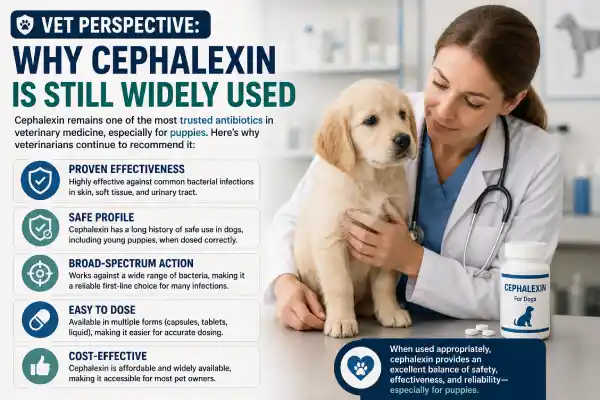
Veterinarians prefer cephalexin because:
- predictable results
- relatively low risk
- effective for common infections
However, it is not always the best choice.
👉 In some cases, alternatives like Amoxicillin may be preferred depending on the infection.
Signs the Medication Is Working
- improved energy
- reduced inflammation
- better appetite
- healing of affected area
Signs Something Is Wrong
- no improvement after 3–5 days
- worsening symptoms
- severe digestive issues
👉 These require veterinary reassessment.
FAQ – Is Cephalexin Safe for Puppies?
Is cephalexin safe for puppies?
Yes, cephalexin is generally safe for puppies when prescribed by a veterinarian. It is commonly used to treat bacterial infections and has a well-established safety profile when given at the correct dose.
What age can puppies take cephalexin?
Puppies can take cephalexin at a young age if needed, but the exact timing depends on the puppy’s health, weight, and condition. A veterinarian must determine if it is appropriate.
What is the correct cephalexin dosage for puppies?
Cephalexin dosage for puppies is based on body weight and must be calculated by a veterinarian. Giving the wrong dose can lead to treatment failure or side effects.
How fast does cephalexin work in puppies?
Most puppies start showing improvement within 24 to 72 hours, but full recovery may take several days depending on the infection.
Can cephalexin cause side effects in puppies?
Yes, the most common side effects include diarrhea, vomiting, and reduced appetite. These are usually mild, but severe symptoms require veterinary attention.
Should I stop cephalexin if my puppy feels better?
If vomiting happens once, monitor your puppy. If it continues or becomes severe, contact your veterinarian, as the medication or dose may need adjustment.
Can cephalexin be used for all infections in puppies?
No. Cephalexin only works against bacterial infections. It will not treat viral infections or parasites, so proper diagnosis is essential.
What should I do if my puppy vomits after taking cephalexin?
If vomiting happens once, monitor your puppy. If it continues or becomes severe, contact your veterinarian, as the medication or dose may need adjustment.
Is cephalexin better than other antibiotics for puppies?
Cephalexin is often a first-line antibiotic for skin and soft tissue infections, but the best antibiotic depends on the specific condition. Your vet will choose the most appropriate one.
Can I give my puppy leftover cephalexin?
No. Never give leftover antibiotics. The dose, duration, and need for treatment must be determined by a veterinarian.
Conclusion
Cephalexin is generally safe for puppies when used correctly, but it must always be prescribed and monitored by a veterinarian. Puppies are more sensitive than adult dogs, which means dosing accuracy, monitoring, and proper treatment duration are critical.
Used properly, cephalexin can effectively treat infections and support your puppy’s recovery. Used incorrectly, it can lead to complications that are far more difficult to manage.
Medical Disclaimer
This article is for educational purposes only and does not replace professional veterinary advice.
Sources
- Plumb’s Veterinary Drug Handbook
- VCA Animal Hospitals
- Veterinary Information Network (VIN)