Quick Answer
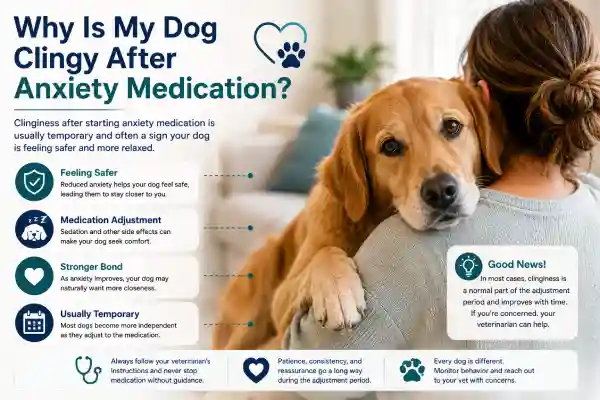
Why Is My Dog Clingy After Anxiety Medication? If your dog has become unusually clingy after starting anxiety medication, it is often a normal and temporary behavioral change. Many dogs become more attached to their owners as anxiety decreases, sedation increases comfort-seeking behavior, or the brain adjusts to medication. In most cases, clinginess improves as your dog adapts to treatment. However, sudden extreme attachment, distress when separated, confusion, or other behavioral changes should be discussed with your veterinarian.
When Owners Commonly Ask This
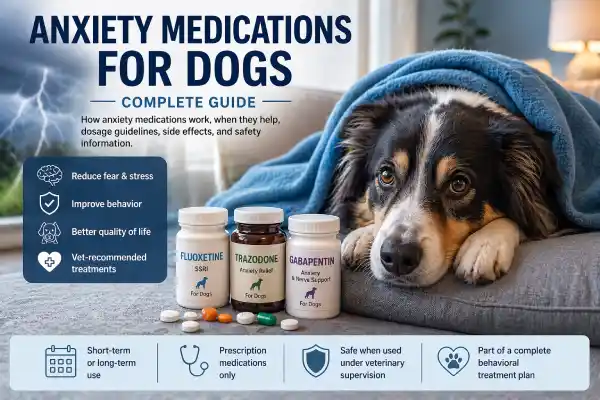
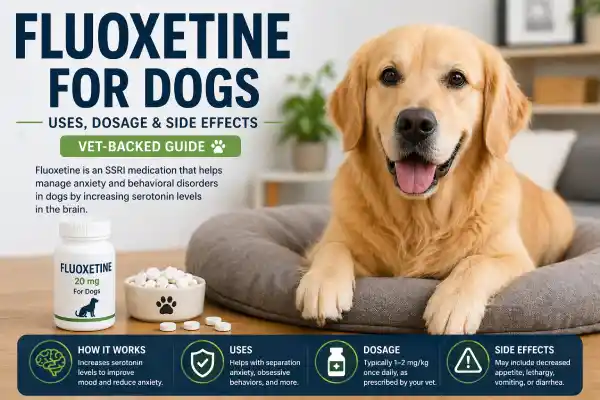
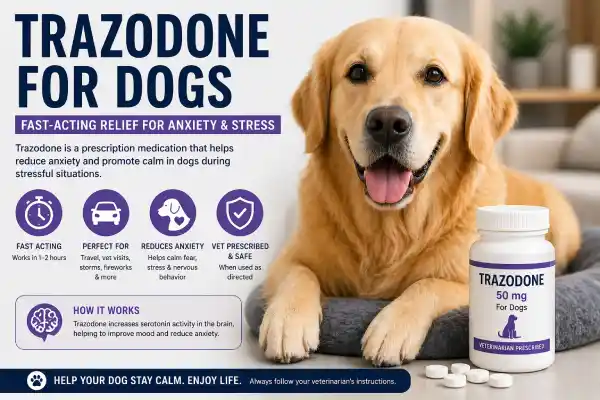
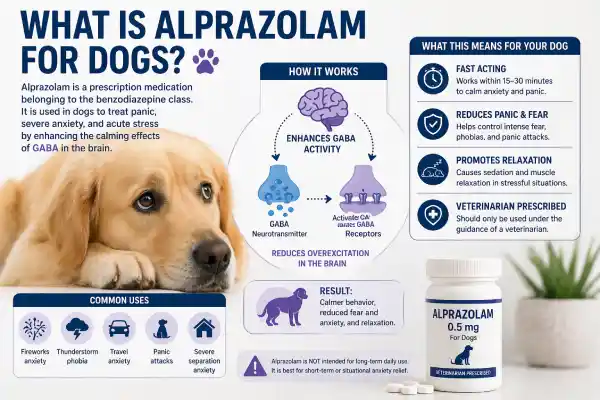
Dog owners often notice clingy behavior shortly after starting medications such as trazodone, fluoxetine, gabapentin, alprazolam, or clomipramine.
Common concerns include:
- “My dog follows me everywhere after trazodone.”
- “Why won’t my dog leave my side?”
- “My dog suddenly wants constant attention.”
- “My dog sleeps next to me all day after starting anxiety medication.”
- “Is this normal or a side effect?”
The good news is that mild clinginess is often less concerning than many owners fear.
Why Does My Dog Seem More Clingy After Starting Anxiety Medication?
Anxiety medications work by affecting brain chemicals involved in:
- Fear responses
- Stress regulation
- Relaxation
- Sleep patterns
- Emotional processing
As these systems change, your dog’s behavior may change temporarily as well.
For some dogs, this means becoming calmer and more independent.
For others, it means seeking additional comfort and reassurance from the people they trust most.
This behavior is particularly common during the first few days or weeks after starting treatment.
Why Is My Dog Clingy After Anxiety Medication?
Can Anxiety Medication Change a Dog’s Personality?
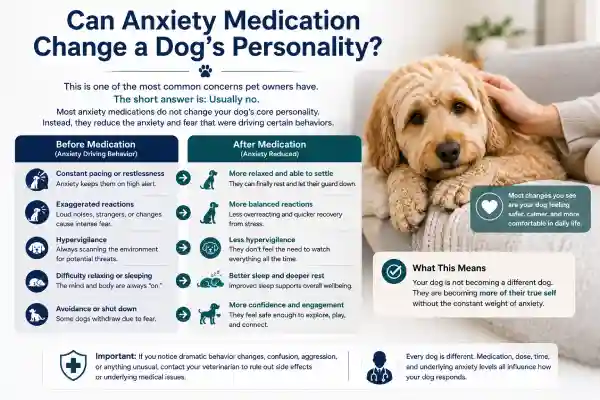
This is one of the most common concerns veterinarians hear.
The short answer is:
Usually no.
Most anxiety medications do not fundamentally change personality.
Instead, they often reduce behaviors that were driven by anxiety.
Owners sometimes mistake this behavioral shift for a personality change.
For example:
| Before Medication | After Medication |
|---|---|
| Constant pacing | Relaxed behavior |
| Fearful reactions | Seeking reassurance |
| Hypervigilance | Calm attachment |
| Restlessness | More resting near owners |
Many dogs simply feel safer.
Which Anxiety Medications Are Most Likely to Cause Clingy Behavior?
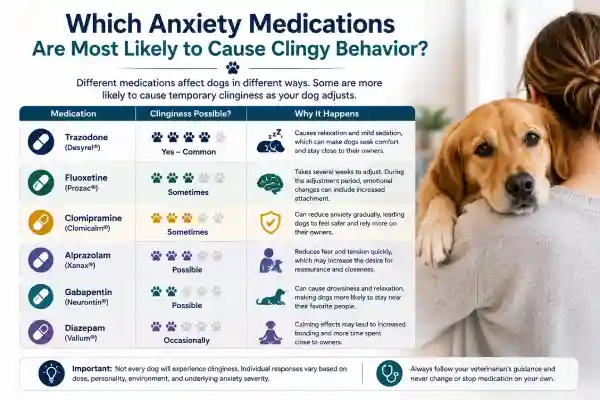
| Medication | Clinginess Possible? | Why It Happens |
|---|---|---|
| Trazodone | Yes | Relaxation and sedation |
| Fluoxetine (Prozac) | Sometimes | Behavioral adjustment period |
| Clomipramine | Sometimes | Emotional adaptation |
| Alprazolam | Possible | Reduced fear response |
| Gabapentin | Possible | Comfort-seeking due to sedation |
| Diazepam | Occasionally | Calming effect |
Not every dog experiences clinginess.
Individual responses vary significantly.
7 Reasons Dogs Become Clingy After Anxiety Medication
1. Anxiety Is Finally Reduced
Many anxious dogs spend enormous amounts of energy monitoring their environment.
Once medication begins working, they may finally feel comfortable enough to:
- Relax
- Rest
- Stay near trusted people
Instead of scanning for threats, they focus on their owners.
This can appear as clinginess even though it may actually represent improvement.
2. Sedation Makes Dogs Seek Comfort
Several anxiety medications can cause temporary drowsiness.
Dogs that feel sleepy often:
- Lie closer to owners
- Seek physical contact
- Follow family members less energetically but more frequently
- Sleep in unusual locations near people
This effect is especially common with:
- Trazodone
- Gabapentin
- Alprazolam
3. Dogs Feel Safer Around Their Owners
Many anxious dogs already rely heavily on their owners for emotional security.
When medication reduces fear, that bond may become more obvious.
You might notice:
- More cuddling
- More eye contact
- Following you around the house
- Sleeping beside your chair
This is often a sign of trust rather than a problem.
4. Temporary Behavioral Adjustment
The brain needs time to adapt to medication.
During the adjustment period, dogs may experience temporary changes in:
- Attention-seeking behavior
- Sleep habits
- Energy levels
- Social interactions
Most dogs stabilize within a few weeks.
5. Medication Changes Sleep Patterns
Anxiety medications often affect sleep quality.
Dogs that are finally sleeping better may:
- Stay close to owners
- Rest more frequently
- Seek familiar sleeping locations
Some owners mistakenly interpret this as dependency.
6. Underlying Anxiety Is Still Present
Sometimes the medication has only partially reduced anxiety.
In these cases, dogs may:
- Feel somewhat calmer
- Still seek reassurance
- Continue shadowing their owners
This may indicate that treatment is still taking effect or may need adjustment.
7. Your Dog Associates You With Feeling Better
Dogs quickly form associations.
If medication reduces discomfort, your dog may naturally associate that positive feeling with:
- Your presence
- Your routines
- Your voice
- Your physical contact
As a result, they may spend more time near you.
Related Symptoms Owners Often Notice
Clinginess rarely occurs alone.
Owners frequently report:
Increased Sleeping
Dogs may rest more frequently during the first few weeks of treatment.
Following Owners Everywhere
Some dogs begin acting like a “shadow,” moving from room to room with their owners.
Increased Affection
Many dogs become:
- More cuddly
- More social
- More interested in physical contact
Reduced Independence
Dogs that previously spent time alone may prefer staying near family members.
Mild Appetite Changes
Some medications may also affect eating habits.
Related article:
Can Anxiety Medication Affect Appetite in Dogs?
Temporary Behavioral Changes
Changes in routine behavior often occur during medication adjustment.
Related articles:
- Can Anxiety Medication Cause Confusion in Dogs?
- Why Does Anxiety Medication Stop Working in Dogs?
- Can Dogs Take CBD With Anxiety Medication?
- Can Dogs Take Melatonin With Anxiety Medication?
- Best Anxiety Medication for Dogs: Comparison Guide
- Can Anxiety Medication Make Dogs Aggressive?
- Can Anxiety Medication Cause Personality Changes?
- Trazodone Side Effects in Dogs: Sedation, Risks & Safety (Vet-Backed Guide)
- Can Gabapentin Cause Weakness in Dogs?
- What Happens If My Dog Misses Anxiety Medication?
These related symptoms help owners understand whether their dog is experiencing a normal adjustment period or something that requires veterinary attention.
Can Clinginess Be a Sign the Medication Is Working?
Sometimes, yes.
Many successful anxiety treatments result in dogs becoming:
- Less fearful
- More relaxed
- More socially engaged
- More interested in human interaction
If clinginess occurs alongside:
- Better sleep
- Reduced anxiety
- Less pacing
- Fewer panic episodes
it may actually indicate that treatment is helping.
The key is determining whether the behavior is comfortable and calm rather than distressed and obsessive.
When Clinginess Becomes Concerning
Most cases are harmless.
However, contact your veterinarian if clinginess is accompanied by:
| Warning Sign | Why It Matters |
|---|---|
| Severe confusion | May indicate adverse effects |
| Disorientation | Requires evaluation |
| Extreme lethargy | Sedation may be excessive |
| Refusal to eat | Possible medication intolerance |
| Vomiting | Potential side effect |
| Tremors | May indicate neurological concerns |
| Agitation | Medication may not be working properly |
| New aggression | Behavioral reassessment needed |
What Owners Should Do
If your dog becomes clingy after starting anxiety medication:
Do
✓ Monitor behavior
✓ Track medication timing
✓ Note any additional side effects
✓ Maintain normal routines
✓ Encourage independent activities
✓ Provide calm reassurance
Don’t
✗ Punish clingy behavior
✗ Force separation
✗ Stop medication suddenly
✗ Change doses without veterinary approval
How Long Does Clinginess Last?
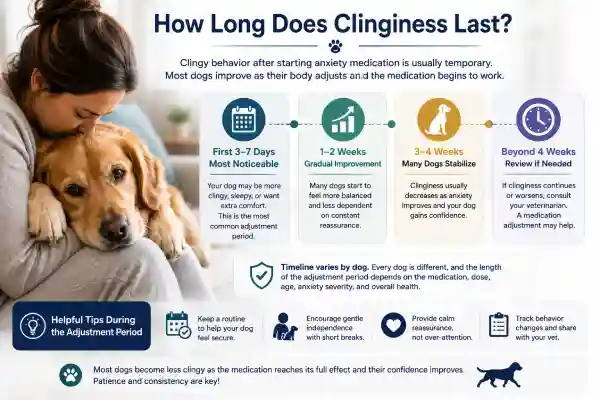
For many dogs:
| Time Frame | Expected Behavior |
|---|---|
| First 3–7 days | Most noticeable |
| 1–2 weeks | Gradual improvement |
| 3–4 weeks | Many dogs stabilize |
| Beyond 4 weeks | Consider veterinary review |
The exact timeline depends on:
- Medication type
- Dose
- Dog’s age
- Anxiety severity
- Overall health
What Veterinarians Look For
Veterinarians typically evaluate:
- Medication timing
- Severity of clinginess
- Other side effects
- Appetite changes
- Sleep patterns
- Energy levels
- Overall quality of life
Their goal is determining whether the behavior represents:
- Normal adjustment
- Effective treatment
- Excessive sedation
- Medication intolerance
Veterinarian Takeaway
Clinginess after anxiety medication is often a normal and temporary response. Many dogs become more affectionate, seek comfort from trusted owners, or stay closer to family members as anxiety decreases. In most cases, this behavior improves as the body adjusts to treatment. Owners should monitor for concerning signs such as confusion, severe lethargy, vomiting, aggression, or refusal to eat, which may require veterinary evaluation.
Bottom Line
If your dog has become clingy after starting anxiety medication, the behavior is often related to relaxation, improved emotional security, mild sedation, or the normal adjustment process.
For many dogs, becoming more affectionate and attached is a temporary phase that improves over time. Monitoring your dog’s overall behavior, appetite, energy level, and comfort can help determine whether the medication is working appropriately or whether a veterinary review is needed.
Reviewed By
Pharmacy Reviewed By
Dimitar Atanasov, MPharm
Master Pharmacist | Medication Safety Educator
Dimitar Atanasov is a licensed Master Pharmacist with experience in pharmacology, medication safety, patient education, and veterinary medication research. He reviews educational content to help pet owners better understand medication use, side effects, and safe treatment practices.
Editorial Policy
Pet Meds Made Simple publishes evidence-based educational content developed from veterinary references, pharmacology resources, peer-reviewed literature, and medication safety guidelines. All content is reviewed for accuracy, clarity, and usefulness to pet owners. Articles are intended for educational purposes only and should never replace individualized veterinary care, diagnosis, or treatment recommendations.
Frequently Asked Questions – Why Is My Dog Clingy After Anxiety Medication
Why is my dog following me everywhere after trazodone?
Trazodone can make dogs feel calmer and more relaxed, which sometimes leads them to seek comfort from their owners.
Can Prozac make dogs more attached?
Yes. Some dogs become more affectionate during the adjustment period.
Is clinginess a side effect of gabapentin?
It can be. Mild sedation may cause dogs to seek comfort and stay close to owners.
Will clingy behavior go away?
In many dogs, clinginess improves within several weeks as the body adjusts.
Can anxiety medication change a dog’s personality?
Usually not. It typically changes anxiety-related behaviors rather than personality itself.
Should I worry if my dog suddenly wants constant attention?
Not necessarily. Mild clinginess is often temporary, but severe behavioral changes should be discussed with a veterinarian.
Can clinginess mean the medication is working?
Sometimes. Reduced anxiety may make dogs more relaxed and socially connected.
Is clinginess different from separation anxiety?
Yes. Clinginess is usually mild and temporary, while separation anxiety involves significant distress when owners leave.
When should I call the veterinarian?
If clinginess occurs with confusion, vomiting, refusal to eat, aggression, or extreme lethargy.
Can anxiety medication make dogs more affectionate?
Yes. Some dogs become noticeably more affectionate once anxiety begins improving.
Medical Disclaimer
This article is for educational purposes only and does not replace professional veterinary advice. Always consult your veterinarian regarding medication side effects, dosage adjustments, behavioral changes, or concerns about your dog’s health. Never stop prescribed medication without veterinary guidance.Why Is My Dog Clingy After Anxiety Medication?
Sources
- American Veterinary Medical Association – Veterinary guidance on behavioral medications and pet health.
- American Animal Hospital Association – Clinical recommendations regarding canine behavioral medicine.
- Merck Veterinary Manual – Reference information on canine anxiety disorders, medication effects, and behavioral changes.
- American College of Veterinary Behaviorists – Resources related to canine anxiety treatment and behavior modification.
- Behavior Problems of the Dog and Cat – Veterinary behavioral medicine reference.
- U.S. Food and Drug Administration – Medication safety information and adverse effect monitoring.
- Landsberg GM, Hunthausen WL, Ackerman LJ. Behavior Problems of the Dog and Cat. Veterinary behavior reference text.
- Plumb DC. Plumb’s Veterinary Drug Handbook. Drug information regarding trazodone, fluoxetine, gabapentin, alprazolam, clomipramine, and diazepam.
- Veterinary psychopharmacology literature discussing behavioral changes, sedation, adjustment periods, and anxiety treatment in dogs.
- Peer-reviewed veterinary studies evaluating canine anxiety management and medication-related behavioral effects.
Images created with AI – Why Is My Dog Clingy After Anxiety Medication