Quick Answer
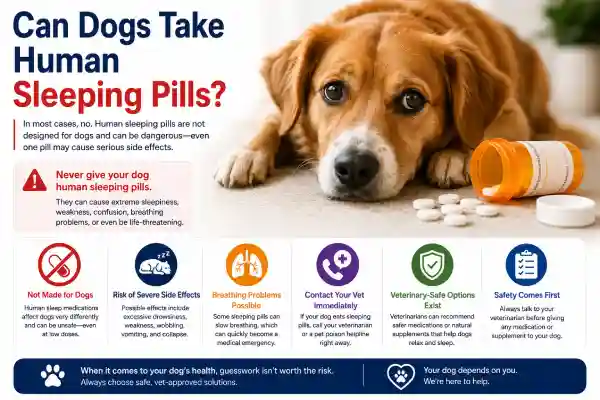
Can dogs take human sleeping pills? In most cases, no. Dogs should never be given human sleeping pills unless specifically instructed by a veterinarian. Many human sleep medications can be dangerous, causing excessive sedation, weakness, confusion, breathing problems, low blood pressure, or even life-threatening complications. If your dog accidentally eats human sleeping pills, contact your veterinarian or a pet poison hotline immediately.
Many dog owners ask “Can dogs take human sleeping pills?” when their pet struggles to sleep, seems restless at night, or experiences anxiety. While it may be tempting to reach for a medication already in your medicine cabinet, human sleep aids are not designed for dogs and can pose serious risks.
When Owners Commonly Ask This
Most owners begin searching for this question after experiencing one of the following situations:
- My dog won’t sleep at night.
- My dog seems anxious before bedtime.
- My dog ate one of my sleeping pills.
- Can I give my dog Ambien?
- Can I give my dog a sleeping tablet?
- What can I give my dog to sleep?
- My dog keeps pacing at night.
- My dog is restless and won’t settle down.
In some cases, owners are simply looking for ways to help an anxious dog relax. In other cases, they are dealing with a medication emergency.
Can Dogs Take Human Sleeping Pills?
The safest answer is generally no.
Human sleeping medications are formulated for the human body and may affect dogs very differently.
Several factors make human sleeping pills risky:
- Different metabolism
- Different body weight
- Different sensitivity to medications
- Potential toxicity
- Higher risk of overdose
Even medications that appear harmless for humans can cause severe side effects in dogs.
If your dog is having trouble resting because of anxiety, there are safer veterinary-approved options available.
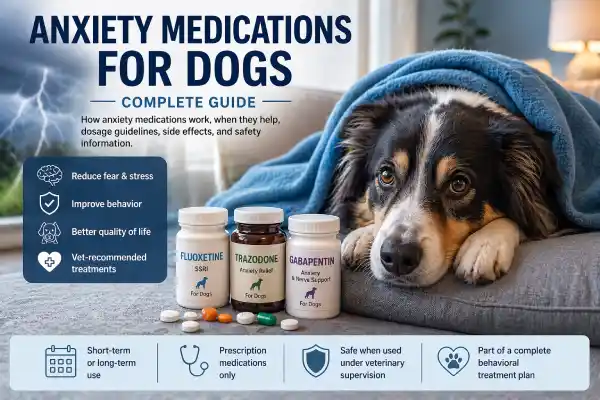
For example, many veterinarians prescribe medications such as trazodone or gabapentin for anxiety-related restlessness.
Related articles:
- Why Does My Dog Sleep All Day After Trazodone?
- What Is the Safest Anxiety Medication for Dogs?
- Can Dogs Take Melatonin With Anxiety Medication?
Can Dogs Take Human Sleeping Pills?
Why Human Sleeping Pills Can Be Dangerous for Dogs
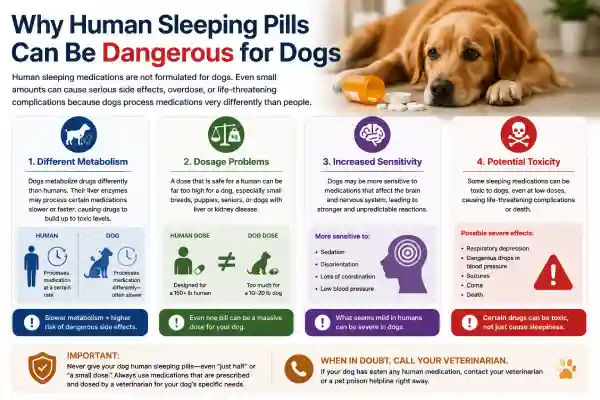
Dogs Process Medications Differently
A medication that is safe for a 180-pound adult human may not be safe for a 20-pound dog.
Dogs metabolize drugs differently, which can make side effects more severe and unpredictable.
Dosage Problems
Even a single sleeping pill may represent a very large dose for a dog.
This is particularly dangerous for:
- Small breeds
- Senior dogs
- Puppies
- Dogs with liver disease
- Dogs with kidney disease
Increased Sensitivity
Dogs may react more strongly to medications that affect the brain and nervous system.
This can lead to:
- Extreme sleepiness
- Weakness
- Disorientation
- Loss of coordination
Potential Toxicity
Some sleeping medications can be toxic even at relatively low doses.
In severe cases, dogs may develop:
- Respiratory depression
- Dangerous changes in blood pressure
- Seizures
- Coma
Common Human Sleeping Medications and Their Risks
| Medication | Safe for Dogs? | Risk Level |
|---|---|---|
| Zolpidem (Ambien) | No | High |
| Eszopiclone (Lunesta) | No | High |
| Temazepam | No | High |
| Triazolam | No | High |
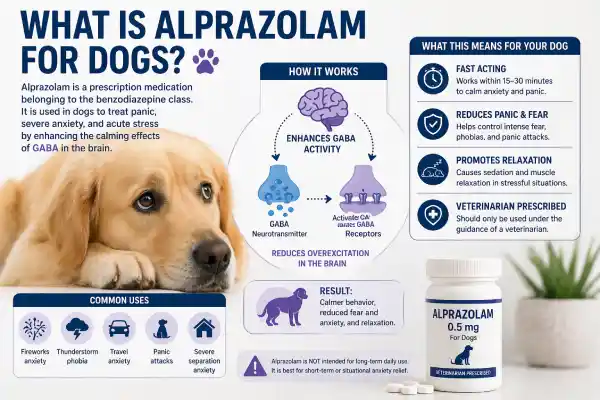
| Alprazolam (Xanax) | Only under veterinary supervision | Moderate |
| Diphenhydramine (Benadryl) | Sometimes under veterinary guidance | Moderate |
| Melatonin | Often used under veterinary guidance | Lower |
It is important to remember that even medications sometimes used in dogs should never be given without proper veterinary dosing instructions.
What Happens If a Dog Eats Human Sleeping Pills?
The symptoms depend on:
- Which medication was consumed
- How much was consumed
- The dog’s size
- The dog’s age
- Existing health conditions
Common symptoms include:
Extreme Sleepiness
Dogs may become unusually drowsy and difficult to keep awake.
Weakness
Many dogs develop weakness or appear unstable while walking.
Related article:
Can Anxiety Medication Cause Weakness in Dogs?
Confusion
Some dogs appear disoriented or mentally “foggy.”
Related article:
Can Anxiety Medication Cause Confusion in Dogs?
Wobbling
Owners often describe their dog as:
- Walking like they’re drunk
- Swaying
- Losing balance
Vomiting
Some medications may irritate the stomach.
Breathing Problems
This is one of the most serious potential complications.
Slow or shallow breathing requires immediate veterinary care.
Collapse
Severe overdose situations may result in collapse or unconsciousness.
Which Sleeping Aids Are Sometimes Used in Dogs?
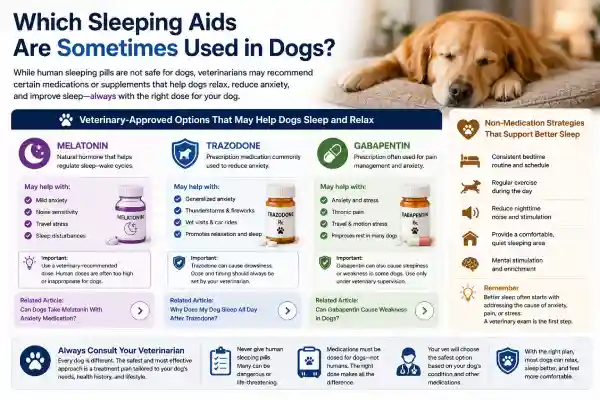
While human sleeping pills are generally unsafe, veterinarians sometimes recommend medications or supplements that help dogs relax.
Melatonin
Melatonin is commonly used for:
- Mild anxiety
- Sleep disturbances
- Noise sensitivity
Related article:
Can Dogs Take Melatonin With Anxiety Medication?
Trazodone
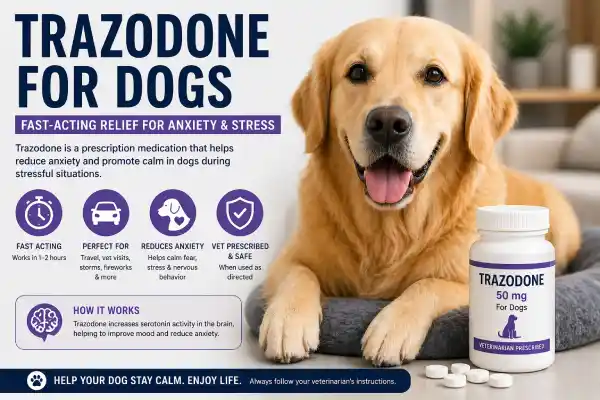
Trazodone is one of the most commonly prescribed medications for canine anxiety.
It helps many dogs:
- Relax
- Sleep better
- Cope with stressful situations
Related article:
Why Does My Dog Sleep All Day After Trazodone?
Gabapentin
Gabapentin may be used for both pain management and anxiety.
Related article:
Can Gabapentin Cause Weakness in Dogs?
Behavioral and Environmental Changes
Sometimes better sleep can be achieved without medication.
Helpful strategies include:
- Consistent bedtime routines
- Exercise during the day
- Reducing nighttime noise
- Providing a comfortable sleeping area
Why Dogs May Have Trouble Sleeping
Not every dog that struggles with sleep needs medication.
Common causes include:
Anxiety
Anxiety is one of the leading reasons dogs become restless at night.
Pain
Dogs experiencing arthritis or other painful conditions often struggle to get comfortable.
Cognitive Dysfunction
Senior dogs may experience age-related cognitive decline.
Environmental Stress
Changes in routine can interfere with normal sleep patterns.
Medical Conditions
Various medical issues can affect sleep quality.
This is one reason veterinary evaluation is important before attempting any treatment.
What Should Owners Do If Their Dog Eats Sleeping Pills?
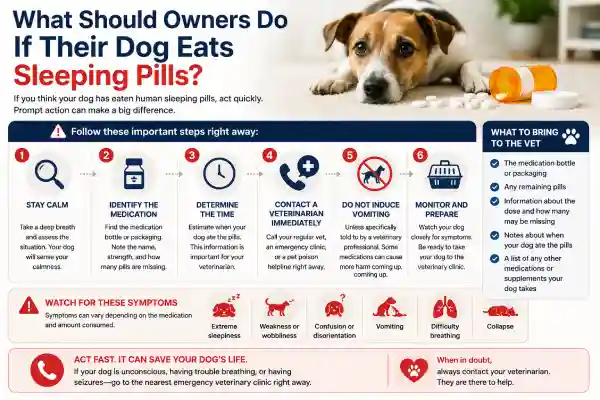
If you suspect your dog consumed human sleeping pills:
Stay Calm
Try to determine:
- Which medication was involved
- How many pills were consumed
- Approximately when ingestion occurred
Contact a Veterinarian Immediately
Prompt veterinary guidance is critical.
Do Not Induce Vomiting Unless Instructed
Some medications require specific treatment approaches.
Save the Medication Container
The ingredient information can help determine the appropriate response.
Monitor Your Dog Closely
Watch for:
- Excessive sleepiness
- Weakness
- Vomiting
- Difficulty breathing
- Collapse
When Should You Call a Veterinarian Immediately?
Seek immediate veterinary care if your dog experiences:
- Difficulty breathing
- Collapse
- Seizures
- Severe weakness
- Unresponsiveness
- Inability to stand
- Blue or pale gums
- Persistent vomiting
These symptoms may indicate a medical emergency.
Related Symptoms Owners Often Notice
Dogs exposed to sleeping medications may show multiple symptoms at once.
Excessive Sleepiness
The most common symptom.
Weakness
Related article:
Can Anxiety Medication Cause Weakness in Dogs?
Wobbling
Many dogs become unsteady on their feet.
Confusion
Related article:
Can Anxiety Medication Cause Confusion in Dogs?
Appetite Changes
Related article:
Can Anxiety Medication Affect Appetite in Dogs?
Clinginess
Some dogs become unusually attached or seek reassurance.
Related article:
Why Is My Dog Clingy After Anxiety Medication?
Additional related articles:
- What Is the Safest Anxiety Medication for Dogs?
- Can Dogs Take CBD With Anxiety Medication?
- Why Does Anxiety Medication Stop Working in Dogs?
- Can Dogs Take Anxiety Medication Every Day?
- Best Anxiety Medication for Dogs: Comparison Guide
Veterinarian Takeaway
Can dogs take human sleeping pills? In most situations, no. Human sleep medications can affect dogs very differently than humans and may cause dangerous side effects. If your dog is struggling with sleep, anxiety, or nighttime restlessness, the safest approach is to work with your veterinarian to identify the underlying cause and choose a treatment specifically designed for dogs.
Bottom Line
Can dogs take human sleeping pills? Generally, they should not. Many human sleep medications carry significant risks for dogs and can lead to excessive sedation, weakness, confusion, breathing difficulties, and other serious complications. If your dog accidentally consumes sleeping pills, contact your veterinarian immediately. When dogs need help sleeping or relaxing, veterinary-approved options are far safer than medications intended for humans.
Frequently Asked Questions – Can Dogs Take Human Sleeping Pills?
Can dogs take human sleeping pills safely?
In most cases, no. Human sleeping pills are not formulated for dogs and may cause serious side effects, including excessive sedation, weakness, confusion, breathing difficulties, and overdose.
What should I do if my dog ate a sleeping pill?
Contact your veterinarian, an emergency veterinary clinic, or a pet poison hotline immediately. Try to determine which medication was consumed, how much was eaten, and approximately when it happened.
Can one sleeping pill hurt a dog?
Yes. Depending on the medication and your dog’s size, even a single sleeping pill may cause significant side effects or toxicity.
Can I give my dog Ambien?
No. Ambien (zolpidem) should never be given to dogs unless specifically prescribed and dosed by a veterinarian.
Can dogs take Benadryl as a sleeping aid?
Benadryl (diphenhydramine) is sometimes used in dogs under veterinary guidance, but it should not be given solely as a sleep aid without professional advice.
Is melatonin safer than sleeping pills for dogs?
Melatonin is often considered safer than most human sleeping medications and is commonly used in veterinary medicine. However, dosing should still be discussed with a veterinarian.
Related article:
Can Dogs Take Melatonin With Anxiety Medication?
Why is my dog suddenly restless at night?
Nighttime restlessness may be caused by:
Anxiety
Pain
Cognitive dysfunction
Environmental stress
Underlying medical conditions
A veterinary examination may be necessary to identify the cause.
What symptoms indicate sleeping pill toxicity in dogs?
Common symptoms include:
Extreme sleepiness
Weakness
Confusion
Wobbling
Vomiting
Difficulty breathing
Collapse
How quickly do sleeping pills affect dogs?
Many sleeping medications begin causing symptoms within 30 minutes to several hours after ingestion.
When should I seek emergency veterinary care?
Seek immediate veterinary attention if your dog experiences:
Difficulty breathing
Collapse
Seizures
Severe weakness
Unresponsiveness
Inability to stand
Reviewed By
Pharmacy Reviewed By
Dimitar Atanasov, MPharm
Master Pharmacist | Medication Safety Educator
Dimitar Atanasov is a licensed Master Pharmacist with experience in pharmacology, medication safety, toxicology, and patient education. He reviews educational content to help pet owners better understand medication risks, side effects, and safe treatment options for dogs.
Editorial Policy
Pet Meds Made Simple publishes evidence-based educational content developed from veterinary references, pharmacology resources, medication safety literature, toxicology databases, and peer-reviewed research.
Our goal is to provide accurate, practical information that helps pet owners make informed decisions while supporting—not replacing—the veterinarian-client relationship.
Learn more about our editorial standards and review process:
Sources
- American Veterinary Medical Association (AVMA)
- American Animal Hospital Association (AAHA)
- Merck Veterinary Manual
- ASPCA Animal Poison Control Center
- Pet Poison Helpline
- FDA Center for Veterinary Medicine
- Plumb’s Veterinary Drug Handbook
- Veterinary Pharmacology and Therapeutics
- Clinical Veterinary Toxicology References
- Peer-Reviewed Veterinary Pharmacology Literature
Medical Disclaimer
This article is for educational purposes only and does not replace professional veterinary advice. Always consult your veterinarian regarding medication use, side effects, toxicity concerns, or treatment decisions. If your dog consumes human medication accidentally, contact your veterinarian immediately.
Images created with AI – Can Dogs Take Human Sleeping Pills?