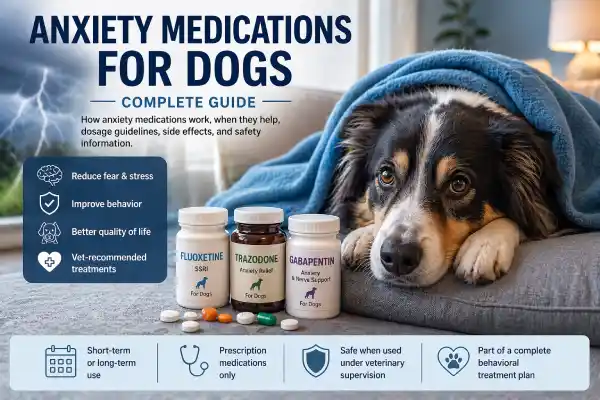
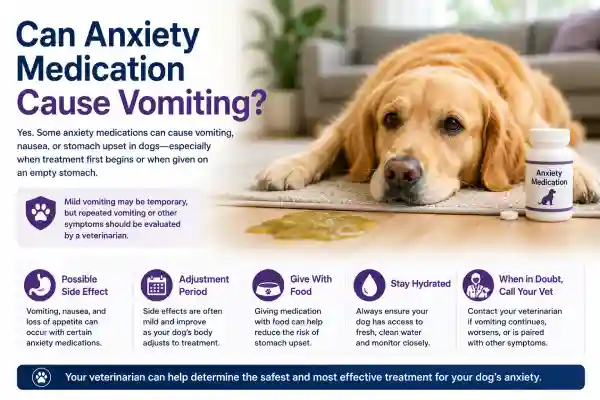
Quick Answer
Can anxiety medication cause vomiting? Yes. Anxiety medication can cause vomiting in some dogs, especially when treatment first begins, after a dose increase, or when the medication is given on an empty stomach. While mild vomiting is often temporary, repeated vomiting, severe lethargy, dehydration, or other concerning symptoms should be evaluated by a veterinarian.
If you’ve recently started your dog on an anxiety medication and suddenly found a pile of vomit on the floor, you’re probably wondering whether the medication is responsible. The good news is that mild stomach upset can occur with several commonly prescribed anxiety medications, and many dogs improve once their bodies adjust to treatment.
However, vomiting should never be ignored entirely because it can sometimes indicate a more significant problem.
When Owners Commonly Ask This
Most owners start searching “Can anxiety medication cause vomiting?” after experiencing one of these situations:
- My dog threw up after anxiety medication.
- My dog vomited after taking trazodone.
- My dog seems nauseous after Xanax.
- My dog started vomiting after beginning fluoxetine.
- Should I give another dose if my dog throws up?
- Is vomiting a normal side effect of anxiety medication?
- My dog won’t eat after taking anxiety medication.
- My dog is vomiting and seems sleepy after medication.
Sometimes the medication is the cause. Other times, the vomiting may be related to anxiety itself, an underlying illness, or something unrelated to the medication.
Can Anxiety Medication Cause Vomiting?
Can Anxiety Medication Cause Vomiting?
Yes, several medications used to treat anxiety can potentially cause vomiting.
This doesn’t mean every dog will experience stomach upset. In fact, many dogs tolerate anxiety medications extremely well and never develop any digestive side effects.
The likelihood depends on factors such as:
- The specific medication
- The dosage
- The dog’s age
- Individual sensitivity
- Whether the medication is given with food
- Existing digestive problems
The digestive system and nervous system are closely connected. Because anxiety medications influence brain chemistry, they can sometimes affect the stomach and intestines as well.
This is particularly common during the first days or weeks of treatment when the body is adjusting to the medication.
Why Vomiting Can Occur After Anxiety Medication
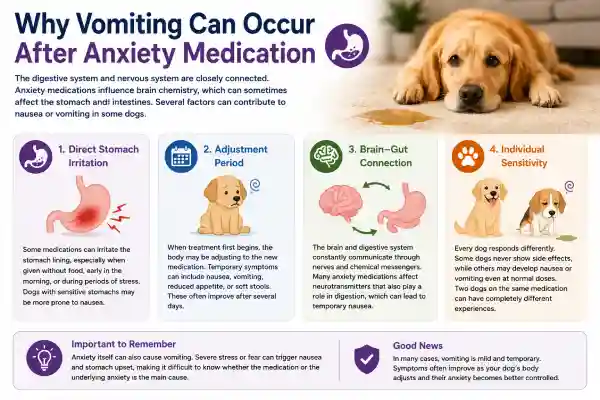
There are several reasons a dog may vomit after taking anxiety medication.
Direct Stomach Irritation
Some medications can irritate the stomach lining.
This irritation may be more noticeable when medication is given:
- On an empty stomach
- Early in the morning
- During periods of stress
Dogs with sensitive stomachs may be especially prone to nausea.
Adjustment Period
Many medications have an adjustment period.
When treatment first begins, the body may temporarily react with:
- Nausea
- Reduced appetite
- Vomiting
- Soft stools
In many cases these symptoms improve after several days.
Brain-Gut Communication
The brain and digestive system constantly communicate through nerves and chemical messengers.
Many anxiety medications affect neurotransmitters that also play a role in digestion.
This is one reason gastrointestinal side effects sometimes occur.
Individual Sensitivity
Every dog responds differently.
Two dogs receiving the exact same medication and dose may have completely different experiences.
Some dogs never show side effects.
Others develop nausea after only one dose.
Which Anxiety Medications May Cause Vomiting?
Not all anxiety medications carry the same risk of stomach upset.
Some medications are more likely to cause digestive side effects than others, especially during the first few weeks of treatment.
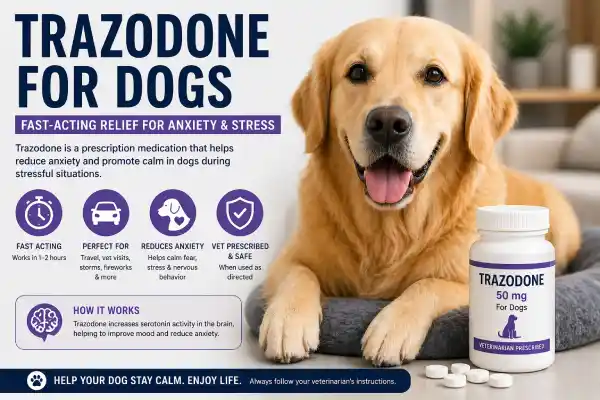
Trazodone
Trazodone is one of the most commonly prescribed anxiety medications in dogs.
Veterinarians frequently use it for:
- Thunderstorm anxiety
- Fireworks
- Travel anxiety
- Veterinary visits
- Recovery after surgery
Most dogs tolerate trazodone well, but some may experience:
- Vomiting
- Nausea
- Decreased appetite
- Sleepiness
Related article:
Why Does My Dog Sleep All Day After Trazodone?
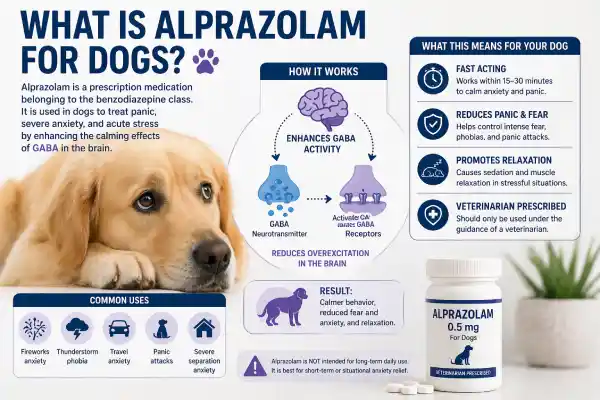
Xanax (Alprazolam)
Xanax is often prescribed for situational anxiety and panic episodes.
Vomiting is not among the most common side effects, but it can occur in certain dogs.
Possible side effects include:
- Sedation
- Weakness
- Reduced appetite
- Occasional vomiting
Related article:
Can Dogs Develop Tolerance to Xanax?
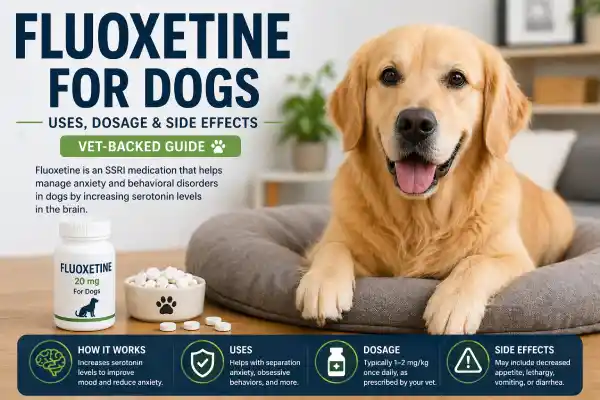
Fluoxetine
Fluoxetine is commonly used for long-term anxiety management.
Digestive side effects are often most noticeable during the first few weeks.
Potential side effects include:
- Vomiting
- Nausea
- Appetite changes
- Soft stools
Clomipramine
Clomipramine can be very effective for separation anxiety and behavioral disorders.
However, gastrointestinal side effects may occur during treatment initiation.
Gabapentin
Gabapentin is frequently used for anxiety, pain management, and stress reduction.
Although vomiting is relatively uncommon, some dogs may experience mild digestive upset.
Anxiety Medications and Vomiting Risk
| Medication | Vomiting Possible? |
|---|---|
| Trazodone | Yes |
| Xanax (Alprazolam) | Sometimes |
| Fluoxetine | Yes |
| Clomipramine | Yes |
| Gabapentin | Occasionally |
The presence of vomiting does not necessarily mean a medication is unsafe. Many dogs continue treatment successfully after the initial adjustment period.
Why Anxiety Medication May Upset the Stomach
Understanding why vomiting occurs can help owners better manage mild side effects.
Empty Stomach Administration
One of the most common causes of medication-related vomiting is giving medication without food.
Some medications are easier on the stomach when administered with a meal or small snack.
Always follow your veterinarian’s instructions regarding administration.
Medication Adjustment Period
When a dog starts a new medication, the body needs time to adapt.
During this adjustment phase, temporary symptoms may include:
- Nausea
- Vomiting
- Reduced appetite
- Mild digestive discomfort
Many dogs improve within several days to a few weeks.
Changes in Digestive Activity
Some anxiety medications influence neurotransmitters that affect both mood and digestion.
This can temporarily alter stomach and intestinal function.
Anxiety Itself Can Cause Vomiting
One important point many owners overlook is that anxiety itself can trigger vomiting.
Dogs experiencing severe anxiety may develop:
- Nausea
- Excessive drooling
- Vomiting
- Appetite loss
This can make it difficult to determine whether the medication or the anxiety is responsible.
When Vomiting Is Usually Not Serious
Fortunately, many cases of vomiting associated with anxiety medication are relatively mild.
Examples that are often less concerning include:
- A single vomiting episode
- Mild nausea that resolves quickly
- Temporary appetite reduction
- Normal energy levels afterward
- Continued drinking
- Continued interest in surroundings
For example, a dog that vomits once shortly after starting medication but then continues eating, drinking, and behaving normally may simply be experiencing a temporary adjustment period.
However, owners should continue monitoring closely.
Even mild symptoms deserve attention if they continue.
When Vomiting Becomes Concerning
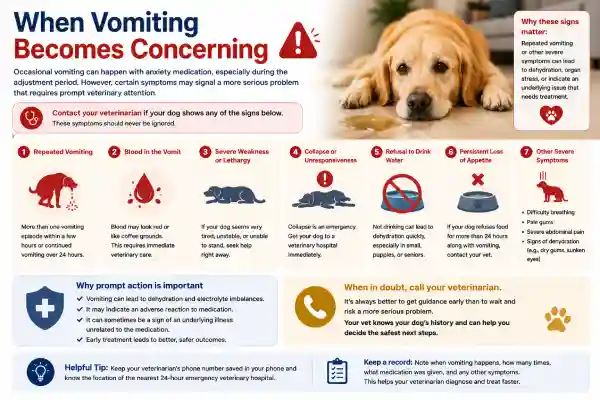
While occasional vomiting may not be dangerous, certain situations require veterinary attention.
Contact your veterinarian if your dog develops:
Repeated Vomiting
Multiple episodes within a short period can quickly lead to dehydration.
Blood in the Vomit
Blood should never be ignored.
Severe Weakness
Vomiting combined with weakness can indicate a more serious reaction.
Related article:
Can Anxiety Medication Cause Weakness in Dogs?
Collapse
Collapse is always an emergency.
Refusal to Drink Water
Dehydration can develop rapidly, particularly in small dogs and seniors.
Persistent Loss of Appetite
If your dog refuses food for more than a day, veterinary guidance is recommended.
Difficulty Breathing
Breathing changes require immediate veterinary evaluation.
Severe Lethargy
Dogs that are difficult to wake, unable to stand, or appear unusually weak should be examined promptly.
Related Symptoms Owners Often Notice
Vomiting often occurs alongside other medication-related side effects.
Appetite Loss
Many dogs that vomit also show less interest in food.
Related article:
Can Anxiety Medication Affect Appetite in Dogs?
Weakness
Some dogs appear tired, wobbly, or weak after medication.
Related article:
Can Anxiety Medication Cause Weakness in Dogs?
Sleepiness
Certain medications may cause both vomiting and increased sleepiness.
Related article:
Why Does My Dog Sleep All Day After Trazodone?
Confusion
Occasionally, dogs adjusting to medication may seem temporarily confused.
Related article:
Can Anxiety Medication Cause Confusion in Dogs?
Clinginess
Some dogs become unusually attached while adjusting to treatment.
Related article:
Why Is My Dog Clingy After Anxiety Medication?
Nighttime Anxiety
Dogs experiencing ongoing anxiety may continue showing symptoms at night.
Related article:
Why Does My Dog Panic at Night?
What Owners Can Do If Their Dog Vomits
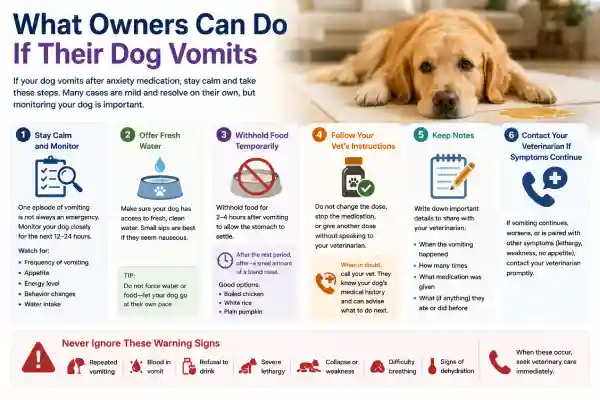
If your dog vomits after anxiety medication, try not to panic.
In many cases, the situation is manageable.
Monitor Closely
Pay attention to:
- Frequency of vomiting
- Appetite
- Energy level
- Water intake
- Behavior changes
Offer Fresh Water
Preventing dehydration is important.
Follow Veterinary Instructions
Never change medication doses on your own.
Keep Notes
Recording when symptoms occur can help your veterinarian identify patterns.
Contact Your Veterinarian If Symptoms Continue
Persistent vomiting should always be discussed with a veterinary professional.
When Owners Should Contact Their Veterinarian
While mild vomiting can sometimes be part of a normal medication adjustment period, there are situations where veterinary guidance is important.
Contact your veterinarian if:
- Vomiting continues for more than 24 hours
- Multiple vomiting episodes occur
- Your dog refuses food completely
- Your dog refuses water
- Weakness develops
- Confusion develops
- Symptoms appear to worsen rather than improve
- New side effects appear
- Your dog has underlying medical conditions
Dogs with kidney disease, liver disease, diabetes, or senior pets may require closer monitoring.
A good rule is:
One mild episode of vomiting may simply require observation. Repeated vomiting or vomiting combined with other symptoms should be evaluated.
Can Vomiting Improve Over Time?
Yes.
Many dogs experience stomach upset only during the initial adjustment period.
As the body becomes accustomed to the medication, symptoms often improve.
Improvement may occur because:
- The digestive system adapts
- The medication is given with food
- The veterinarian adjusts the dosage
- Anxiety itself becomes better controlled
This is why many veterinarians recommend monitoring mild symptoms before immediately changing treatment.
Veterinarian Takeaway
Can anxiety medication cause vomiting? Yes. Vomiting is a recognized side effect of several medications commonly used to treat anxiety in dogs, including trazodone, fluoxetine, clomipramine, and occasionally Xanax or gabapentin. In many cases, vomiting is mild and temporary, especially during the first few days of treatment. However, repeated vomiting, dehydration, weakness, collapse, or other concerning symptoms should always be discussed with a veterinarian.
Bottom Line
Can anxiety medication cause vomiting? Absolutely. Some dogs experience nausea, vomiting, or stomach upset after starting anxiety medication. Fortunately, these symptoms are often temporary and improve as the dog’s body adjusts to treatment. Monitoring your dog’s appetite, hydration, energy level, and overall comfort can help determine whether the vomiting is a mild side effect or a reason to seek veterinary care.
If vomiting becomes frequent, severe, or occurs alongside symptoms such as weakness, confusion, or refusal to drink water, contact your veterinarian promptly.
The goal of anxiety treatment is to improve your dog’s quality of life while minimizing side effects, and your veterinarian can help find the safest and most effective approach.Can Anxiety Medication Cause Vomiting?
Frequently Asked Questions – Can Anxiety Medication Cause Vomiting?
Can trazodone cause vomiting in dogs?
Yes. Trazodone can occasionally cause vomiting, nausea, or reduced appetite, particularly when treatment first begins.
Can Xanax make dogs vomit?
Vomiting is less common with Xanax (alprazolam), but it can occur in some dogs.
Is vomiting a normal side effect of anxiety medication?
Mild vomiting can occur with certain anxiety medications, especially during the adjustment period.
Should I give another dose if my dog vomits?
Do not automatically repeat a dose. Contact your veterinarian for guidance, particularly if vomiting occurred shortly after administration.
Can anxiety itself cause vomiting?
Yes. Severe anxiety and stress can sometimes cause nausea and vomiting even without medication involvement.
How long does medication-related vomiting last?
Many dogs improve within a few days as their bodies adjust to treatment.
Should anxiety medication be given with food?
Some medications are better tolerated with food, but always follow your veterinarian’s instructions.
Can vomiting lead to dehydration?
Yes. Repeated vomiting can cause dehydration, especially in small dogs, puppies, and senior dogs.
When is vomiting considered an emergency?
Vomiting becomes more concerning when it is repeated, contains blood, occurs with collapse, or is accompanied by breathing difficulties.
Should I stop the medication if my dog vomits?
Never stop prescribed medication without consulting your veterinarian.
Reviewed By
Pharmacy Reviewed By
Dimitar Atanasov, MPharm
Master Pharmacist | Medication Safety Educator
Dimitar Atanasov is a licensed Master Pharmacist with experience in pharmacology, medication safety, toxicology, and patient education. He reviews educational content to help pet owners better understand medication side effects, treatment options, and safe medication use in dogs.
Editorial Policy
Pet Meds Made Simple publishes evidence-based educational content developed from veterinary references, pharmacology resources, medication safety literature, and peer-reviewed research.Can Anxiety Medication Cause Vomiting?
Our goal is to help pet owners make informed decisions while supporting—not replacing—the veterinarian-client relationship.
Learn more about our editorial standards and review process:
Sources
- American Veterinary Medical Association (AVMA)
- American Animal Hospital Association (AAHA)
- Merck Veterinary Manual
- Plumb’s Veterinary Drug Handbook
- FDA Center for Veterinary Medicine
- Veterinary Pharmacology and Therapeutics
- Veterinary Behavioral Medicine Guidelines
- Peer-Reviewed Veterinary Psychopharmacology Literature
- Clinical References on Canine Anxiety Treatment
- Small Animal Internal Medicine References
Medical Disclaimer
This article is for educational purposes only and does not replace professional veterinary advice. Always consult your veterinarian regarding medication side effects, vomiting, dosage adjustments, behavioral changes, or concerns about your dog’s health. Never stop or change prescribed medications without veterinary guidance.Can Anxiety Medication Cause Vomiting?
Images created with AI – Can Anxiety Medication Cause Vomiting?