Quick Answer
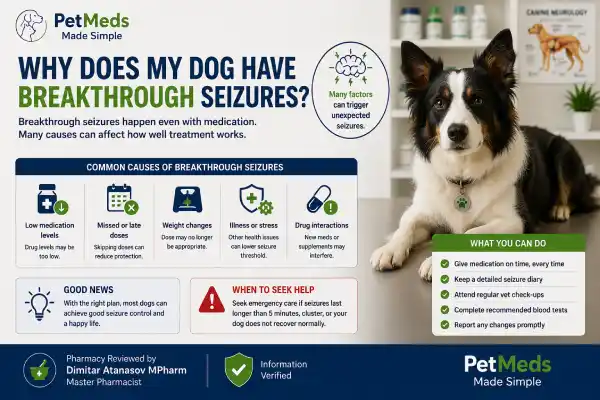
Why Does My Dog Have Breakthrough Seizures? A breakthrough seizure is a seizure that occurs despite a dog already receiving anti-seizure medication. While this can be alarming, it does not automatically mean the medication has stopped working. Breakthrough seizures may happen because drug levels are too low, doses were missed, the dog’s condition has progressed, another illness has developed, or new seizure triggers have appeared.
Most dogs with epilepsy will experience occasional breakthrough seizures during their lifetime. The goal of treatment is usually reducing the frequency and severity of seizures, not necessarily eliminating every seizure forever.
If your dog has a breakthrough seizure, contact your veterinarian promptly—especially if seizures become more frequent, occur in clusters, last longer than five minutes, or your dog struggles to recover afterward.
What Is a Breakthrough Seizure?
A breakthrough seizure refers to any seizure that occurs after seizure control has already been established with medication.
For example:
| Situation | Is It a Breakthrough Seizure? |
|---|---|
| Dog started phenobarbital yesterday and has another seizure | Usually No |
| Dog has been seizure-free for six months but suddenly has one seizure | Yes |
| Dog has been stable for a year but develops two seizures this week | Yes |
| Dog missed several medication doses and then had a seizure | Technically yes, but medication non-compliance is the likely cause |
Breakthrough seizures are frustrating because owners often assume the medication has “failed.” Fortunately, that is only one of many possible explanations.
Why Does My Dog Have Breakthrough Seizures?
How Common Are Breakthrough Seizures?

They’re actually quite common.
Even dogs receiving excellent veterinary care may occasionally have seizures despite treatment.
This happens because epilepsy is a chronic neurological disease, not simply a condition that disappears once medication begins.
Many anti-seizure drugs work by:
- raising the brain’s seizure threshold
- reducing abnormal electrical activity
- decreasing seizure frequency
- shortening seizure duration
They do not cure epilepsy.
Think of seizure medications like blood pressure medications or insulin—they manage a disease rather than eliminate it.
Many dogs experience:
- long seizure-free periods
- occasional isolated breakthrough seizures
- medication adjustments over time
- years of good quality of life.
Why Can Breakthrough Seizures Happen?
There isn’t just one reason.
Veterinarians often investigate several possibilities before deciding whether medication should be changed.
The most common causes include:
- medication blood levels becoming too low
- disease progression
- missed medication doses
- vomiting after taking medication
- poor drug absorption
- weight gain leading to underdosing
- new illnesses
- stress or major routine changes
- interactions with other medications
- toxin exposure
- metabolic disorders
- liver changes affecting drug metabolism.
Let’s look at each possibility in more detail.
1. Medication Levels May Have Fallen Below the Therapeutic Range
One of the most common causes is insufficient drug concentration in the bloodstream.
This doesn’t necessarily mean your dog is receiving the wrong medication.
Instead, the medication may no longer be reaching levels high enough to prevent seizures.
This can happen because:
- your dog has gained weight
- metabolism has changed
- liver enzymes break down the drug faster
- absorption has decreased
- doses are wearing off before the next scheduled administration.
This is particularly important for medications like:
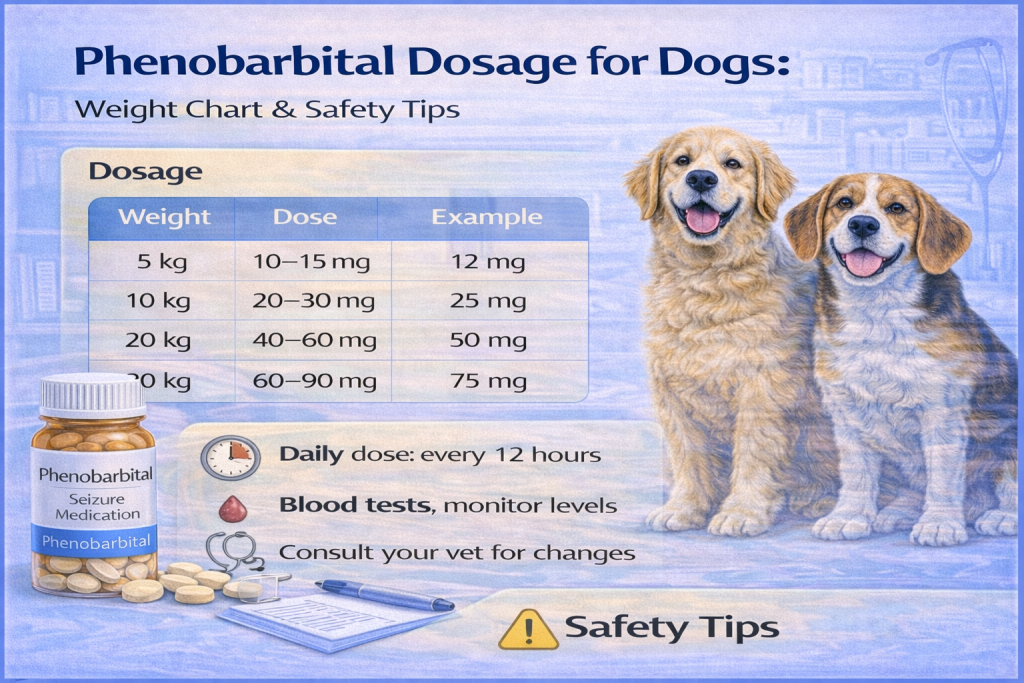
- Phenobarbital
- Potassium Bromide
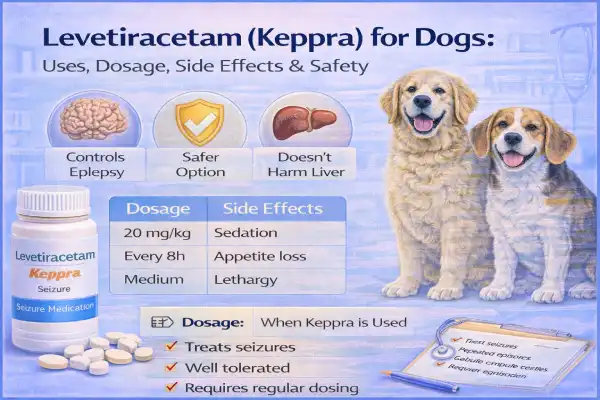
- Levetiracetam (Keppra)
- Zonisamide
Your veterinarian may recommend blood testing to determine whether drug concentrations remain within the therapeutic range before changing medications.
Weight Gain Can Reduce Medication Effectiveness
Many owners don’t realize this.
A dog that gains several kilograms may effectively be receiving a lower dose per kilogram than when treatment first started.
For example:
| Starting Weight | Current Weight | Medication Changed? | Possible Result |
|---|---|---|---|
| 20 kg | 25 kg | No | Lower effective dose |
| 30 kg | 36 kg | No | Drug concentration may decrease |
| 15 kg | 18 kg | No | Increased risk of breakthrough seizures |
This is one reason veterinarians routinely weigh dogs during epilepsy checkups.
2. A Missed Dose Is One of the Most Common Reasons
Anti-seizure medications work best when blood concentrations remain stable.
Missing even one dose can reduce protection in some dogs.
Owners sometimes forget because:
- schedules change
- someone else was supposed to give the medication
- the dog spits out the tablet
- medication runs out
- travel disrupts routines.
Never double the next dose unless your veterinarian specifically instructs you to do so.
If you’re unsure what to do after a missed dose, contact your veterinary clinic immediately.
What If My Dog Vomited After Taking the Medication?
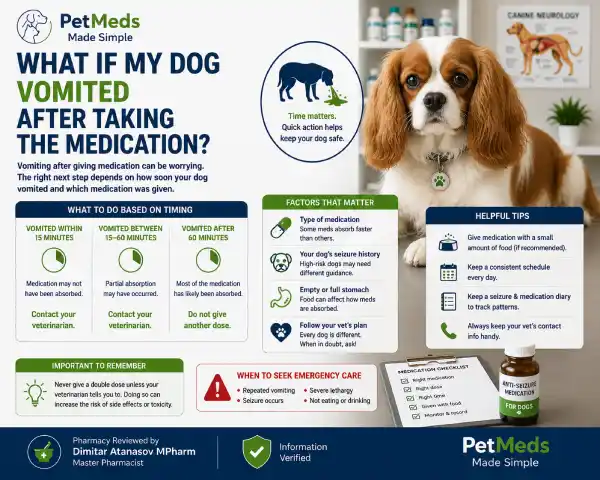
This is another surprisingly common cause.
If vomiting occurs shortly after medication administration, your dog may not absorb the full dose.
Whether another dose should be given depends on:
- how soon vomiting occurred
- which medication was used
- your dog’s seizure history
- your veterinarian’s recommendations.
Never assume another full tablet is automatically safe.
3. Epilepsy Can Progress Over Time
Unfortunately, epilepsy isn’t always a static disease.
Some dogs remain stable for years.
Others gradually experience:
- shorter seizure-free intervals
- more frequent seizures
- cluster seizures
- stronger seizure activity
- longer recovery periods.
This progression doesn’t necessarily mean treatment has failed.
Instead, the disease itself may be changing.
Many dogs simply require medication adjustments as time goes on.
Does One Breakthrough Seizure Mean Things Are Getting Worse?
Not necessarily.
A single isolated seizure after many months of good control may simply represent:
- temporary stress
- excitement
- mild illness
- missed medication timing
- minor fluctuations in drug levels.
Veterinarians usually become more concerned when:
- seizures become progressively more frequent
- recovery becomes longer
- seizures occur in clusters
- seizures become more severe
- medication adjustments no longer improve control.
4. Other Illnesses Can Lower the Seizure Threshold
The brain doesn’t exist in isolation.
Many illnesses elsewhere in the body can make seizures easier to trigger.
Examples include:
- liver disease
- kidney disease
- diabetes
- electrolyte imbalances
- low blood sugar
- severe infections
- inflammatory diseases
- endocrine disorders.
In these situations, the seizure medication may still be working—but another disease has made seizures easier to occur.
Common Medical Conditions That May Trigger Breakthrough Seizures
| Medical Condition | How It May Affect Seizure Control |
|---|---|
| Low blood sugar | Reduces brain energy supply |
| Liver disease | Alters drug metabolism |
| Kidney disease | Changes medication elimination |
| Electrolyte imbalance | Increases brain excitability |
| Fever | Can lower seizure threshold |
| Severe infection | May trigger neurological stress |
This is why veterinarians often recommend blood tests whenever seizure control suddenly changes.
5. Stress and Major Routine Changes Can Play a Role
Stress doesn’t directly cause epilepsy.
However, in dogs that already have epilepsy, significant stress may lower the seizure threshold enough for a breakthrough seizure to occur.
Possible triggers include:
- moving house
- boarding
- hospitalization
- loud fireworks
- thunderstorms
- travel
- introduction of a new pet
- major surgery
- sleep disruption.
Not every dog is affected the same way, but veterinarians frequently ask about recent life changes when evaluating breakthrough seizures.
Can Excitement Trigger a Breakthrough Seizure?
Sometimes.
Some owners notice seizures occurring after:
- intense play sessions
- dog parks
- agility competitions
- long car rides
- family gatherings
- highly stimulating environments.
While excitement itself doesn’t cause epilepsy, excessive stimulation may contribute to seizure activity in susceptible dogs.
6. Could the Medication Itself Stop Working?
This is one of the first fears many owners have after a breakthrough seizure.
Fortunately, the answer is usually no.
Unlike antibiotics, where bacteria may develop resistance, seizure medications don’t suddenly become “ineffective” overnight.
Instead, veterinarians usually investigate whether:
- the medication dose is no longer appropriate
- blood concentrations have fallen below the therapeutic range
- the dog’s body is metabolizing the drug differently
- another medical condition has developed
- additional seizure triggers are present.
In other words, the medication itself often still works—but the treatment plan may need adjustment.
Can Dogs Become Resistant to Seizure Medication?
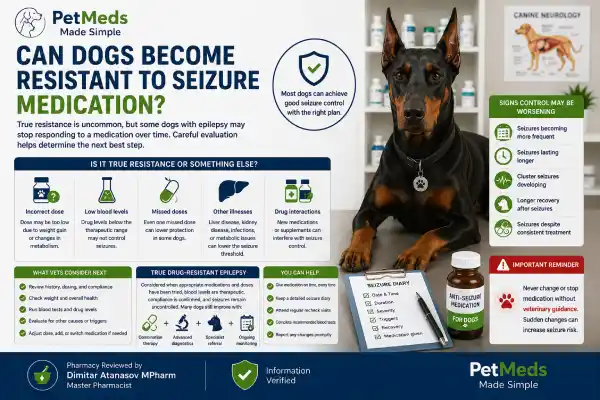
True medication resistance can occur, but it is less common than many owners think.
Veterinary neurologists often prefer the term drug-resistant epilepsy rather than saying a medication has “stopped working.”
Drug-resistant epilepsy is generally considered when:
- appropriate medications have been used,
- therapeutic blood levels have been achieved,
- medications have been given consistently,
- yet seizures remain poorly controlled.
Even in these cases, treatment options still exist.
Veterinarians may recommend:
- adjusting the current dose,
- adding a second anticonvulsant,
- switching medications,
- referral to a veterinary neurologist,
- additional diagnostic testing.
Many dogs achieve improved seizure control after these changes.
7. Drug Interactions Can Trigger Breakthrough Seizures
Sometimes the seizure medication isn’t the problem at all.
A newly introduced medication or supplement may interfere with seizure control.
Potential interactions include:
- certain antibiotics
- corticosteroids
- antifungal medications
- herbal supplements
- CBD products
- sedatives
- some flea and tick products (in susceptible dogs)
Not every interaction causes seizures, but veterinarians always ask about every medication, supplement, and over-the-counter product a dog is receiving.
This is one reason we recently discussed Can Dogs Take CBD With Seizure Medication?, since CBD may alter liver metabolism and affect how certain anticonvulsants behave.
Could Liver Changes Affect Medication Levels?
Absolutely.
Many anticonvulsants particularly phenobarbital are processed by the liver.
If liver function changes over time, medication levels may also change.
Possible consequences include:
- medication being broken down faster
- medication remaining in the body longer
- increased side effects
- reduced seizure control.
This is why routine blood testing remains an important part of long-term epilepsy management.
8. Cluster Seizures May Develop Despite Treatment
Not every breakthrough seizure is an isolated event.
Some dogs experience cluster seizures, meaning two or more seizures within a 24-hour period.
Cluster seizures are considered much more serious because they increase the risk of:
- prolonged recovery
- hospitalization
- status epilepticus
- brain injury
- life-threatening complications.
Dogs with a history of cluster seizures often require emergency medications at home and closer long-term monitoring.
When Is a Breakthrough Seizure an Emergency?
A single brief seizure followed by complete recovery is often less concerning than prolonged or repeated seizures.
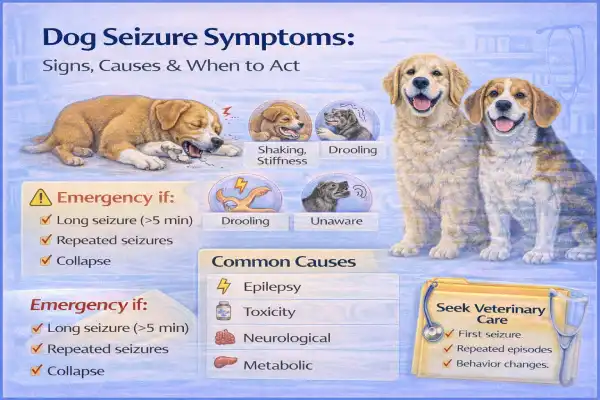
However, owners should seek immediate veterinary care if:
| Emergency Sign | Why It Matters |
|---|---|
| Seizure lasts longer than 5 minutes | Risk of status epilepticus |
| Multiple seizures occur within 24 hours | Cluster seizures require urgent treatment |
| Dog does not regain consciousness | Possible ongoing brain dysfunction |
| Severe difficulty breathing develops | Medical emergency |
| Body temperature rises significantly | Hyperthermia can become life-threatening |
| Another seizure begins before recovery | Emergency neurological situation |
Never wait to “see what happens” if seizures become prolonged or repetitive.
What Will the Veterinarian Do After a Breakthrough Seizure?
Many owners expect the medication dose to be increased immediately.
In reality, veterinarians usually investigate why the seizure occurred before changing treatment.
A typical evaluation may include:
- reviewing seizure history
- discussing medication compliance
- performing a neurological examination
- measuring body weight
- reviewing recent illnesses
- discussing possible toxin exposure
- evaluating recent medication changes
- recommending laboratory testing.
Only after gathering this information will treatment adjustments be considered.
Common Diagnostic Tests
Veterinarians don’t perform every test on every dog.
Instead, they choose investigations based on the individual case.
| Diagnostic Test | Purpose |
|---|---|
| Complete Blood Count (CBC) | Detect infection or inflammation |
| Serum Biochemistry | Evaluate liver and kidney function |
| Blood Glucose | Rule out hypoglycemia |
| Electrolytes | Detect metabolic abnormalities |
| Phenobarbital Blood Level | Confirm therapeutic concentration |
| Bromide Level | Evaluate potassium bromide therapy |
| Urinalysis | Assess overall health |
| MRI or CT Scan | Investigate structural brain disease |
| Cerebrospinal Fluid (CSF) Analysis | Evaluate inflammatory brain disorders |
Many dogs require only basic blood work, while others benefit from advanced neurological testing.
Should Owners Give an Extra Dose After a Breakthrough Seizure?
Usually not.
One of the most common mistakes owners make is giving an extra tablet because they worry the medication “didn’t work.”
Unfortunately, this may increase the risk of overdose and serious side effects.
Always follow your veterinarian’s seizure action plan.
Some dogs are prescribed emergency medications—such as rectal or intranasal diazepam—for prolonged seizures, but these should only be used exactly as instructed.
Never increase daily seizure medication without veterinary guidance.
Can Breakthrough Seizures Be Prevented?
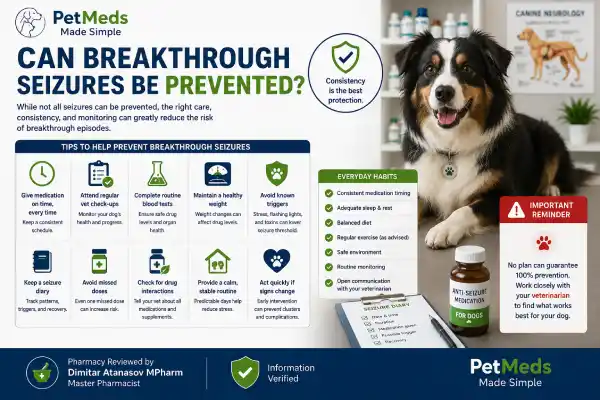
Not every breakthrough seizure can be prevented.
However, several steps significantly reduce the risk.
Owners can help by:
- giving medication at the same time every day
- never skipping doses
- attending routine recheck appointments
- completing recommended blood tests
- maintaining a healthy body weight
- avoiding known seizure triggers
- informing the veterinarian about every supplement or medication
- keeping a detailed seizure diary.
Consistency remains one of the most powerful tools in long-term epilepsy management.
What Information Should Owners Record After Every Seizure?
One of the most valuable things an owner can do is keep a detailed seizure diary.
Many breakthrough seizures happen weeks or months apart, making it difficult to remember exactly what occurred. A written record helps your veterinarian identify patterns that might otherwise be missed.
Try to record:
- Date and time of the seizure
- Approximate seizure duration
- What your dog was doing beforehand
- Any possible trigger (stress, excitement, illness, missed medication)
- Whether medication was given on time
- Recovery time
- Appetite after the seizure
- Behavior during the next 24 hours
Even short notes can provide valuable information during follow-up appointments.
Seizure Diary Example
| Information to Record | Example |
|---|---|
| Date | July 12 |
| Time | 8:45 PM |
| Duration | Approximately 90 seconds |
| Medication Given? | Yes, Phenobarbital at 8 AM and 8 PM |
| Missed Dose? | No |
| Possible Trigger | Fireworks nearby |
| Recovery Time | 20 minutes |
| Appetite | Normal |
| Walking Normally? | Yes after recovery |
Keeping consistent records often helps determine whether seizures are becoming more frequent or whether treatment adjustments are working.
Questions Your Veterinarian Will Probably Ask
When a dog experiences a breakthrough seizure, veterinarians usually ask many detailed questions.
Examples include:
- When was the last seizure?
- Has the seizure frequency changed?
- Has your dog missed any medication?
- Has your dog gained or lost weight?
- Have there been any new medications?
- Has your dog started CBD or supplements?
- Has your dog vomited after medication?
- Has appetite changed?
- Has water consumption increased?
- Has your dog shown unusual behavior recently?
These questions help identify the underlying cause rather than simply treating the seizure itself.
Could Your Dog Need a Higher Dose?

Sometimes.
But veterinarians don’t automatically increase medication after one seizure.
Instead, they consider:
- Blood drug concentrations
- Body weight
- Frequency of seizures
- Severity of seizures
- Medication side effects
- Liver function
- Kidney function
If blood levels remain therapeutic, simply increasing the dose may provide little additional benefit while increasing the risk of adverse effects.
Could Another Medication Be Added?
Yes.
Combination therapy is common in dogs whose seizures are no longer adequately controlled by a single medication.
Examples include:
| Primary Medication | Possible Additional Medication |
|---|---|
| Phenobarbital | Levetiracetam (Keppra) |
| Phenobarbital | Potassium Bromide |
| Keppra | Phenobarbital |
| Phenobarbital | Zonisamide |
| Potassium Bromide | Keppra |
The exact combination depends on:
- seizure frequency,
- seizure type,
- age,
- concurrent diseases,
- previous response to therapy.
Can Lifestyle Changes Help Reduce Breakthrough Seizures?
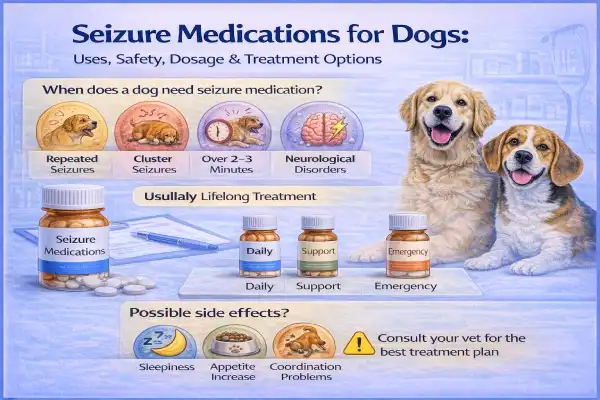
Medication remains the cornerstone of epilepsy treatment.
However, maintaining a stable daily routine may reduce seizure triggers in some dogs.
Helpful habits include:
- Giving medication at exactly the same time every day.
- Avoiding sudden dietary changes.
- Maintaining a healthy body weight.
- Providing regular sleep.
- Minimizing unnecessary stress.
- Preventing overheating during exercise.
- Scheduling routine veterinary examinations.
- Completing recommended laboratory monitoring.
While lifestyle changes cannot cure epilepsy, they can support long-term seizure management.
Related Symptoms Owners Often Notice
Owners searching “Why Does My Dog Have Breakthrough Seizures?” often ask related questions such as:
- Can seizure medication stop working?
- Can dogs miss a dose of seizure medication?
- Can seizure medication cause depression?
- Why is my dog drinking more water on seizure medication?
- Why is my dog hungry all the time on phenobarbital?
- Can dogs take CBD with seizure medication?
- Can seizure medication affect the liver?
- Can dogs stay on seizure medication for life?
These symptoms frequently occur together because epilepsy management often involves long-term monitoring, medication adjustments, and regular veterinary follow-up.
Veterinarian Takeaway
A breakthrough seizure does not automatically mean your dog’s medication has failed. In many cases, the cause is something that can be identified and corrected, such as a missed dose, changes in body weight, altered medication metabolism, or progression of the underlying disease.
The safest approach is to contact your veterinarian promptly after any unexpected seizure, keep a detailed seizure diary, and follow recommendations for blood testing and medication monitoring. With appropriate adjustments, many dogs continue to enjoy excellent seizure control and a good quality of life for many years.
Bottom Line
Breakthrough seizures are one of the most common challenges in managing canine epilepsy.
Although they can be frightening, they do not necessarily indicate that treatment has stopped working. Many cases are related to changes in medication levels, missed doses, illness, or other factors that can often be corrected.
Working closely with your veterinarian, maintaining consistent medication schedules, attending routine monitoring appointments, and documenting every seizure are the best ways to improve long-term seizure control and keep your dog safe.
Frequently Asked Questions – Why Does My Dog Have Breakthrough Seizures
What is a breakthrough seizure in dogs?
A breakthrough seizure is a seizure that occurs despite a dog already receiving anti-seizure medication.
Does one breakthrough seizure mean the medication has failed?
No. A single seizure does not necessarily mean treatment is no longer effective.
Can missing one dose trigger a seizure?
Yes. In some dogs, even one missed dose can lower medication levels enough to increase seizure risk.
Should I give an extra dose after a breakthrough seizure?
No. Never give an additional dose unless your veterinarian specifically instructs you to do so.
Can stress trigger breakthrough seizures?
Stress may lower the seizure threshold in some dogs and contribute to seizure activity.
Will my dog need stronger medication?
Not necessarily. Your veterinarian may first recommend blood tests or investigate other causes before changing treatment.
Can liver disease cause breakthrough seizures?
Indirectly, yes. Liver disease may alter how seizure medications are metabolized, affecting their effectiveness.
Should blood tests be repeated?
Often yes, especially for dogs receiving long-term phenobarbital or potassium bromide therapy.
Can breakthrough seizures be prevented completely?
Unfortunately, not always. However, consistent medication, routine monitoring, and avoiding known triggers can significantly reduce the risk.
When should I seek emergency veterinary care?
Immediately seek emergency care if a seizure lasts longer than five minutes, multiple seizures occur within 24 hours, your dog does not recover normally, or another seizure begins before recovery is complete.
Sources
- Plumb’s Veterinary Drug Handbook
- BSAVA Small Animal Formulary
- Merck Veterinary Manual
- Veterinary Pharmacology and Therapeutics (Papich & Riviere)
- International Veterinary Epilepsy Task Force (IVETF) Consensus Guidelines
- American College of Veterinary Internal Medicine (ACVIM) Consensus Statement on Seizure Management
- Journal of Veterinary Internal Medicine (JVIM)
- Frontiers in Veterinary Science
- JAVMA (Journal of the American Veterinary Medical Association)
- Veterinary Neurology and Neurosurgery texts
- PubMed
Medical Review Statement
This article was written by Dimitar Georgiev Atanasov, MPharm, pharmacy and scientifically reviewed by Gergana Krasimirova Atanasova, MPharm, and independently veterinary reviewed by Dr. Valcho Georgiev Valchev, DVM. It is based on current veterinary neurology guidelines, peer-reviewed scientific literature, and evidence-based recommendations for the diagnosis and management of canine epilepsy.
Image Disclosure
Some images used in this article may be AI-generated or AI-assisted for educational purposes. Every PMMS article is independently researched, pharmacy-written, scientifically reviewed, and veterinary-reviewed. AI-generated illustrations are intended solely to improve understanding of veterinary medications and neurological conditions and should not be interpreted as photographs of actual clinical patients.