Dimitar Georgiev Atanasov

I hold a Master's degree in Pharmacy and have worked as a pharmacist for over 10 years, helping people manage their health through safe and effective medication use. Four years ago, my own dog faced serious health challenges that changed everything. Watching him struggle sparked a deep personal interest in how drugs affect animals, and I began studying veterinary pharmacology, pharmacokinetics in pets, and animal-specific drug responses on my own. What started as research to help my furry companion grew into a passion for bridging human pharmacy knowledge with animal care. Today, I run this blog to share practical, evidence-based information with other pet owners and animal lovers. My goal is to help people better understand medications for their pets, make informed decisions alongside their veterinarians, and improve the quality of life for animals facing health issues—just like I did for my dog. Whether you're dealing with a chronic condition, curious about side effects, or looking for reliable advice, I'm here to provide clear, trustworthy insights drawn from my pharmacy expertise and real-world experience with pet health.

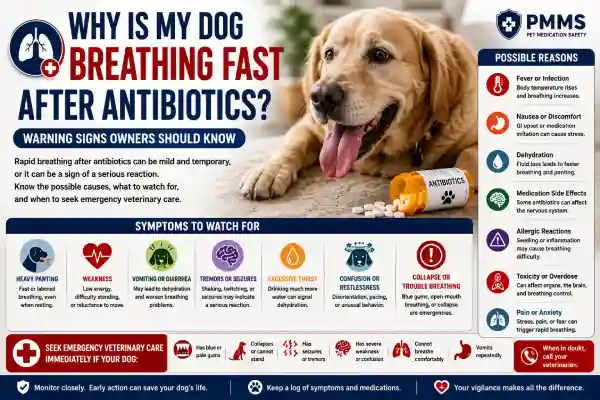
Why Is My Dog Breathing Fast After Antibiotics?

Why Is My Dog Breathing Fast After Antibiotics? Warning Signs Owners Should Know

Why is my dog breathing fast after antibiotics? Learn the most common causes of rapid breathing in dogs after antibiotics, including fever, dehydration, allergic reactions, toxicity, pain, neurological complications, and emergency warning signs that may require immediate veterinary care.

Why Is My Dog Breathing Fast After Antibiotics? Warning Signs Owners Should Know Read More »

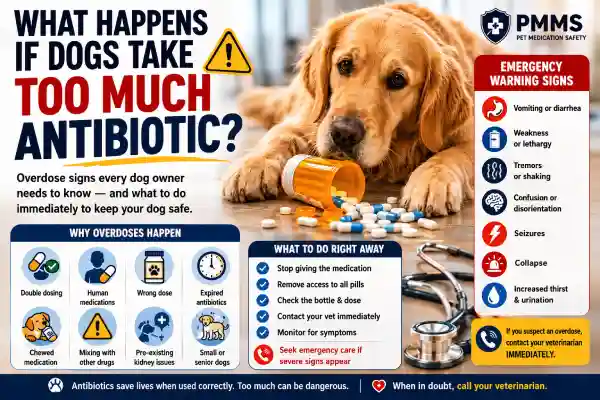
What Happens If Dogs Take Too Much Antibiotic?

What Happens If Dogs Take Too Much Antibiotic? Overdose Warning Signs Every Owner Should Know

What happens if dogs take too much antibiotic? Learn the most common signs of antibiotic overdose in dogs, including vomiting, tremors, seizures, weakness, dehydration, kidney complications, and neurological toxicity — plus what owners should do immediately in an emergency.

What Happens If Dogs Take Too Much Antibiotic? Overdose Warning Signs Every Owner Should Know Read More »

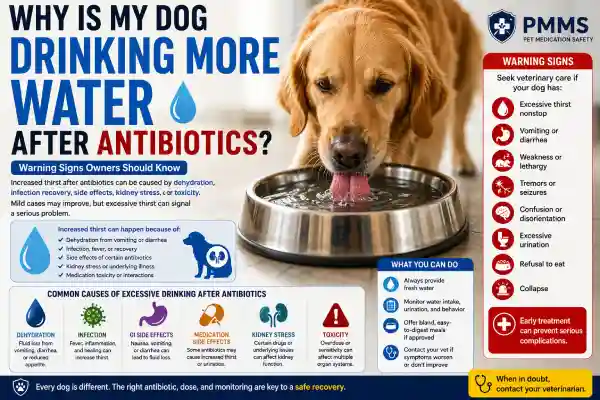
Why Is My Dog Drinking More Water After Antibiotics?

Why Is My Dog Drinking More Water After Antibiotics? Warning Signs Owners Should Know

Why is my dog drinking more water after antibiotics? Learn the most common causes of increased thirst in dogs after antibiotics, including dehydration, diarrhea, infection recovery, kidney stress, medication side effects, and toxicity warning signs that may require immediate veterinary care.

Why Is My Dog Drinking More Water After Antibiotics? Warning Signs Owners Should Know Read More »

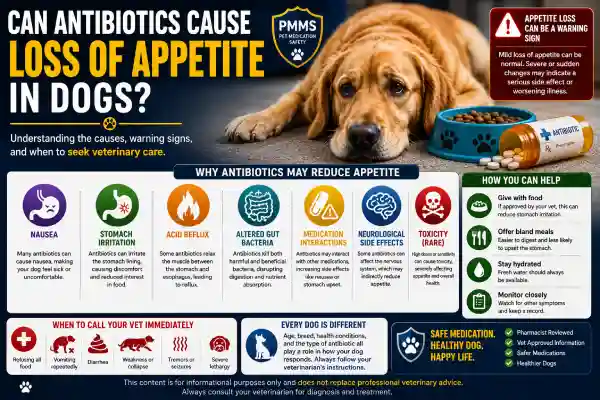
Can Antibiotics Cause Loss of Appetite in Dogs?

Can Antibiotics Cause Loss of Appetite in Dogs? Warning Signs Owners Should Know

Can antibiotics cause loss of appetite in dogs? Learn why dogs may stop eating after antibiotics, which medications most commonly cause nausea or GI irritation, and which warning signs may signal toxicity, acid reflux, medication interactions, or serious side effects requiring veterinary care.

Can Antibiotics Cause Loss of Appetite in Dogs? Warning Signs Owners Should Know Read More »

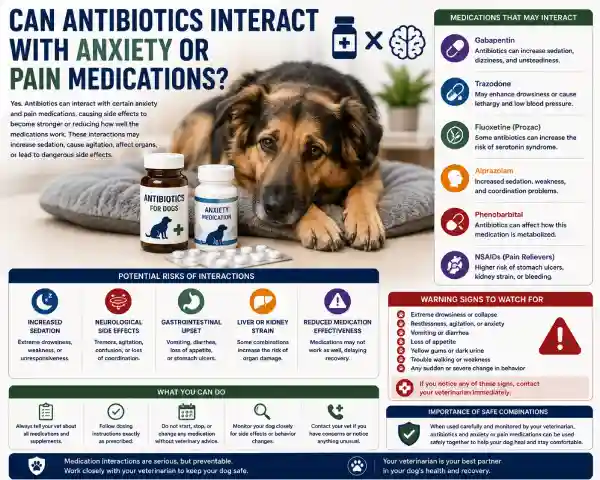
Can Antibiotics Interact With Anxiety or Pain Medications

Can Antibiotics Interact With Anxiety or Pain Medications? (Vet-Backed Safety Guide)

Can antibiotics interact with anxiety or pain medications in dogs? Learn which medication combinations may increase the risk of weakness, tremors, neurological side effects, sedation, toxicity, GI irritation, or dangerous drug interactions — including warning signs every dog owner should know.

Can Antibiotics Interact With Anxiety or Pain Medications? (Vet-Backed Safety Guide) Read More »

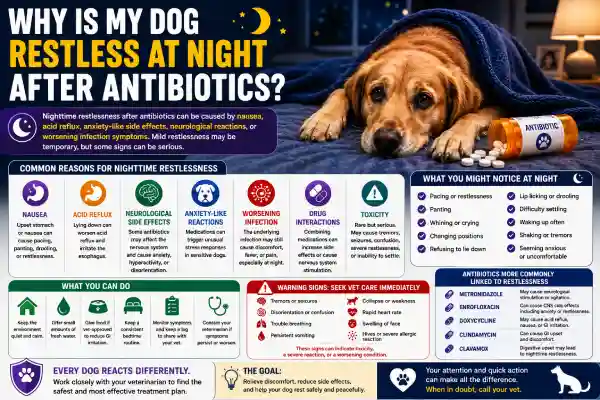
Why Is My Dog Restless at Night After Antibiotics?

Why Is My Dog Restless at Night After Antibiotics? Warning Signs Owners Should Never Ignore

Why is my dog restless at night after antibiotics? Learn the most common causes of nighttime pacing, panting, anxiety, nausea, acid reflux, neurological side effects, and medication toxicity in dogs after antibiotics — including dangerous warning signs owners should never ignore.

Why Is My Dog Restless at Night After Antibiotics? Warning Signs Owners Should Never Ignore Read More »

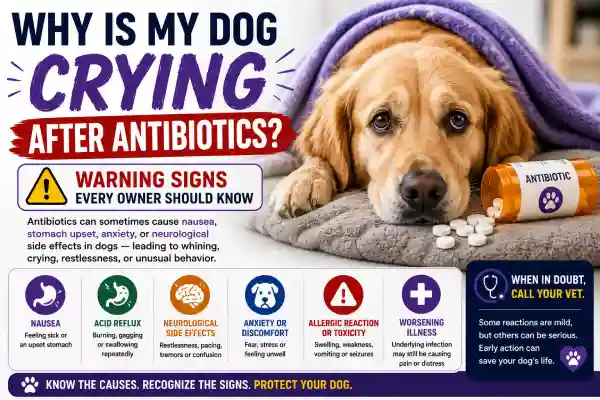
Why Is My Dog Crying After Antibiotics

Why Is My Dog Crying After Antibiotics? Warning Signs Every Owner Should Know

Why is my dog crying after antibiotics? Learn the most common causes of whining, vocalization, pacing, nausea, acid reflux, toxicity symptoms, and medication side effects in dogs after antibiotics — including dangerous warning signs every dog owner should know.

Why Is My Dog Crying After Antibiotics? Warning Signs Every Owner Should Know Read More »

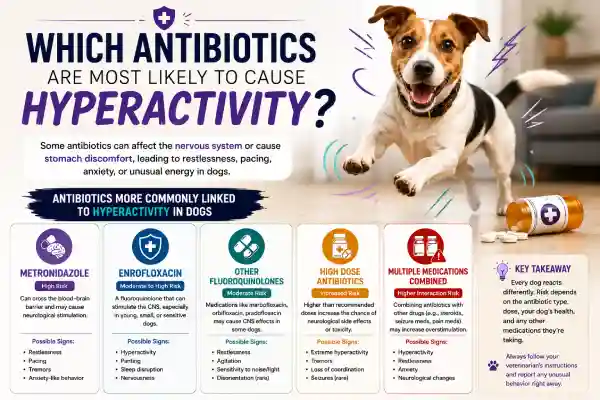
Can Antibiotics Cause Hyperactivity in Dogs?

Can Antibiotics Cause Hyperactivity in Dogs? (Vet-Backed Guide)

Can antibiotics cause hyperactivity in dogs? Learn why some dogs become restless, anxious, hyper, or unable to settle after antibiotics. Discover which medications are most commonly linked to neurological side effects, pacing, panting, anxiety-like behavior, toxicity warning signs, and when you should contact your veterinarian immediately.

Can Antibiotics Cause Hyperactivity in Dogs? (Vet-Backed Guide) Read More »

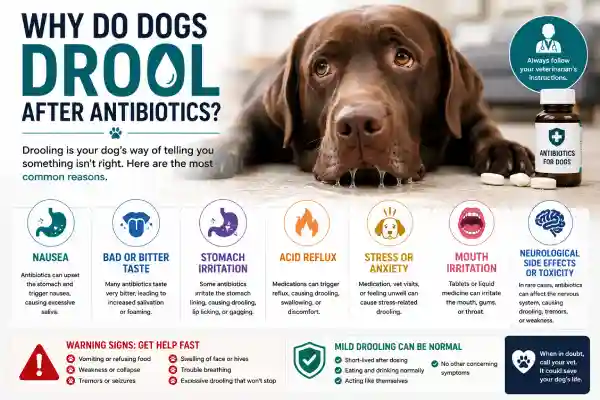
Why Does My Dog Drool After Antibiotics?

Why Does My Dog Drool After Antibiotics? (Vet-Backed Guide)

Why does my dog drool after antibiotics? Learn the most common causes of excessive salivation in dogs after antibiotics, including nausea, bitter taste, acid reflux, allergic reactions, and toxicity warning signs. Discover which antibiotics are most likely to cause drooling and when you should contact your veterinarian immediately.

Why Does My Dog Drool After Antibiotics? (Vet-Backed Guide) Read More »

Scroll to Top