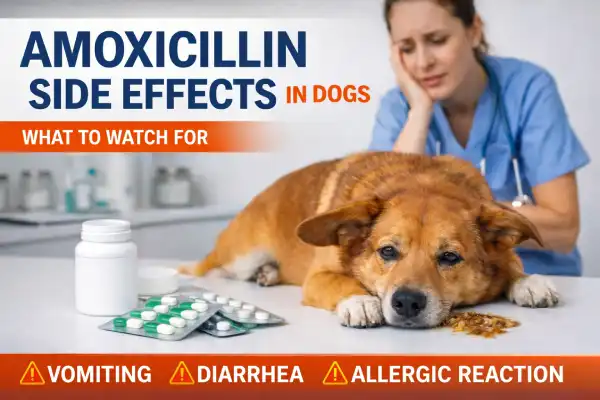

Quick Answer
Why Is My Dog Crying After Antibiotics? Dogs may cry, whine, yelp, or vocalize after antibiotics because of nausea, stomach pain, acid reflux, anxiety, dizziness, medication side effects, allergic reactions, or worsening illness. Mild whining can sometimes happen from temporary discomfort, but persistent crying combined with weakness, tremors, vomiting, confusion, swelling, or breathing problems may signal a serious reaction that requires immediate veterinary attention.
Few things are more stressful for dog owners than hearing their dog suddenly:
- Cry after medication
- Whine all night
- Yelp unexpectedly
- Pace and vocalize
- Act uncomfortable after antibiotics
Many owners immediately panic and think:
“Did the antibiotics hurt my dog?”
Sometimes the cause is relatively mild.
Other times, crying can be an early warning sign of:
- Severe nausea
- Acid reflux
- Medication intolerance
- Neurological side effects
- Toxicity
- Allergic reactions
- Drug interactions
- Worsening infection
The difficult part is that dogs cannot explain what feels wrong.
Instead, they communicate discomfort through:
- Whining
- Restlessness
- Pacing
- Crying
- Hiding
- Excess swallowing
- Trembling
- Vocalization
This guide explains:
- Why dogs cry after antibiotics
- Which antibiotics most commonly trigger discomfort
- What symptoms are dangerous
- How veterinarians diagnose medication reactions
- What treatments may help
- When you should call your veterinarian immediately
Related articles:
- Why Is My Dog Acting Strange After Antibiotics?
- Can Antibiotics Cause Hyperactivity in Dogs?
- Why Does My Dog Drool After Antibiotics?
- Can Antibiotics Cause Weakness in Dogs?
- Can Antibiotics Cause Shaking in Dogs?
- What Does Antibiotic Toxicity Look Like in Dogs?
For broader guidance:
- Antibiotics for Dogs: Uses, Types, Dosage, Side Effects & Safety Guide
- Safest Antibiotics for Dogs: Vet Comparison Guide
- Pain Medications for Dogs
- Seizure Medications for Dogs
Why Is My Dog Crying After Antibiotics?
Why Do Dogs Cry After Antibiotics?
Dogs may cry after antibiotics because they feel:
- Nauseated
- Dizzy
- Anxious
- Painful
- Restless
- Neurologically uncomfortable
Sometimes the medication itself is responsible.
Other times the infection or illness is still causing pain despite treatment.
Common Reasons Dogs Cry After Antibiotics
| Cause | Common? | Serious? |
|---|---|---|
| Nausea | Very common | Usually mild |
| Acid reflux | Common | Usually mild |
| GI cramping | Common | Mild to moderate |
| Anxiety-like reaction | Sometimes | Usually mild |
| Neurological side effects | Less common | Potentially serious |
| Toxicity | Rare | Serious |
| Allergic reaction | Rare | Emergency |
| Worsening infection | Sometimes | Potentially serious |
What Does Medication-Related Crying Look Like?
Medication-related crying can appear differently depending on the cause.
Common Signs
| Behavior | Possible Meaning |
|---|---|
| Whining | Nausea or discomfort |
| Crying at night | Acid reflux or anxiety |
| Sudden yelping | Pain or neurological symptoms |
| Pacing and crying | GI discomfort |
| Restless vocalization | Medication intolerance |
| High-pitched crying | Severe distress |
Some dogs also:
- Hide
- Tremble
- Refuse food
- Drool excessively
- Become clingy
- Cannot settle comfortably
Which Antibiotics Most Commonly Cause Discomfort?

Some antibiotics are more likely to trigger stomach irritation or neurological side effects.
Antibiotics More Commonly Associated With Crying or Distress
| Antibiotic | Possible Problem |
|---|---|
| Metronidazole | Neurological side effects |
| Doxycycline | Acid reflux and nausea |
| Clindamycin | GI irritation |
| Enrofloxacin | Nervous system stimulation |
| Clavamox | Digestive upset |
Related:
- Metronidazole Side Effects in Dogs
- Doxycycline Side Effects in Dogs
- Enrofloxacin Side Effects in Dogs
- Clavamox Side Effects in Dogs
Can Nausea Cause Dogs to Cry?
Absolutely.
Nausea is one of the most common causes of whining after antibiotics.
Dogs experiencing nausea often:
- Lip lick constantly
- Swallow repeatedly
- Pace
- Drool
- Refuse food
- Cry at night
- Act anxious
Some dogs become extremely restless because they cannot get comfortable.
Related:
Can Antibiotics Cause Acid Reflux?
Yes — especially when medications irritate the esophagus or stomach.
Acid reflux may cause:
- Crying at night
- Swallowing repeatedly
- Burping
- Gagging
- Restlessness
- Refusal to lie down comfortably
Doxycycline is especially known for causing esophageal irritation in some dogs.
Related:
Can Antibiotics Cause Anxiety-Like Behavior?
Sometimes yes.
Certain antibiotics may contribute to:
- Hyperactivity
- Nervousness
- Restlessness
- Clingy behavior
- Panic-like reactions
This is more likely in:
- Sensitive dogs
- Small breeds
- Dogs taking multiple medications
- Dogs with neurological conditions
Related:
Can Crying Be a Sign of Toxicity?
Sometimes — and this is extremely important.
Medication toxicity may affect the nervous system and trigger:
- Crying
- Restlessness
- Tremors
- Weakness
- Confusion
- Seizures
- Collapse
Toxicity Warning Signs
| Symptom | Emergency? |
|---|---|
| Tremors | Yes |
| Severe pacing | Yes |
| Loss of coordination | Yes |
| Seizures | Emergency |
| Collapse | Emergency |
| Confusion | Yes |
| Severe weakness | Yes |
Related:
Can Drug Interactions Cause Crying?
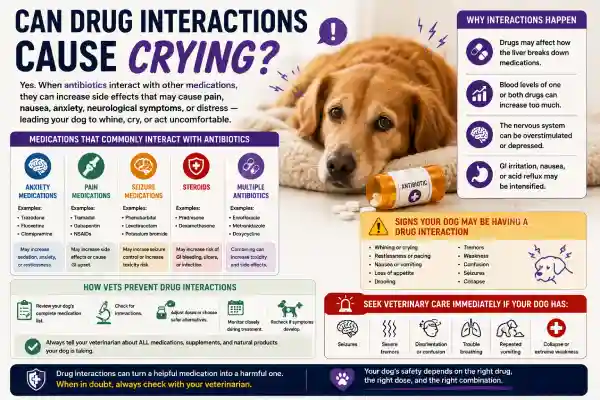
Yes.
This becomes especially important in dogs taking:
- Anxiety medications
- Pain medications
- Seizure medications
- Steroids
- Multiple antibiotics
Drug interactions may increase:
- Nervous system stimulation
- Nausea
- Dizziness
- Behavioral reactions
Related:
- Can Antibiotics Interact With Anxiety or Pain Medications?
- Seizure Medications for Dogs
- Pain Medications for Dogs
Can the Infection Itself Cause Crying?
Absolutely.
Sometimes the medication is NOT the real problem.
The underlying illness may still be causing:
- Fever
- Pain
- Pressure
- Inflammation
- Severe discomfort
This is especially important if:
- Symptoms worsen
- Crying becomes constant
- Appetite disappears
- Weakness develops
Why Does My Dog Cry at Night After Antibiotics?
Nighttime symptoms are very common.
Dogs may cry more at night because:
- Acid reflux worsens while lying down
- Nausea feels stronger
- The environment becomes quieter
- Anxiety increases
- GI discomfort becomes more noticeable
Night pacing combined with whining is commonly linked to:
- Reflux
- Nausea
- Restlessness
- Medication intolerance
Which Dogs Are Most Sensitive to Side Effects?
Higher-Risk Dogs
| Dog Type | Why Risk Increases |
|---|---|
| Small breeds | Higher drug sensitivity |
| Senior dogs | Slower metabolism |
| Dogs with liver disease | Reduced medication clearance |
| Dogs with kidney disease | Increased toxicity risk |
| Dogs with GI disease | Easier stomach irritation |
| Dogs on multiple medications | Interaction risk |
How Veterinarians Diagnose Medication Reactions
Veterinarians evaluate:
- Timing of symptoms
- Type of antibiotic
- Neurological signs
- GI symptoms
- Drug interactions
- Existing medical conditions
Possible tests may include:
- Bloodwork
- Neurological examination
- Toxicity evaluation
- Medication review
- GI assessment
How Is Crying After Antibiotics Treated?
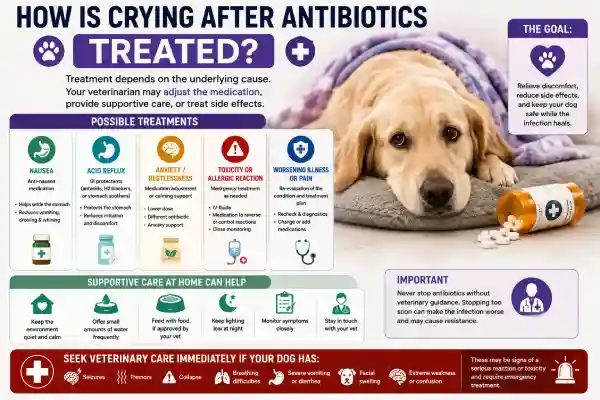
Treatment depends on the cause.
Possible Treatments
| Cause | Possible Treatment |
|---|---|
| Nausea | Anti-nausea medication |
| Acid reflux | GI protectants |
| Anxiety-like behavior | Medication adjustment |
| Toxicity | Emergency treatment |
| Allergic reaction | Emergency care |
| Worsening infection | Antibiotic reassessment |
How to Comfort Your Dog Safely
Helpful Strategies
| Tip | Why It Helps |
|---|---|
| Keep the environment calm | Reduce stress |
| Offer water regularly | Prevent dehydration |
| Use food if vet-approved | Reduce GI irritation |
| Avoid forcing activity | Prevent worsening discomfort |
| Monitor breathing and coordination | Detect emergencies |
| Contact your vet if symptoms worsen | Improve safety |
When Should You Call the Vet Immediately?
Seek emergency veterinary care if crying occurs with:
- Tremors
- Seizures
- Collapse
- Trouble breathing
- Facial swelling
- Severe vomiting
- Weakness
- Loss of coordination
- Severe confusion
- Continuous pacing
- Refusal to eat for over 24 hours
These symptoms may indicate:
- Toxicity
- Severe allergic reaction
- Neurological complications
- Dangerous medication reactions
- Worsening infection
FAQ – Why Is My Dog Crying After Antibiotics
Is it normal for dogs to cry after antibiotics?
Mild whining may occasionally happen from nausea or discomfort, but persistent crying should always be monitored carefully.
Why does my dog cry at night after antibiotics?
Nighttime crying is commonly linked to acid reflux, nausea, anxiety, or GI discomfort.
Can antibiotics cause pain in dogs?
Some antibiotics may irritate the stomach or esophagus, causing discomfort that leads to whining or vocalization.
Can crying be a sign of toxicity?
Yes — especially if crying occurs with tremors, weakness, confusion, seizures, or collapse.
Should I stop antibiotics if my dog cries?
Do not stop antibiotics without veterinary guidance unless emergency symptoms develop.
Can Stress From Medication Make Dogs More Vocal?
Yes — and many owners underestimate how stressful medications can feel for dogs.
Some dogs become emotionally distressed after taking antibiotics because they associate medication with:
- Nausea
- Bad taste
- Stomach discomfort
- Forced pill administration
- Previous negative experiences
Over time, this can create anxiety-like behavior where the dog begins:
- Crying before medication
- Hiding at medication time
- Whining after swallowing pills
- Refusing food
- Acting unusually clingy or fearful
This emotional stress may become even stronger if the dog already feels physically sick from the infection itself.
Interestingly, some dogs also react to the owner’s anxiety. If owners become visibly worried, repeatedly check on the dog, or panic after side effects appear, sensitive dogs may become even more stressed and vocal.
Creating a calmer medication routine can sometimes help reduce whining and crying.
Helpful strategies include:
- Using calm body language
- Offering rewards after medication
- Giving pills with vet-approved food
- Avoiding forceful restraint when possible
- Keeping medication times predictable
- Offering quiet rest afterward
Dogs experiencing stress-related vocalization often improve once:
- The medication course finishes
- Nausea improves
- The infection begins healing
- The dog feels physically normal again
However, persistent crying should never simply be dismissed as “anxiety,” especially if neurological symptoms, weakness, vomiting, or tremors are also present.
Medical Disclaimer
This article is for educational purposes only and does not replace professional veterinary advice, diagnosis, or treatment. The content is written and pharmacist-reviewed to improve medication safety awareness and help dog owners better understand antibiotic side effects, neurological reactions, digestive complications, toxicity risks, and veterinary treatment considerations. Always consult your veterinarian before starting, stopping, or changing any medication for your dog.Why Is My Dog Crying After Antibiotics
Sources
- Merck Veterinary Manual
- VIN Veterinary Partner
- American Veterinary Medical Association (AVMA)
- FDA Center for Veterinary Medicine
- WSAVA Global Veterinary Guidelines