Dimitar Georgiev Atanasov

I hold a Master's degree in Pharmacy and have worked as a pharmacist for over 10 years, helping people manage their health through safe and effective medication use. Four years ago, my own dog faced serious health challenges that changed everything. Watching him struggle sparked a deep personal interest in how drugs affect animals, and I began studying veterinary pharmacology, pharmacokinetics in pets, and animal-specific drug responses on my own. What started as research to help my furry companion grew into a passion for bridging human pharmacy knowledge with animal care. Today, I run this blog to share practical, evidence-based information with other pet owners and animal lovers. My goal is to help people better understand medications for their pets, make informed decisions alongside their veterinarians, and improve the quality of life for animals facing health issues—just like I did for my dog. Whether you're dealing with a chronic condition, curious about side effects, or looking for reliable advice, I'm here to provide clear, trustworthy insights drawn from my pharmacy expertise and real-world experience with pet health.

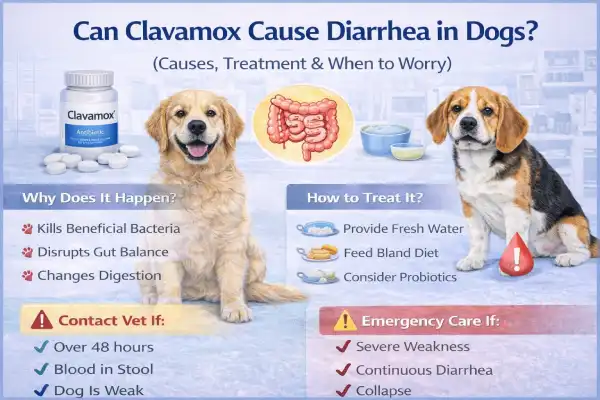
Can Clavamox Cause Diarrhea in Dogs?

Can Clavamox Cause Diarrhea in Dogs? (Causes, Treatment & When to Worry)

Clavamox can cause diarrhea in dogs by disrupting the balance of gut bacteria. While most cases are mild and temporary, some dogs may develop more serious digestive symptoms that require veterinary care. Understanding the causes, warning signs, and treatment options can help you manage this common antibiotic side effect safely.

Can Clavamox Cause Diarrhea in Dogs? (Causes, Treatment & When to Worry) Read More »
When Does a Dog Need Antibiotics

When Does a Dog Need Antibiotics? (Signs, Conditions & Vet-Backed Guide)

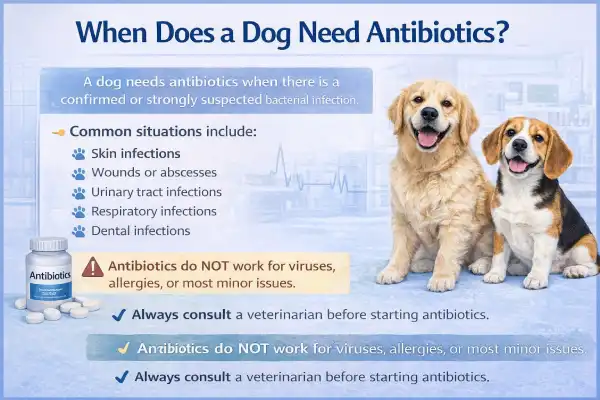
When Does a Dog Need Antibiotics – A dog needs antibiotics when there is a confirmed or strongly suspected bacterial infection. 👉 Common situations include: ⚠️ Antibiotics do NOT work for viruses, allergies, or most minor issues. What Are Antibiotics for Dogs? Antibiotics are medications used to kill or stop the growth of bacteria. Common

When Does a Dog Need Antibiotics? (Signs, Conditions & Vet-Backed Guide) Read More »

Is Enrofloxacin Safe for Puppies?

Is Enrofloxacin Safe for Puppies? (Risks, Side Effects & Safer Alternatives)

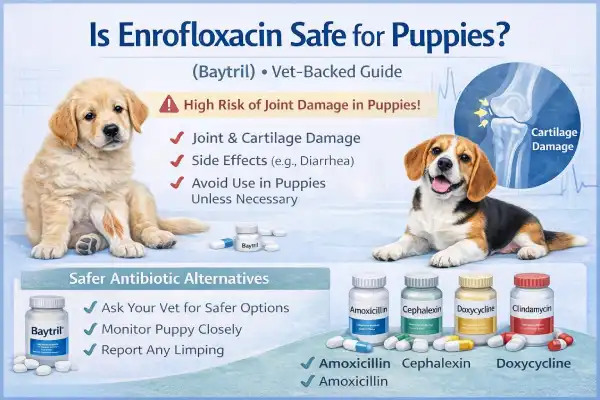
Is Enrofloxacin Safe for Puppies? – No — Enrofloxacin (Baytril) is generally NOT considered safe for puppies, especially during their growth phase. 👉 Why? 👉 However: ⚠️ Puppies are the highest-risk group for this antibiotic. Why Is Enrofloxacin Risky for Puppies? Enrofloxacin belongs to the fluoroquinolone class, which is known to affect joint development. What

Is Enrofloxacin Safe for Puppies? (Risks, Side Effects & Safer Alternatives) Read More »

best antibiotics for dogs comparison chart

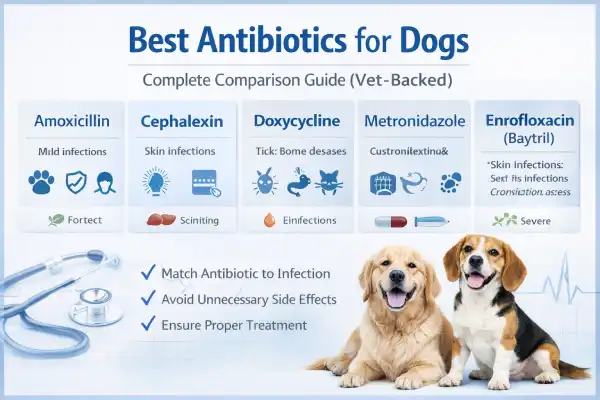
Best Antibiotics for Dogs: When to Use Each (Complete Vet-Backed Comparison Guide)

Best Antibiotics for Dogs depends on the infection. 👉 Most commonly used: ⚠️ There is no “one best antibiotic” — correct choice depends on diagnosis. Why Choosing the Right Antibiotic Matters Using the wrong antibiotic can: 👉 That’s why this guide connects all key medications from your Antibiotics for Dogs: Uses, Types, Dosage, Side Effects

Best Antibiotics for Dogs: When to Use Each (Complete Vet-Backed Comparison Guide) Read More »

Enrofloxacin (Baytril) for Dogs

Enrofloxacin (Baytril) for Dogs: Uses, Dosage, Side Effects & Safety (Vet-Backed Guide)

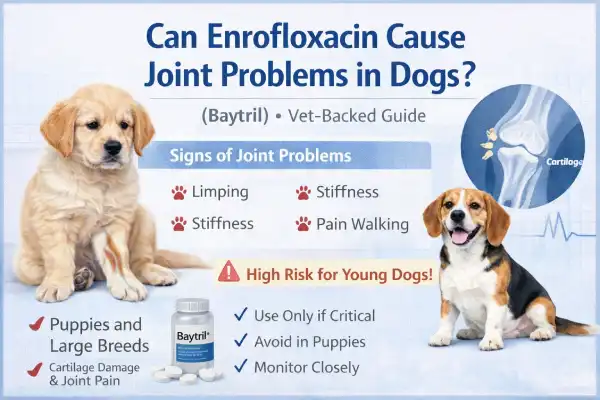
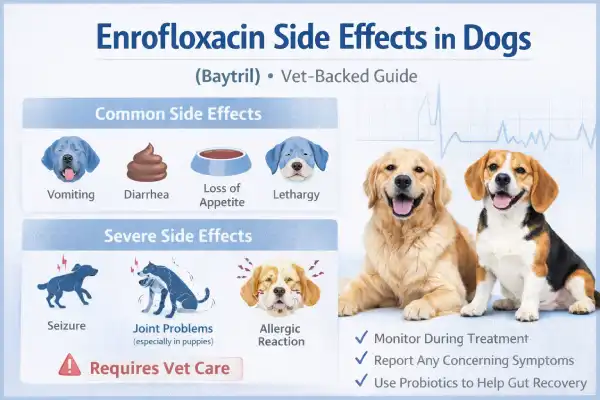
Enrofloxacin (Baytril) is a powerful broad-spectrum antibiotic used in dogs to treat serious bacterial infections. 👉 It is commonly prescribed for: 👉 Most dogs tolerate it well, but it can cause: ⚠️ It should be used carefully in young dogs and dogs with neurological conditions. What Is Enrofloxacin (Baytril) for Dogs? Enrofloxacin is a fluoroquinolone

Enrofloxacin (Baytril) for Dogs: Uses, Dosage, Side Effects & Safety (Vet-Backed Guide) Read More »

Scroll to Top