
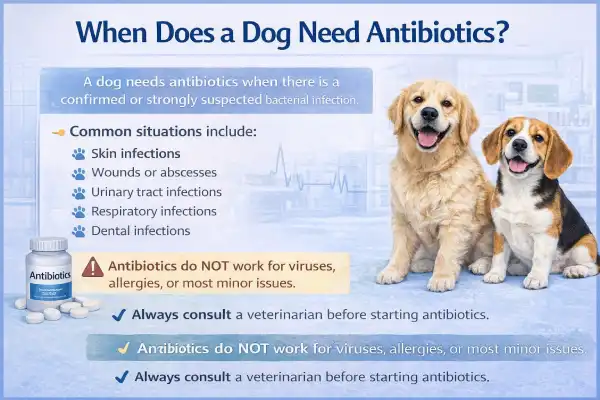
When Does a Dog Need Antibiotics – A dog needs antibiotics when there is a confirmed or strongly suspected bacterial infection.
👉 Common situations include:
- Skin infections
- Wounds or abscesses
- Urinary tract infections
- Respiratory infections
- Dental infections
⚠️ Antibiotics do NOT work for viruses, allergies, or most minor issues.
What Are Antibiotics for Dogs?
Antibiotics are medications used to kill or stop the growth of bacteria.
Common veterinary antibiotics include:
- Amoxicillin
- Cephalexin
- Doxycycline
- Metronidazole
- Clindamycin
- Enrofloxacin
👉 Each one is used for different types of infections, which is why choosing the right one matters.
👉 If you want a full breakdown:
When Does a Dog Need Antibiotics?
When Does a Dog Need Antibiotics? (Full Breakdown)
Not every illness requires antibiotics. In fact, using them unnecessarily can cause more harm than good.
1. Skin Infections
👉 Signs:
- Redness
- Pus
- Swelling
- Hair loss
👉 Common causes:
- Bacterial infections
- Infected wounds
👉 Often treated with:
- Cephalexin for Dogs: Uses, Dosage, Side Effects & Safety
- Amoxicillin for Dogs: Uses, Dosage & Side Effects
2. Wounds and Abscesses
👉 If a wound becomes infected:
- Swelling
- Heat
- Pain
- Pus
👉 Antibiotics are needed to prevent:
- Spread of infection
- Systemic illness
3. Urinary Tract Infections (UTIs)
👉 Signs:
- Frequent urination
- Blood in urine
- Pain when urinating
👉 May require antibiotics depending on cause.
4. Respiratory Infections
👉 Signs:
- Coughing
- Nasal discharge
- Fever
👉 Not all require antibiotics
👉 Only bacterial cases do
👉 Sometimes treated with:
5. Gastrointestinal Infections
👉 Signs:
- Diarrhea
- Vomiting
- Weakness
👉 Only certain bacterial cases need antibiotics
👉 Example:
6. Dental Infections
👉 Signs:
- Bad breath
- Swelling
- Pain
👉 Often treated with:
7. Severe or Resistant Infections
👉 In serious cases:
- Deep infections
- Resistant bacteria
👉 Stronger antibiotics may be used:

Table 1: When Dogs Need Antibiotics
| Condition | Needs Antibiotics? |
|---|---|
| Skin infection | Yes |
| Viral infection | No |
| Minor wound | Usually no |
| Infected wound | Yes |
| UTI | Often |
| Allergies | No |
When Dogs DO NOT Need Antibiotics
👉 This is where most owners make mistakes
Viral infections
- Kennel cough (most cases)
- Flu
Allergies
- Itching
- Skin redness
Minor digestive upset
- Mild diarrhea
👉 Instead, supportive care is needed
Table 2: Antibiotics vs Not Needed
| Condition | Antibiotics |
|---|---|
| Bacterial infection | Yes |
| Viral infection | No |
| Allergy | No |
| Mild diarrhea | No |
| Severe bacterial diarrhea | Yes |
Signs Your Dog May Need Antibiotics
👉 Watch for:
- Fever
- Pus or discharge
- Persistent symptoms
- Pain
- Swelling
👉 If symptoms last more than 48 hours → vet visit
How Vets Decide If Antibiotics Are Needed
Veterinarians use:
- Physical exam
- Medical history
- Lab tests (if needed)
👉 Sometimes:
- Culture and sensitivity testing
Risks of Using Antibiotics When Not Needed
- Antibiotic resistance
- Side effects
- Gut damage
👉 Learn more:
- Antibiotic Diarrhea in Dogs: Causes, Treatment & Prevention
- Probiotics for Dogs: Do They Help with Antibiotic Side Effects?
Table 3: Risks of Misuse
| Risk | Effect |
|---|---|
| Resistance | Harder infections |
| Side effects | Vomiting, diarrhea |
| Gut imbalance | Digestive issues |
How to Use Antibiotics Safely
✔️ Follow dosage
✔️ Complete full course
✔️ Do not skip doses
✔️ Monitor side effects
Pro Tips
- Never self-prescribe antibiotics
- Always confirm bacterial cause
- Use probiotics during treatment
- Monitor your dog closely

Can Antibiotics Be Dangerous?
👉 Yes, if misused
Side effects include:
- Diarrhea
- Vomiting
- Appetite loss
👉 Some antibiotics can cause more serious issues:
- Can Enrofloxacin Cause Joint Problems in Dogs?
- Can Metronidazole Cause Neurological Symptoms in Dogs?
When to See a Vet Immediately
👉 Emergency signs:
- High fever
- Severe lethargy
- Pus discharge
- Difficulty breathing
Why This Matters
Using antibiotics correctly:
- Improves recovery
- Prevents complications
- Protects long-term health
FAQ – When Does a Dog Need Antibiotics?
When should a dog take antibiotics?
Only when a bacterial infection is present.
Can I give antibiotics without a vet?
No — unsafe and not recommended.
Do antibiotics help with diarrhea?
No — unsafe and not recommended.
How fast do antibiotics work?
Usually 24–48 hours.
Can antibiotics harm dogs?
Yes, if used incorrectly.
Final Thoughts
Understanding when a dog truly needs antibiotics is one of the most important things a responsible pet owner can learn. It’s easy to assume that antibiotics are a quick fix for any illness, but in reality, they are powerful medical tools that should be used carefully and only when necessary. Giving antibiotics without a clear bacterial cause doesn’t just fail to help—it can actually harm your dog by disrupting gut health, causing side effects, and contributing to long-term antibiotic resistance.
A well-informed approach means observing your dog closely, recognizing the difference between mild, self-limiting issues and signs of a more serious infection, and knowing when professional veterinary care is essential. Symptoms like persistent fever, swelling, discharge, or worsening condition over time are signals that should never be ignored. At the same time, minor digestive upset, allergies, or viral illnesses often require supportive care—not antibiotics.
The key takeaway is simple: antibiotics should always be part of a targeted, diagnosis-based treatment plan, not a guess. By working closely with your veterinarian, following prescribed treatments exactly, and avoiding unnecessary use, you protect not only your dog’s immediate health but also their long-term well-being. Responsible antibiotic use ensures that these medications remain effective when your dog truly needs them most.
Medical Disclaimer
This article is for informational purposes only and does not replace veterinary advice. Always consult a licensed veterinarian.When Does a Dog Need Antibiotics
Sources & References
Images are created with AI – When Does a Dog Need Antibiotics? (Signs, Conditions & Vet-Backed Guide)