
NSAID Toxicity in Dogs
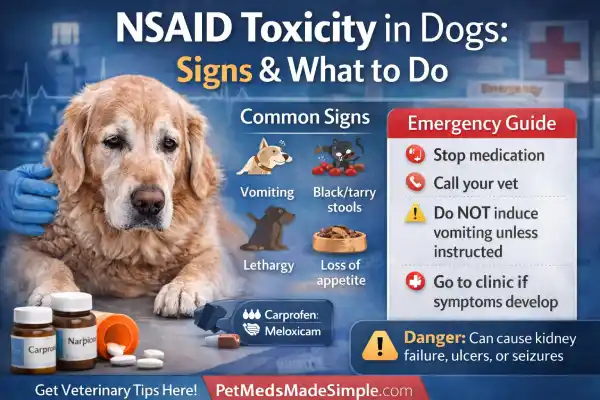
NSAID toxicity in dogs can occur when a dog receives too much medication or reacts poorly to drugs like Carprofen or Meloxicam. Common signs include vomiting, diarrhea, lethargy, loss of appetite, and black stools. In severe cases, it can lead to kidney failure, ulcers, or seizures. If you suspect toxicity, contact a veterinarian immediately.
What Are NSAIDs for Dogs?

NSAIDs (Non-Steroidal Anti-Inflammatory Drugs) are commonly prescribed to reduce pain, inflammation, and fever in dogs.
Common veterinary NSAIDs include:
- Carprofen
- Meloxicam
- Rimadyl
- Deracoxib
They are often used for:
- Arthritis
- Post-surgical pain
- Injury-related inflammation
👉 For a full breakdown, see your pillar: Dog Pain Medications Explained: Safety, Dosage & Side Effects
NSAID Toxicity – dogs
What Causes NSAID Toxicity in Dogs?
NSAID toxicity can happen for several reasons:
- Accidental overdose
- Giving human NSAIDs (like ibuprofen or naproxen)
- Combining multiple NSAIDs
- Using NSAIDs with steroids
- Pre-existing kidney or liver disease
Dogs are especially sensitive because NSAIDs affect prostaglandins, which protect the stomach lining and support kidney function.
Signs of NSAID Toxicity in Dogs
Early Symptoms
- Vomiting
- Diarrhea
- Loss of appetite
- Lethargy
- Drooling
Gastrointestinal Damage
- Black, tarry stools (melena)
- Blood in vomit
- Abdominal pain
Kidney Damage
- Increased thirst and urination
- Dehydration
- Weakness
Severe / Emergency Signs
- Seizures
- Collapse
- Pale gums
- Coma
⚠️ These symptoms can appear within hours or days after exposure.
NSAID Toxicity Timeline
| Time After Exposure | What Happens |
|---|---|
| 0–6 hours | Vomiting, nausea |
| 6–24 hours | GI irritation begins |
| 24–72 hours | Ulcers, bleeding |
| 2–5 days | Kidney damage may appear |
What To Do Immediately (Emergency Guide)
If you suspect NSAID toxicity:
Step-by-step action
- Stop the medication immediately
- Call your veterinarian or emergency clinic
- Do NOT induce vomiting unless instructed
- Provide:
- Drug name
- Dose given
- Time of ingestion
- Go to a clinic if symptoms appear
🚨 Early treatment dramatically improves survival.
Treatment for NSAID Toxicity in Dogs
Veterinary treatment may include:
- Inducing vomiting (early cases)
- Activated charcoal
- IV fluids (to protect kidneys)
- Gastroprotective medications
- Bloodwork monitoring
Hospitalization may be required for moderate to severe cases.
Risk Factors for NSAID Toxicity
Some dogs are at higher risk:
- Senior dogs
- Dogs with kidney disease
- Dogs with liver problems
- Small breeds (dose sensitivity)
- Dogs on multiple medications
👉 Related: Gabapentin and Kidney Disease in Dogs: Is It Safe?
How to Prevent NSAID Toxicity
- Always follow veterinary dosing instructions
- Never give human pain medications
- Avoid combining drugs without vet approval
- Store medications safely
- Monitor your dog after starting NSAIDs
👉 See also:
Final Verdict
NSAID toxicity in dogs is a serious and potentially life-threatening condition, but it is often preventable. Recognizing early symptoms like vomiting and lethargy—and acting quickly—can save your dog’s life.
When in doubt, contact your veterinarian immediately.
FAQ – NSAID Toxicity in Dogs
How long does NSAID toxicity take to show in dogs?
Symptoms can appear within a few hours, but serious complications like kidney damage may take 2–5 days.
Can a dog recover from NSAID toxicity?
Yes, especially if treated early. Delayed treatment increases the risk of severe complications.
What is the most common sign of NSAID toxicity in dogs?
Vomiting is usually the first and most common symptom.
Are human NSAIDs safe for dogs?
No. Medications like ibuprofen and naproxen are highly toxic to dogs.
Medical Disclaimer
This article is for informational purposes only and does not replace professional veterinary advice. Always consult a licensed veterinarian before giving your dog any medication. If you suspect toxicity or overdose, seek immediate veterinary care.
Sources
- American Veterinary Medical Association
- Merck Veterinary Manual
- VCA Animal Hospitals
- Plumb’s Veterinary Drug Handbook, 9th Edition
- American Animal Hospital Association (AAHA) Pain Management Guidelines
All image for this article NSAID Toxicity in Dogs: Signs & What to Do are created with AI

Pingback: Can I Give My Dog Ibuprofen or Aspirin? - PetMedsMadeSimple
Pingback: Antibiotics for Dogs #1 Full Guide - PetMedsMadeSimple