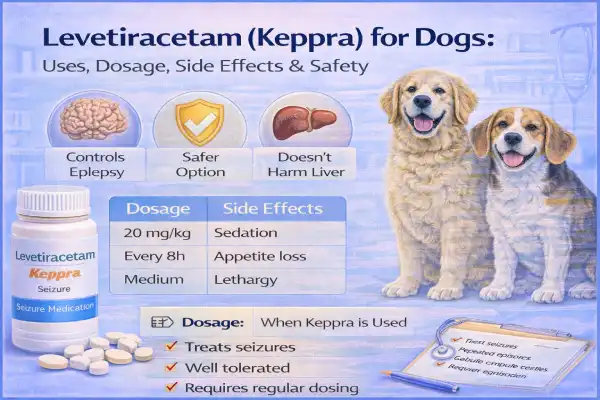

Diazepam side effects in dogs can range from mild sedation and temporary weakness to more serious complications like respiratory depression or behavioral changes.
Quick Answer
Diazepam side effects in dogs most commonly include sedation, weakness, and disorientation. These effects are usually temporary, but serious reactions such as breathing problems or extreme lethargy require immediate veterinary attention.
Introduction
Diazepam (Valium) is one of the most important emergency medications used in dogs, especially for stopping seizures quickly.
As explained in
👉 Diazepam for Dogs: Uses, Dosage, Side Effects & Emergency Safety (Vet-Backed Guide),
this medication acts rapidly on the brain to calm abnormal electrical activity.
It is often used alongside long-term medications such as:
👉 Zonisamide for Dogs: Uses, Dosage, Side Effects & Safety (Vet-Backed Guide)
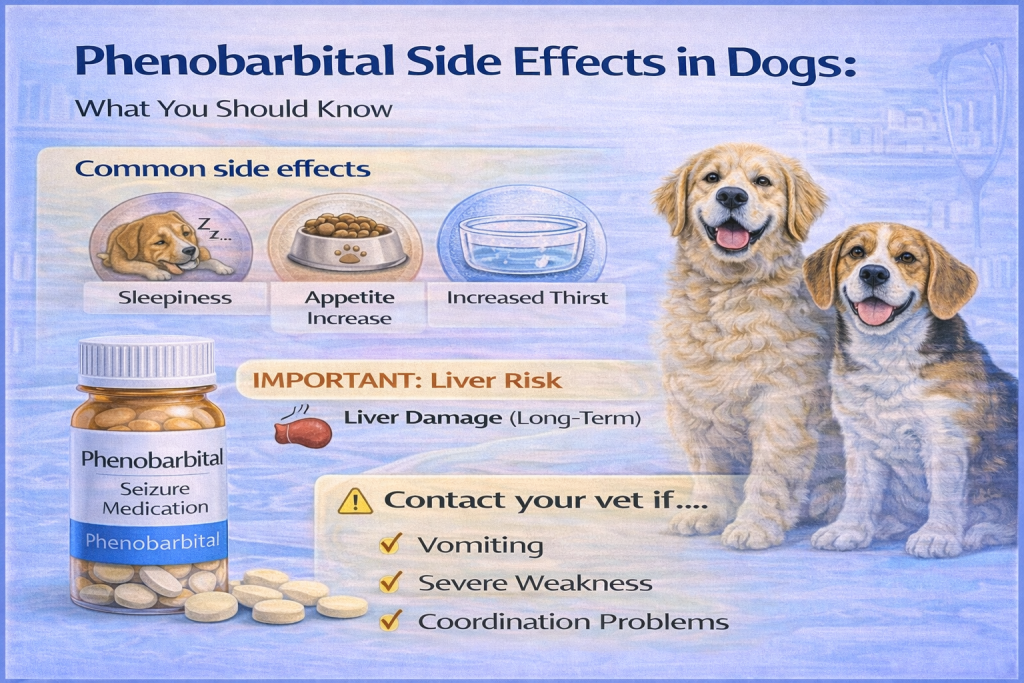
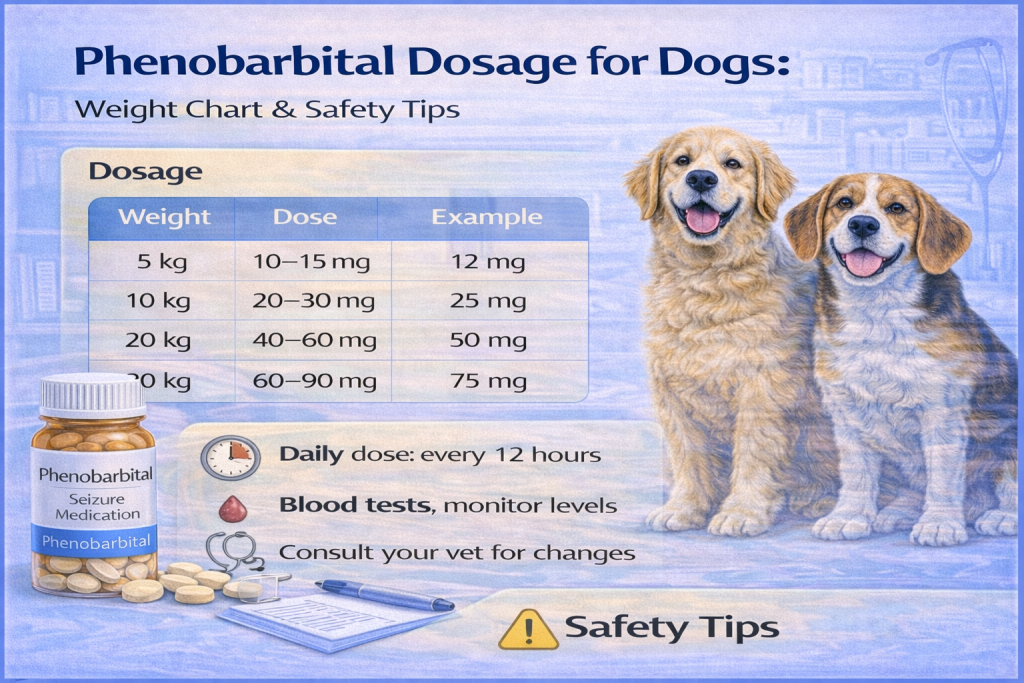
👉 Phenobarbital for Dogs: Uses, Dosage, Side Effects & Safety (Vet-Backed Guide)
👉 Potassium Bromide for Dogs: Uses, Dosage, Side Effects & Safety (Vet-Backed Guide)
Understanding its side effects is critical for safe emergency use.
For a full overview, see:
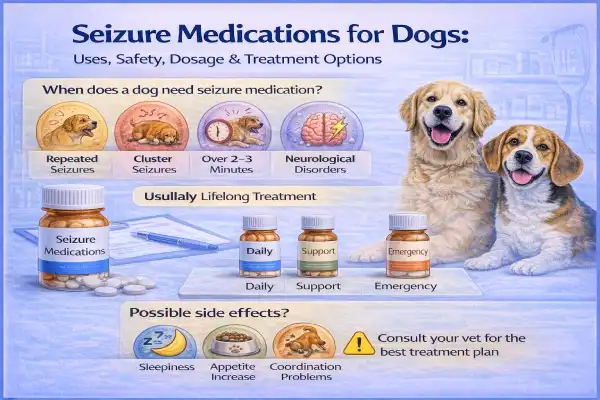
👉 Seizure Medications for Dogs: Complete Guide (Uses, Safety, Dosage & Treatment Options)
Diazepam Side Effects in Dogs
Why Does Diazepam Cause Side Effects?
Diazepam works by:
- enhancing GABA (a calming neurotransmitter)
- slowing brain activity
- reducing seizure activity
👉 However, this can also:
- depress the nervous system
- affect coordination
- impact breathing in high doses
Most Common Diazepam Side Effects in Dogs
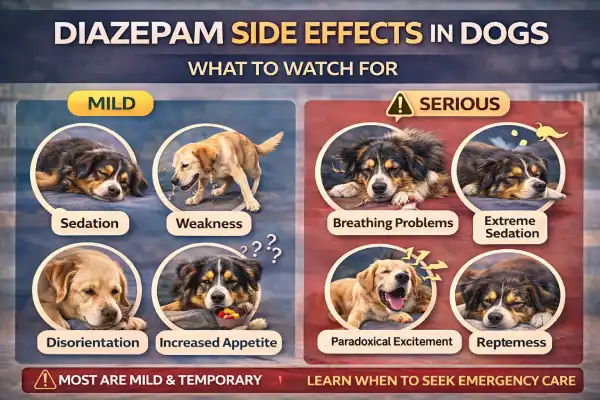
1. Sedation (Sleepiness)
- dogs may appear very calm or drowsy
- most common effect
- usually temporary
2. Weakness or Loss of Coordination
- difficulty standing
- wobbly walking
3. Disorientation
- confusion
- unusual behavior
- slow reactions
4. Increased Appetite (Less Common)
- temporary increase in hunger
Diazepam Side Effects: Severity Guide
| Side Effect | Severity | What to Do |
|---|---|---|
| Mild sedation | Common | Monitor |
| Weakness | Common | Keep dog safe |
| Disorientation | Mild | Observe |
| Ataxia | Moderate | Contact vet if severe |
| Breathing changes | Serious | Emergency |
| Extreme lethargy | Serious | Call vet immediately |
Less Common Side Effects
1. Behavioral Changes
- agitation
- excitement instead of sedation (paradoxical reaction)
2. Increased Salivation
- drooling after administration
3. Temporary Appetite Changes
- mild and short-lived
Serious Diazepam Side Effects
1. Respiratory Depression (Most Important)
🚨 Signs:
- slow or shallow breathing
- difficulty breathing
- weakness
👉 This is rare but can be life-threatening.
2. Extreme Sedation
- unresponsive dog
- inability to wake
- collapse
3. Paradoxical Excitement
Instead of calming:
- agitation
- hyperactivity
- restlessness
Diazepam vs Other Seizure Medication Side Effects
| Medication | Common Side Effects | Risk Level |
|---|---|---|
| Diazepam | Sedation, weakness | Low–moderate |
| Zonisamide | Appetite loss, lethargy | Low–moderate |
| Phenobarbital | Liver effects, sedation | Moderate |
| Potassium Bromide | Ataxia, sedation | Moderate |
👉 Compare:
👉 Potassium Bromide vs Phenobarbital for Dogs: Which Is Safer and More Effective? (Vet-Backed Guide)
Factors That Increase the Risk of Side Effects
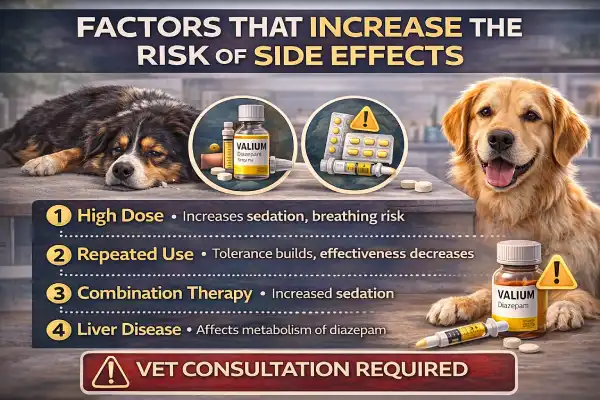
1. High Dose
- increases sedation and breathing risk
2. Repeated Use
- tolerance builds
- effectiveness decreases
3. Combination Therapy
Using with:
- phenobarbital
- potassium bromide
- zonisamide
👉 may increase sedation
4. Liver Disease
- affects metabolism of diazepam
Rectal Diazepam and Side Effects
Rectal administration:
- acts quickly
- may cause temporary sedation
- generally safe when used correctly
👉 See full guide:
👉 Rectal Diazepam for Dogs (At-Home Emergency Use)
When to Contact Your Veterinarian
Call your vet immediately if:
🚨 breathing slows or becomes irregular
🚨 dog becomes unresponsive
🚨 severe weakness occurs
🚨 seizures continue
Also review:
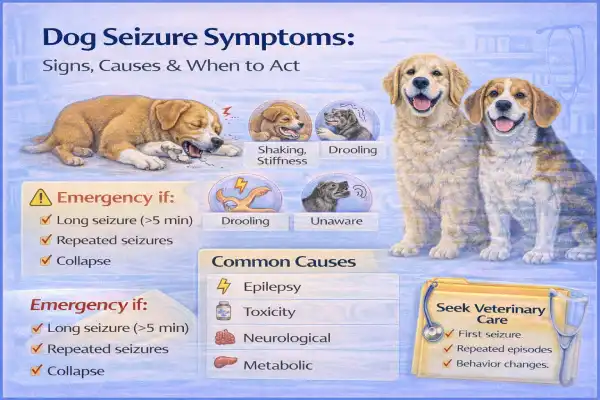
👉 Dog Seizure Symptoms: Signs, Causes & When to Act (Vet-Backed Guide)
How to Reduce Diazepam Side Effects
✔ use correct dose
✔ follow vet instructions
✔ avoid overuse
✔ monitor closely after administration
Common Mistakes to Avoid
❌ using diazepam daily
❌ incorrect dosing
❌ ignoring serious symptoms
❌ delaying emergency care
FAQ – Diazepam Side Effects in Dogs
Are diazepam side effects dangerous in dogs?
Most are mild, but serious effects are possible.
How long do side effects last?
Usually a few hours.
Is sedation normal after diazepam?
Yes, it is expected.
Can diazepam cause breathing problems?
Rarely, but possible in high doses.
Should I be worried if my dog is very sleepy?
Mild sedation is normal, but extreme lethargy requires attention.
Conclusion
Diazepam is a powerful and life-saving medication, but like all drugs, it comes with potential side effects.
Most are mild and temporary, but serious reactions can occur, especially with improper dosing or repeated use.
Understanding these risks ensures safe and effective emergency treatment for your dog.Diazepam Side Effects in Dogs
Medical Disclaimer
This article is for informational purposes only and does not replace professional veterinary advice.
Sources & References
- American Veterinary Medical Association
- Veterinary Information Network
- Plumb’s Veterinary Drug Handbook