
Potassium bromide vs phenobarbital for dogs is one of the most common comparisons in canine seizure treatment, especially for dogs needing long-term epilepsy control.
Quick Answer
Phenobarbital is usually the first-line seizure medication for dogs due to its fast and powerful effect, while potassium bromide is often used as a long-term add-on therapy. Phenobarbital works quickly but may affect the liver, whereas potassium bromide is slower but safer for dogs with liver disease.
Introduction
If your dog has been diagnosed with seizures, your veterinarian may recommend medications like phenobarbital or potassium bromide.
Both drugs are widely used and highly effective, but they work very differently.
As explained in
👉 Seizure Medications for Dogs: Complete Guide (Uses, Safety, Dosage & Treatment Options),
choosing the right medication depends on your dog’s condition, severity of seizures, and overall health.
You may also encounter alternatives like
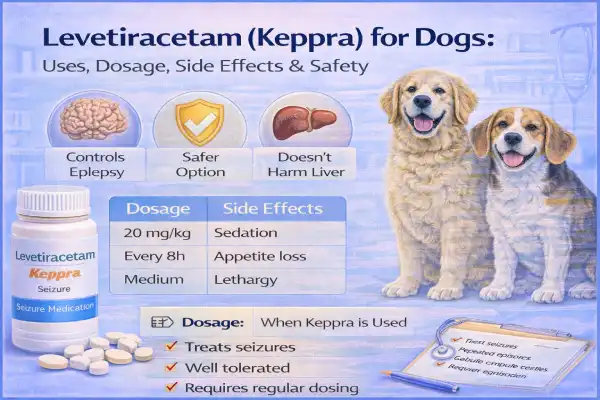
👉 Levetiracetam (Keppra) for Dogs: Uses, Dosage, Side Effects & Safety,
which are often used alongside these medications.
Potassium Bromide vs Phenobarbital for Dogs
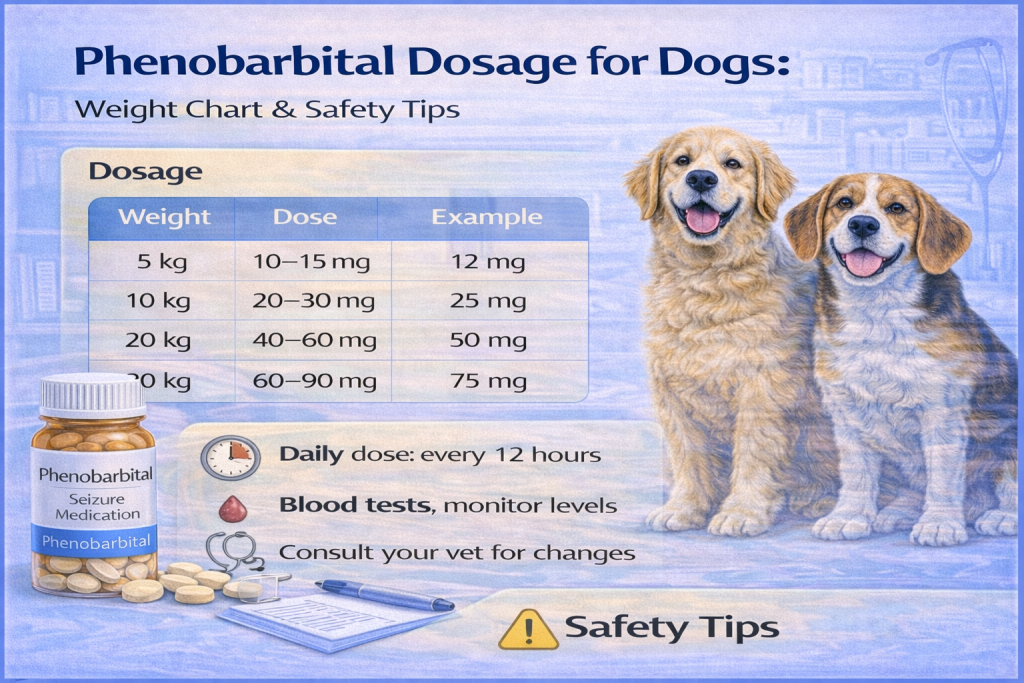
What Is Phenobarbital for Dogs?
Phenobarbital is:
- one of the most commonly prescribed seizure medications
- fast-acting
- highly effective at controlling seizures
👉 It works by:
- depressing the central nervous system
- reducing abnormal brain activity
Learn more here:
👉 Phenobarbital for Dogs: Uses, Dosage, Side Effects & Safety (Vet-Backed Guide)

What Is Potassium Bromide for Dogs?
Potassium bromide (KBr):
- is a long-term seizure control medication
- works slowly but steadily
- is often used as an add-on therapy
👉 It is especially useful for dogs with:
- liver disease
- poor tolerance to phenobarbital
See full guide:
👉 Potassium Bromide for Dogs: Uses, Dosage, Side Effects & Safety (Vet-Backed Guide)
Potassium Bromide vs Phenobarbital: Key Differences
| Feature | Phenobarbital | Potassium Bromide |
|---|---|---|
| Speed of action | Fast (days) | Slow (weeks–months) |
| First-line use | Yes | Usually add-on |
| Liver impact | Yes | No |
| Monitoring | Blood + liver tests | Blood levels |
| Half-life | Moderate | Very long |
| Emergency use | Yes | No |
Effectiveness: Which Works Better?
Phenobarbital
- works quickly
- strong seizure suppression
- ideal for initial control
Potassium Bromide
- builds up slowly
- stabilizes long-term control
- best for chronic management
👉 In many cases, vets use both together for optimal control.
Side Effects Comparison
| Side Effect | Phenobarbital | Potassium Bromide |
|---|---|---|
| Sedation | Common | Common |
| Liver damage | Possible | No |
| Ataxia | Mild–moderate | More common |
| Increased thirst | Yes | Yes |
| Toxicity risk | Moderate | Accumulative |
👉 Learn more:
👉 Phenobarbital Side Effects in Dogs: What to Watch For (Vet-Backed Guide)
👉 Potassium Bromide Side Effects in Dogs: What to Watch For (Vet-Backed Guide)

Safety: Which Is Safer?
Phenobarbital Risks
- long-term liver damage
- requires regular blood tests
- dose adjustments needed
Potassium Bromide Risks
- neurological side effects
- bromide toxicity
- slow adjustments
👉 Overall:
- Phenobarbital = more powerful but riskier for liver
- KBr = safer for liver but slower and accumulative
When Do Vets Choose Phenobarbital?
- first diagnosis of epilepsy
- frequent or severe seizures
- need for fast control
When Do Vets Choose Potassium Bromide?
- seizures not fully controlled
- liver disease present
- long-term stabilization needed
Combination Therapy: Best of Both Worlds
Many dogs benefit from:
👉 Phenobarbital + Potassium Bromide
This allows:
- lower doses of each drug
- better seizure control
- reduced side effects
Real-World Example
A dog with severe epilepsy may:
- Start on phenobarbital
- Add potassium bromide if seizures continue
- Possibly include Keppra for breakthrough seizures
👉 Also see:
👉 Dog Seizure Symptoms: Signs, Causes & When to Act (Vet-Backed Guide)
Pros and Cons Summary
Phenobarbital
✔ Fast acting
✔ Strong seizure control
❌ Liver risk
❌ Requires monitoring
Potassium Bromide
✔ Safe for liver
✔ Long-term stability
❌ Slow onset
❌ Neurological side effects
FAQ – Potassium Bromide vs Phenobarbital for Dogs
Which is better: potassium bromide or phenobarbital?
It depends. Phenobarbital is better for fast control, while KBr is better for long-term management.
Can dogs take both together?
Yes, combination therapy is very common and effective.
Which is safer long-term?
Potassium bromide is safer for the liver, but still requires monitoring.
How long does potassium bromide take to work?
Up to 2–3 months for full effect.
Does phenobarbital work immediately?
It starts working within days.
Conclusion – Potassium Bromide vs Phenobarbital for Dogs
Potassium bromide and phenobarbital are both essential tools in managing seizures in dogs.
Phenobarbital provides fast and powerful control, while potassium bromide offers long-term stability and safety for dogs with liver concerns.
In many cases, the best approach is not choosing one over the other—but using them together under veterinary supervision.Potassium Bromide vs Phenobarbital for Dogs
Medical Disclaimer
This article is for informational purposes only and does not replace professional veterinary advice. Always consult your veterinarian before adjusting any medication. – Potassium Bromide vs Phenobarbital for Dogs
Sources & References
- Plumb’s Veterinary Drug Handbook
- American Veterinary Medical Association
- Veterinary Information Network
Images created with AI – Potassium Bromide vs Phenobarbital for Dogs