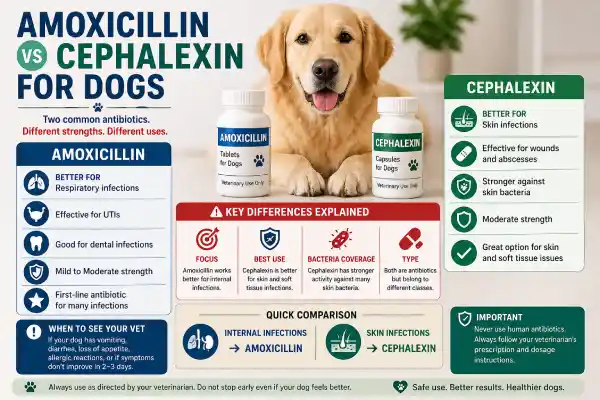
Amoxicillin vs Cephalexin for dogs is a common comparison because both antibiotics are frequently used in veterinary medicine—but they are not the same medication, and they are not always used for the same infections.
Both can help treat bacterial infections, but the “better” choice depends on:
✔ Type of infection
✔ Bacteria involved
✔ Skin vs internal infection
✔ Dog’s medical history
✔ Previous antibiotic use
✔ Vet exam and culture results
👉 Amoxicillin is often a gentler first-line antibiotic.
👉 Cephalexin is often preferred for many skin infections and wounds.
Before choosing any antibiotic, start here:
➡️ Antibiotics for Dogs: Uses, Types, Dosage, Side Effects & Safety Guide
Quick Answer
Amoxicillin is commonly used for mild to moderate bacterial infections, including some respiratory, urinary, dental, soft tissue, and gastrointestinal infections.
Cephalexin is commonly used for skin infections, wounds, abscesses, and some urinary tract infections.
👉 Cephalexin is usually stronger for dog skin infections.
👉 Amoxicillin is often a safer, gentler first-line option for many uncomplicated infections.
👉 Neither should be used without veterinary guidance because wrong antibiotic choice can lead to treatment failure or resistance.
Amoxicillin vs Cephalexin for Dogs
Amoxicillin vs Cephalexin for Dogs
Quick Comparison Table
| Feature | Amoxicillin | Cephalexin |
|---|---|---|
| Drug class | Penicillin-type antibiotic | First-generation cephalosporin |
| Main use | Mild/moderate bacterial infections | Skin, wound, soft tissue infections |
| Best for | Respiratory, urinary, dental, GI infections | Pyoderma, wounds, abscesses, skin infections |
| Strength | Mild–moderate | Moderate |
| Common side effects | Vomiting, diarrhea, appetite loss | Vomiting, diarrhea, appetite loss |
| Allergy risk | Possible penicillin allergy | Possible cephalosporin allergy |
| Best safety use | First-line vet-guided treatment | Skin infection treatment with vet monitoring |
| Should be used without vet? | No | No |
VCA notes that both amoxicillin and cephalexin may cause gastrointestinal effects such as vomiting, diarrhea, and appetite changes, and both can rarely trigger allergic reactions.
What Is Amoxicillin for Dogs?
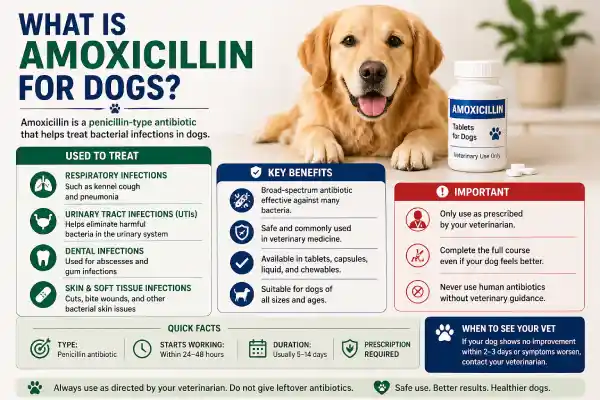
Amoxicillin for dogs is a penicillin-type antibiotic used to treat bacterial infections when the bacteria are likely sensitive to this drug.
It works by interfering with bacterial cell wall formation, which helps stop susceptible bacteria from multiplying.
Common Uses of Amoxicillin in Dogs
Veterinarians may prescribe amoxicillin for:
✔ Respiratory infections
✔ Urinary tract infections
✔ Dental infections
✔ Some gastrointestinal infections
✔ Soft tissue infections
✔ Bite wounds in some cases
➡️ Internal links:
- Amoxicillin for Dogs: Uses, Dosage & Side Effects
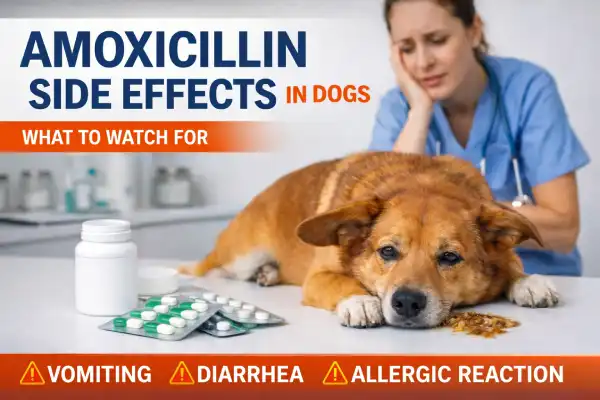
- Amoxicillin Side Effects in Dogs: What to Watch For
- Amoxicillin Diarrhea in Dogs? Causes, Treatment & When to Worry
- Antibiotic Diarrhea in Dogs: Causes, Treatment & Prevention
What Is Cephalexin for Dogs?
Cephalexin for dogs is a first-generation cephalosporin antibiotic often used for bacterial skin infections, wounds, and soft tissue infections.
It is especially common in cases involving skin bacteria such as staphylococcal infections. MSD/Merck notes that first-generation cephalosporins are useful for infections involving Staphylococcus species, including dermatitis.
Common Uses of Cephalexin in Dogs
Veterinarians may prescribe cephalexin for:
✔ Skin infections
✔ Pyoderma
✔ Wounds
✔ Abscesses
✔ Soft tissue infections
✔ Some urinary tract infections
✔ Post-surgical infection prevention in selected cases
➡️ Internal links:
- Cephalexin for Dogs: Uses, Dosage, Side Effects & Safety
- Cephalexin Side Effects in Dogs: What to Watch For
- Cephalexin Cause Diarrhea in Dogs? Causes, Treatment & When to Worry
- Best Antibiotics for Dogs: When to Use Each
Amoxicillin vs Cephalexin for Dogs: Key Differences Explained
1. Drug Class
Amoxicillin belongs to the penicillin family.
Cephalexin belongs to the cephalosporin family.
Both are beta-lactam antibiotics, but they are not identical. This matters because some bacteria may respond better to one than the other.
2. Best Infection Type
| Infection Type | Better Option |
|---|---|
| Skin infection | Cephalexin |
| Wound infection | Cephalexin |
| Mild respiratory infection | Amoxicillin |
| Dental infection | Amoxicillin or Clavamox |
| UTI | Depends on bacteria |
| Deep infection | Depends on culture |
| Resistant infection | Vet culture needed |
👉 Cephalexin often wins for skin infections.
👉 Amoxicillin may be preferred for milder internal infections.
3. Strength
Cephalexin is often considered more targeted for skin and soft tissue infections.
Amoxicillin is broader in everyday first-line use, but not always strong enough against resistant bacteria.
This is why veterinarians may choose:
- Amoxicillin for uncomplicated infections
- Cephalexin for skin/wound infections
- Clavamox when beta-lactamase resistance is suspected
- Doxycycline for tick-borne or respiratory patterns
- Enrofloxacin for selected resistant infections only
➡️ Internal links:
- Clavamox Side Effects in Dogs: What to Watch For
- Doxycycline for Dogs: Uses, Dosage, Side Effects & Safety
- Enrofloxacin (Baytril) for Dogs: Uses, Dosage, Side Effects & Safety
- When Does a Dog Need Antibiotics?
Safety Comparison Table
| Safety Factor | Amoxicillin | Cephalexin |
|---|---|---|
| GI upset risk | Moderate | Moderate |
| Diarrhea risk | Yes | Yes |
| Vomiting risk | Yes | Yes |
| Allergy risk | Possible | Possible |
| Long-term use | Only if prescribed | Only if prescribed |
| Best tolerated by many dogs | Often yes | Often yes |
| Risk if wrong antibiotic is used | Treatment failure | Treatment failure |
| Overall safety | High with vet use | High with vet use |
👉 Both are generally considered safe when prescribed correctly, but neither is “safe” if used at the wrong dose, for the wrong infection, or without a diagnosis.
Which Is Better for Skin Infections?
For many dog skin infections, cephalexin is often the better choice.
This includes:
✔ Pyoderma
✔ Hot spot complications
✔ Infected wounds
✔ Abscesses
✔ Bacterial dermatitis
Cephalexin is commonly used for uncomplicated bacterial skin infections in dogs, and Veterinary Partner describes it as a broad-spectrum antibiotic useful for many common uncomplicated infections.
👉 If your dog has red, itchy, infected skin or pus-filled lesions, cephalexin may be more likely than amoxicillin to be selected by a vet.
Which Is Better for UTIs?
For urinary tract infections, there is no universal winner.
A vet may choose:
- Amoxicillin
- Cephalexin
- Clavamox
- Trimethoprim-Sulfa
- Another antibiotic based on urine culture
Merck Veterinary Manual emphasizes that antibiotic selection for urinary tract infections depends on the expected bacteria, susceptibility, and clinical situation.
➡️ Internal links:
- Trimethoprim-Sulfa for Dogs: Uses, Dosage, Side Effects & Safety
- Trimethoprim-Sulfa Side Effects in Dogs
- Can Trimethoprim-Sulfa Cause Dry Eye in Dogs?
Which Is Better for Dental Infections?
For dental infections, amoxicillin or amoxicillin-clavulanate may often be preferred, depending on the bacteria involved.
However, dental infections can be complex because they may involve:
✔ Anaerobic bacteria
✔ Tooth root abscesses
✔ Gum disease
✔ Bone involvement
✔ Pain and inflammation
👉 Antibiotics alone often do not fix dental disease. A dog may need dental cleaning, extraction, or imaging.
Which Is Better for Wounds and Abscesses?
For wounds and abscesses, cephalexin may be preferred, especially when the suspected bacteria are skin-associated.
However, bite wounds can involve mixed bacteria, and some cases may require broader coverage.
👉 Deep wounds, punctures, swelling, fever, or pus should always be examined by a veterinarian.
Side Effects: Amoxicillin vs Cephalexin for Dogs
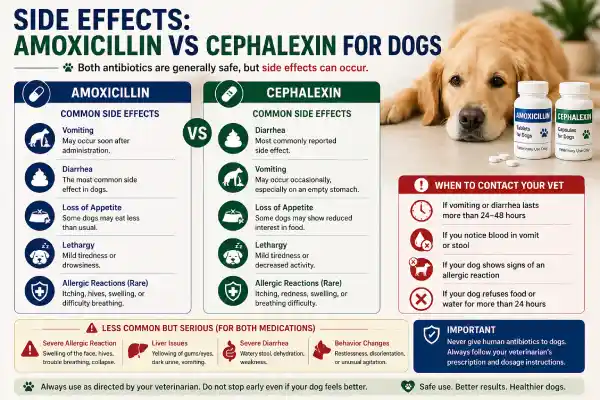
Both medications can cause similar side effects.
Common Side Effects
| Side Effect | Amoxicillin | Cephalexin |
|---|---|---|
| Diarrhea | Possible | Possible |
| Vomiting | Possible | Possible |
| Loss of appetite | Possible | Possible |
| Drooling/nausea | Possible | Possible |
| Lethargy | Possible | Possible |
| Allergic reaction | Rare but serious | Rare but serious |
When to Call the Vet
Call your vet if your dog develops:
❌ Severe diarrhea
❌ Repeated vomiting
❌ Facial swelling
❌ Hives or rash
❌ Trouble breathing
❌ Collapse
❌ Bloody stool
❌ Refusal to eat
❌ Symptoms getting worse after 48–72 hours
➡️ Internal links:
- Antibiotic Diarrhea in Dogs: Causes, Treatment & Prevention
- Probiotics for Dogs: Do They Help with Antibiotic Side Effects?
- Amoxicillin Side Effects in Dogs
- Cephalexin Side Effects in Dogs
Can Amoxicillin and Cephalexin Be Used Together?
Usually, no.
Amoxicillin and cephalexin are both beta-lactam antibiotics, so using them together is usually not necessary unless a veterinarian has a very specific reason.
Combining antibiotics incorrectly may increase:
❌ Diarrhea risk
❌ Vomiting risk
❌ Gut microbiome disruption
❌ Antibiotic resistance risk
❌ Confusion if side effects appear
👉 Never combine antibiotics unless your vet specifically instructs you to.
Decision Tree: Amoxicillin vs Cephalexin for Dogs
Use this simple guide:
Skin infection
👉 Cephalexin may be preferred
Wound or abscess
👉 Cephalexin or broader antibiotic depending on severity
Dental infection
👉 Amoxicillin or Clavamox may be considered
Mild respiratory infection
👉 Amoxicillin may be considered
UTI
👉 Depends on urine culture
Diarrhea from antibiotics
👉 Supportive care + vet guidance
Resistant or recurring infection
👉 Culture and sensitivity test needed
Advanced Antibiotic Strategy
Step 1 – Identify the Infection Type
Not every red spot, cough, or urinary issue needs antibiotics.
Some problems are:
- Viral
- Allergic
- Fungal
- Parasitic
- Inflammatory
- Pain-related
- Immune-mediated
➡️ Start with: When Does a Dog Need Antibiotics?
Step 2 – Choose the Narrowest Effective Antibiotic
The best antibiotic is not always the strongest.
The goal is to use the most appropriate antibiotic for the likely bacteria.
👉 This reduces side effects and helps protect against resistance.
Step 3 – Monitor the First 48–72 Hours
During treatment, watch:
✔ Appetite
✔ Stool quality
✔ Vomiting
✔ Energy
✔ Pain
✔ Skin redness
✔ Swelling
✔ Fever
✔ Infection worsening
If symptoms worsen, your vet may need to change treatment.
Step 4 – Finish the Prescribed Course
Stopping early may allow bacteria to survive and return.
But if side effects are severe, do not simply stop and guess—call your veterinarian.
Step 5 – Use Culture Testing for Recurring Cases
Culture testing is especially useful for:
✔ Recurring UTIs
✔ Chronic skin infections
✔ Deep wounds
✔ Failed antibiotic treatment
✔ Resistant infections
✔ Dogs with repeated antibiotic exposure
Common Mistakes Pet Owners Make
❌ Using leftover antibiotics
❌ Giving human antibiotics without vet approval
❌ Stopping when the dog “looks better”
❌ Mixing antibiotics
❌ Giving the wrong dose
❌ Using antibiotics for viral illness
❌ Ignoring diarrhea or vomiting
❌ Not using probiotics when recommended
❌ Skipping culture testing in recurring infections
👉 These mistakes can make infections harder to treat later.
Amoxicillin vs Cephalexin for Dogs: Which Is Safer?
Both can be safe when prescribed correctly.
But safety depends on the dog.
Amoxicillin may be safer for:
✔ Mild infections
✔ First-line treatment
✔ Dogs needing gentler antibiotic coverage
✔ Some respiratory or dental cases
Cephalexin may be safer for:
✔ Skin infections
✔ Wounds
✔ Abscesses
✔ Cases where skin bacteria are suspected
👉 The safest antibiotic is the one that matches the infection.
Amoxicillin vs Cephalexin for Dogs: Which Works Faster?
Neither should be judged only by speed.
Many dogs may start improving within a few days if the antibiotic is correct, but full healing can take longer.
Signs the antibiotic may be working:
✔ Less redness
✔ Less swelling
✔ Better appetite
✔ More energy
✔ Less licking or scratching
✔ Reduced discharge
✔ Improved urination
✔ Less fever or discomfort
Signs it may not be working:
❌ Infection spreads
❌ Fever continues
❌ Dog becomes weaker
❌ Wound worsens
❌ Skin becomes more inflamed
❌ UTI signs continue
❌ Vomiting or diarrhea becomes severe
Medication vs Probiotics: Should Dogs Take Probiotics with Antibiotics?
Antibiotics can disturb normal gut bacteria, which may lead to diarrhea.
Probiotics may help some dogs tolerate antibiotics better.
| Option | Purpose | When Useful |
|---|---|---|
| Antibiotic | Treat bacterial infection | When vet confirms/suspects bacteria |
| Probiotic | Support gut health | During or after antibiotics |
| Bland diet | Reduce GI upset | Mild diarrhea/vomiting |
| Vet recheck | Adjust treatment | If symptoms worsen |
➡️ Internal link: Probiotics for Dogs: Do They Help with Antibiotic Side Effects?
What Is the Best Choice Overall?
There is no single winner.
Choose Amoxicillin when:
✔ Infection is mild to moderate
✔ Vet suspects sensitive bacteria
✔ Respiratory, urinary, dental, or soft tissue infection is suspected
✔ A gentler first-line antibiotic is appropriate
Choose Cephalexin when:
✔ Skin infection is present
✔ Wound or abscess is suspected
✔ Pyoderma is diagnosed
✔ Vet suspects staphylococcal infection
👉 Amoxicillin is often the gentler first-line option.
👉 Cephalexin is often better for skin and wound infections.
FAQ – Amoxicillin vs Cephalexin for Dogs
Is amoxicillin or cephalexin better for dogs?
It depends on the infection. Amoxicillin is often used for mild to moderate internal infections, while cephalexin is commonly preferred for skin infections, wounds, and abscesses.
Is cephalexin stronger than amoxicillin for dogs?
Cephalexin may be more effective for many skin infections, but “stronger” does not always mean better. The correct antibiotic depends on the bacteria involved.
Can I give my dog amoxicillin instead of cephalexin?
No. Do not switch antibiotics without veterinary guidance. The wrong antibiotic may fail to treat the infection.
Can cephalexin cause diarrhea in dogs?
Yes. Cephalexin can cause vomiting, diarrhea, and appetite changes in some dogs.
Can amoxicillin cause diarrhea in dogs?
Yes. Amoxicillin can cause gastrointestinal upset, including diarrhea, vomiting, and reduced appetite.
Can dogs take amoxicillin and cephalexin together?
Usually no. They are not typically combined unless a veterinarian has a specific reason.
Which is better for dog skin infections?
Cephalexin is commonly used for bacterial skin infections and may be preferred for pyoderma, wounds, and abscesses.
Which is better for dog UTIs?
Either may be used depending on the bacteria, but recurring or complicated UTIs often need urine culture testing.
Conclusion
Amoxicillin vs Cephalexin for dogs is not about which antibiotic is universally stronger—it is about which one matches the infection.
✔ Amoxicillin = often gentler first-line antibiotic
✔ Cephalexin = often better for skin infections and wounds
✔ Both can cause diarrhea or vomiting
✔ Neither should be used without a vet
✔ Culture testing is best for recurring or resistant infections
👉 The safest and most effective antibiotic is the one selected for your dog’s specific infection.
Medical Disclaimer
This content is for informational purposes only and does not replace professional veterinary advice, diagnosis, or treatment. Never give your dog amoxicillin, cephalexin, or any antibiotic without guidance from a licensed veterinarian.
Sources
- VCA Hospitals – Amoxicillin
- VCA Hospitals – Cephalexin
- Merck Veterinary Manual – Antimicrobial use and urinary tract infections
- MSD Veterinary Manual – Cephalosporins and cephamycins use in animals
- Veterinary Partner / VIN – Cephalexin and amoxicillin drug information