
Does amitriptyline cause sleepiness in dogs?
Yes, amitriptyline commonly causes sleepiness in dogs because it has sedative effects on the central nervous system. This drowsiness is one of the most frequent side effects and can range from mild calming to noticeable lethargy, depending on the dose and the individual dog.
Amitriptyline is a tricyclic antidepressant (TCA) often used in dogs for anxiety, behavioral disorders, and even certain pain conditions. While sedation can be beneficial in some cases, it can also become problematic if excessive.
As a pharmacist, I’ll make this very clear:
👉 Sleepiness is not always a “side effect”—sometimes it’s part of the intended therapeutic effect
➡️ Learn full guide:
Amitriptyline for Dogs: Uses, Dosage & Side Effects (Vet-Backed Guide)
How Amitriptyline Works in Dogs (Why It Causes Sleepiness)
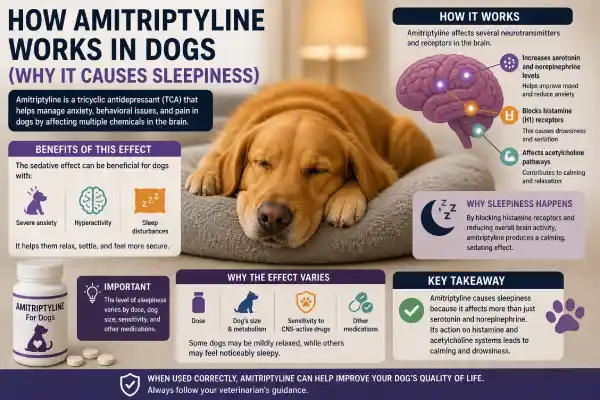
Amitriptyline works by affecting multiple neurotransmitters in the brain, primarily serotonin and norepinephrine, which play key roles in mood regulation and stress response. However, unlike more selective medications such as SSRIs, amitriptyline also interacts with other receptor systems, including histamine receptors and acetylcholine pathways.
This broader mechanism is exactly why sedation occurs.
When amitriptyline blocks histamine receptors, it produces effects similar to antihistamines—namely drowsiness and relaxation. At the same time, its action on the central nervous system reduces overall neural activity, contributing to a calming, sometimes sleepy state.
This sedation can actually be beneficial for dogs with:
- Severe anxiety
- Hyperactivity
- Sleep disturbances
In these cases, the calming effect helps the dog settle more easily and reduces overstimulation.
However, because amitriptyline is not highly selective, the level of sedation can vary significantly between dogs. Some may experience only mild relaxation, while others may become noticeably lethargic, especially at higher doses.
👉 The key takeaway:
Sleepiness is a direct result of how the drug interacts with multiple brain systems—not just anxiety pathways.
Does Amitriptyline Cause Sleepiness in Dogs?
How Common Is Sleepiness in Dogs Taking Amitriptyline?
Sleepiness is considered one of the most common side effects of amitriptyline in dogs. In clinical use, a large percentage of dogs will experience some degree of sedation, particularly during the first days or weeks of treatment.
The intensity of sleepiness depends on several factors:
- Dosage
- Dog’s size and metabolism
- Sensitivity to CNS-active drugs
- Concurrent medications
For many dogs, the sedation is mild and temporary, often improving as the body adapts to the medication. This adaptation process is known as tolerance to side effects, and it typically occurs within 1–2 weeks.
However, in some dogs, especially smaller breeds or older animals, sedation may be more pronounced and persist longer.
When Sleepiness Is Expected
✔ First 1–2 weeks of treatment
✔ After dose increases
✔ When combined with other calming medications
When It May Be Too Much
❌ Excessive lethargy
❌ Difficulty waking
❌ Loss of normal activity
👉 These may indicate that the dose needs adjustment.
➡️ Internal links:
- Amitriptyline Side Effects in Dogs: What to Watch For (Vet-Backed Guide)
- What Can I Give My Dog for Anxiety? (Full Comparison Guide)
Table: Normal vs Excessive Sleepiness
| Level | Description | Action Needed |
|---|---|---|
| Mild | Relaxed, slightly sleepy | Normal |
| Moderate | Sleeps more than usual | Monitor |
| Severe | Hard to wake, inactive | Contact vet |
Is Sleepiness a Good or Bad Effect?
Sleepiness from amitriptyline can be both beneficial and problematic—it depends entirely on the situation.
When It’s Beneficial
- Dogs with severe anxiety
- Dogs that cannot settle
- Dogs with sleep disturbances
In these cases, sedation helps restore balance and improve overall well-being.
When It’s Problematic
- Working or active dogs
- Dogs needing alertness
- Dogs already low-energy
Excessive sedation can reduce quality of life and interfere with normal activities such as eating, playing, and interacting.
Balance Is Key
The goal is not to eliminate activity—but to:
✔ Reduce anxiety
✔ Maintain normal function
✔ Improve quality of life
👉 Proper dosing is critical to achieving this balance.
How to Reduce Sleepiness in Dogs
If sedation becomes too strong, there are several strategies that can help.
1. Adjust the Dose
Lowering the dose often reduces excessive sedation while maintaining benefits.
2. Change Timing
Giving the medication:
👉 In the evening can reduce daytime drowsiness
3. Gradual Adjustment
Allow time for the dog to adapt before making major changes.
4. Review Other Medications
Combining with other sedatives can increase sleepiness.
➡️ Internal links:
- Trazodone for Dogs: Uses, Dosage & Safety (Vet-Backed Guide)
- Alprazolam for Dogs: Is It Safe? (Vet-Backed Guide)
Table: Amitriptyline vs Other Anxiety Medications
| Medication | Sedation Level | Best Use |
|---|---|---|
| Amitriptyline | Moderate–High | Anxiety + pain |
| Buspirone | Low | Mild anxiety |
| Trazodone | Moderate | Situational anxiety |
| Alprazolam | High | Panic episodes |
When to Be Concerned
While mild sleepiness is expected, certain signs require attention.
Warning Signs
- Extreme lethargy
- Weakness or collapse
- Lack of appetite
- Disorientation
These symptoms may indicate:
- Overdose
- Drug interaction
- Sensitivity
What to Do
✔ Contact your veterinarian
✔ Review dosage
✔ Check for interactions
👉 Never ignore severe sedation.
Common Mistakes

❌ Assuming all sedation is bad
❌ Ignoring excessive drowsiness
❌ Combining with other sedatives without guidance
❌ Adjusting dose independently
One of the biggest mistakes is misunderstanding the purpose of sedation. Some owners stop medication too early because their dog seems “sleepy,” even though this effect may stabilize over time.
Another issue is combining medications without realizing the additive sedative effects, which can lead to excessive CNS depression.
Pro Tips for Best Results
✔ Start with the lowest effective dose
✔ Give at consistent times
✔ Monitor behavior closely
✔ Adjust gradually
For best results, treat sedation as a signal, not just a side effect. Mild sleepiness often means the medication is working, while excessive sedation indicates the need for adjustment.
Tracking your dog’s behavior daily can help identify patterns and improve treatment outcomes.
FAQ
Does amitriptyline make dogs sleepy?
Yes, it commonly causes drowsiness.
Is this normal?
Yes, especially at the beginning of treatment.
Will the sleepiness go away?
Often improves within 1–2 weeks.
Can I reduce the dose?
Only with veterinary guidance.
Is it dangerous?
Usually not, unless severe.
Conclusion
Amitriptyline often causes sleepiness—but this effect can be both helpful and manageable.
✔ Common and expected
✔ Often temporary
✔ Dose-dependent
👉 The goal is calm without excessive sedation
Medical Disclaimer
This content is for informational purposes only and does not replace professional veterinary advice.
Sources
American Veterinary Medical Association
Merck Veterinary Manual
VCA Animal Hospitals
Veterinary Information Network (VIN)