Quick Answer
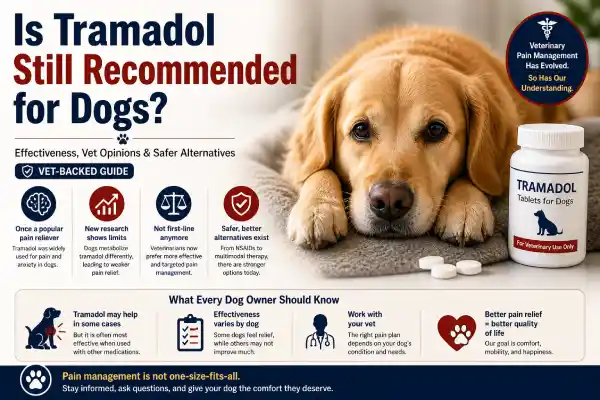
Is Tramadol Still Recommended for Dogs? – Tramadol is no longer considered a first-line pain medication for most dogs. While it was widely used in the past, newer research shows that dogs metabolize tramadol differently than humans, often resulting in limited pain relief. Today, veterinarians typically prefer NSAIDs like carprofen or multimodal pain strategies, using tramadol only in specific cases such as combination therapy or when other options are not suitable.
What Is Tramadol and How Does It Work in Dogs?
Tramadol is a synthetic opioid-like medication that works through two main mechanisms:
- Weak stimulation of opioid receptors (pain relief effect)
- Inhibition of serotonin and norepinephrine reuptake (modulates pain perception)
In humans, tramadol is effective because it is converted into a stronger active metabolite. However, dogs produce much lower levels of this active metabolite, which significantly reduces its effectiveness.
Is Tramadol Safe for Dogs? Uses, Dosage & Risks
Why Tramadol Was Popular for Dogs
Tramadol became extremely popular in veterinary medicine because:
- It was considered safer than traditional opioids
- It had lower risk of respiratory depression
- It was easy to prescribe for chronic pain
- It was used when NSAIDs were contraindicated
- It was thought to help both pain and mild anxiety
For years, it was commonly prescribed for:
- arthritis
- post-surgical pain
- chronic pain conditions
- cancer-related pain
Is Tramadol Still Recommended for Dogs?
Why Tramadol Is No Longer First-Line
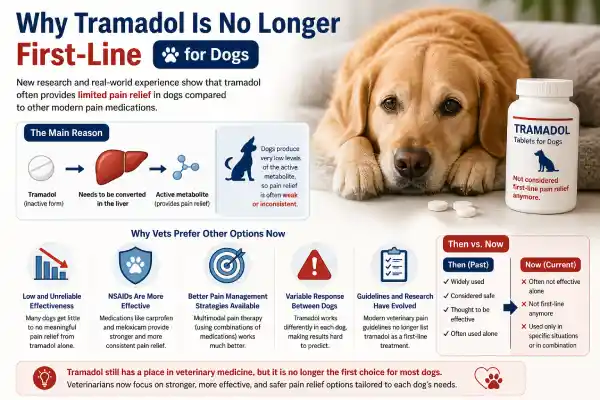
Short Answer: It often doesn’t work well in dogs
Recent veterinary research and clinical experience show that tramadol:
- provides minimal pain relief when used alone
- works inconsistently between dogs
- is much weaker than previously believed
The key issue is metabolism. Dogs do not convert tramadol efficiently into its active form, meaning:
👉 The drug may be present in the body
👉 But the pain relief effect is limited
Tramadol Effectiveness in Dogs (Reality vs Expectation)
| Factor | Expectation (Past) | Reality (Current Understanding) |
|---|---|---|
| Pain relief strength | Moderate to strong | Mild or inconsistent |
| Works alone | Yes | Often no |
| Best for arthritis | Yes | NSAIDs are superior |
| Best for severe pain | Yes | Not recommended alone |
| Predictable effect | Yes | Highly variable |
| Still used | Yes | But mostly as add-on |
When Tramadol May Still Be Used
Despite its limitations, tramadol is not completely obsolete.
Veterinarians may still use it in:
1. Combination Therapy (Multimodal Pain Control)
Tramadol can be combined with:
- gabapentin
- NSAIDs (in selected cases)
- amantadine
Internal links:
- Gabapentin for Dogs: Uses, Dosage & Safety
- Amantadine for Dogs: A Hidden Pain Management Tool
- Carprofen for Dogs: Uses, Dosage & Side Effects
2. Dogs That Cannot Take NSAIDs
If a dog has:
- kidney disease
- liver disease
- GI sensitivity
- NSAID intolerance
Tramadol may be used as a safer (but weaker) alternative.
3. Mild to Moderate Pain (Short-Term)
Tramadol may still help in:
- mild discomfort
- recovery support
- transitional pain management
4. Sedation Benefit
Tramadol may provide mild calming or sedative effects, which can help:
- anxious dogs
- dogs recovering from surgery
- dogs with restlessness due to pain
When Tramadol Is NOT a Good Choice
Tramadol is generally not recommended alone for:
- severe pain
- advanced arthritis
- post-surgical pain requiring strong analgesia
- cancer pain
- nerve pain
In these cases, better options include:
- NSAIDs
- gabapentin
- opioids (vet-controlled)
- multimodal therapy
Tramadol vs Modern Pain Medications
| Medication | Pain Relief Strength | Best Use | Current Preference |
|---|---|---|---|
| Tramadol | Mild | Add-on therapy | Limited |
| Carprofen | Strong | Arthritis, inflammation | First-line |
| Gabapentin | Moderate | Nerve pain | Common |
| Amantadine | Moderate | Chronic pain | Add-on |
| Buprenorphine | Strong | Acute/severe pain | Vet use |
| NSAIDs (general) | Strong | Inflammatory pain | Gold standard |
Side Effects of Tramadol in Dogs
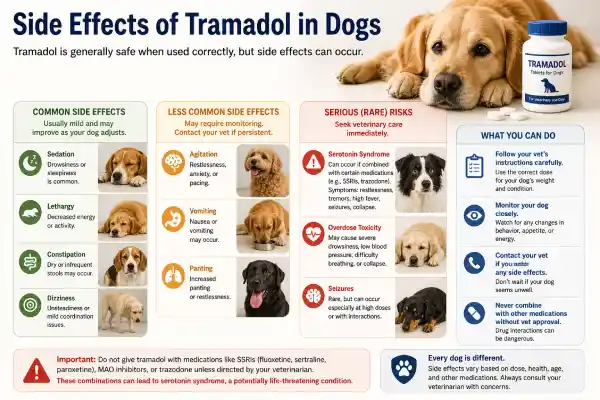
Tramadol is generally safe when used correctly, but side effects can occur.
Common Side Effects
- sedation
- lethargy
- mild dizziness
- constipation
Less Common
- agitation
- anxiety (paradoxical reaction)
- vomiting
- panting
Serious Risks
- serotonin syndrome (if combined with SSRIs)
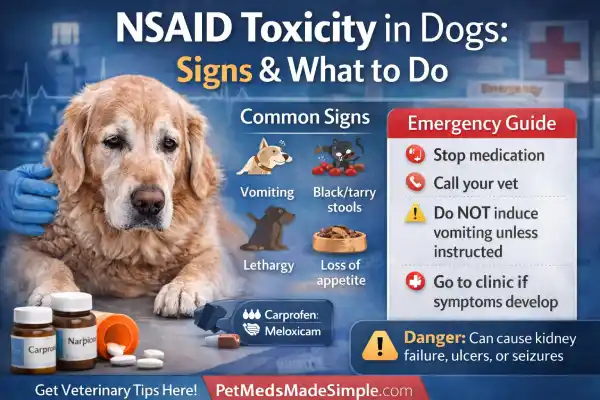
- overdose toxicity
- seizures (rare but possible)
Internal link:
Tramadol vs Codeine for Dogs: Which Is Stronger?
Important Drug Interactions
Tramadol should be used carefully with:
- SSRIs (fluoxetine, sertraline, paroxetine)
- trazodone
- amitriptyline
- MAO inhibitors
These combinations increase the risk of:
👉 Serotonin syndrome (dangerous condition)
Signs Tramadol Is NOT Working
One of the biggest problems with tramadol is false confidence.
Your dog may still be in pain even while taking it.
Watch for:
- limping
- reluctance to move
- whining
- panting
- behavioral changes
- reduced activity
If these persist → treatment likely needs adjustment.
Better Alternatives to Tramadol
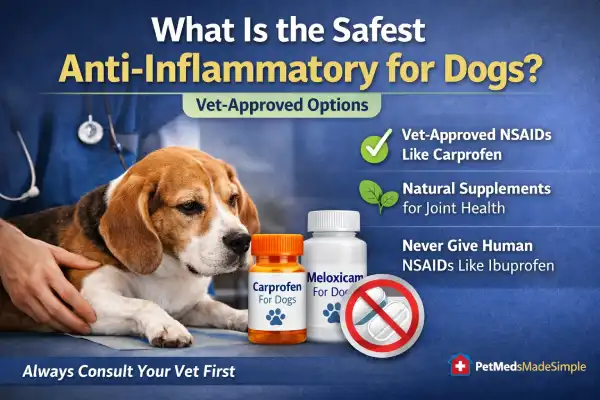
1. NSAIDs (First-Line for Most Dogs)
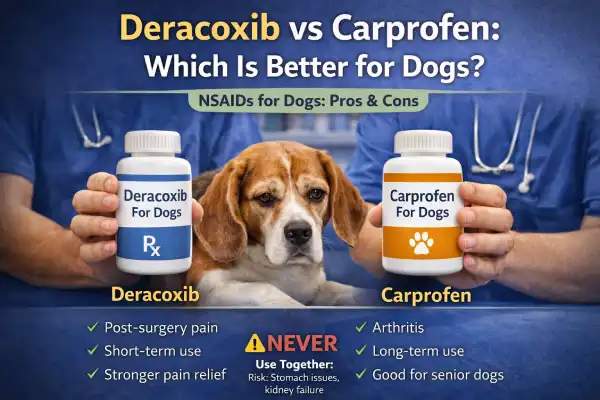
- carprofen
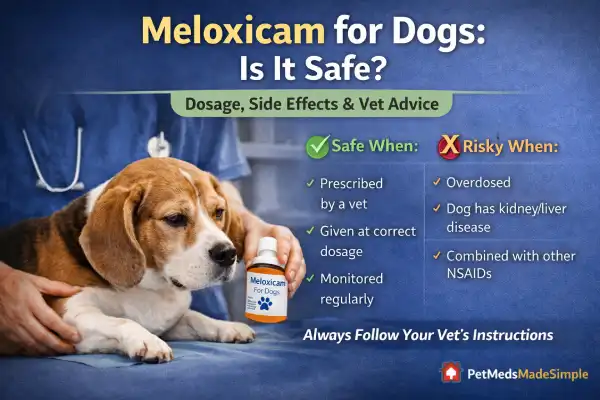
- meloxicam
- deracoxib
Best for:
- arthritis
- inflammation
- joint pain
2. Gabapentin
Best for:
- nerve pain
- chronic pain
- combination therapy
3. Amantadine
Best for:
- chronic pain
- NSAID-resistant cases
4. Multimodal Therapy (Best Approach)
Modern veterinary medicine focuses on combining drugs for better results.
Example:
- NSAID + gabapentin
- NSAID + amantadine
- gabapentin + tramadol
Vet Perspective: Is Tramadol Outdated?
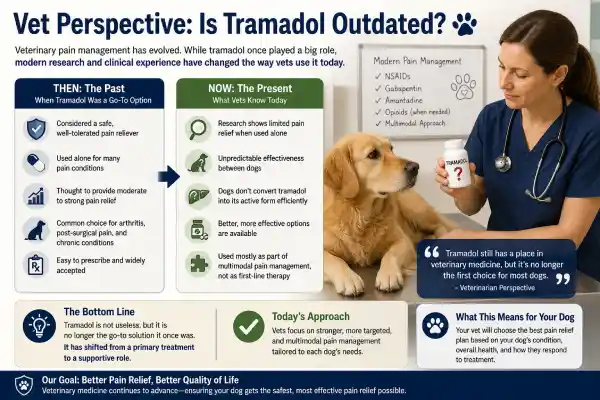
Most veterinarians today agree:
👉 Tramadol is not useless
👉 But it is overrated as a standalone painkiller
It has shifted from:
❌ Primary treatment
➡️ Secondary/support medication
Common Mistakes Owners Make
- relying on tramadol alone for serious pain
- assuming sedation = pain relief
- not monitoring effectiveness
- combining with other meds without vet guidance
- continuing use when the dog is not improving
Pro Tips for Best Results
- Use tramadol as part of combination therapy
- Do not rely on it for severe pain
- Monitor your dog’s behavior, not just sedation
- Ask your vet about better alternatives
- Adjust treatment if no improvement in 3–5 days
- Never mix with other medications without guidance
FAQ – Is Tramadol Still Recommended for Dogs?
Is tramadol effective for dogs?
It can help in some cases, but it is often less effective than previously believed, especially when used alone.
Why doesn’t tramadol work well in dogs?
Dogs do not convert tramadol efficiently into its active form, reducing its pain-relieving effect.
Do vets still prescribe tramadol?
Yes, but mostly as part of combination therapy, not as a first-line treatment.
What is better than tramadol for dogs?
NSAIDs like carprofen, along with gabapentin and multimodal pain therapy, are usually more effective.
Can tramadol be combined with other medications?
Yes, but only under veterinary supervision due to interaction risks.
Is tramadol safe for long-term use?
It may be used long-term in some cases, but effectiveness and side effects should be monitored closely.
Conclusion
Tramadol is no longer the go-to pain medication for dogs that it once was. While it still has a role in veterinary medicine, especially as part of multimodal therapy, it is rarely effective as a standalone treatment for moderate to severe pain.
Modern pain management focuses on stronger, more targeted options like NSAIDs, gabapentin, and combination strategies. If your dog is still on tramadol and not improving, it may be time to reassess the treatment plan with your veterinarian.Is Tramadol Still Recommended for Dogs?
Medical Disclaimer
This content is for educational purposes only and does not replace professional veterinary advice. Never start, stop, or adjust tramadol or any medication without consulting your veterinarian. If your dog shows signs of pain, overdose, or unusual behavior, seek veterinary care immediately.Is Tramadol Still Recommended for Dogs?
Sources
- FDA – Pain Management for Pets
- VCA Animal Hospitals – Tramadol Use in Dogs
- Plumb’s Veterinary Drug Handbook
- Journal of Veterinary Pharmacology and Therapeutics
- Veterinary Partner (VIN)