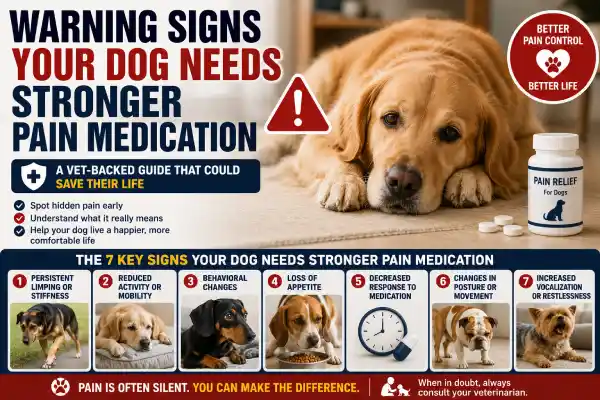
Warning Signs Your Dog Needs Stronger Pain Medication are often subtle but critical to recognize. These include persistent limping, reduced mobility, behavioral changes, appetite loss, and decreased response to current treatment.
Quick Answer
Yes—there are clear signs your dog may need stronger pain medication. If your dog continues to limp, becomes less active, eats less, or shows behavior changes despite treatment, their pain is likely not adequately controlled.
Why This Is a Critical Topic
Many dog owners assume:
👉 “If my dog is on medication, the pain is under control.”
But the reality is very different.
- ❌ Pain in dogs is frequently under-treated
- ❌ Symptoms are often subtle and misinterpreted
- ❌ Dogs naturally hide pain
👉 This is why recognizing these signs early is essential.
The Hidden Truth About Pain in Dogs
Dogs do not express pain like humans.
They:
- hide discomfort (instinct for survival)
- adapt behavior instead of vocalizing
- reduce activity rather than showing obvious distress
👉 This makes chronic pain extremely easy to miss.
Warning Signs Your Dog Needs Stronger Pain Medication
The 7 Key Signs Your Dog Needs Stronger Pain Medication
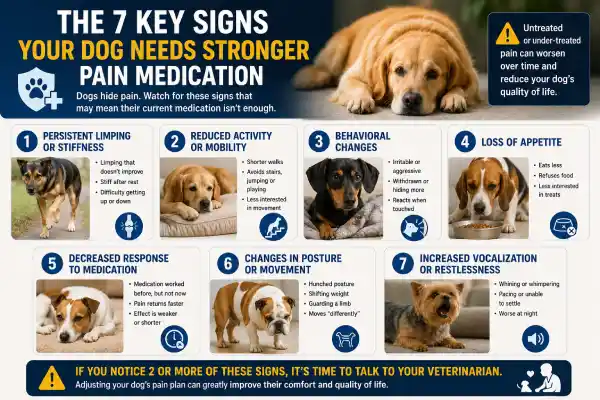
1. Persistent Limping or Stiffness
If your dog continues to:
- limp daily
- struggle to stand
- move stiffly after rest
👉 This is one of the strongest indicators that pain control is insufficient.
Why It Happens
- inflammation is not fully controlled
- joint damage is progressing
- current NSAID dose is not enough
👉 This is commonly seen in dogs with arthritis. You can compare treatment strategies in
Best Pain Medication for Dogs with Arthritis (Comparison Guide).
2. Reduced Activity or Mobility
This is often overlooked.
Watch for:
- shorter walks
- reluctance to run
- avoiding stairs or jumping
Subtle Signs
- sleeping more than usual
- slower response to commands
- hesitation before movement
👉 Many owners mistake this for aging, but it’s often pain progression.
3. Behavioral Changes (VERY IMPORTANT)
Pain affects personality.
Common Behavioral Signs
- irritability
- aggression when touched
- withdrawal
- hiding
👉 Dogs in pain often become:
👉 quiet, distant, or reactive
4. Loss of Appetite
This is a major red flag.
If your dog:
- eats less
- refuses food
- shows decreased interest in meals
👉 Pain may be worsening OR medication side effects may be involved.
👉 This is closely connected to the topic explained in
Can Pain Medication Cause Loss of Appetite in Dogs?
5. Decreased Response to Current Medication
One of the clearest indicators.
Signs
- medication worked initially
- effect is now weaker
- pain returns faster
👉 This means:
👉 pain pathways have changed
Why This Happens
Over time:
- pain becomes chronic
- nervous system adapts
- central sensitization develops
👉 This is explained in pain progression models and also affects how drugs like Gabapentin work in chronic conditions.
👉 NSAIDs alone are no longer sufficient at this stage.
6. Changes in Posture or Movement
Watch carefully for:
- hunched posture
- shifting weight
- guarding a limb
👉 These are signs of compensatory pain behavior
7. Increased Vocalization or Restlessness
Some dogs show pain more openly:
- whining
- pacing
- inability to settle
Especially at night.
👉 This is often a sign of uncontrolled pain
The Science: Why Pain Gets Worse Over Time
Acute vs Chronic Pain
| Type | Mechanism |
|---|---|
| Acute Pain | inflammation |
| Chronic Pain | nervous system changes |
Central Sensitization
Over time:
- pain signals amplify
- spinal cord becomes hypersensitive
- brain lowers pain threshold
👉 Even mild stimuli become painful.
👉 This is why stronger or combination therapy is needed.
Common Mistake: Increasing Dose Alone
Many owners think:
👉 “Just give more medication.”
Why This Is Dangerous
- increases side effects
- does not treat nerve pain
- increases toxicity risk
👉 Especially with NSAIDs.
Correct Approach: Multimodal Pain Management
Modern veterinary medicine uses:
👉 combination therapy
Common Combinations
| Combination | Benefit |
|---|---|
| NSAID + Gabapentin | nerve pain control |
| NSAID + Amantadine | reduces sensitization |
| Triple therapy | severe chronic pain |
👉 Learn more about combination strategies in
Amantadine for Dogs: A Hidden Pain Management Tool
When to Consider Stronger Medication
Clear Indicators
- pain persists longer than 2 weeks
- worsening mobility
- reduced quality of life
- medication loses effect
👉 At this stage, treatment must be adjusted.
Case Example
Dog A
- mild arthritis
- treated with carprofen
✔ good control
Dog B
- chronic arthritis
- same medication
⚠ worsening symptoms
⚠ needs additional therapy
👉 Same drug, different progression.
What “Stronger Medication” Actually Means
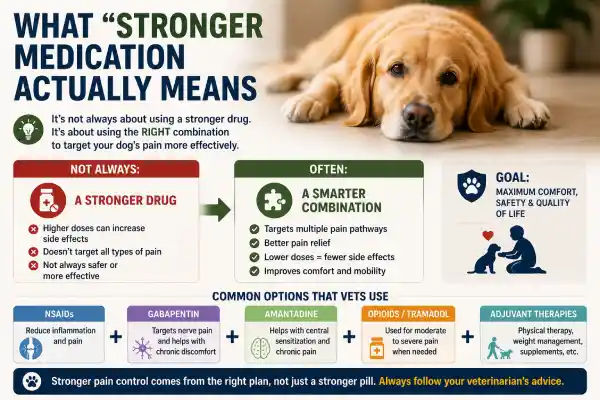
Not always:
❌ stronger drug
Often:
✔ smarter combination
Options
- add Amantadine
- add gabapentin
- switch NSAID
- adjust dosing
NSAIDs vs Advanced Pain Control
| Treatment | Works For |
|---|---|
| NSAIDs | inflammation |
| Gabapentin | nerve pain |
| Amantadine | central sensitization |
| Opioids | severe pain |
👉 Best results = combination approach
Quality of Life: The Ultimate Indicator
Pain control is not just about movement.
Ask Yourself
Is your dog:
- happy?
- active?
- engaged?
If not:
👉 pain is likely under-treated
Advanced Owner Checklist
Your dog likely needs stronger medication if:
✔ limping continues
✔ appetite decreases
✔ behavior changes
✔ meds lose effect
✔ mobility worsens
👉 Even 2–3 signs = action needed
What Happens If You Ignore These Signs
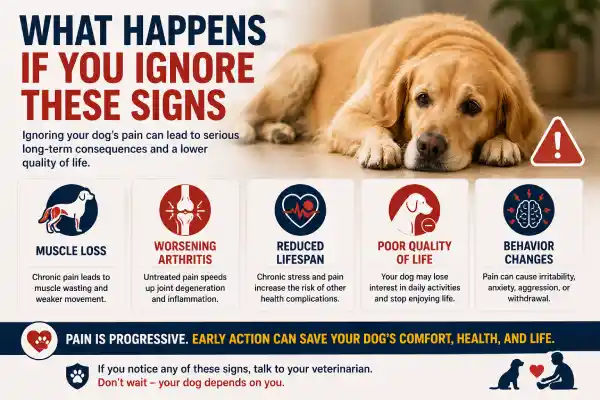
Ignoring pain leads to:
- muscle loss
- worsening arthritis
- reduced lifespan
- poor quality of life
👉 Pain is progressive if untreated.
Vet Perspective
Veterinarians don’t aim for:
👉 “less pain”
They aim for:
👉 functional comfort
That includes:
- normal movement
- stable appetite
- balanced behavior
What NOT to Do
❌ Don’t increase dose without vet
❌ Don’t ignore symptoms
❌ Don’t delay treatment
❌ Don’t use human drugs
👉 Especially avoid:
- Ibuprofen
- naproxen
FAQ – Key Signs Your Dog Needs Stronger Pain Medication
How do I know if my dog needs stronger pain medication?
If symptoms persist or worsen despite treatment, medication adjustment is needed.
Can pain medication stop working?
Yes, especially in chronic pain conditions.
Is combining medications safe?
Yes, when prescribed by a veterinarian.
When should I contact a vet?
If symptoms persist beyond 1–2 weeks or worsen.
Conclusion
Recognizing the signs your dog needs stronger pain medication can dramatically improve their quality of life. Pain is often silent, progressive, and underestimated—but with the right strategy, it can be effectively managed.
The key is not stronger drugs—but smarter treatment.
Medical Disclaimer
This content is for educational purposes only and does not replace veterinary advice.
Sources
- Plumb’s Veterinary Drug Handbook
- VCA Animal Hospitals
- VIN (Veterinary Information Network)