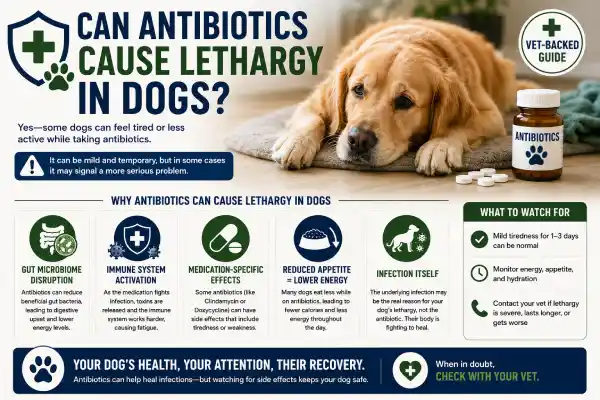
Can antibiotics cause lethargy in dogs? Yes—some dogs become tired, less active, or “not themselves” while taking antibiotics. In many cases this is a mild and temporary side effect, but in others it can signal that the medication is not well tolerated or that the underlying infection is still affecting your dog.
Quick Answer
Antibiotics can cause lethargy in dogs due to their effects on gut health, metabolism, and the immune response. Mild tiredness is common, but severe or worsening lethargy should always be evaluated by a veterinarian.
Why This Symptom Is Often Misunderstood
Most dog owners expect side effects like:
- vomiting
- diarrhea
But lethargy is often overlooked because it is:
👉 subtle
👉 gradual
👉 easy to misinterpret
Many assume:
👉 “My dog is just resting to recover”
But in reality:
👉 lethargy can be an early warning sign
What Does “Lethargy” Really Mean in Dogs?
Lethargy is not just “being tired.”
It includes:
- reduced energy
- lack of interest in activities
- slower movement
- increased sleeping
A lethargic dog may:
- avoid walks
- hesitate to move
- seem mentally “dull”
👉 This is different from normal rest during recovery.
Can Antibiotics Cause Lethargy in Dogs?
Why Antibiotics Can Cause Lethargy in Dogs
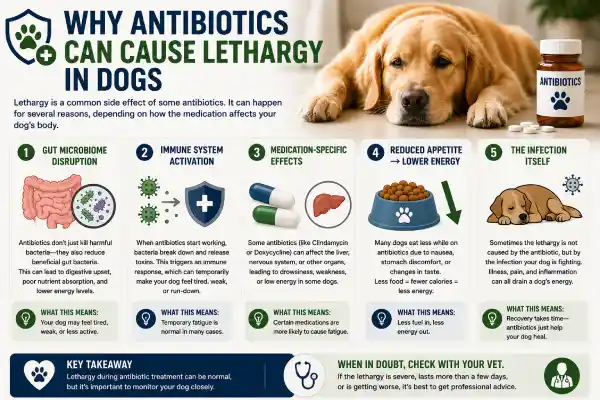
There are several mechanisms behind this effect.
1. Gut Microbiome Disruption
Antibiotics affect not only harmful bacteria but also beneficial gut bacteria.
This can lead to:
- reduced nutrient absorption
- digestive discomfort
- lower energy levels
👉 This is closely related to what we discussed in
Antibiotic Diarrhea in Dogs: Causes, Treatment & Prevention
2. Immune System Activation
When antibiotics start working:
- bacteria break down
- toxins are released
- immune system becomes active
This can temporarily make dogs feel:
👉 tired
👉 weak
👉 less active
3. Medication-Specific Effects
Some antibiotics are more likely to cause lethargy.
Examples include:
- Clindamycin
- Doxycycline
👉 These may cause systemic effects beyond digestion.
4. Reduced Appetite → Lower Energy
Many dogs eat less while on antibiotics.
👉 This leads to:
- fewer calories
- less energy
- visible lethargy
👉 This connects directly to
Can Pain Medication Cause Loss of Appetite in Dogs?
When Lethargy Is Considered Normal
Mild lethargy can be expected:
- during the first 1–3 days
- when starting a new antibiotic
- during active infection
In these cases, the dog usually:
- still eats (even if slightly less)
- responds to interaction
- gradually improves
When Lethargy Is NOT Normal
This is where things become serious.
Red Flags
- extreme weakness
- refusal to move
- no appetite
- worsening over time
- combination with vomiting
Mild vs Dangerous Lethargy
| Type | Description | Action |
|---|---|---|
| Mild | slightly tired | monitor |
| Moderate | less active | observe closely |
| Severe | inactive, weak | contact vet |
| Progressive | worsening daily | urgent evaluation |
The Hidden Factor: Infection Itself
Sometimes the antibiotic is NOT the cause.
The infection itself can cause:
- fatigue
- weakness
- reduced appetite
👉 This is very common in:
- systemic infections
- respiratory infections
- deep tissue infections
Real Scenario (Very Common)
Dog starts antibiotics.
Day 1–2:
- appears tired
Owner thinks:
👉 “The medication is the problem”
Reality:
👉 infection + immune response = lethargy
Puppies Are More Sensitive
Young dogs are especially vulnerable.
Because of:
- faster metabolism
- developing immune system
- lower reserves
👉 Even mild lethargy should be monitored closely.
Which Antibiotics Are More Likely to Cause Lethargy?
Not all antibiotics behave the same.
Antibiotic Comparison
| Antibiotic | Lethargy Risk |
|---|---|
| Amoxicillin | Low |
| Cephalexin | Low–Moderate |
| Clindamycin | Moderate |
| Doxycycline | Moderate–High |
How Long Does Antibiotic-Related Lethargy Last?
In most cases:
👉 1–3 days
If it lasts longer:
👉 reassessment is needed
What If Lethargy Gets Worse?
This is a critical point.
Possible Causes
- wrong antibiotic
- adverse reaction
- worsening infection
- dehydration
👉 This situation should never be ignored.
What Should You Do If Your Dog Becomes Lethargic?
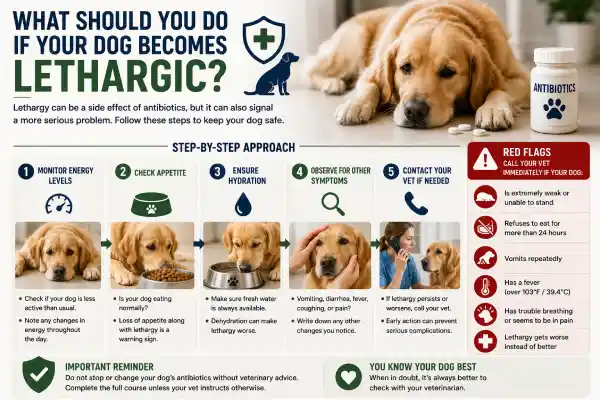
✔ Step-by-Step Approach
- Monitor energy levels
- Check appetite
- Ensure hydration
- observe for other symptoms
If symptoms persist:
👉 contact your vet
Common Owner Mistakes
1. Ignoring Early Signs
Waiting too long can worsen the condition.
2. Stopping Antibiotics Immediately
This can lead to:
- infection relapse
- resistance
👉 Related:
Miss a Dose of Antibiotics in Dogs? (Critical Vet Guide)
3. Assuming It’s Always Normal
Not all lethargy is harmless.
How to Reduce the Risk of Lethargy
✔ Practical Tips
- give medication with food
- maintain hydration
- monitor appetite
- follow dosing schedule
👉 Proper antibiotic duration is also critical, as explained in
How Long Should Dogs Stay on Antibiotics?
Vet Perspective (IMPORTANT)
Veterinarians look at lethargy as a signal, not just a symptom.
They evaluate:
- severity
- duration
- associated signs
Because:
👉 lethargy can indicate deeper issues
Signs Your Dog Is Recovering (GOOD SIGNS)
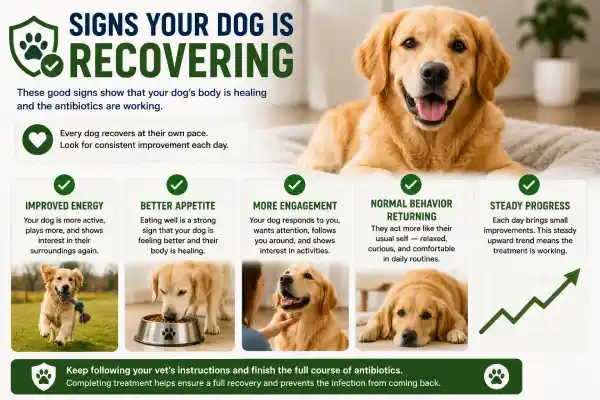
- improved energy
- better appetite
- more engagement
- normal behavior returning
Signs You Must Call Your Vet Immediately
- severe weakness
- collapse
- refusal to eat
- persistent vomiting
- worsening condition
Conclusion
Antibiotics can cause lethargy in dogs, but the key is understanding whether it is mild and temporary or a sign of something more serious. Most cases are manageable, but careful monitoring is essential.
When in doubt, it’s always better to act early than wait too long.
FAQ
Can antibiotics make dogs sleepy?
Yes, some antibiotics can cause tiredness or reduced activity, especially in the first few days.
Is lethargy a side effect of antibiotics in dogs?
Yes, but it is usually mild. Severe lethargy should be evaluated by a veterinarian.
How long does lethargy last in dogs on antibiotics?
Typically 1–3 days. Longer duration may indicate a problem.
Should I stop antibiotics if my dog is lethargic?
No, not without veterinary advice.
When should I worry about lethargy?
If it worsens, lasts several days, or is combined with other symptoms.
Sources & Scientific References
Medical Disclaimer
This article is for educational purposes only and does not replace professional veterinary advice.