Signs of medication overdose in dogs can range from mild vomiting and lethargy to seizures, collapse, breathing problems, or life-threatening organ failure. Some overdoses happen suddenly after accidental ingestion, while others develop slowly because of incorrect dosing, medication interactions, or long-term accumulation in the body.
This is one of the most important emergency topics every dog owner should understand.
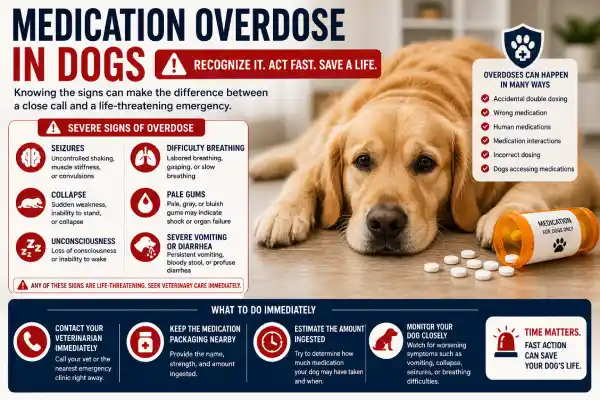
Many owners assume overdoses only happen when a dog eats an entire bottle of medication. In reality, overdose situations can occur in far more subtle ways:
- giving doses too close together
- accidentally double dosing
- mixing medications incorrectly
- using human medications
- incorrect weight-based dosing
- gradual buildup in senior dogs
Because dogs metabolize medications differently than humans, even relatively small mistakes can sometimes become dangerous.
Understanding the early warning signs of overdose can save valuable time and potentially save your dog’s life.
Quick Answer
Common signs of medication overdose in dogs include vomiting, diarrhea, severe lethargy, tremors, difficulty walking, breathing changes, seizures, collapse, and abnormal behavior. Any suspected overdose should be treated as a veterinary emergency.
Why Medication Overdoses Happen More Often Than Owners Realize
Most overdose situations are accidental.
Owners are usually trying to help their dogs—not harm them.
Common causes include:
- forgetting a previous dose was already given
- multiple family members medicating the dog
- misunderstanding dosage instructions
- using human medications
- dogs accessing pill containers
Senior dogs are especially vulnerable because their bodies often process medications more slowly.
This naturally connects with:
- What to Do If Dog Medication Is Not Working
- Can You Stop Antibiotics Early in Dogs?
- Miss a Dose of Antibiotics in Dogs?
because medication timing and dosing consistency are critical parts of safety.
Signs of Medication Overdose in Dogs
Why Dogs Are More Sensitive to Certain Medications
Dogs metabolize drugs very differently from humans.
Some medications considered relatively safe for people can become highly toxic in dogs.
Examples include:
- Ibuprofen
- Naproxen
- Acetaminophen
Even small amounts may cause:
- stomach bleeding
- kidney failure
- liver damage
- neurological symptoms
This is why owners should never assume human medication doses apply safely to dogs.
Early Signs of Medication Overdose in Dogs
One of the biggest mistakes owners make is waiting too long because symptoms initially seem mild.
Early overdose signs may include:
- unusual sleepiness
- vomiting
- drooling
- wobbling
- loss of appetite
- agitation
- unusual behavior
These symptoms can progress rapidly depending on the medication involved.
Common Early Warning Signs
| Early Symptom | Why It Matters |
|---|---|
| vomiting | stomach irritation or toxicity |
| lethargy | nervous system depression |
| wobbling | neurological involvement |
| excessive drooling | nausea or toxin exposure |
| appetite loss | systemic reaction |
Severe Signs of Medication Overdose
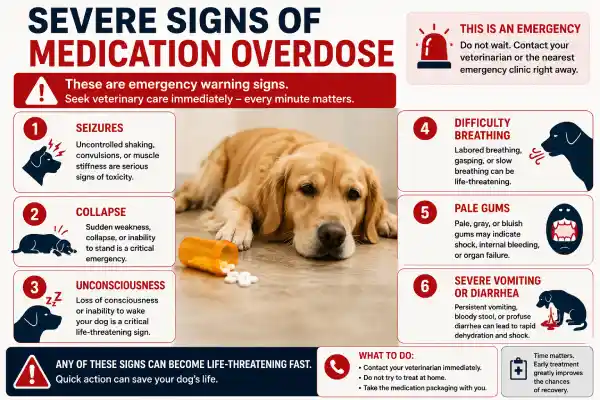
As toxicity progresses, symptoms may become life-threatening.
Emergency Warning Signs
| Severe Symptom | Possible Meaning |
|---|---|
| seizures | severe neurological toxicity |
| collapse | cardiovascular or neurological emergency |
| difficulty breathing | respiratory involvement |
| pale gums | shock or internal bleeding |
| unconsciousness | critical emergency |
Any of these signs require immediate veterinary care.
Why NSAID Overdoses Are Extremely Dangerous
NSAID overdoses are among the most common veterinary poisoning emergencies.
This includes medications like:
- Ibuprofen
- Naproxen
- excessive doses of Carprofen
These medications can damage:
- the stomach lining
- kidneys
- liver
- nervous system
Common Signs of NSAID Toxicity
- black stool
- vomiting blood
- severe lethargy
- abdominal pain
- increased thirst
- loss of appetite
This connects directly with:
- What Is the Safest NSAID for Dogs Long-Term?
- Why Is My Dog Still in Pain After Medication?
- Signs Your Dog Needs Stronger Pain Medication
because owners sometimes accidentally overdose while trying to improve pain control.
The Hidden Danger: Double Dosing
One of the most common overdose scenarios is accidental double dosing.
This often happens when:
- multiple family members give medication
- owners forget previous doses
- medication schedules become confusing
This is especially risky with:
- pain medications
- seizure medications
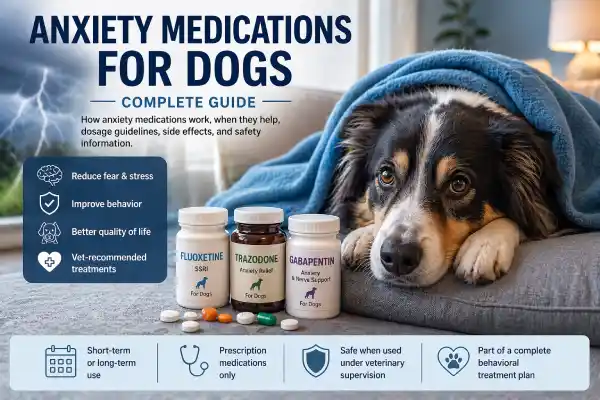
- anxiety medications
Why Senior Dogs Face Higher Risk
Older dogs metabolize medications more slowly.
This means drugs may remain in the body longer.
Senior dogs are also more likely to have:
- kidney disease
- liver disease
- multiple medications
This dramatically increases overdose risk.
Medication Interactions Can Mimic Overdose
Sometimes toxicity occurs even when doses seem “normal.”
This happens because medications interact with each other.
For example:
- combining sedatives
- multiple anti-inflammatory drugs
- certain anxiety medication combinations
can excessively depress the nervous system.
Sedation vs Dangerous Neurological Depression
This distinction is extremely important.
Some medications intentionally cause mild calming or sedation.
But overdose sedation becomes dangerous when dogs show:
- inability to stand
- severe confusion
- slowed breathing
- collapse
Sedation vs Emergency Toxicity
| Mild Sedation | Dangerous Depression |
|---|---|
| sleepy but responsive | difficult to wake |
| slower movement | collapse |
| calm behavior | severe confusion |
| normal breathing | breathing changes |
Why Anxiety Medication Overdoses Can Be Misleading
Some anxiety medications initially cause:
- sedation
- weakness
- wobbling
Owners may assume this is “normal calming.”
But worsening symptoms may indicate overdose or excessive nervous system suppression.
This connects naturally with:
because emotional treatment and sedation are not the same thing.
The Nervous System Is Often the First System Affected
Many overdoses first affect the brain and nervous system.
Common neurological signs include:
- tremors
- shaking
- disorientation
- pacing
- agitation
- seizures
The severity depends on:
- medication type
- dose
- body weight
- overall health
Why Small Dogs Are Especially Vulnerable
Toxicity risk is heavily influenced by body weight.
A dose that may barely affect a large dog could become life-threatening for a small breed.
This is why accurate weight-based dosing is critical in veterinary medicine.
What To Do Immediately If You Suspect Overdose
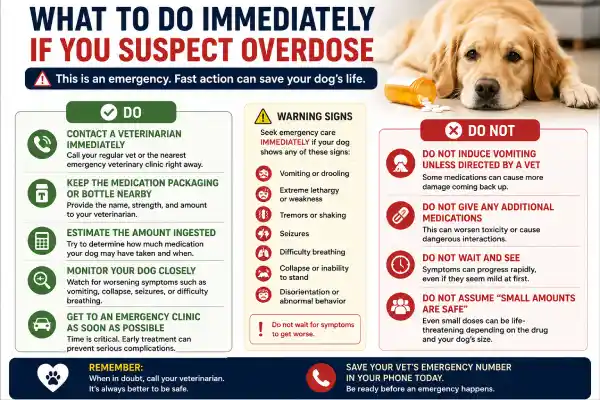
If you suspect medication overdose:
DO:
- contact a veterinarian immediately
- keep medication packaging nearby
- estimate the amount consumed
- monitor breathing and consciousness
DO NOT:
- induce vomiting without veterinary advice
- give additional medications
- “wait and see” during severe symptoms
Fast action can dramatically improve outcomes.
Why Time Matters So Much
Some medications absorb very quickly.
Early treatment may allow veterinarians to:
- induce vomiting safely
- administer activated charcoal
- provide IV fluids
- reduce organ damage
Waiting too long often limits treatment options.
The Emotional Reality of Medication Mistakes
Many owners feel panic and guilt after accidental overdose situations.
But medication mistakes happen far more often than people realize.
The important thing is:
👉 responding quickly
👉 staying calm
👉 seeking veterinary help immediately
Early action often saves lives.
Signs You Should Go to an Emergency Vet Immediately
Never delay emergency evaluation if your dog shows:
- seizures
- collapse
- difficulty breathing
- inability to walk
- severe vomiting
- pale gums
- loss of consciousness
These signs can become fatal rapidly.
Why Prevention Matters More Than Treatment
The safest overdose is the one that never happens.
Simple prevention strategies include:
- using medication charts
- storing medications securely
- keeping a written schedule
- avoiding human medications
- using pill organizers carefully
These small habits greatly reduce risk.
Medication Safety Checklist
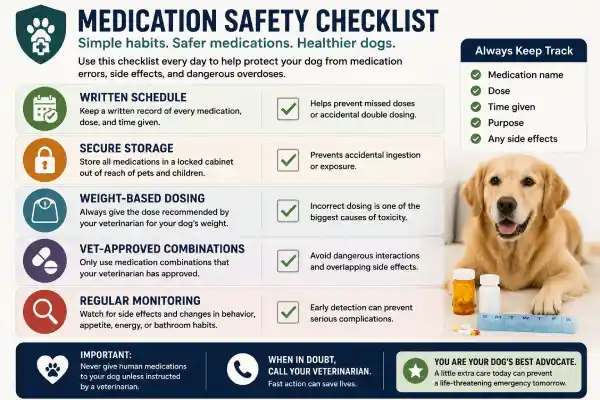
| Safety Habit | Why It Helps |
|---|---|
| written schedule | prevents double dosing |
| secure storage | prevents accidental ingestion |
| weight-based dosing | reduces toxicity risk |
| vet-approved combinations | avoids interactions |
| regular monitoring | catches side effects early |
Real-Life Example
Dog A
- receives proper NSAID dose
- monitored carefully
- improves safely
Dog B
- owner accidentally double doses
- develops vomiting and collapse
Result:
❌ emergency hospitalization required
This type of scenario is extremely common in emergency veterinary medicine.
The Future of Veterinary Medication Safety
Modern veterinary medicine increasingly focuses on:
- individualized dosing
- safer formulations
- medication monitoring
- owner education
- digital tracking systems
This is helping reduce preventable overdose situations.
Conclusion
Signs of medication overdose in dogs should never be ignored. Early symptoms may seem mild at first, but toxicity can progress rapidly depending on the medication involved.
Vomiting, lethargy, wobbling, tremors, breathing changes, seizures, and collapse all require immediate attention—especially if overdose is suspected.
The most important factors are recognizing warning signs early, avoiding impulsive reactions, and seeking veterinary help as quickly as possible.
Medication mistakes can happen to anyone. Fast action is what matters most.
FAQ
What are the first signs of medication overdose in dogs?
Vomiting, lethargy, wobbling, drooling, and unusual behavior are common early signs.
Can dogs recover from medication overdose?
Yes, especially when treatment begins quickly.
Is double dosing dangerous in dogs?
Yes. Even accidental double dosing can become serious depending on the medication.
Which human medications are most dangerous for dogs?
Ibuprofen, naproxen, and acetaminophen are especially dangerous.
Should I make my dog vomit after overdose?
Not unless instructed by a veterinarian.
Sources & Scientific References
- ASPCA Animal Poison Control Center
- Merck Veterinary Manual
- Plumb’s Veterinary Drug Handbook
- Veterinary Information Network (VIN)
- Pet Poison Helpline
Medical Disclaimer
This article is for educational purposes only and does not replace professional veterinary advice.