Quick Answer
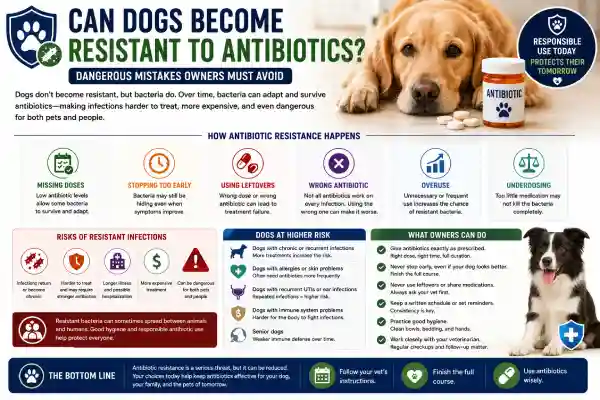
Can dogs become resistant to antibiotics? Dogs themselves do not become resistant, but bacteria inside or around the dog can become resistant to antibiotics over time. This may happen when antibiotics are overused, stopped too early, underdosed, used incorrectly, or repeatedly prescribed. Antibiotic-resistant infections can become harder to treat, more expensive, and potentially dangerous for both animals and humans.
Many dog owners assume:
“If the antibiotic worked once, it should always work.”
But unfortunately, that is not always true.
Over time, some bacteria may adapt and survive antibiotic treatment.
This is called:
- Antibiotic resistance
- Antimicrobial resistance (AMR)
And honestly?
This is becoming one of the biggest challenges in both:
- Human medicine
- Veterinary medicine
Resistant infections may become:
- Harder to treat
- More aggressive
- More expensive
- More dangerous
- More likely to return
The good news?
Many cases of resistance can be reduced through:
- Proper dosing
- Correct antibiotic use
- Finishing medications correctly
- Avoiding dangerous medication mistakes
This guide explains:
- What antibiotic resistance means in dogs
- How resistance develops
- Which owner mistakes increase risk
- Whether resistant bacteria can spread
- What symptoms owners should watch for
- How veterinarians diagnose resistant infections
Related articles:
- What If My Dog Misses Multiple Antibiotic Doses?
- What Happens If Dogs Take Too Much Antibiotic?
- Can Dogs Take Antibiotics on an Empty Stomach?
- Can Dogs Take Probiotics With Antibiotics?
- Why Is My Dog Worse After Starting Antibiotics?
- Antibiotics for Dogs: Uses, Types, Dosage, Side Effects & Safety Guide
Can Dogs Become Resistant to Antibiotics?
What Does Antibiotic Resistance Mean?
Antibiotic resistance happens when bacteria learn how to survive medications that once killed them.
This does NOT mean:
- The dog becomes immune to antibiotics
Instead:
- The bacteria become harder to kill
Over time, resistant bacteria may continue growing even while antibiotics are being given.
Can Dogs Become Resistant to Antibiotics?
Technically:
- Dogs do not become resistant
- Bacteria become resistant
However, owners often use the phrase:
“My dog became resistant to antibiotics.”
What usually happens is:
- The infection bacteria adapted
- The medication stopped working effectively
- A stronger or different antibiotic became necessary
How Does Antibiotic Resistance Happen?
Resistance develops when bacteria survive antibiotic exposure and continue multiplying.
This becomes more likely when:
- Antibiotics are stopped too early
- Doses are missed
- Wrong antibiotics are used
- Antibiotics are used unnecessarily
- Underdosing occurs
- Leftover antibiotics are reused
Common Causes of Antibiotic Resistance
| Cause | Why It Matters |
|---|---|
| Missing doses | Incomplete bacterial killing |
| Stopping treatment early | Surviving bacteria remain |
| Wrong antibiotic choice | Bacteria continue growing |
| Repeated unnecessary use | Increased bacterial adaptation |
| Underdosing | Weak antibiotic exposure |
Related:
Can Missing Doses Cause Resistance?
Potentially yes.
When doses are skipped:
- Antibiotic levels may drop too low
- Some bacteria survive
- Surviving bacteria may adapt over time
This is one reason veterinarians emphasize:
- Consistent timing
- Completing treatment
- Avoiding interruptions
Can Stopping Antibiotics Early Cause Resistance?
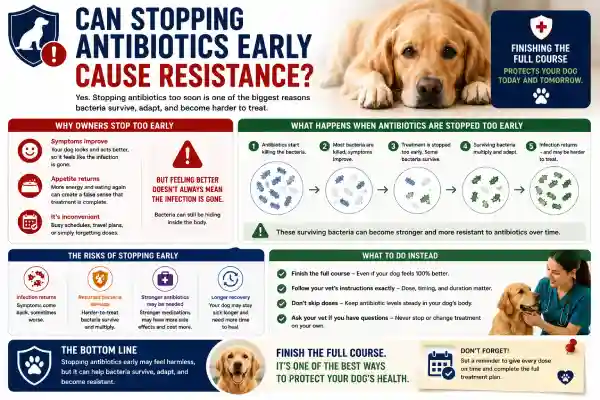
Yes — this is one of the biggest risk factors.
Many owners stop antibiotics when:
- The dog looks better
- Symptoms improve
- Appetite returns
- Fever disappears
But bacteria may still remain inside the body.
Stopping treatment too early may allow:
- Infection relapse
- Stronger bacteria survival
- Chronic infection development
Can Leftover Antibiotics Cause Resistance?
Absolutely.
Owners should NEVER:
- Save antibiotics for later
- Share medications between pets
- Use leftover pills without veterinary guidance
This may result in:
- Incorrect dosing
- Wrong medication choice
- Delayed proper treatment
- Increased resistance risk
Dangerous Leftover Antibiotic Mistakes
| Mistake | Potential Risk |
|---|---|
| Using expired antibiotics | Reduced effectiveness |
| Using wrong antibiotic | Treatment failure |
| Guessing the dose | Toxicity or underdosing |
| Sharing medications | Dangerous interactions |
Related:
Can Resistant Infections Become Dangerous?
Yes — resistant infections may become significantly harder to treat.
Possible complications include:
- Longer illness duration
- Recurring infections
- Hospitalization
- Stronger antibiotic requirements
- Increased treatment costs
- More severe complications
Some resistant infections may require:
- Advanced testing
- Combination therapy
- Long-term treatment
Can Resistant Bacteria Spread to Humans?
Potentially yes.
This is part of the “One Health” concept, where:
- Human health
- Animal health
- Environmental health
are connected.
Resistant bacteria may sometimes spread through:
- Close contact
- Contaminated surfaces
- Bodily fluids
- Poor hygiene
This is why proper antibiotic use matters for:
- Pets
- Families
- Veterinary medicine
- Public health
Which Dogs May Be More at Risk?
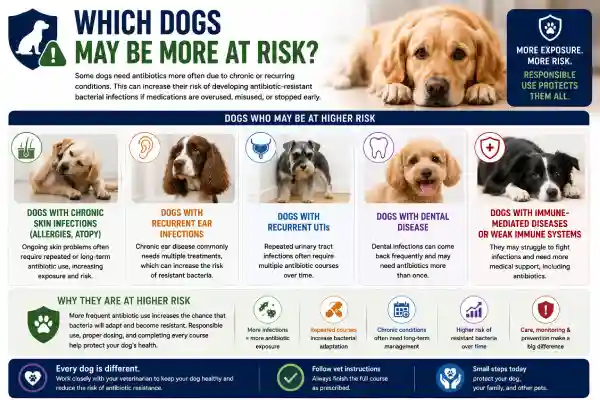
Some dogs experience repeated antibiotic exposure because of:
- Chronic skin infections
- Allergies
- Ear infections
- Dental disease
- Recurrent UTIs
- Immune problems
Dogs at Higher Risk for Resistant Infections
| Higher Risk Group | Why |
|---|---|
| Dogs with chronic infections | Frequent antibiotic exposure |
| Senior dogs | Reduced immune function |
| Dogs with immune disease | Harder infection control |
| Dogs with recurrent UTIs | Repeated treatments |
| Dogs with allergies | Chronic skin infections |
What Symptoms Should Owners Watch For?
Resistant infections may sometimes cause:
- Symptoms that return quickly
- Poor response to antibiotics
- Fever that does not improve
- Ongoing drainage
- Persistent coughing
- Worsening skin infections
Possible Signs of Antibiotic Resistance
| Symptom | Why It Matters |
|---|---|
| Symptoms return quickly | Infection may persist |
| Fever continues | Poor treatment response |
| Ongoing swelling | Infection remains active |
| Worsening discharge | Bacterial growth continues |
| Repeated infections | Possible resistance |
Related:
How Veterinarians Diagnose Resistant Infections
Veterinarians may perform:
- Physical examination
- Infection culture
- Sensitivity testing
- Bloodwork
- Imaging
- Medication history review
What Is Culture and Sensitivity Testing?
This test helps identify:
- Which bacteria are present
- Which antibiotics still work
- Which medications the bacteria resist
This is one of the most important tools in managing resistant infections.
How Can Owners Help Prevent Resistance?
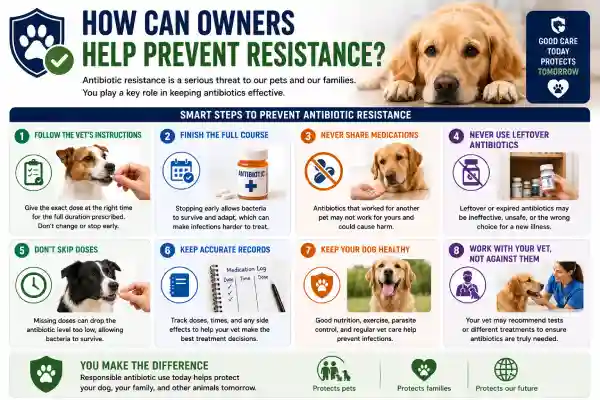
Important Prevention Tips
| Tip | Why It Helps |
|---|---|
| Finish antibiotics exactly as prescribed | Reduce bacterial survival |
| Avoid missed doses | Maintain proper treatment levels |
| Never share antibiotics | Improve safety |
| Never use leftovers without approval | Prevent wrong treatment |
| Follow veterinary instructions carefully | Improve outcomes |
What Should Owners Never Do?
Owners should NEVER:
- Double doses without guidance
- Stop treatment early
- Use old medications
- Guess antibiotic doses
- Use human antibiotics randomly
- Ignore worsening symptoms
These mistakes may increase:
- Toxicity
- Treatment failure
- Resistance risk
- Serious complications
When Should You Contact the Vet?
Contact your veterinarian if your dog:
- Stops improving
- Gets worse during treatment
- Develops repeated infections
- Has fever that returns
- Has severe weakness
- Refuses food
- Develops breathing problems
- Has ongoing diarrhea or vomiting
These may indicate:
- Treatment failure
- Resistant infection
- Severe illness
- Medication complications
FAQ – Can Dogs Become Resistant to Antibiotics?
Can dogs become resistant to antibiotics?
Dogs themselves do not become resistant, but bacteria inside or around the dog may become resistant over time.
Can missing doses cause antibiotic resistance?
Potentially yes. Missed doses may allow bacteria to survive and adapt.
Can stopping antibiotics early make infections worse?
Absolutely. Some bacteria may remain active even after symptoms improve.
Can resistant bacteria spread to humans?
In some situations, resistant bacteria may spread between animals and humans.
How do veterinarians test for resistant infections?
Veterinarians may perform culture and sensitivity testing to identify which antibiotics still work.
Medical Disclaimer
This article is for educational purposes only and does not replace professional veterinary advice, diagnosis, or treatment. The content is written and pharmacist-reviewed to improve medication safety awareness and help dog owners better understand antibiotic resistance, antimicrobial stewardship, infection management, medication mistakes, treatment failure risks, and veterinary antibiotic safety principles. Always follow your veterinarian’s instructions regarding antibiotic use and infection treatment.