Quick Answer
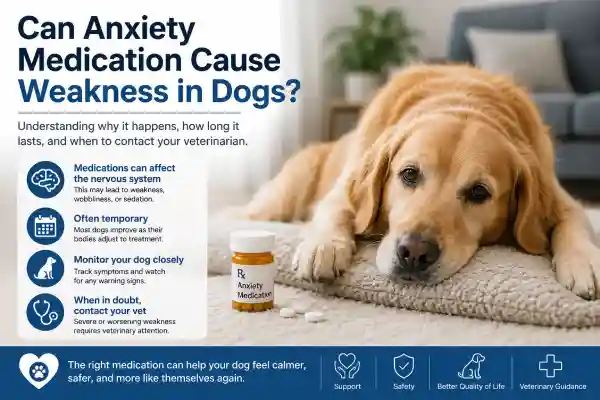
Can anxiety medication cause weakness in dogs? Yes, anxiety medication can cause weakness in dogs, especially during the first few days of treatment or after a dosage adjustment. Medications such as gabapentin, trazodone, alprazolam, and diazepam can temporarily affect coordination, balance, energy levels, and muscle control. In most cases, the weakness is mild and improves as the medication wears off or as the dog’s body adapts to treatment. However, severe weakness, collapse, or difficulty standing should always be discussed with a veterinarian.
If you’ve recently started treatment and are wondering, “Can anxiety medication cause weakness in dogs?”, you’re not alone. This is one of the most common side effects owners notice when beginning anxiety treatment. While weakness can be alarming, understanding why it occurs can help you determine whether your dog is experiencing a normal medication adjustment or a problem that needs veterinary attention.
When Owners Commonly Ask This
Owners typically search for this question after noticing sudden changes in mobility or behavior.
Common concerns include:
- My dog seems weak after trazodone.
- My dog is wobbling after gabapentin.
- My dog’s back legs seem weak after anxiety medication.
- My dog won’t get up after taking medication.
- My dog looks drunk after trazodone.
- My dog is stumbling while walking.
- My dog is sleeping all day after medication.
- My dog seems weak and confused after starting treatment.
In many cases, these symptoms appear within hours or days of starting medication.
Table of Contents – Can Anxiety Medication Cause Weakness in Dogs?
Can Anxiety Medication Cause Weakness in Dogs?
The simple answer is yes.
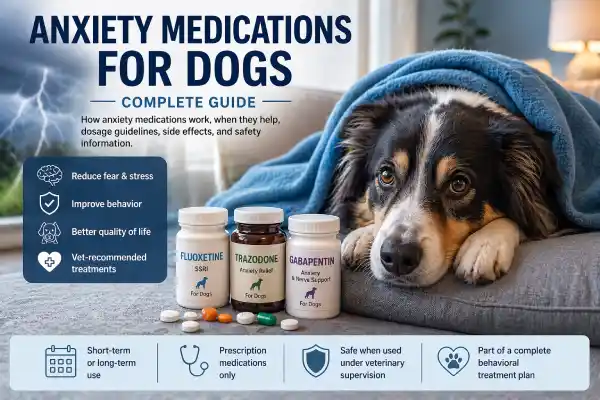
Can anxiety medication cause weakness in dogs? Absolutely. Anxiety medications work by affecting neurotransmitters that regulate fear, stress, arousal, and nervous system activity. While these effects help reduce anxiety, they can sometimes cause side effects involving movement and coordination.
Dogs experiencing medication-related weakness may show:
- Slower movement
- Reduced activity
- Difficulty jumping
- Mild wobbling
- Sleepiness
- Temporary balance issues
The severity varies significantly between dogs. Some dogs show only mild sleepiness, while others may appear noticeably weak for several hours after taking medication.
Many owners also notice behavioral changes at the same time. For example, dogs may become unusually attached to family members. If this sounds familiar, see our guide on Why Is My Dog Clingy After Anxiety Medication?
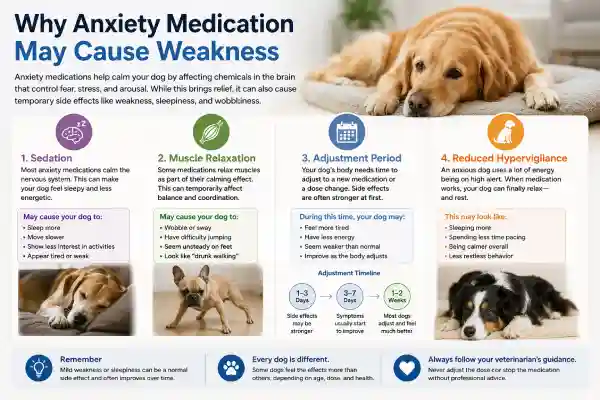
Why Anxiety Medication May Cause Weakness
Sedation
The most common reason anxiety medication causes weakness is sedation.
Many anti-anxiety medications intentionally calm the nervous system. This can reduce fear and stress but may also make dogs appear:
- Tired
- Sluggish
- Less interested in activity
- Sleepier than normal
For many dogs, what owners describe as weakness is actually sedation.
Muscle Relaxation
Some medications produce muscle-relaxing effects.
While this relaxation can help anxious dogs feel more comfortable, it may temporarily affect balance and coordination.
Owners often report:
- Wobbly walking
- Difficulty climbing stairs
- Hesitation when jumping
- Weak-looking back legs
The Adjustment Period
Most medications require time for the body to adapt.
During the first several days:
- Side effects may be more noticeable.
- Weakness may appear stronger.
- Dogs may sleep more than usual.
Fortunately, many dogs improve significantly after the adjustment period.
Reduced Hypervigilance
Some anxious dogs spend hours every day:
- Pacing
- Panting
- Following owners
- Monitoring their surroundings
When anxiety medication starts working, these dogs may suddenly seem much calmer.
Owners sometimes mistake this normal relaxation for weakness.
Which Anxiety Medications Are Most Likely to Cause Weakness?
Different medications carry different risks.
| Medication | Weakness Possible? | Frequency |
|---|---|---|
| Gabapentin | Yes | Common |
| Trazodone | Yes | Moderate |
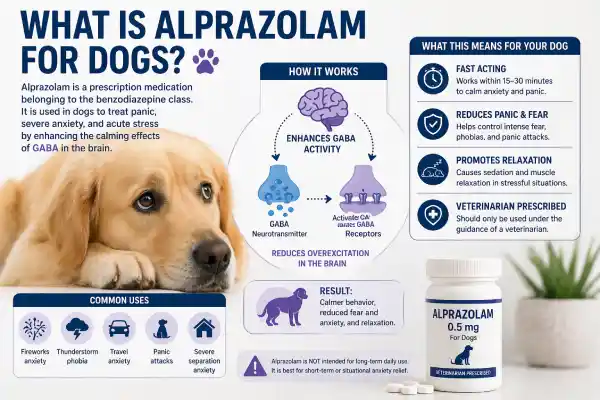
| Alprazolam | Yes | Moderate |
| Diazepam | Yes | Moderate |
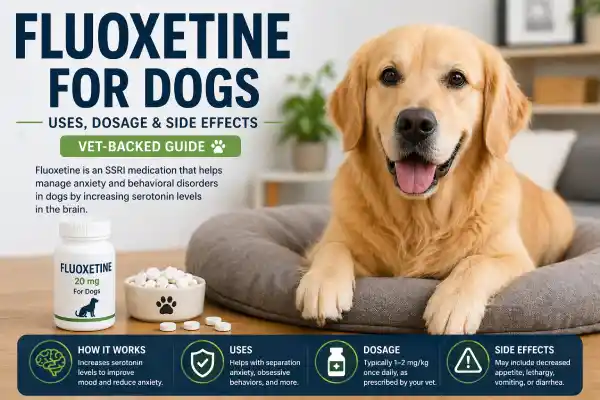
| Fluoxetine | Less Common | Low |
| Clomipramine | Less Common | Low |
Gabapentin and trazodone are among the medications most commonly associated with weakness and wobbliness.
If you’re trying to compare treatment options, you may also find What Is the Safest Anxiety Medication for Dogs? helpful.
Gabapentin and Weakness in Dogs
Gabapentin deserves special attention because many owners specifically associate it with weakness.
Veterinarians commonly prescribe gabapentin for:
- Anxiety
- Chronic pain
- Arthritis
- Recovery after surgery
Because gabapentin affects nerve signaling, some dogs experience:
- Weakness
- Sleepiness
- Wobbling
- Reduced coordination
Senior dogs may be particularly sensitive to these effects.
If your dog takes gabapentin, you may also want to read Can Senior Dogs Safely Take Anxiety Medication?
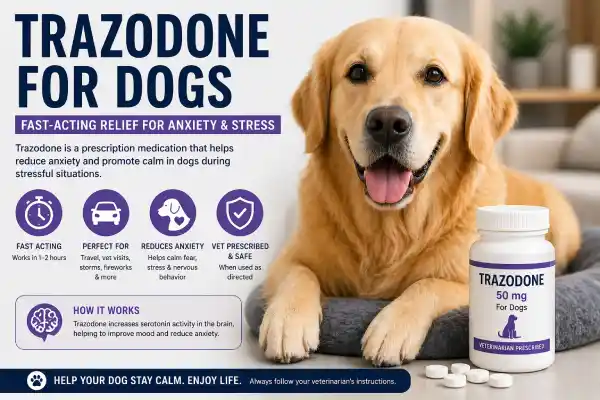
Trazodone and Weakness in Dogs
Trazodone is one of the most frequently prescribed anxiety medications in veterinary medicine.
Veterinarians often use it for:
- Thunderstorm anxiety
- Firework anxiety
- Travel anxiety
- Veterinary visits
- Post-surgical confinement
Although trazodone is generally well tolerated, some dogs develop temporary:
- Weakness
- Sleepiness
- Reduced coordination
- Balance changes
Fortunately, these side effects are usually temporary.
How Long Does Weakness Last?
One of the most common owner concerns is duration.
| Situation | Typical Duration |
|---|---|
| First Dose | Several Hours |
| Dose Increase | 1–3 Days |
| New Medication Adjustment | Several Days to 2 Weeks |
| Situational Medication Use | Usually Less Than 24 Hours |
Most dogs gradually improve as treatment continues.
However, if weakness persists or worsens, veterinary guidance is recommended.
When Weakness Is Usually Normal
During the First Few Days
Many dogs experience temporary weakness while their bodies adjust to treatment.
After a Dose Increase
Increasing the dosage can temporarily increase side effects.
After Situational Medication
Dogs receiving medication before fireworks, travel, or thunderstorms often appear sleepy and weak afterward.
Owners who use medication before stressful events frequently ask Best Anxiety Medication for Dogs: Comparison Guide
When Anxiety Improves
A calmer dog is not necessarily a weaker dog.
Many dogs that previously spent hours pacing suddenly begin resting more once treatment starts working.
This change is often a positive sign rather than a medication problem.
Why Senior Dogs May Experience More Weakness
Older dogs often process medications differently than younger dogs.
Age-related changes may affect:
- Liver function
- Kidney function
- Drug metabolism
- Balance
- Mobility
Because of these changes, senior dogs may experience stronger side effects even at standard doses.
This is one reason veterinarians often start older dogs on lower doses and increase gradually.
Many owners asking “Can anxiety medication cause weakness in dogs?” are actually caring for senior pets.
Older dogs may also experience:
- Arthritis
- Cognitive dysfunction
- Reduced muscle mass
- Existing mobility issues
These factors can make medication-related weakness more noticeable.
When Weakness Becomes Concerning

While mild weakness is often a normal side effect, there are situations where weakness should never be ignored.
Contact your veterinarian immediately if your dog experiences:
- Collapse
- Inability to stand
- Severe lethargy
- Repeated falls
- Tremors
- Persistent vomiting
- Difficulty breathing
- Severe confusion
- Refusal to eat for more than 24 hours
- Unresponsiveness
These symptoms may indicate excessive sedation, a medication reaction, an overdose, or an unrelated medical problem that requires prompt evaluation.
A useful rule is this:
Mild weakness that gradually improves is usually less concerning than weakness that gets worse over time.
Which Dogs Are More Likely to Experience Weakness?
Not every dog responds to anxiety medication in the same way.
Some dogs are naturally more likely to experience weakness.
Senior Dogs
Older dogs often metabolize medications more slowly.
They may experience:
- Stronger sedation
- Reduced coordination
- Longer-lasting side effects
If your dog is older, see Can Senior Dogs Safely Take Anxiety Medication?
Dogs Taking Multiple Medications
Combining medications may increase the risk of weakness.
Examples include:
- Pain medications
- Seizure medications
- Sleep aids
- Other sedatives
Drug interactions can amplify side effects.
Dogs With Neurological Conditions
Dogs with existing neurological disorders may be more sensitive to medications affecting the brain and nervous system.
Dogs With Arthritis
Dogs with arthritis often already have mobility limitations.
Even mild medication-related weakness can become much more noticeable.
Small Breed Dogs
Small dogs may appear more dramatically affected because subtle balance changes are easier to recognize.
Related Symptoms Owners Often Notice
Weakness rarely occurs alone.
Many owners notice several symptoms at the same time.
Increased Sleeping
Sleepiness is one of the most common side effects associated with anxiety medication.
Dogs may:
- Nap more frequently
- Sleep longer
- Show less interest in activity
Clinginess
Some dogs become unusually attached after starting treatment.
They may:
- Follow owners constantly
- Seek physical contact
- Sleep closer to family members
Related article:
Why Is My Dog Clingy After Anxiety Medication?
Appetite Changes
Changes in appetite sometimes occur alongside weakness.
Dogs may:
- Eat less
- Skip meals
- Become pickier about food
Related article:
Can Anxiety Medication Affect Appetite in Dogs?
Mild Confusion
Temporary confusion can occur during the adjustment period.
Owners may notice:
- Disorientation
- Delayed responses
- Unusual behavior
Related article:
Can Anxiety Medication Cause Confusion in Dogs?
Wobbling
Many owners describe their dog as:
- Walking like they’re drunk
- Swaying
- Losing balance
This symptom is especially common with gabapentin and trazodone.
Reduced Interest in Exercise
Dogs that normally enjoy walks or play sessions may seem less enthusiastic while adjusting to medication.
Additional related articles:
- What Is the Safest Anxiety Medication for Dogs?
- Can Dogs Take Melatonin With Anxiety Medication?
- Can Dogs Take CBD With Anxiety Medication?
- Why Does Anxiety Medication Stop Working in Dogs?
- Can Anxiety Medication Make Dogs Aggressive?
- Can Dogs Take Anxiety Medication Every Day?
- Best Anxiety Medication for Dogs
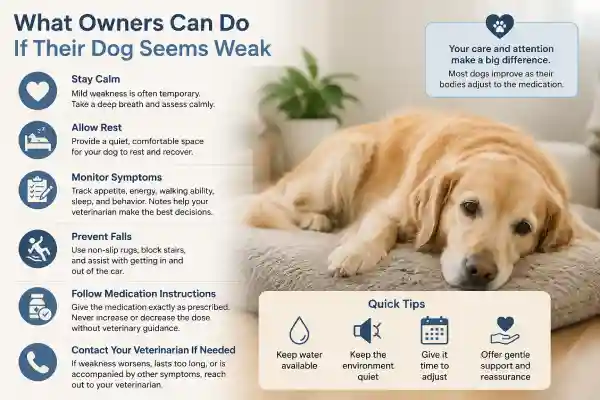
What Owners Can Do If Their Dog Seems Weak
Stay Calm
Mild weakness is often temporary.
Panic may make it harder to objectively evaluate your dog’s condition.
Allow Rest
Many dogs simply need time to adjust.
Provide:
- A comfortable resting area
- Easy access to water
- A quiet environment
Monitor Symptoms
Track:
- Appetite
- Walking ability
- Sleep patterns
- Energy levels
- Behavioral changes
Keeping notes can help your veterinarian assess the situation.
Prevent Falls
Weak dogs may be more likely to slip or fall.
Helpful strategies include:
- Non-slip rugs
- Blocking stairs
- Assisting with vehicle entry and exit
Follow Medication Instructions Carefully
Never increase or decrease medication doses without veterinary guidance.
Contact Your Veterinarian If Needed
If weakness worsens, persists, or is accompanied by other concerning symptoms, seek professional advice.
When Owners Should Contact Their Veterinarian
Owners should contact their veterinarian if:
- Weakness gets worse instead of better
- Weakness lasts longer than expected
- The dog falls repeatedly
- Appetite disappears completely
- Confusion becomes severe
- Vomiting develops
- The dog cannot stand comfortably
- Breathing changes occur
Veterinarians can determine whether:
- The dose should be adjusted
- The medication should be changed
- Additional testing is necessary
Veterinarian Takeaway
Can anxiety medication cause weakness in dogs? Yes. Weakness is a recognized side effect of several commonly prescribed anxiety medications, particularly gabapentin, trazodone, alprazolam, and diazepam. In most cases, the weakness is temporary and improves as the dog adjusts to treatment. Monitoring symptoms, following dosing instructions carefully, and maintaining communication with your veterinarian can help ensure treatment remains both safe and effective.
Bottom Line
Can anxiety medication cause weakness in dogs? Absolutely. Anxiety medications can sometimes cause temporary weakness, wobbliness, sleepiness, and reduced coordination because they affect the nervous system. Fortunately, most dogs improve as their bodies adapt to treatment. Mild weakness is often normal, especially during the first few days. However, severe weakness, collapse, inability to stand, or worsening symptoms should always prompt a call to your veterinarian.
The goal of anxiety treatment is to improve your dog’s quality of life while minimizing side effects. With proper monitoring and veterinary guidance, many dogs successfully use anxiety medications safely and comfortably.
Frequently Asked Questions
Can trazodone cause weakness in dogs?
Yes. Trazodone can cause temporary weakness, sleepiness, and reduced coordination.
Can gabapentin make dogs weak?
Yes. Gabapentin is one of the medications most commonly associated with weakness and wobbliness.
How long does weakness last after anxiety medication?
Many cases improve within several hours to several days, depending on the medication and dosage.
Is weakness a normal side effect of anxiety medication?
Mild weakness can be a normal side effect, particularly during the adjustment period.
Should I stop anxiety medication if my dog seems weak?
No. Always consult your veterinarian before stopping or changing medication.
Can anxiety medication make dogs wobble?
Yes. Wobbling and temporary balance changes are commonly reported side effects.
Are senior dogs more likely to become weak?
Yes. Older dogs often metabolize medications more slowly and may be more sensitive to side effects.
Can weakness indicate an overdose?
Yes. Wobbling and temporary balance changes are commonly reported side effects.
Should my dog rest if weakness occurs?
Yes. Rest is often beneficial while the body adjusts to treatment.
When should I call the veterinarian?
Call your veterinarian if weakness is severe, worsening, persistent, or accompanied by other concerning symptoms.
Reviewed By
Pharmacy Reviewed By
Dimitar Atanasov, MPharm
Master Pharmacist | Medication Safety Educator
Dimitar Atanasov is a licensed Master Pharmacist with experience in pharmacology, medication safety, patient education, and veterinary medication research. He reviews educational content to help pet owners better understand medication side effects, treatment decisions, and medication safety.
Editorial Policy
Pet Meds Made Simple publishes evidence-based educational content developed from veterinary references, pharmacology resources, medication safety literature, and peer-reviewed research.
Learn more about our editorial standards and review process:
Sources
- American Veterinary Medical Association (AVMA)
- American Animal Hospital Association (AAHA)
- Merck Veterinary Manual
- American College of Veterinary Behaviorists (ACVB)
- FDA Center for Veterinary Medicine
- Veterinary Behavior Medicine Guidelines
- Peer-Reviewed Veterinary Psychopharmacology Literature
- Clinical References on Canine Anxiety Treatment
- Veterinary Pharmacology and Therapeutics
- Current Veterinary Therapy Textbooks
Medical Disclaimer
This article is for educational purposes only and does not replace professional veterinary advice. Always consult your veterinarian regarding medication side effects, dosage adjustments, behavioral changes, or concerns about your dog’s health. Never stop prescribed medication without veterinary guidance.Can Anxiety Medication Cause Weaknessa