Quick Answer
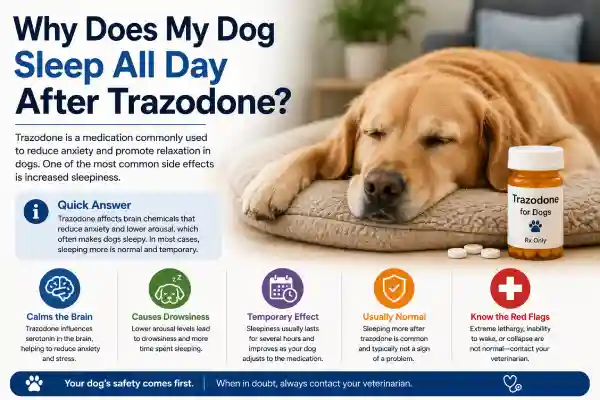
Why does my dog sleep all day after trazodone? The most common reason is that trazodone has sedative effects that help calm anxiety, reduce stress, and promote relaxation. Many dogs become noticeably sleepier after taking trazodone, especially during the first few doses or after a dosage increase. In most cases, sleeping more than usual is a normal side effect. However, extreme lethargy, difficulty waking up, collapse, or breathing problems should always be discussed with a veterinarian.
If you’re wondering, “Why does my dog sleep all day after trazodone?”, you’re asking one of the most common questions dog owners have after their veterinarian prescribes this medication. Seeing your normally active dog spend most of the day sleeping can be surprising, but understanding how trazodone works can help you determine whether what you’re seeing is expected or concerning.
When Owners Commonly Ask This
Many owners become concerned after noticing their dog suddenly sleeping much more than normal.
Common situations include:
- My dog slept all day after trazodone.
- My dog won’t get off the couch after taking trazodone.
- Is trazodone making my dog too sleepy?
- My dog seems lethargic after trazodone.
- My dog sleeps for hours after anxiety medication.
- My dog looks tired all day after trazodone.
- My dog seems calm but sleeps constantly.
In many cases, the increased sleep is directly related to the medication’s calming effects.
Why Does My Dog Sleep All Day After Trazodone?
The simple answer is that trazodone affects brain chemicals involved in anxiety, stress, and arousal.
When these brain pathways become less active, dogs often feel:
- Calmer
- Less anxious
- More relaxed
- Sleepier
This sleepiness is actually one of the reasons veterinarians prescribe trazodone.
For dogs experiencing:
- Thunderstorm anxiety
- Firework fears
- Travel anxiety
- Veterinary visit stress
- Post-surgical confinement
a calmer and more relaxed state can be beneficial.
Because trazodone reduces nervous system activity, many dogs naturally spend more time sleeping while the medication is active.
Why Does My Dog Sleep All Day After Trazodone?
What Is Trazodone?
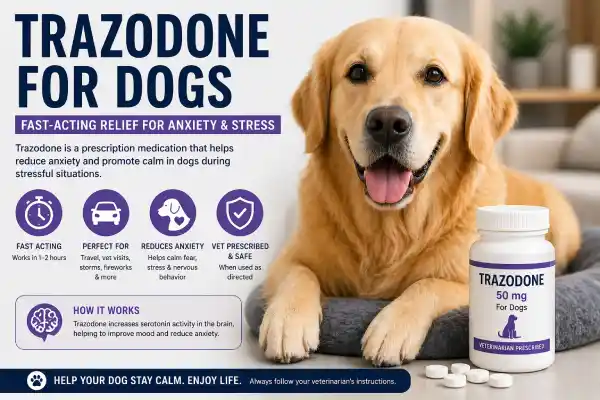
Trazodone is a prescription medication commonly used in veterinary medicine to help manage anxiety and stress.
Veterinarians frequently prescribe it for:
- Separation anxiety
- Noise phobias
- Travel anxiety
- Veterinary visits
- Recovery after surgery
- Situational stress
Unlike some anxiety medications that require weeks to become effective, trazodone typically begins working within a few hours.
This rapid onset makes it especially useful for short-term anxiety management.
Owners comparing medications may also find What Is the Safest Anxiety Medication for Dogs? helpful.
How Trazodone Affects the Brain and Nervous System
Serotonin Regulation
Trazodone affects serotonin, a neurotransmitter involved in mood, behavior, and relaxation.
Increased serotonin activity can help reduce anxiety and emotional distress.
Reduced Anxiety
An anxious dog often spends significant energy:
- Pacing
- Panting
- Watching the environment
- Following owners constantly
When trazodone reduces anxiety, dogs often become noticeably calmer.
Sedative Effects
In addition to reducing anxiety, trazodone can produce sedation.
This is why many dogs:
- Nap more frequently
- Sleep longer
- Show less interest in activity
Lower Arousal Levels
Dogs on trazodone often react less intensely to stressful situations.
This reduced state of alertness can naturally lead to increased sleep.
Is Sleeping All Day After Trazodone Normal?
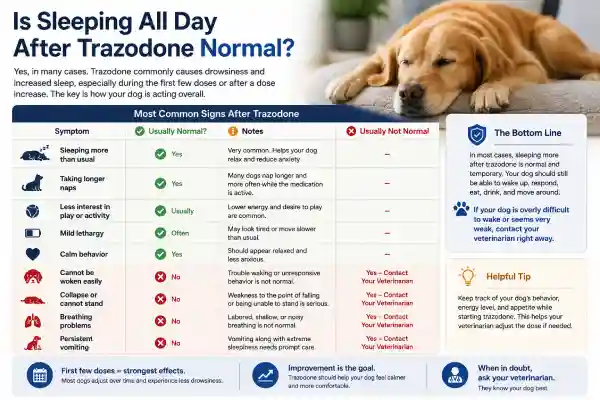
In many cases, yes.
The following table can help owners understand what is usually expected.
| Symptom | Usually Normal? |
|---|---|
| Sleeping more than usual | Yes |
| Taking longer naps | Yes |
| Less interest in activity | Usually |
| Mild lethargy | Often |
| Calm behavior | Yes |
| Mild wobbling | Sometimes |
| Difficulty waking up | No |
| Collapse | No |
| Breathing problems | No |
Most dogs that are simply sleeping more remain easy to wake and continue eating, drinking, and interacting with family members.
How Long Does Trazodone Sleepiness Last?
The duration depends on:
- Dosage
- Dog size
- Age
- Individual sensitivity
- Other medications
Typical Timeline
| Situation | Typical Duration |
|---|---|
| Single Dose | 4–12 Hours |
| Higher Dose | 6–24 Hours |
| First Few Doses | Often Strongest |
| Long-Term Use | Usually Better Tolerated |
Many owners notice that sedation is most pronounced during the first several doses.
Over time, some dogs adapt and experience less sleepiness.
Why Some Dogs Sleep More Than Others
Not every dog responds to trazodone the same way.
Several factors influence how sleepy a dog becomes.
Individual Sensitivity
Some dogs are naturally more sensitive to sedative medications.
Even standard doses may produce stronger effects.
Body Size
Smaller dogs may sometimes appear more affected because subtle changes are easier to notice.
Health Conditions
Underlying medical conditions can influence medication responses.
Examples include:
- Liver disease
- Kidney disease
- Neurological disorders
Previous Medication Exposure
Dogs that have never taken sedating medications may appear especially sleepy during the first few treatments.
Which Dogs May Sleep More After Trazodone?
Senior Dogs
Older dogs often metabolize medications more slowly.
They may experience:
- Stronger sedation
- Longer sleep periods
- More noticeable side effects
Learn more in Can Senior Dogs Safely Take Anxiety Medication?
Dogs Taking Other Medications
Combining trazodone with certain medications may increase sleepiness.
Examples include:
- Gabapentin
- Pain medications
- Seizure medications
- Other sedatives
Dogs Recovering From Surgery
Dogs recovering from surgery often receive trazodone alongside pain medications.
This combination may significantly increase sleeping time.
Dogs With Chronic Anxiety
Dogs with severe anxiety may finally be able to rest comfortably once treatment begins.
Can Trazodone Make Dogs Sleep Too Much?
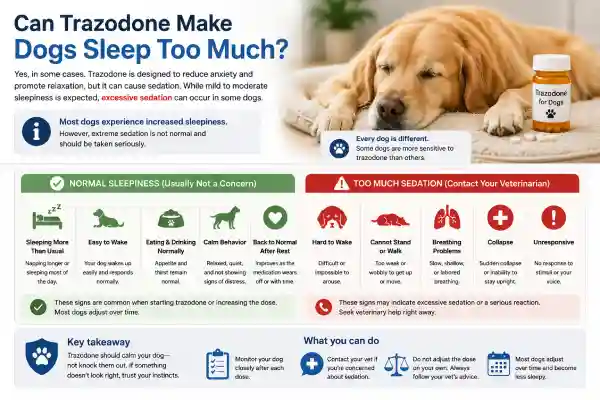
Sometimes.
Most dogs simply experience increased sleep while remaining responsive and comfortable.
However, excessive sedation can occasionally occur.
Signs that your dog may be overly sedated include:
- Difficulty standing
- Trouble walking
- Extreme weakness
- Minimal responsiveness
- Difficulty waking
If you notice weakness alongside increased sleeping, see Can Anxiety Medication Cause Weakness in Dogs?
Related Symptoms Owners Often Notice
Weakness
Some dogs appear sleepy and weak at the same time.
Related article:
Can Anxiety Medication Cause Weakness in Dogs?
Clinginess
Some dogs become unusually attached after starting medication.
Related article:
Why Is My Dog Clingy After Anxiety Medication?
Appetite Changes
Certain dogs experience temporary appetite changes.
Related article:
Can Anxiety Medication Affect Appetite in Dogs?
Mild Confusion
A small number of dogs may appear temporarily confused while adjusting to treatment.
Related article:
Can Anxiety Medication Cause Confusion in Dogs?
Wobbling
Some dogs walk more carefully or appear unsteady.
Reduced Interest in Exercise
Dogs may prefer resting instead of playing during the medication’s active period.
Additional related articles:
- Can Dogs Take Melatonin With Anxiety Medication?
- Can Dogs Take CBD With Anxiety Medication?
- Why Does Anxiety Medication Stop Working in Dogs?
- Can Anxiety Medication Make Dogs Aggressive?
- Can Dogs Take Anxiety Medication Every Day?
- Best Anxiety Medication for Dogs: Comparison Guide
- What Happens If My Dog Misses Anxiety Medication?
When Sleeping Becomes Concerning
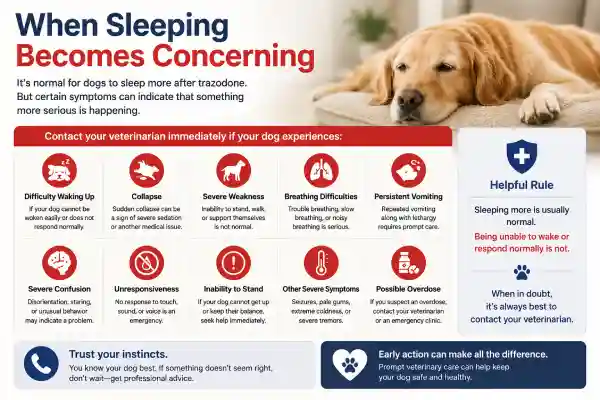
While increased sleep is often expected, certain symptoms should never be ignored.
Contact your veterinarian if your dog experiences:
- Difficulty waking up
- Collapse
- Severe weakness
- Inability to stand
- Breathing difficulties
- Persistent vomiting
- Unresponsiveness
- Severe confusion
A good rule is:
Sleeping more is usually normal. Being unable to wake or respond normally is not.
What Owners Can Do
Allow Rest
Many dogs simply need time to adjust.
Provide:
- A quiet environment
- Comfortable bedding
- Easy access to water
Monitor Symptoms
Track:
- Appetite
- Energy levels
- Walking ability
- Sleep patterns
Avoid Strenuous Activity
Allow your dog to recover naturally while the medication is active.
Follow Dosing Instructions
Never increase or decrease the dose without veterinary guidance.
Contact Your Veterinarian If Needed
If symptoms seem severe or unusual, professional advice is always appropriate.
When Owners Should Contact Their Veterinarian
Owners should contact their veterinarian if:
- Sleepiness becomes extreme
- The dog cannot stand
- Appetite disappears completely
- Breathing changes occur
- Weakness worsens
- The dog becomes difficult to wake
Prompt evaluation helps ensure safe treatment.
Veterinarian Takeaway
Why does my dog sleep all day after trazodone? In most cases, the answer is simple: trazodone reduces anxiety and produces mild sedation. This combination often causes dogs to sleep significantly more than usual, especially during the first few doses. While increased sleep is generally expected, severe lethargy, collapse, breathing difficulties, or an inability to wake normally should always be evaluated by a veterinarian.
Bottom Line
Why does my dog sleep all day after trazodone? Because trazodone affects brain pathways involved in anxiety and arousal, many dogs become calmer and sleepier after taking it. Most cases of increased sleep are normal and temporary. Monitoring your dog’s overall comfort, appetite, mobility, and responsiveness can help determine whether the sleepiness is part of a normal adjustment period or a reason to contact your veterinarian.
Frequently Asked Questions – Should I let my dog sleep after taking trazodone?
How long will my dog sleep after trazodone?
Most dogs experience increased sleepiness for approximately 4 to 12 hours after a single dose. Higher doses may cause sedation that lasts longer. Some dogs remain sleepy for up to 24 hours, particularly when first starting treatment.
Is it normal for my dog to sleep all day after trazodone?
Yes. Many dogs sleep significantly more than usual after taking trazodone. This is one of the most common side effects and is often part of the medication’s calming effect.
Can trazodone make my dog too sleepy?
Yes. While mild to moderate sleepiness is expected, excessive sedation can occur in some dogs. If your dog is difficult to wake, unable to stand, or appears unresponsive, contact your veterinarian.
Why does my dog sleep all day after trazodone but act normal when awake?
This is very common. Many dogs simply spend more time sleeping while the medication is active but remain alert, responsive, and comfortable when awake.
Should I let my dog sleep after taking trazodone?
In most cases, yes. Allowing your dog to rest comfortably is appropriate as long as they can be awakened easily and continue eating, drinking, and interacting normally.
Can trazodone cause weakness as well as sleepiness?
Yes. Some dogs experience both sedation and weakness. This combination can make them appear tired, wobbly, or less coordinated.
Related article:
Can Anxiety Medication Cause Weakness in Dogs?
Are senior dogs more likely to sleep after trazodone?
Yes. Senior dogs often process medications more slowly and may experience stronger or longer-lasting sedation.
Does trazodone work better when dogs sleep?
Not necessarily. Sleeping is simply a side effect of the medication’s calming properties. The goal is reduced anxiety, not excessive sedation.
Can I reduce my dog’s trazodone dose if they sleep too much?
Never adjust medication without veterinary guidance. If you feel your dog is excessively sleepy, discuss the situation with your veterinarian.
When should I worry about trazodone sleepiness?
You should contact your veterinarian if your dog:
Cannot be awakened easily
Has difficulty standing
Appears severely weak
Develops breathing problems
Experiences collapse
Becomes unresponsive
Reviewed By
Pharmacy Reviewed By
Dimitar Atanasov, MPharm
Master Pharmacist | Medication Safety Educator
Dimitar Atanasov is a licensed Master Pharmacist with experience in pharmacology, medication safety, patient education, and veterinary medication research. He reviews educational content to help pet owners better understand medication side effects, treatment options, and safe medication use in dogs.
Editorial Policy
Pet Meds Made Simple publishes evidence-based educational content developed from veterinary references, pharmacology resources, medication safety literature, and peer-reviewed research.
Every article is created to help pet owners make informed decisions while supporting—not replacing—the veterinarian-client relationship.
Learn more about our editorial standards and review process:
Sources
- American Veterinary Medical Association (AVMA)
- American Animal Hospital Association (AAHA)
- Merck Veterinary Manual
- American College of Veterinary Behaviorists (ACVB)
- FDA Center for Veterinary Medicine
- Veterinary Behavior Medicine Guidelines
- Plumb’s Veterinary Drug Handbook
- Peer-Reviewed Veterinary Psychopharmacology Literature
- Clinical References on Canine Anxiety Treatment
- Veterinary Pharmacology and Therapeutics
Medical Disclaimer
This article is for educational purposes only and does not replace professional veterinary advice. Always consult your veterinarian regarding medication side effects, dosage adjustments, behavioral changes, or concerns about your dog’s health. Never stop, start, or change prescribed medication without veterinary guidance.Should I let my dog sleep after taking trazodone?
Images create with AI – Should I let my dog sleep after taking trazodone?