Quick Answer
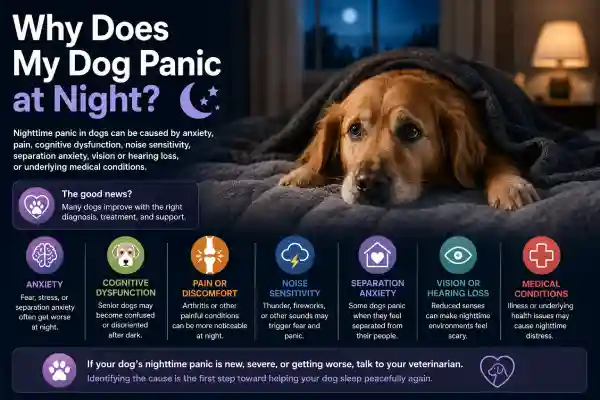
Why does my dog panic at night? Nighttime panic in dogs can be caused by anxiety, cognitive dysfunction, pain, noise sensitivity, separation anxiety, vision loss, medical conditions, or age-related changes. Some dogs become fearful when the house becomes quiet and dark, while others may experience discomfort or confusion that becomes more noticeable overnight. Identifying the underlying cause is essential because treatment depends on the reason behind the panic.
If you’ve ever been awakened by a dog pacing, panting, trembling, or acting terrified in the middle of the night, you’re not alone. Many owners search for answers after their dog suddenly begins showing unusual nighttime behavior. While occasional restlessness may not be serious, recurring nighttime panic deserves attention.
When Owners Commonly Ask This
Most owners begin searching for this problem after noticing unusual nighttime behavior.
Common concerns include:
- My dog suddenly panics at night.
- My dog wakes up terrified.
- My dog pants and paces every night.
- My senior dog acts confused at night.
- My dog seems afraid of the dark.
- My dog follows me everywhere at night.
- My dog won’t settle down before bed.
- My dog cries during the night.
In some cases, the panic develops gradually. In others, it seems to appear overnight.
Why Does My Dog Panic at Night?
The most important thing to understand is that nighttime panic is a symptom, not a diagnosis.
Dogs panic at night for many different reasons.
For some dogs, anxiety is the primary cause. For others, pain, cognitive dysfunction, declining senses, or underlying medical conditions may be responsible.
The challenge is determining which factor is triggering the behavior.
Because many causes can look similar, a veterinarian may be needed to identify the underlying problem.
Why Does My Dog Panic at Night?
7 Common Reasons Dogs Panic at Night
Anxiety Disorders
Anxiety is one of the most common explanations for nighttime panic.
Dogs with anxiety may experience:
- Panting
- Trembling
- Pacing
- Restlessness
- Vocalization
- Clinginess
When distractions disappear at night, anxious thoughts and fears can become more noticeable.
Owners considering treatment options may also find these guides helpful:
- What Is the Safest Anxiety Medication for Dogs?
- Best Anxiety Medication for Dogs: Comparison Guide
- Can Dogs Take CBD With Anxiety Medication?
Cognitive Dysfunction Syndrome
Senior dogs may develop cognitive dysfunction syndrome (CDS), often compared to dementia in humans.
Affected dogs may:
- Wander aimlessly
- Become confused
- Forget routines
- Wake during the night
- Seem frightened for no obvious reason
Nighttime confusion is one of the most common signs of cognitive dysfunction.
Pain or Physical Discomfort
Pain often becomes more noticeable during quiet nighttime hours.
Common examples include:
- Arthritis
- Hip dysplasia
- Back pain
- Dental pain
- Neurological disorders
A dog experiencing pain may appear anxious when they are actually uncomfortable.
Noise Sensitivity
Some dogs become frightened by sounds that humans barely notice.
Potential triggers include:
- Thunderstorms
- Fireworks
- Wind
- Wildlife
- Neighbor activity
- Household appliances
Because sounds are often easier to hear at night, sensitive dogs may become increasingly distressed.
Separation Anxiety
Some dogs struggle when family members go to bed.
Signs may include:
- Whining
- Barking
- Pacing
- Following owners constantly
These dogs often settle once they are allowed near their owners.
Vision or Hearing Loss
Senior dogs with declining senses may become frightened when they cannot fully understand their surroundings.
Reduced vision can be particularly problematic in dark environments.
Dogs may:
- Startle easily
- Become disoriented
- Refuse to enter dark rooms
- Panic unexpectedly
Underlying Medical Conditions
Medical issues can sometimes trigger panic-like behaviors.
Potential causes include:
- Heart disease
- Hormonal disorders
- Neurological disease
- Gastrointestinal discomfort
- Respiratory problems
This is one reason a veterinary examination is important when nighttime panic develops suddenly.
What Does Nighttime Panic Look Like?
Nighttime panic can appear differently from dog to dog.
| Symptom | Common? |
|---|---|
| Pacing | Yes |
| Panting | Yes |
| Trembling | Yes |
| Clinginess | Yes |
| Barking | Yes |
| Restlessness | Yes |
| Refusing to Sleep | Yes |
| Hiding | Sometimes |
| Destructive Behavior | Sometimes |
Many dogs display several symptoms simultaneously.
For example, a dog may:
- Pace continuously
- Pant heavily
- Follow owners from room to room
- Refuse to lie down
These behaviors often become repetitive and may worsen over time.
Is Nighttime Panic More Common in Senior Dogs?
Yes.
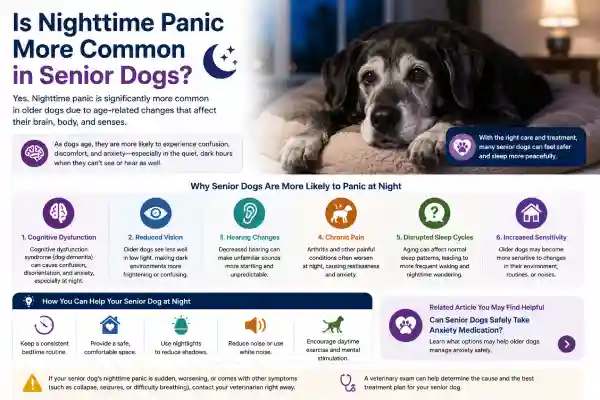
Nighttime panic is significantly more common in older dogs.
Several age-related factors contribute:
Cognitive Dysfunction
Confusion often becomes more severe during nighttime hours.
Reduced Vision
Darkness may make navigation more difficult.
Hearing Changes
Dogs may misinterpret unfamiliar sounds.
Chronic Pain
Conditions such as arthritis frequently worsen during periods of inactivity.
Owners of senior dogs may also want to read:
Can Senior Dogs Safely Take Anxiety Medication?
Can Anxiety Cause Nighttime Panic?
Absolutely.
Dogs with anxiety disorders often experience heightened fear during nighttime hours.
Triggers may include:
- Separation from owners
- Unfamiliar noises
- Darkness
- Changes in routine
- Previous traumatic experiences
Some anxious dogs also develop physical symptoms.
Examples include:
- Panting
- Trembling
- Increased heart rate
- Refusal to settle
Many owners eventually consider anxiety treatment when symptoms become frequent or severe.
Can Certain Medications Cause Nighttime Panic?
Sometimes.
Although anxiety medications often help reduce panic, some dogs may experience unusual behavioral changes while adjusting to treatment.
Owners sometimes report:
- Restlessness
- Confusion
- Clinginess
- Changes in sleep patterns
Related articles:
- Why Is My Dog Clingy After Anxiety Medication?
- Can Anxiety Medication Cause Confusion in Dogs?
- Why Does My Dog Sleep All Day After Trazodone?
Related Symptoms Owners Often Notice
Panting
Panting is one of the most common signs associated with nighttime anxiety.
Pacing
Many dogs walk continuously around the house during episodes.
Refusing to Sleep
Some dogs simply cannot settle despite appearing exhausted.
Clinginess
Dogs often seek reassurance from their owners.
Related article:
Why Is My Dog Clingy After Anxiety Medication?
Appetite Changes
Stress and anxiety may affect appetite.
Related article:
Can Anxiety Medication Affect Appetite in Dogs?
Confusion
Confusion is especially common in senior dogs.
Related article:
Can Anxiety Medication Cause Confusion in Dogs?
Weakness
If medication is involved, weakness may occasionally accompany panic-related symptoms.
Related article:
Can Anxiety Medication Cause Weakness in Dogs?
What Owners Can Do at Home
Create a Consistent Bedtime Routine
Dogs often feel more secure when daily routines remain predictable.
Provide a Comfortable Sleeping Area
A quiet, familiar resting place can reduce stress.
Reduce Noise Exposure
White noise machines, fans, or calming music may help some dogs.
Increase Daytime Exercise
Physical activity often improves nighttime relaxation.
Avoid Punishment
Punishment can worsen anxiety and fear.
Monitor for Patterns
Keep notes about:
- Timing
- Duration
- Triggers
- Severity
This information may help your veterinarian identify the cause.
When Nighttime Panic May Be an Emergency
Most cases of nighttime panic are not life-threatening, but there are situations where immediate veterinary attention is necessary.
Seek emergency care if your dog experiences:
- Collapse
- Seizures
- Difficulty breathing
- Loss of consciousness
- Sudden inability to walk
- Severe disorientation
- Blue, gray, or pale gums
- Repeated vomiting
- Signs of severe pain
These symptoms may indicate a medical emergency rather than simple anxiety.
A useful rule is:
Panic alone is concerning. Panic combined with physical symptoms can be an emergency.
When Owners Should Contact Their Veterinarian
Schedule a veterinary visit if:
- Nighttime panic occurs regularly
- Symptoms are becoming more severe
- Your dog suddenly develops nighttime fear
- Sleep is being disrupted frequently
- Appetite changes develop
- Weight loss occurs
- Confusion is worsening
- Your dog appears painful
- Anxiety is affecting quality of life
Many underlying causes can be successfully managed once identified.
How Veterinarians Diagnose Nighttime Panic
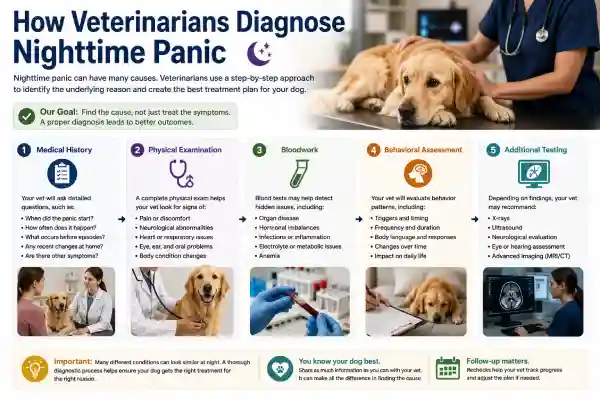
Your veterinarian may evaluate:
Medical History
Questions often include:
- When did the behavior start?
- How often does it happen?
- Has anything changed recently?
- Are there other symptoms?
Physical Examination
A complete examination helps identify pain, illness, or neurological abnormalities.
Bloodwork
Blood tests may help detect:
- Hormonal disorders
- Organ disease
- Metabolic problems
Behavioral Assessment
Behavior patterns often provide important clues about anxiety-related conditions.
Additional Testing
Depending on findings, your veterinarian may recommend:
- Imaging studies
- Neurological evaluation
- Vision assessment
- Hearing assessment
Treatment Options for Nighttime Panic
Treatment depends entirely on the underlying cause.
Environmental Changes
Many dogs benefit from:
- Predictable routines
- Quiet sleeping spaces
- Nightlights
- White noise machines
Anxiety Management
Dogs with anxiety may benefit from:
- Behavioral modification
- Training strategies
- Veterinary-approved medications
Related articles:
- What Is the Safest Anxiety Medication for Dogs?
- Best Anxiety Medication for Dogs: Comparison Guide
- Can Dogs Take Melatonin With Anxiety Medication?
Pain Management
If pain is contributing to nighttime distress, treating the discomfort often improves sleep significantly.
Cognitive Support
Senior dogs with cognitive dysfunction may require a combination of environmental changes, supplements, dietary adjustments, and medication.
Can Nighttime Panic Improve?
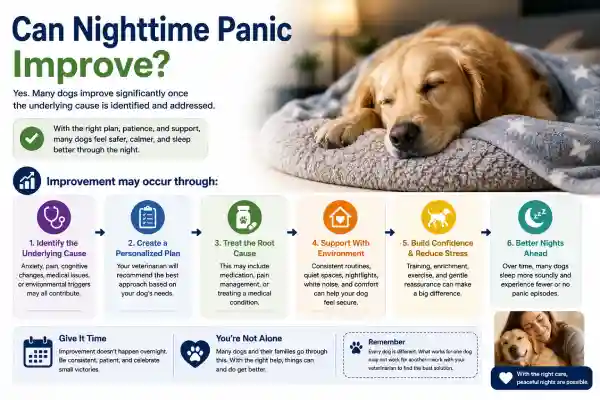
Yes.
Many dogs improve significantly once the underlying cause is identified.
Improvement may occur through:
- Better pain control
- Anxiety treatment
- Environmental modifications
- Treatment of medical conditions
- Improved sleep routines
The key is determining why the panic is occurring.
Veterinarian Takeaway
Why does my dog panic at night? Nighttime panic is often a sign that something is making your dog feel unsafe, uncomfortable, confused, or anxious. Common causes include anxiety disorders, cognitive dysfunction, pain, noise sensitivity, declining vision or hearing, and underlying medical conditions. Because multiple conditions can produce similar symptoms, veterinary evaluation is often the fastest way to identify the cause and develop an effective treatment plan.
Bottom Line
Why does my dog panic at night? Dogs may panic at night for many reasons, including anxiety, pain, cognitive dysfunction, environmental triggers, or medical problems. While occasional restlessness may not be serious, repeated episodes of nighttime panic deserve attention. Identifying the underlying cause is essential because treatment varies depending on whether the problem is behavioral, physical, neurological, or age-related.
With proper diagnosis and management, many dogs experience significant improvement and return to sleeping comfortably through the night.
Frequently Asked Questions – Why Does My Dog Panic at Night?
Why does my dog suddenly panic at night?
Sudden nighttime panic may result from anxiety, pain, cognitive dysfunction, illness, environmental changes, or age-related sensory decline.
Is nighttime panic common in senior dogs?
Yes. Older dogs are more likely to experience nighttime panic because of cognitive dysfunction, pain, vision loss, and hearing changes.
Can anxiety cause a dog to wake up scared?
Absolutely. Anxiety disorders can trigger sudden fear, panting, pacing, and nighttime restlessness.
Why does my dog pace at night?
Pacing may be caused by anxiety, pain, cognitive dysfunction, gastrointestinal discomfort, or other medical conditions.
Can arthritis cause nighttime panic?
Yes. Dogs experiencing pain may become restless and appear anxious during the night.
Why does my dog pant only at night?
Pacing may be caused by anxiety, pain, cognitive dysfunction, gastrointestinal discomfort, or other medical conditions.
Should I wake my dog during a panic episode?
Approach calmly and provide reassurance, but avoid startling a frightened dog.
Can cognitive dysfunction cause panic at night?
Yes. Cognitive dysfunction syndrome is one of the most common causes of nighttime confusion and panic in senior dogs.
When should I call my veterinarian?
Contact your veterinarian if panic episodes become frequent, severe, sudden, or are accompanied by other concerning symptoms.
Reviewed By
Pharmacy Reviewed By
Dimitar Atanasov, MPharm
Master Pharmacist | Medication Safety Educator
Dimitar Atanasov is a licensed Master Pharmacist with experience in pharmacology, medication safety, patient education, and veterinary medication research. He reviews educational content to help pet owners better understand treatment options, medication side effects, and canine health concerns.
Editorial Policy
Pet Meds Made Simple publishes evidence-based educational content developed from veterinary references, pharmacology resources, behavioral medicine guidelines, and peer-reviewed research.
Our mission is to provide accurate, practical information that helps pet owners make informed decisions while supporting—not replacing—the veterinarian-client relationship.
Learn more about our editorial standards and review process:
Sources
- American Veterinary Medical Association (AVMA)
- American Animal Hospital Association (AAHA)
- Merck Veterinary Manual
- American College of Veterinary Behaviorists (ACVB)
- Veterinary Behavior Guidelines
- FDA Center for Veterinary Medicine
- Veterinary Behavioral Medicine Textbooks
- Peer-Reviewed Canine Anxiety Research
- Clinical References on Cognitive Dysfunction Syndrome
- Veterinary Internal Medicine References
Medical Disclaimer
This article is for educational purposes only and does not replace professional veterinary advice. Always consult your veterinarian regarding behavioral changes, anxiety symptoms, medical concerns, or treatment decisions involving your dog.