Quick Answer
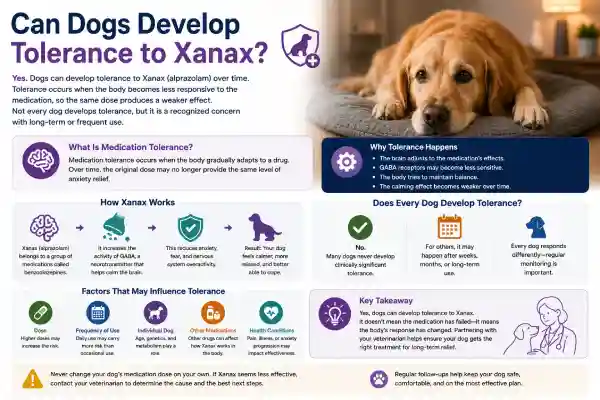
Can dogs develop tolerance to Xanax? Yes, dogs can develop tolerance to Xanax (alprazolam) over time. Tolerance occurs when the body becomes less responsive to a medication, causing the same dose to produce a weaker effect than it once did. Not every dog develops tolerance, and the timeline can vary significantly, but it is a recognized concern with long-term or frequent use. If Xanax seems less effective than it used to be, your veterinarian can help determine whether tolerance, worsening anxiety, or another factor may be responsible.
Many dog owners begin asking “Can dogs develop tolerance to Xanax?” after noticing that their dog’s anxiety symptoms are returning despite continued treatment. While Xanax can be highly effective for situational anxiety and panic episodes, it is important to understand how the medication works and what may happen with prolonged use.
When Owners Commonly Ask This
Most owners start researching tolerance after noticing changes in their dog’s response to Xanax.
Common concerns include:
- Xanax stopped working for my dog.
- My dog’s anxiety came back.
- Why isn’t Xanax calming my dog anymore?
- Does Xanax lose effectiveness over time?
- My dog still panics despite medication.
- My dog needs Xanax more often than before.
- My dog’s fireworks anxiety is getting worse again.
- My dog seems less affected by Xanax than before.
These situations do not always mean tolerance has developed, but they often prompt a conversation with a veterinarian.
What Is Xanax?
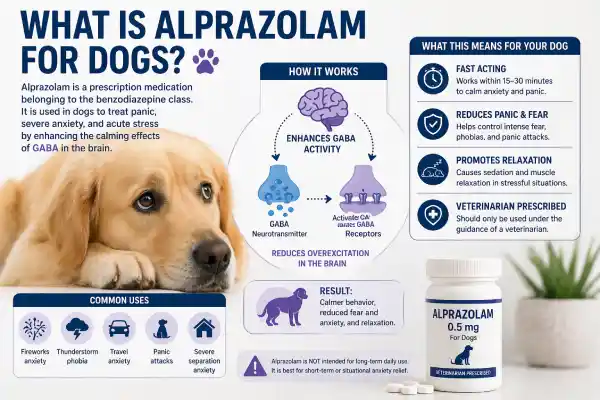
Xanax is the brand name for alprazolam, a medication that belongs to a group of drugs called benzodiazepines.
Veterinarians sometimes prescribe Xanax for:
- Thunderstorm anxiety
- Firework phobias
- Travel anxiety
- Separation-related panic
- Situational stress
- Acute anxiety episodes
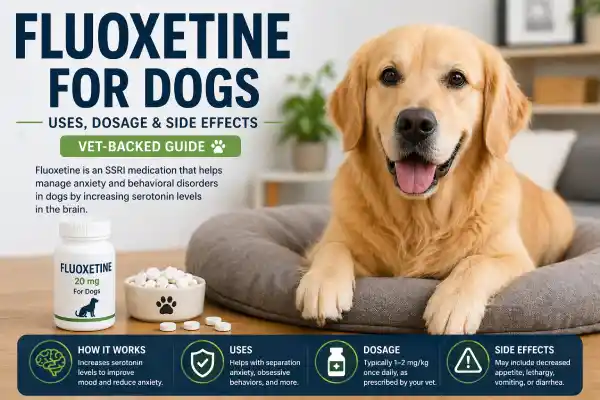
Unlike medications such as fluoxetine that may take several weeks to work, Xanax usually begins working relatively quickly.
This makes it useful for short-term anxiety management.
How Xanax Works
Xanax affects neurotransmitters in the brain that regulate anxiety, fear, and nervous system activity.
The medication increases the activity of GABA (gamma-aminobutyric acid), which helps slow excessive brain stimulation.
As a result, many dogs experience:
- Reduced anxiety
- Less fear
- Increased relaxation
- Improved ability to cope with stressful situations
Because the effect occurs relatively quickly, Xanax is often used before predictable anxiety triggers.
Can Dogs Develop Tolerance to Xanax
Can Dogs Develop Tolerance to Xanax?
Yes.
Can dogs develop tolerance to Xanax? They can.
Tolerance occurs when the body gradually adapts to a medication.
Over time, the same dose may no longer produce the same level of anxiety relief.
This can cause owners to feel that:
- The medication stopped working.
- The calming effect is weaker.
- Anxiety returns sooner.
- The medication seems less reliable.
Tolerance is not unique to dogs. It is a well-recognized phenomenon in both veterinary and human medicine.
What Is Medication Tolerance?
Medication tolerance occurs when the body becomes less responsive to a drug after repeated exposure.
Think of it as the nervous system adapting to the medication’s presence.
As adaptation occurs:
- The original effect becomes weaker.
- Higher doses may be needed to achieve the same response.
- The duration of effectiveness may decrease.
This does not necessarily mean the medication has failed.
It simply means the body’s response has changed.
Why Tolerance Happens
Researchers believe tolerance develops because the brain attempts to maintain balance.
When Xanax repeatedly influences certain receptors, the body may gradually adjust those receptors over time.
This adaptation can reduce the medication’s effectiveness.
Factors that may influence tolerance include:
- Frequency of use
- Dose size
- Duration of treatment
- Individual sensitivity
- Concurrent medications
Some dogs appear more prone to tolerance than others.
Does Every Dog Develop Tolerance?
No.
Many dogs never develop clinically significant tolerance.
Others may experience reduced effectiveness after:
- Several weeks
- Several months
- Long-term use
Every dog responds differently.
Some dogs continue responding well to the same dose for extended periods, while others require adjustments sooner.
Because of this variability, regular veterinary monitoring is important.
Signs Your Dog May Be Developing Tolerance
The following signs may suggest Xanax is becoming less effective.
| Possible Sign | May Indicate Tolerance? |
|---|---|
| Anxiety returns sooner | Yes |
| Reduced calming effect | Yes |
| More panic behaviors | Yes |
| Shorter duration of relief | Yes |
| Less response to the same dose | Yes |
| Increased restlessness | Sometimes |
| Nighttime anxiety returning | Sometimes |
| No obvious effect after dosing | Possibly |
These signs should always be discussed with your veterinarian before making any medication changes.
How Long Does It Take for Tolerance to Develop?
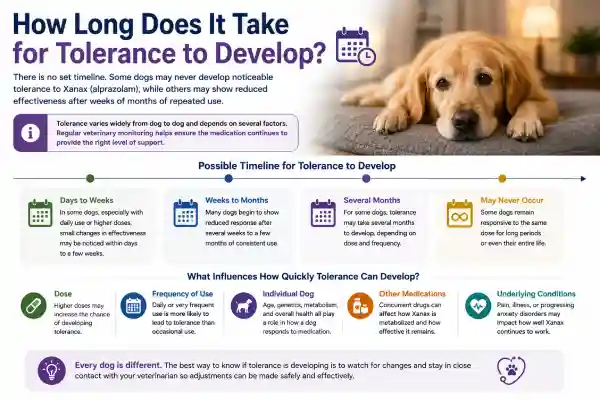
There is no universal timeline.
Some dogs may never develop noticeable tolerance.
Others may show reduced responsiveness after:
- Weeks of frequent use
- Months of ongoing therapy
- Repeated exposure during stressful seasons
Several factors influence the timeline.
Dose
Higher doses may increase the likelihood of tolerance.
Frequency
Daily use may carry a different risk than occasional situational use.
Individual Factors
Age, health status, genetics, and medication sensitivity all play a role.
Concurrent Treatments
Other medications may influence how Xanax affects the body.
Tolerance vs. Progression of Anxiety
One of the most important concepts for owners to understand is that tolerance is not always the explanation.
Sometimes the medication appears less effective because the underlying anxiety has worsened.
For example:
- New stressors may develop.
- Environmental changes may occur.
- Medical conditions may increase anxiety.
- Cognitive dysfunction may progress.
In these cases, the medication may still be working exactly as intended.
The problem is that the anxiety itself has become more severe.
This is one reason veterinary reassessment is important whenever treatment appears less effective.
Can Nighttime Anxiety Mimic Tolerance?
Absolutely.
Some owners assume Xanax is no longer working because their dog suddenly becomes restless overnight.
However, nighttime anxiety may be related to:
- Pain
- Cognitive dysfunction
- Environmental changes
- Age-related decline
Related article:
Why Does My Dog Panic at Night?
Can Senior Dogs Respond Differently to Xanax?
Yes.
Senior dogs often process medications differently than younger dogs.
Age-related changes can affect:
- Drug metabolism
- Sensitivity to medications
- Duration of action
- Side effect risk
In some cases, what appears to be tolerance may actually reflect age-related changes in how the medication is processed.
Related article:
Can Senior Dogs Safely Take Anxiety Medication?
Related Symptoms Owners Often Notice
When owners begin questioning whether Xanax is still working, they often notice additional symptoms.
Panic Episodes
Dogs may seem more fearful during previously manageable situations.
Clinginess
Many anxious dogs become unusually attached to family members.
Related article:
Why Is My Dog Clingy After Anxiety Medication?
Restlessness
Dogs may struggle to relax despite medication.
Nighttime Anxiety
Fear and pacing may become more noticeable overnight.
Related article:
Why Does My Dog Panic at Night?
Appetite Changes
Anxiety can affect eating habits.
Related article:
Can Anxiety Medication Affect Appetite in Dogs?
Weakness or Sedation Changes
Owners sometimes notice changes in side effects as treatment progresses.
Related article:
Can Anxiety Medication Cause Weakness in Dogs?
Can Dogs Become Dependent on Xanax?
Yes, dependence is a separate concern from tolerance and is one reason veterinarians are careful when prescribing Xanax for long-term use.
While tolerance means the medication may become less effective over time, dependence means the body becomes accustomed to having the medication present.
This does not mean your dog is “addicted” in the way many people think of addiction.
Instead, it means sudden discontinuation could potentially cause problems.
For this reason, veterinarians often recommend gradual dose reductions when stopping long-term Xanax therapy.
Related article:
Can Dogs Take Anxiety Medication Every Day?
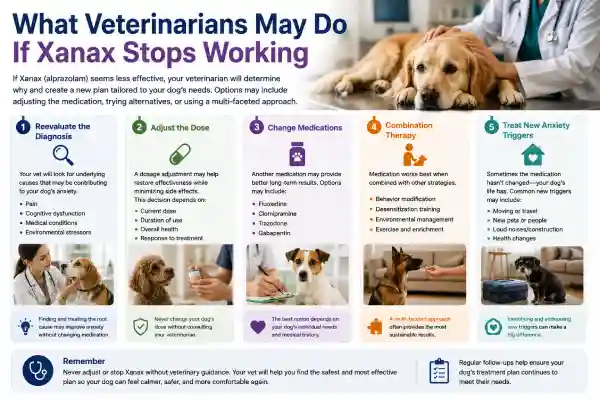
What Veterinarians May Do If Xanax Stops Working
If Xanax appears less effective, your veterinarian will first try to determine why.
The solution depends on the underlying cause.
Reevaluate the Diagnosis
Sometimes anxiety is not the only problem.
Veterinarians may look for:
- Pain
- Cognitive dysfunction
- Medical illness
- Environmental stressors
Addressing the root cause may improve symptoms without changing medication.
Adjust the Dose
In some situations, the veterinarian may recommend a dosage adjustment.
This decision depends on:
- Current dose
- Side effects
- Overall health
- Treatment goals
Owners should never adjust Xanax doses on their own.
Change Medications
Sometimes another medication may provide better long-term results.
Examples may include:
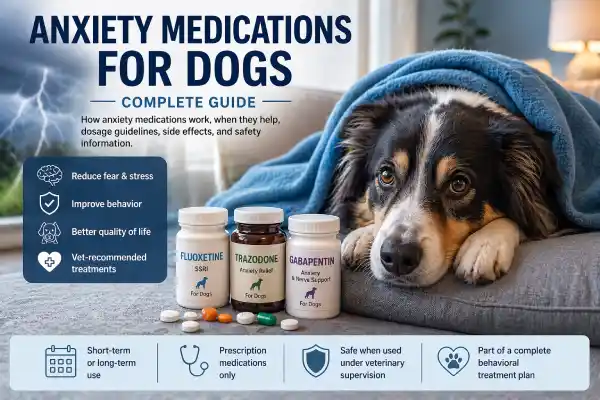
- Fluoxetine
- Clomipramine
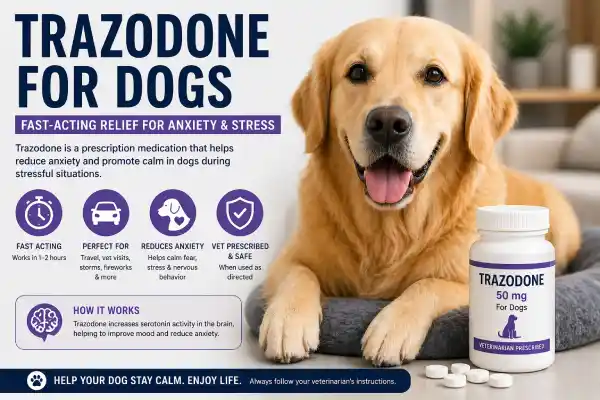
- Trazodone
- Gabapentin
The best option depends on the individual dog.
Related articles:
Combination Therapy
Many anxiety treatment plans include more than medication alone.
Additional strategies may include:
- Behavior modification
- Desensitization training
- Environmental management
- Exercise programs
Combining approaches often produces better results than medication alone.
Treat New Anxiety Triggers
Sometimes the medication hasn’t changed—the dog’s life has.
Examples include:
- Moving homes
- New pets
- New family members
- Loud construction
- Health changes
Addressing new triggers may significantly improve outcomes.
Can Tolerance Be Prevented?
Not always.
However, veterinarians often use strategies that may help reduce the likelihood of tolerance.
These may include:
- Using the lowest effective dose
- Reserving Xanax for predictable anxiety events
- Combining medication with behavior modification
- Monitoring treatment regularly
- Reassessing treatment plans over time
Every dog is different, which is why ongoing veterinary supervision is important.
When Owners Should Contact Their Veterinarian
You should contact your veterinarian if:
- Xanax suddenly seems ineffective
- Anxiety symptoms are worsening
- Panic attacks become more frequent
- New behavioral changes appear
- Side effects develop
- Sleep patterns change dramatically
- Appetite decreases significantly
- Your dog seems distressed despite treatment
Veterinarians can determine whether tolerance, disease progression, medication interactions, or another issue may be involved.
Veterinarian Takeaway
Can dogs develop tolerance to Xanax? Yes, they can. Over time, some dogs become less responsive to alprazolam, causing the same dose to provide less anxiety relief. However, tolerance is not the only explanation when Xanax appears less effective. Worsening anxiety, new stressors, medical conditions, and age-related changes can all mimic tolerance. A veterinary evaluation is often the best way to determine what is actually happening and whether treatment adjustments are needed.
Bottom Line
Can dogs develop tolerance to Xanax? Yes. Tolerance is a recognized possibility with long-term or repeated use of alprazolam in dogs. Some dogs may experience a reduced calming effect over time, while others continue responding well for extended periods. If Xanax seems less effective than it once was, avoid making changes on your own and consult your veterinarian. Identifying the true cause of the change is the first step toward finding the most effective solution for your dog’s anxiety.
Frequently Asked Questions
Can dogs develop tolerance to Xanax?
Yes. Some dogs may gradually become less responsive to Xanax over time.
How quickly can tolerance develop?
The timeline varies significantly. Some dogs may develop tolerance after weeks or months, while others never experience noticeable tolerance.
Does every dog develop tolerance?
No. Many dogs continue responding well to Xanax for extended periods.
How do I know if Xanax stopped working?
Signs may include reduced calming effects, shorter duration of relief, or the return of anxiety symptoms.
Can worsening anxiety look like tolerance?
Yes. New stressors or progression of anxiety can make a medication appear less effective even when tolerance has not developed.
Can senior dogs respond differently to Xanax?
Yes. Age-related changes can affect how medications are processed and tolerated.
Can dogs become dependent on Xanax?
Yes. Long-term use may lead to physical dependence, which is why abrupt discontinuation should be avoided.
Should I increase my dog’s Xanax dose if it stops working?
No. Never change medication doses without veterinary guidance.
What alternatives exist if Xanax becomes less effective?
Veterinarians may consider behavioral therapy, medication adjustments, or alternative medications depending on the situation.
When should I call my veterinarian?
Contact your veterinarian if anxiety worsens, Xanax appears ineffective, or new symptoms develop.
Reviewed By
Pharmacy Reviewed By
Dimitar Atanasov, MPharm
Master Pharmacist | Medication Safety Educator
Dimitar Atanasov is a licensed Master Pharmacist with experience in pharmacology, medication safety, toxicology, and patient education. He reviews educational content to help pet owners better understand medication effects, side effects, and safe treatment options for dogs.
Editorial Policy
Pet Meds Made Simple publishes evidence-based educational content developed from veterinary references, pharmacology resources, medication safety literature, and peer-reviewed research.
Our goal is to help pet owners make informed decisions while supporting—not replacing—the veterinarian-client relationship.
Learn more about our editorial standards and review process:
Sources
- American Veterinary Medical Association (AVMA)
- American Animal Hospital Association (AAHA)
- Merck Veterinary Manual
- American College of Veterinary Behaviorists (ACVB)
- Plumb’s Veterinary Drug Handbook
- Veterinary Psychopharmacology Literature
- FDA Center for Veterinary Medicine
- Veterinary Pharmacology and Therapeutics
- Clinical Canine Anxiety Treatment Guidelines
- Peer-Reviewed Research on Benzodiazepine Use in Dogs
Medical Disclaimer
This article is for educational purposes only and does not replace professional veterinary advice. Always consult your veterinarian regarding medication use, side effects, treatment changes, or concerns about your dog’s anxiety management. Never stop or adjust prescribed medications without veterinary guidance.