
Quick Answer
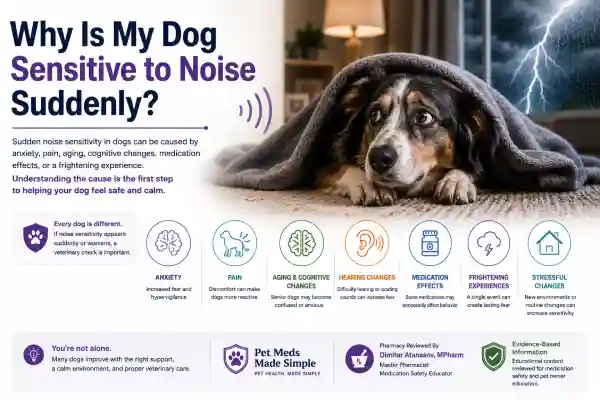
Why is my dog sensitive to noise suddenly? A dog that suddenly becomes sensitive to noise may be experiencing anxiety, pain, cognitive dysfunction, hearing changes, medication side effects, age-related behavioral changes, or a recent frightening experience. While occasional sensitivity to loud sounds can be normal, sudden fear of everyday noises often indicates an underlying physical or emotional cause that deserves attention.
Many owners become concerned when their dog suddenly starts reacting to sounds that never seemed to matter before.
A dog that previously ignored household noises may suddenly become frightened by:
- Doors closing
- Kitchen sounds
- Traffic
- Thunderstorms
- Fireworks
- Household appliances
- Voices
If you’re asking “Why is my dog sensitive to noise suddenly?”, you’re not alone. Sudden noise sensitivity is one of the most common behavior changes reported by dog owners.
When Owners Commonly Ask This
Owners often search for answers after noticing:
- My dog suddenly hates loud noises.
- My dog is scared of sounds now.
- My dog startles easily.
- My dog is suddenly afraid of thunder.
- My dog hides when the TV is on.
- My dog reacts to every noise.
- My senior dog became noise-sensitive.
- My dog developed noise anxiety overnight.
Many owners describe the change as happening “out of nowhere.”
However, there is usually an explanation.
Why Is My Dog Sensitive to Noise Suddenly?
Noise sensitivity rarely develops without a reason.
In most cases, something has changed physically, emotionally, or medically.
Common explanations include:
- Anxiety
- Pain
- Aging
- Cognitive dysfunction
- Medication effects
- Stress
- Hearing changes
- Previous frightening experiences
The key is identifying the trigger behind the behavior change.
Why Is My Dog Sensitive to Noise Suddenly?
8 Common Reasons Dogs Suddenly Become Sensitive to Noise
Anxiety Disorders
Anxiety is one of the most common causes.
Dogs with anxiety often become hyperaware of their surroundings.
Sounds that once seemed insignificant may suddenly trigger:
- Trembling
- Hiding
- Panting
- Pacing
Related article:
Can Dogs Take Benadryl for Anxiety?
A Frightening Experience
Dogs can form strong associations.
A single frightening event may cause future fear.
Examples include:
- Fireworks
- Thunderstorms
- Accidents
- Falling objects
- Loud construction noise
The dog may later react to similar sounds.
Pain or Physical Discomfort
Pain can dramatically increase sensitivity.
Dogs experiencing pain often become:
- More reactive
- More anxious
- Easier to startle
Common examples include:
- Arthritis
- Back pain
- Dental pain
- Ear problems
Cognitive Dysfunction Syndrome
Senior dogs sometimes develop cognitive dysfunction.
This condition may cause:
- Confusion
- Anxiety
- Disorientation
- Increased noise sensitivity
Related article:
Why Does My Dog Panic at Night?
Hearing Changes
Ironically, hearing loss can sometimes increase startle responses.
Dogs may become frightened because they have difficulty locating sounds or understanding where noises are coming from.
Medication Effects
Certain medications may temporarily affect behavior.
Occasionally owners notice increased sensitivity after starting new medications.
Related articles:
Can Anxiety Medication Cause Confusion in Dogs?
Can Dogs Become Emotionally Numb on Anxiety Medication?
Stressful Life Changes
Major routine changes may increase sensitivity.
Examples include:
- Moving homes
- New pets
- New family members
- Boarding
- Schedule changes
Age-Related Behavioral Changes
Senior dogs often become more sensitive to environmental changes.
This includes:
- Noise
- Lighting
- Routine disruptions
Aging can affect how dogs process their surroundings.
What Noises Commonly Trigger Fear?
Not every dog reacts to the same sounds.
Common triggers include:
| Noise | Common Trigger? |
|---|---|
| Thunder | Yes |
| Fireworks | Yes |
| Vacuum Cleaners | Yes |
| Door Slams | Yes |
| Kitchen Noises | Sometimes |
| Traffic | Sometimes |
| Television | Sometimes |
| Children Playing | Sometimes |
| Construction Noise | Yes |
| Alarms | Yes |
Some dogs react only to specific sounds.
Others become sensitive to nearly everything.
Is Noise Sensitivity More Common in Senior Dogs?

Yes.
Older dogs are significantly more likely to develop sudden noise sensitivity.
Age-related factors include:
Cognitive Dysfunction
May increase confusion and fear.
Sensory Changes
Vision and hearing changes can alter how dogs interpret their environment.
Chronic Pain
Pain often contributes to anxiety-like behavior.
Reduced Adaptability
Older dogs may struggle more with unexpected environmental changes.
Related article:
Why Is My Dog Suddenly Afraid of Everything?
Can Anxiety Medication Affect Noise Sensitivity?
Sometimes.
Most anxiety medications are intended to reduce fear and reactivity.
However, some dogs may experience temporary behavioral changes during adjustment periods.
Owners occasionally report:
- Increased clinginess
- Mild confusion
- Temporary sensitivity changes
Related articles:
Why Does My Dog Follow Me Everywhere After Medication?
Can Anxiety Medication Cause Weakness in Dogs?
Related Symptoms Owners Often Notice
Noise-sensitive dogs often show additional symptoms.
Hiding
One of the most common reactions.
Trembling
Many fearful dogs shake during triggering events.
Panting
Stress frequently increases respiratory rate.
Clinginess
Dogs often seek comfort from owners.
Related article:
Why Does My Dog Follow Me Everywhere After Medication?
Nighttime Panic
Symptoms may become worse after dark.
Related article:
Why Does My Dog Panic at Night?
What Owners Can Do If Their Dog Becomes Noise Sensitive
If your dog has suddenly become sensitive to noise, there are several steps you can take to help them feel safer and more comfortable.
Create a Safe Space
Many dogs benefit from having a quiet retreat.
Examples include:
- A crate with the door open
- A quiet bedroom
- A covered den-like area
- A favorite resting spot
Allow your dog to choose where they feel safest.
Never force them into a noisy situation.
Reduce Exposure When Possible
While you cannot eliminate every sound, reducing unnecessary noise can help.
Examples include:
- Closing windows during storms
- Using curtains
- Playing calming background music
- Using white noise machines
Small changes can make a big difference.
Stay Calm
Dogs often look to their owners for cues.
If you become anxious every time your dog reacts, your dog may become even more concerned.
Instead:
- Speak calmly
- Move normally
- Avoid excessive fussing
Your calm behavior can help reassure your dog.
Maintain Normal Routines
Predictability reduces anxiety.
Try to maintain:
- Feeding schedules
- Walk schedules
- Bedtimes
- Play sessions
Routine helps many anxious dogs feel secure.
Consider Professional Help
For dogs with severe noise fears, veterinary behavior support may be beneficial.
Some dogs require:
- Behavior modification
- Desensitization training
- Anxiety medication
- Environmental management
Should You Comfort a Noise-Sensitive Dog?

Yes.
This is a common misconception.
Many owners worry that comforting their dog will “reward fear.”
Modern behavioral experts generally agree that providing calm reassurance is appropriate.
Helpful approaches include:
✅ Sitting nearby
✅ Speaking softly
✅ Allowing physical contact if your dog seeks it
✅ Providing a safe environment
Avoid:
❌ Punishment
❌ Forced exposure
❌ Yelling
❌ Dragging the dog toward the noise
Fear cannot be punished away.
When Noise Sensitivity Becomes Concerning
Mild reactions are common.
However, certain signs deserve closer attention.
Severe Panic
Contact your veterinarian if your dog experiences:
- Intense trembling
- Attempts to escape
- Self-injury
- Destructive behavior
Rapid Behavioral Changes
Sudden dramatic changes may indicate an underlying medical issue.
Loss of Quality of Life
Noise sensitivity becomes concerning when it interferes with:
- Eating
- Sleeping
- Exercise
- Family interaction
Additional Neurological Signs
Seek veterinary attention if noise sensitivity occurs alongside:
- Confusion
- Circling
- Seizures
- Disorientation
- Vision changes
How Veterinarians Diagnose Noise Sensitivity

Veterinarians do more than determine whether a dog is frightened by sounds.
The goal is identifying why the behavior developed.
Medical History
Questions often include:
- When did the behavior start?
- Which noises trigger reactions?
- Were medications recently changed?
- Has anything stressful happened recently?
Physical Examination
Veterinarians evaluate:
- Pain
- Ear health
- Neurological function
- General health
Behavioral Assessment
The pattern of fear often provides important clues.
Diagnostic Testing
Depending on findings, testing may include:
- Bloodwork
- Neurological evaluation
- Hearing assessment
- Imaging studies
Especially in senior dogs, medical causes should never be overlooked.
When Owners Should Contact Their Veterinarian
Contact your veterinarian if:
- Noise sensitivity appeared suddenly
- Fear continues worsening
- Panic attacks occur
- Appetite changes develop
- Sleep is affected
- Confusion develops
- Your dog is a senior pet
- New symptoms appear
The earlier the cause is identified, the easier treatment often becomes.
Veterinarian Takeaway
Why is my dog sensitive to noise suddenly? Sudden noise sensitivity is often a sign that something has changed physically, emotionally, or medically. Anxiety, pain, cognitive dysfunction, hearing changes, stressful experiences, aging, and medication effects can all contribute. While mild noise sensitivity is common, sudden or severe reactions deserve attention, particularly when accompanied by other behavioral or physical symptoms.
Bottom Line
Why is my dog sensitive to noise suddenly? Dogs rarely develop new fears without a reason. Anxiety, pain, cognitive dysfunction, hearing changes, medication effects, and stressful experiences are among the most common explanations.
The good news is that many dogs improve significantly once the underlying cause is identified and addressed.
If your dog’s fear is severe, worsening, or interfering with daily life, a veterinary evaluation is the best next step.
Frequently Asked Questions – Why Is My Dog Sensitive to Noise Suddenly
Why is my dog suddenly afraid of noises?
Anxiety, pain, aging, cognitive dysfunction, hearing changes, medication effects, or a frightening experience may contribute.
Can anxiety cause sudden noise sensitivity?
Yes. Anxiety is one of the most common causes of increased sensitivity to sounds.
Why is my senior dog suddenly afraid of noises?
Cognitive dysfunction, pain, hearing changes, and age-related anxiety are common contributors.
Can medications make dogs sensitive to noise?
Some medications may temporarily affect behavior during adjustment periods.
Can pain cause noise sensitivity?
Yes. Dogs in pain often become easier to startle and more reactive.
Why is my dog suddenly scared of thunder?
A previous frightening experience, anxiety, or age-related behavioral changes may contribute.
Should I comfort my dog during loud noises?
Yes. Calm reassurance is generally appropriate.
Can hearing loss make dogs more fearful?
Yes. Hearing changes can sometimes increase confusion and startle responses.
Can noise sensitivity improve?
Many dogs improve significantly once the underlying cause is identified and treated.
When should I call my veterinarian?
Contact your veterinarian if fear develops suddenly, worsens, or interferes with your dog’s quality of life.
Reviewed By
Pharmacy Reviewed By
Dimitar Atanasov, MPharm
Master Pharmacist | Medication Safety Educator
Editorial Policy
Sources
- American Veterinary Medical Association (AVMA)
- American Animal Hospital Association (AAHA)
- Merck Veterinary Manual
- American College of Veterinary Behaviorists (ACVB)
- Veterinary Behavioral Medicine Guidelines
- FDA Center for Veterinary Medicine
- Small Animal Internal Medicine
- Veterinary Neurology References
- Clinical References on Cognitive Dysfunction Syndrome
- Peer-Reviewed Canine Anxiety Research
images created with AI – Why Is My Dog Sensitive to Noise Suddenly