Quick Answer
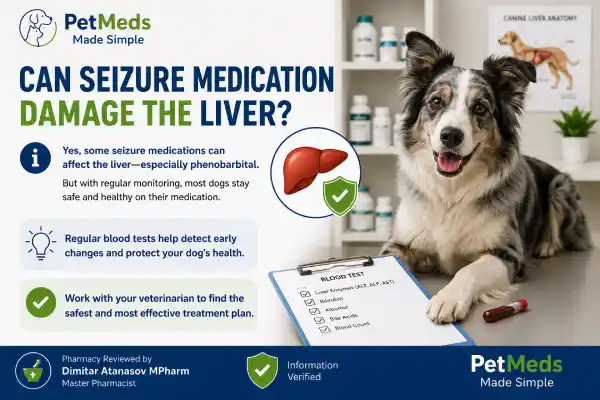
Can seizure medication damage the liver? Yes, some seizure medications can affect the liver, but the risk varies greatly depending on the drug. Phenobarbital is the anticonvulsant most commonly associated with liver enzyme elevations and, in rare cases, liver disease after long-term use. Other medications, such as levetiracetam (Keppra) or potassium bromide, have a much lower risk. Routine blood tests allow veterinarians to detect liver changes early so treatment can often continue safely for many years.
Can Seizure Medication Damage the Liver?
Can Seizure Medication Damage the Liver?
Hearing that your dog needs lifelong seizure medication can be overwhelming. One of the first concerns many owners have after reading about anticonvulsants online is whether seizure medication can damage the liver.
The short answer is sometimes but not always.
Modern veterinary medicine offers several seizure medications, and each one behaves differently inside the body. Some rely heavily on the liver for metabolism, while others are eliminated primarily through the kidneys. This means the risk of liver injury is not the same for every medication.
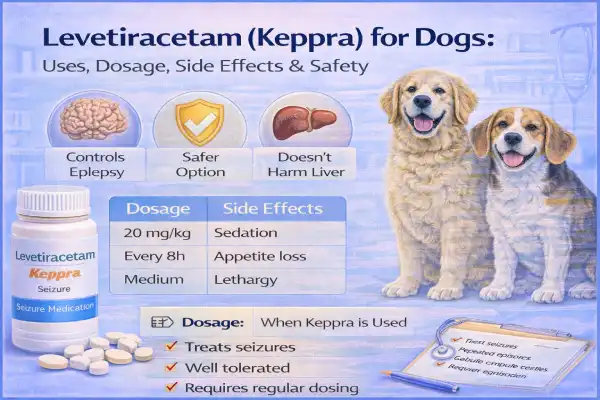
For example, dogs receiving Phenobarbital for Dogs: Uses, Dosage, Side Effects & Safety require regular liver monitoring because phenobarbital is processed extensively by the liver. In contrast, dogs taking Levetiracetam (Keppra) for Dogs: Uses, Dosage, Side Effects & Safety generally have a much lower risk of liver-related complications because most of the drug leaves the body through the kidneys rather than the liver.
Understanding these differences is important because many owners become unnecessarily frightened after seeing mildly elevated liver enzymes on routine blood work. In reality, elevated enzymes do not automatically mean permanent liver damage.
Throughout this guide, you’ll learn:
- which seizure medications pose the greatest liver risk,
- why some drugs affect the liver more than others,
- how veterinarians monitor liver health,
- which warning signs should never be ignored,
- and how most dogs successfully remain on seizure medication for many years.
Why the Liver Plays Such an Important Role
To understand whether seizure medication can damage the liver, it helps to first understand what the liver actually does.
The liver is one of the largest and hardest-working organs in your dog’s body. It performs hundreds of essential functions every single day, many of which are critical for processing medications safely.
Some of its most important responsibilities include:
| Liver Function | Why It Matters |
|---|---|
| Drug metabolism | Breaks down many medications before they leave the body |
| Detoxification | Removes waste products and harmful substances |
| Protein production | Produces albumin and clotting factors |
| Bile production | Helps digest fats and absorb vitamins |
| Energy storage | Stores glycogen for future energy needs |
| Vitamin storage | Stores vitamins A, D, E, K and B12 |
Whenever your dog receives medication, the liver often acts as the body’s primary “chemical processing plant.”
For many medications, this process is completely routine and causes no problems. However, certain drugs require liver cells to work much harder than others, especially when treatment continues for months or years.
This is why veterinarians routinely recommend blood work for dogs receiving long-term anticonvulsants such as Phenobarbital for Dogs, while monitoring requirements may differ for medications like Potassium Bromide for Dogs: Uses, Dosage, Side Effects & Safety.
How Seizure Medications Are Processed in the Body
One of the biggest misconceptions among dog owners is that every seizure medication follows the same pathway through the body.
In reality, anticonvulsants differ significantly in how they are absorbed, metabolized, and eliminated.
The general process looks like this:
| Step | What Happens |
|---|---|
| Administration | Your dog swallows the medication. |
| Absorption | The drug enters the bloodstream through the digestive tract. |
| Distribution | The medication reaches the brain to help control abnormal electrical activity. |
| Metabolism | Depending on the drug, the liver may chemically modify the medication. |
| Elimination | The drug leaves the body through the kidneys, liver, or both. |
The metabolism stage is where liver health becomes especially important.
Some anticonvulsants depend heavily on liver enzymes, while others require very little liver involvement.
This difference explains why the answer to Can seizure medication damage the liver? depends largely on which seizure medication your dog is taking.
Why Phenobarbital Has the Highest Liver Risk
Among all commonly prescribed seizure medications for dogs, phenobarbital has the strongest association with liver-related side effects.
This does not mean phenobarbital is unsafe.
In fact, it remains one of the most effective and widely prescribed treatments for canine epilepsy worldwide because it provides excellent seizure control for many dogs.
However, phenobarbital is extensively metabolized by the liver.
Over time, this continuous metabolism can:
- stimulate liver enzyme production,
- increase the workload placed on liver cells,
- enlarge the liver,
- and, in a small percentage of dogs, contribute to chronic liver disease.
Because of these risks, veterinarians routinely recommend periodic blood tests for dogs taking phenobarbital.
If your dog currently receives this medication, you may also find these PMMS guides helpful:
- Phenobarbital Side Effects in Dogs: What to Watch For
- Phenobarbital Dosage for Dogs: Vet Guidelines, Weight Chart & Safety Tips
- Phenobarbital vs Levetiracetam (Keppra) for Dogs: Which Seizure Medication Is Better?
Together, these articles explain how veterinarians balance excellent seizure control with long-term safety.
Does Liver Damage Mean the Medication Is Failing?
Not at all.
Many owners panic after hearing that their dog’s liver enzymes have increased.
Fortunately, this is one of the most misunderstood aspects of anticonvulsant therapy.
There is a major difference between:
- enzyme induction,
- mild liver stress,
- temporary liver inflammation, and
- true liver failure.
Phenobarbital commonly increases enzymes such as ALP without causing permanent injury.
In many dogs, these laboratory changes simply reflect the liver working harder to metabolize the medication.
Your veterinarian evaluates far more than a single blood test before concluding that liver disease is present.
They consider:
- physical examination findings,
- your dog’s appetite,
- body weight,
- energy level,
- seizure control,
- medication dose,
- duration of treatment,
- and trends across multiple blood tests rather than one isolated result.
This is one reason why routine monitoring is so valuable—it allows veterinarians to identify meaningful changes over time instead of reacting to a single laboratory value.
Which Seizure Medications Carry the Greatest Liver Risk?
Not every anticonvulsant affects the liver in the same way.
Some medications rely heavily on hepatic metabolism, while others bypass the liver almost entirely.
| Medication | Relative Liver Risk | Long-Term Monitoring |
|---|---|---|
| Phenobarbital | High | Essential |
| Zonisamide | Low to Moderate | Recommended |
| Diazepam | Low | Depends on duration |
| Imepitoin | Low | Routine monitoring |
| Levetiracetam (Keppra) | Very Low | Usually minimal |
| Potassium Bromide | Very Low | Primarily kidney monitoring |
Understanding these differences helps veterinarians choose the safest medication for each individual dog.
For example, if a dog already has chronic liver disease, a veterinarian may prefer Levetiracetam (Keppra) for Dogs, Potassium Bromide for Dogs, or another anticonvulsant with minimal liver metabolism instead of relying solely on phenobarbital.
Likewise, dogs with difficult-to-control epilepsy sometimes benefit from combination therapy, allowing lower doses of each medication while maintaining excellent seizure control and potentially reducing the risk of side effects.
How Different Seizure Medications Affect the Liver
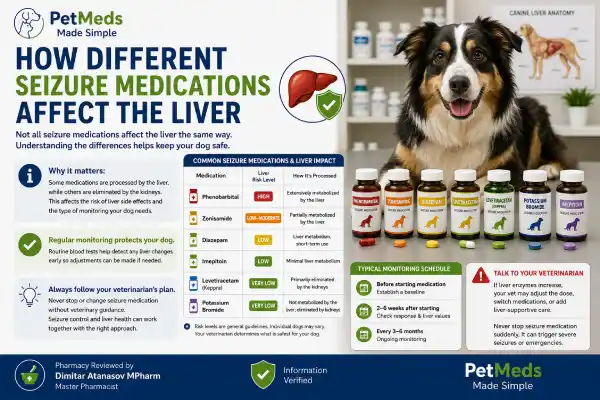
Can seizure medication damage the liver? depends largely on which medication your dog is taking. Some anticonvulsants rely heavily on liver metabolism, while others have very little impact on liver function.
Understanding these differences helps owners appreciate why one dog may need liver blood tests every few months, while another may require much less intensive monitoring.
Phenobarbital
Phenobarbital remains the gold standard for treating canine epilepsy and is often the first medication prescribed for dogs with recurrent seizures.
Its popularity comes from its excellent effectiveness.
Studies consistently show that approximately 60–80% of epileptic dogs achieve significantly improved seizure control with phenobarbital, making it one of the most successful anticonvulsants available in veterinary medicine.
However, this success comes with an important responsibility—routine liver monitoring.
Phenobarbital is almost completely metabolized by the liver. Every dose requires liver enzymes to process the medication before it can be eliminated from the body.
Over months and years, this increased workload may lead to:
- Elevated ALT
- Elevated ALP
- Mild liver enlargement
- Increased bile acids
- Reduced liver function in rare cases
- Chronic hepatotoxicity in a very small percentage of dogs
Fortunately, severe liver failure remains uncommon when dogs are monitored appropriately.
Owners who want a detailed discussion of this medication should also read Phenobarbital for Dogs: Uses, Dosage, Side Effects & Safety, Phenobarbital Side Effects in Dogs: What to Watch For, and Phenobarbital Dosage for Dogs: Vet Guidelines, Weight Chart & Safety Tips.
Levetiracetam (Keppra)
Levetiracetam, commonly known by the brand name Keppra, has become increasingly popular over the last decade.
One major reason is its excellent safety profile.
Unlike phenobarbital, levetiracetam undergoes minimal hepatic metabolism.
Instead, most of the medication leaves the body unchanged through the kidneys.
This means:
- liver toxicity is extremely uncommon,
- enzyme induction rarely occurs,
- it is often preferred for dogs with liver disease,
- and it combines well with other seizure medications.
Because of these characteristics, many veterinary neurologists recommend Levetiracetam (Keppra) for Dogs: Uses, Dosage, Side Effects & Safety as part of combination therapy, particularly when liver health is already a concern.
Potassium Bromide
Potassium bromide is unusual among anticonvulsants.
Unlike nearly every other seizure medication, it does not require liver metabolism.
Instead, it is eliminated almost entirely by the kidneys.
This makes potassium bromide particularly useful for dogs that:
- already have liver disease,
- cannot tolerate phenobarbital,
- require additional seizure control,
- or need lower phenobarbital doses.
Although potassium bromide has its own potential adverse effects—including sedation, weakness, and gastrointestinal upset—liver toxicity is not considered one of its major risks.
For owners interested in learning more, see Potassium Bromide for Dogs: Uses, Dosage, Side Effects & Safety and Potassium Bromide Side Effects in Dogs: What to Watch For.
Zonisamide
Zonisamide is another anticonvulsant that has gained popularity in veterinary neurology.
Most dogs tolerate it extremely well.
Although the liver participates in metabolizing zonisamide, the overall risk of clinically significant liver injury appears much lower than with phenobarbital.
Rare cases of liver enzyme elevations and hepatotoxicity have been reported, which is why veterinarians still recommend periodic blood work, especially in dogs receiving multiple anticonvulsants.
Owners can learn more in Zonisamide for Dogs: Uses, Dosage, Side Effects & Safety and Zonisamide Side Effects in Dogs: What to Watch For.
Diazepam
Diazepam is commonly used as an emergency medication during active seizures or seizure clusters.
Because treatment is usually short-term, liver complications are uncommon.
Long-term oral diazepam therapy is relatively uncommon in dogs because tolerance develops quickly and more effective maintenance medications are available.
Nevertheless, veterinarians still evaluate liver health if prolonged treatment becomes necessary.
You can read more in Diazepam for Dogs: Uses, Dosage, Side Effects & Emergency Safety and Diazepam Side Effects in Dogs: What to Watch For.
Imepitoin
Imepitoin is licensed in several countries for the management of idiopathic epilepsy in dogs.
Compared with phenobarbital, it generally has a lower risk of liver toxicity while still providing good seizure control in selected patients.
Routine health monitoring is still recommended, but clinically important liver disease appears uncommon.
Why Elevated Liver Enzymes Do Not Always Mean Liver Damage
Perhaps the most important concept for owners to understand is that high liver enzymes and liver damage are not the same thing.
This misunderstanding causes enormous anxiety.
Many owners receive blood test results showing elevated ALT or ALP and immediately assume their dog’s liver is failing.
Fortunately, that is often not the case.
Veterinarians interpret liver enzymes in context.
Enzyme Induction
Phenobarbital stimulates the liver to produce additional metabolic enzymes.
As a result, blood tests often show increased ALP concentrations.
This process is called enzyme induction.
The liver is working harder—but it is not necessarily being injured.
Many dogs remain perfectly healthy despite persistently elevated ALP values.
Mild Hepatic Stress
Sometimes liver cells experience increased metabolic demand without permanent injury.
Blood values may fluctuate slightly.
The liver often compensates remarkably well because it has tremendous regenerative capacity.
At this stage, dogs usually:
- eat normally,
- maintain normal energy,
- continue playing,
- and show no outward signs of illness.
Hepatocellular Injury
True liver injury occurs when liver cells themselves become damaged.
This is less common but more concerning.
Possible findings include:
- Progressive ALT elevation
- Rising bilirubin
- Reduced albumin
- Increased bile acids
- Poor clotting function
These abnormalities require additional investigation and may prompt medication adjustments.
Liver Failure
Complete liver failure is fortunately rare.
When it occurs, owners may notice:
- severe lethargy,
- jaundice,
- persistent vomiting,
- neurological changes,
- abdominal swelling,
- weight loss,
- poor appetite,
- worsening seizure control.
Immediate veterinary care is required if these signs develop.
Why Regular Blood Testing Is So Important
Routine laboratory monitoring is one of the main reasons most dogs taking seizure medication never develop serious liver disease.
Rather than waiting for clinical signs to appear, veterinarians monitor liver health proactively.
A typical monitoring schedule may look like this:
| Stage of Treatment | Typical Monitoring Goal |
|---|---|
| Before starting medication | Establish baseline liver values |
| 2–6 weeks after starting | Evaluate early response and medication levels |
| Every 3–6 months | Monitor liver enzymes and organ function |
| Whenever the dose changes | Confirm continued safety |
| If new symptoms appear | Investigate possible complications |
Dogs taking Phenobarbital for Dogs often require therapeutic drug level monitoring in addition to routine chemistry panels because maintaining the correct blood concentration helps maximize seizure control while minimizing unnecessary liver stress.
Which Blood Tests Help Evaluate Liver Health?
Veterinarians rarely rely on a single laboratory value.
Instead, they evaluate multiple markers together.
| Test | What It Helps Evaluate |
|---|---|
| ALT | Liver cell injury |
| ALP | Enzyme induction or biliary disease |
| AST | Liver or muscle injury |
| GGT | Bile duct health |
| Bilirubin | Liver function and bile flow |
| Albumin | Protein production |
| Bile Acids | Overall liver function |
| Phenobarbital Level | Medication concentration |
Evaluating these values together provides a much clearer picture than focusing on one abnormal number.
Which Dogs Are at the Greatest Risk of Liver Problems?
Although seizure medication can damage the liver in some dogs, the vast majority never develop clinically significant liver disease. However, certain patients have a higher likelihood of experiencing liver-related complications and therefore benefit from closer monitoring.
Veterinarians evaluate several risk factors before choosing the most appropriate anticonvulsant.
Dogs Receiving High Phenobarbital Doses
The risk of liver toxicity generally increases with:
- Higher daily doses
- Higher blood phenobarbital concentrations
- Longer treatment duration
This does not mean every dog taking a high dose will develop liver disease. Many dogs require higher doses to control seizures and remain healthy for years because they are monitored appropriately.
In these situations, your veterinarian may recommend combining Phenobarbital for Dogs: Uses, Dosage, Side Effects & Safety with another anticonvulsant, such as Levetiracetam (Keppra) for Dogs: Uses, Dosage, Side Effects & Safety or Potassium Bromide for Dogs: Uses, Dosage, Side Effects & Safety, allowing lower doses of each medication.
Dogs Taking Multiple Seizure Medications
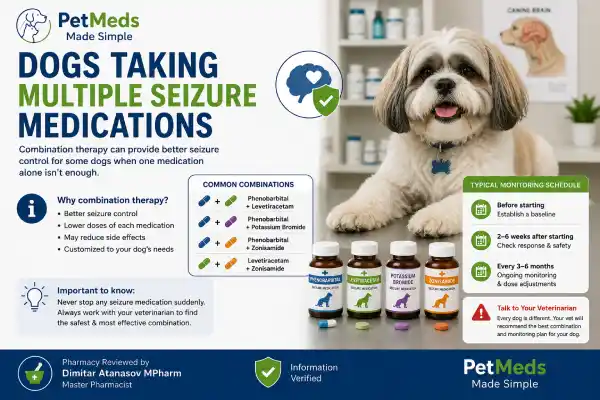
Many dogs with epilepsy eventually require more than one medication.
Combination therapy is common when seizures become difficult to control.
Examples include:
- Phenobarbital + Levetiracetam
- Phenobarbital + Potassium Bromide
- Phenobarbital + Zonisamide
- Levetiracetam + Zonisamide
While combination therapy often improves seizure control, veterinarians carefully monitor blood work because multiple medications may increase the body’s overall metabolic workload.
Dogs With Existing Liver Disease
Dogs that already have chronic liver disease require particularly careful medication selection.
Whenever possible, veterinarians often choose medications with minimal hepatic metabolism.
For these patients, drugs such as Levetiracetam (Keppra) for Dogs or Potassium Bromide for Dogs may be preferable to high-dose phenobarbital.
Treatment decisions always balance two priorities:
- protecting liver function,
- maintaining seizure control.
Preventing seizures remains critically important because uncontrolled epilepsy itself can become life-threatening.
Senior Dogs
Older dogs naturally experience reduced organ reserve.
Although age alone does not prevent successful epilepsy treatment, senior dogs may:
- metabolize medications more slowly,
- have additional medical conditions,
- require more frequent blood testing,
- need individualized dose adjustments.
Your veterinarian will consider your dog’s complete medical history rather than age alone.
Dogs With Other Chronic Diseases
Medical conditions affecting the liver, kidneys, endocrine system, or gastrointestinal tract may influence how seizure medications are processed.
Examples include:
- Chronic hepatitis
- Congenital liver shunts
- Chronic kidney disease
- Diabetes mellitus
- Cushing’s disease
These dogs often require individualized treatment plans and closer monitoring throughout therapy.
Early Warning Signs Owners Should Never Ignore
One challenge with liver disease is that it often develops gradually.
Many dogs appear completely normal while blood tests already show mild abnormalities.
As liver function becomes more impaired, owners may begin noticing subtle changes.
Common Early Symptoms
Early signs may include:
- Reduced appetite
- Eating more slowly
- Mild weight loss
- Increased tiredness
- Sleeping more than usual
- Occasional vomiting
- Mild diarrhea
- Increased thirst
- Increased urination
Unfortunately, these signs are not specific to liver disease.
They can also occur with:
- epilepsy itself,
- medication side effects,
- gastrointestinal disease,
- kidney disease,
- endocrine disorders,
- or unrelated illnesses.
For example, dogs taking Phenobarbital for Dogs commonly drink and urinate more even when their liver is functioning normally.
Likewise, dogs receiving Levetiracetam (Keppra) for Dogs or Zonisamide for Dogs: Uses, Dosage, Side Effects & Safety may occasionally experience temporary gastrointestinal upset that is unrelated to liver injury.
This is why laboratory monitoring is so valuable.
Advanced Signs of Liver Disease
As liver function declines further, clinical signs usually become much more obvious.
Owners should seek veterinary attention immediately if they notice:
| Warning Sign | Why It Occurs |
|---|---|
| Yellow gums or eyes (jaundice) | Bilirubin accumulates in the bloodstream |
| Persistent vomiting | Liver dysfunction affects metabolism and digestion |
| Severe lethargy | Reduced liver function affects the entire body |
| Collapse | Advanced metabolic abnormalities |
| Swollen abdomen | Fluid accumulation (ascites) |
| Bruising or bleeding | Reduced clotting factor production |
| Severe confusion | Hepatic encephalopathy |
| Persistent loss of appetite | Progressive liver dysfunction |
Fortunately, these severe complications are uncommon when dogs undergo routine monitoring.
Can Liver Damage Be Reversed?
One of the most common questions owners ask is whether liver damage caused by seizure medication is permanent.
The answer depends on how early the problem is detected.
The liver has remarkable regenerative abilities.
Unlike many other organs, healthy liver tissue can repair itself after mild or moderate injury.
If abnormalities are identified early, veterinarians may recommend:
- lowering the medication dose,
- adding a second anticonvulsant,
- switching medications,
- temporarily increasing monitoring,
- adding liver-supportive therapy when appropriate.
Many dogs experience significant improvement once the underlying cause has been addressed.
However, severe chronic liver disease is much more difficult to reverse.
This is exactly why routine blood work is emphasized throughout treatment.
Can Liver Supplements Help?
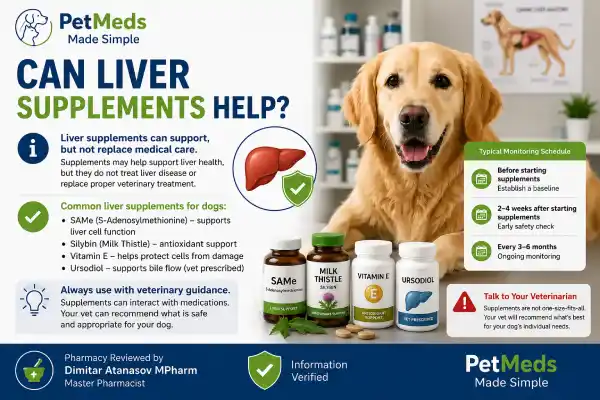
Owners frequently ask whether supplements can prevent seizure medication from damaging the liver.
Several products are commonly discussed in veterinary medicine, including:
- SAMe (S-adenosylmethionine)
- Silybin (Milk Thistle Extract)
- Vitamin E
- Ursodiol (for selected liver conditions)
These products may be appropriate in certain patients, particularly dogs receiving long-term phenobarbital therapy or those with documented liver disease.
However, supplements should never be started without veterinary guidance.
Even natural products can:
- interact with medications,
- affect laboratory results,
- vary in quality,
- or be unnecessary for healthy dogs.
Your veterinarian will determine whether liver-supportive therapy is appropriate based on blood test results rather than using supplements routinely in every patient.
How Veterinarians Reduce the Risk of Liver Damage
Modern epilepsy management focuses not only on controlling seizures but also on minimizing long-term side effects.
Veterinarians commonly reduce liver risk by:
- Choosing the most appropriate anticonvulsant for each patient
- Using the lowest effective dose
- Performing regular blood tests
- Measuring therapeutic drug concentrations when indicated
- Adjusting treatment before severe abnormalities develop
- Using combination therapy when appropriate
- Monitoring other medications that may affect the liver
For example, if a dog develops persistent liver enzyme elevations while taking Phenobarbital for Dogs, the veterinarian may gradually introduce Levetiracetam (Keppra) for Dogs, allowing the phenobarbital dose to be reduced without sacrificing seizure control.
This individualized approach has helped countless dogs remain seizure-free while maintaining excellent quality of life for many years.
Should You Ever Stop Seizure Medication Because of Liver Concerns?
No—not without direct veterinary guidance.
This is one of the most dangerous mistakes owners can make.
Reading online that seizure medication can damage the liver sometimes leads people to discontinue treatment abruptly.
Unfortunately, stopping anticonvulsants suddenly may trigger:
- Breakthrough seizures
- More frequent seizures
- Cluster seizures
- Status epilepticus
- Life-threatening neurological emergencies
If your veterinarian suspects medication-related liver problems, they will usually recommend a gradual transition rather than stopping treatment immediately.
Depending on the situation, they may:
- reduce the current dose,
- add another anticonvulsant,
- transition to a medication with lower hepatic metabolism,
- or investigate other possible causes of abnormal liver values.
Maintaining seizure control while protecting liver health is always the primary goal, and these decisions should be made using both your dog’s clinical signs and laboratory results rather than a single abnormal blood test.
When Should You Contact Your Veterinarian?
Regular follow-up appointments are one of the most important parts of successful epilepsy management. In many cases, liver-related problems can be detected through routine blood work before your dog develops any noticeable symptoms.
However, certain changes at home should never be ignored.
Schedule an appointment with your veterinarian if your dog:
- Eats significantly less than usual for more than 24 hours
- Vomits repeatedly
- Develops persistent diarrhea
- Drinks or urinates much more than normal
- Appears unusually tired for several days
- Begins losing weight
- Has more frequent seizures
- Develops new medication side effects
- Misses multiple doses of seizure medication
Owners may also find these PMMS guides helpful:
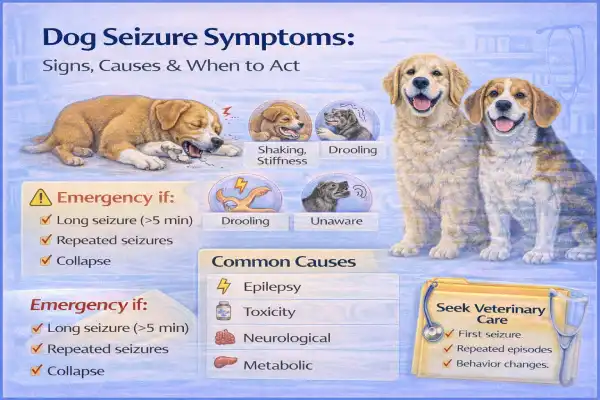
- Dog Seizure Symptoms: Signs, Causes & When to Act (Vet-Backed Guide)
- Best Seizure Medication for Dogs: Complete Comparison Guide (Vet-Backed)
- What to Do During a Dog Seizure (Emergency Guide for Pet Owners)
- Phenobarbital vs Levetiracetam (Keppra) for Dogs: Which Seizure Medication Is Better?
- Seizure Medications for Dogs: Complete Guide (Uses, Safety, Dosage & Treatment Options)
Seek Emergency Veterinary Care Immediately If Your Dog Shows:
Although severe liver injury is uncommon, some symptoms require immediate evaluation.
These include:
- Yellow gums, eyes, or skin (jaundice)
- Collapse
- Difficulty standing
- Severe weakness
- Continuous vomiting
- Severe confusion
- Uncontrollable seizures
- Cluster seizures
- Status epilepticus
- Severe abdominal swelling
- Difficulty breathing
These signs may indicate advanced liver disease, severe medication toxicity, or another life-threatening emergency.
Related Symptoms Owners Often Notice
Owners searching “Can seizure medication damage the liver?” frequently report additional concerns that may or may not be related to liver disease.
Common symptoms include:
- Sleepiness
- Increased thirst
- Increased urination
- Increased appetite
- Weight gain
- Weight loss
- Weakness
- Wobbliness
- Occasional vomiting
- Poor appetite
- Personality changes
- Anxiety
- Restlessness
- Tremors
- Reduced activity
Many of these symptoms are actually expected side effects of certain anticonvulsants rather than evidence of liver disease.
For example:
- Dogs taking Phenobarbital for Dogs: Uses, Dosage, Side Effects & Safety commonly drink more water and urinate more frequently.
- Dogs receiving Levetiracetam (Keppra) for Dogs: Uses, Dosage, Side Effects & Safety may experience temporary sleepiness after starting treatment.
- Dogs taking Potassium Bromide for Dogs: Uses, Dosage, Side Effects & Safety can develop temporary weakness or sedation while adjusting to therapy.
Because several anticonvulsants share similar side effects, veterinarians rely on physical examinations and laboratory testing rather than symptoms alone when evaluating liver health.
When Owners Commonly Ask This
Questions about liver safety often arise after owners receive routine blood work or begin researching epilepsy medications online.
Some of the most common questions include:
- “My dog’s ALT is elevated. Does this mean the liver is failing?”
- “Should I stop phenobarbital immediately?”
- “Can Keppra replace phenobarbital?”
- “How often should liver enzymes be checked?”
- “Can seizure medication cause permanent liver damage?”
- “Is liver damage reversible?”
- “Are liver supplements necessary?”
- “Why are my dog’s ALP levels increasing?”
- “Can my dog stay on seizure medication for life?”
- “Is there a safer seizure medication for dogs with liver disease?”
These are excellent questions to discuss with your veterinarian because the answers depend on your dog’s seizure history, blood test results, medication doses, and overall health.
Veterinarian Takeaway
The possibility that seizure medication can damage the liver understandably worries many dog owners. Fortunately, serious liver disease remains relatively uncommon when anticonvulsants are prescribed appropriately and dogs receive regular monitoring.
Phenobarbital continues to be one of the most effective treatments for canine epilepsy despite its higher potential for affecting liver enzymes. Meanwhile, medications such as Levetiracetam (Keppra) for Dogs, Potassium Bromide for Dogs, and Zonisamide for Dogs provide valuable alternatives for dogs requiring individualized treatment plans.
The goal of epilepsy management is never simply to stop seizures—it is to achieve the best possible seizure control while maintaining long-term quality of life and minimizing medication-related side effects.
Routine blood tests, careful dose adjustments, and ongoing communication with your veterinarian make that goal achievable for most dogs.
Bottom Line
So, can seizure medication damage the liver?
The answer is yes but only certain medications carry a significant risk, and even then, serious liver disease is relatively uncommon with proper veterinary care.
Phenobarbital has the greatest potential to affect liver function because it is extensively metabolized by the liver. Other anticonvulsants, including Levetiracetam (Keppra) and Potassium Bromide, generally have much lower hepatic risk and are often considered for dogs with existing liver disease or those requiring combination therapy.
The most important takeaway is that routine monitoring saves lives. Regular blood tests allow veterinarians to identify early liver changes, adjust treatment when necessary, and continue controlling seizures safely. Owners should never stop anticonvulsants without veterinary guidance, as uncontrolled seizures often pose a much greater immediate danger than medication-related liver side effects. Can Seizure Medication Damage the Liver
Frequently Asked Questions – Can Seizure Medication Damage the Liver
Can seizure medication permanently damage a dog’s liver?
It can, but permanent liver damage is uncommon. Most dogs tolerate anticonvulsants well, especially when regular blood tests allow veterinarians to detect abnormalities early.
Which seizure medication has the highest risk of liver damage?
Phenobarbital is the anticonvulsant most commonly associated with liver enzyme elevations and long-term liver toxicity because it is extensively metabolized by the liver.
Does Keppra damage the liver?
Levetiracetam (Keppra) has a very low risk of liver toxicity because most of the medication is eliminated through the kidneys rather than the liver.
Can potassium bromide damage the liver?
Potassium bromide is not metabolized by the liver, making liver toxicity extremely uncommon.
How often should liver blood tests be performed?
Monitoring schedules vary, but many veterinarians perform baseline blood work before treatment, repeat testing several weeks after starting therapy, and continue monitoring every 3–6 months during long-term treatment.
Can elevated liver enzymes return to normal?
Yes. Mild enzyme elevations often improve after dose adjustments, medication changes, or treatment of underlying liver disease.
Should I stop phenobarbital if liver enzymes are elevated?
No. Never stop seizure medication without veterinary guidance because sudden withdrawal may trigger breakthrough seizures, cluster seizures, or status epilepticus.
Can liver supplements prevent medication-related liver damage?
Some dogs may benefit from liver-supportive products such as SAMe or silybin, but supplements should only be used under veterinary supervision.
Can dogs with liver disease still receive seizure medication?
Yes. Veterinarians often select anticonvulsants with lower hepatic metabolism, such as levetiracetam or potassium bromide, depending on the individual case.
Is liver damage more dangerous than seizures?
Both conditions can be serious. However, uncontrolled epilepsy can become life-threatening very quickly, which is why seizure medications should never be discontinued without veterinary guidance.
Sources – Can Seizure Medication Damage the Liver
- Plumb’s Veterinary Drug Handbook
- BSAVA Small Animal Formulary
- Merck Veterinary Manual
- Veterinary Pharmacology and Therapeutics (Riviere & Papich)
- Small Animal Clinical Pharmacology (Maddison, Page & Church)
- WSAVA Global Guidelines
- ACVIM Consensus Statement on Seizure Management
- Veterinary Information Network (VIN)
- Journal of the American Veterinary Medical Association (JAVMA)
- Frontiers in Veterinary Science
- Veterinary Anaesthesia and Analgesia
- PubMed (peer-reviewed studies on canine epilepsy, phenobarbital hepatotoxicity, levetiracetam pharmacokinetics, and anticonvulsant safety)
Medical Review Statement
This article was written by Dimitar Georgiev Atanasov, MPharm, pharmacy and scientifically reviewed by Gergana Krasimirova Atanasova, MPharm, and independently veterinary reviewed by Dr. Valcho Georgiev Valchev, DVM. It is based on current veterinary pharmacology references, peer-reviewed scientific literature, canine neurology references, epilepsy treatment guidelines, and evidence-based veterinary recommendations to ensure accurate, practical, and trustworthy information for dog owners.
Important Medical Disclaimer
The information provided on PetMedsMadeSimple.com is intended for educational purposes only and should not replace professional veterinary diagnosis or treatment.
Never start, stop, or adjust your dog’s seizure medication without consulting your veterinarian. If your dog develops prolonged seizures, repeated seizures, collapse, jaundice, severe breathing difficulties, persistent vomiting, or becomes difficult to wake, seek emergency veterinary care immediately.
Image Disclosure – Can Seizure Medication Damage the Liver
Some images used in this article may be AI-generated or AI-assisted for educational purposes. Every PMMS article is independently researched, pharmacy-written, scientifically reviewed, and veterinary-reviewed. AI-generated illustrations are used solely to improve understanding of veterinary medications and should not be interpreted as photographs of actual clinical patients.