

Quick Answer
Can dogs stay on NSAIDs for life? In many cases, yes dogs with chronic conditions such as osteoarthritis may safely remain on NSAIDs for months or even years under regular veterinary supervision. Lifelong NSAID therapy is not appropriate for every dog, however. Veterinarians monitor kidney function, liver health, gastrointestinal safety, pain control, and overall quality of life to determine whether long-term treatment continues to provide more benefits than risks.
Why Owners Ask: Can Dogs Stay on NSAIDs for Life?
One of the first questions owners ask after their dog is diagnosed with arthritis or another painful chronic condition is:
“Can my dog stay on NSAIDs for life?”
This concern is completely understandable.
Many owners worry that giving an anti-inflammatory medication every day for years could eventually damage their dog’s kidneys, liver, or stomach.
Others wonder whether their dog will become dependent on the medication or whether it will eventually stop working altogether.
The reassuring news is that modern veterinary medicine does not view NSAIDs as short-term medications only.
Instead, veterinarians carefully weigh the risks and benefits for each individual patient.
For many dogs, remaining on NSAIDs provides significantly better comfort, mobility, and quality of life than discontinuing treatment.
If you’re new to these medications, our comprehensive guide Dog Pain Medications Explained: Safety, Dosage & Side Effects explains how NSAIDs fit into long-term pain management.
Can Dogs Stay on NSAIDs for Life?
What Are NSAIDs?
Before answering Can dogs stay on NSAIDs for life?, it’s important to understand what NSAIDs actually are.
NSAID stands for Non-Steroidal Anti-Inflammatory Drug.
These medications reduce:
- inflammation
- pain
- swelling
- joint stiffness
Unlike opioids, NSAIDs work by blocking cyclooxygenase (COX) enzymes involved in producing inflammatory prostaglandins.
Common veterinary NSAIDs include:
- Carprofen
- Meloxicam
- Deracoxib
- Firocoxib
- Galliprant (piprant class with a different mechanism)
These medications are among the most frequently prescribed treatments for canine osteoarthritis and chronic orthopedic pain.
Because arthritis is often lifelong, it’s natural for owners to ask Can dogs stay on NSAIDs for life? In many situations, that question becomes part of every long-term treatment discussion with a veterinarian.
Can Dogs Stay on NSAIDs for Life?

The short answer is:
Yes some dogs can stay on NSAIDs for life.
However, that answer comes with an important condition.
A veterinarian must regularly evaluate whether long-term NSAID therapy remains both safe and beneficial.
Dogs are not automatically removed from NSAIDs after a certain number of months.
Instead, veterinarians continually assess whether:
- pain remains well controlled
- mobility improves
- side effects are absent
- blood work remains acceptable
- quality of life continues to improve
If the benefits continue to outweigh the risks, many dogs remain on NSAIDs for several years.
This is especially common in senior dogs with chronic osteoarthritis.
Owners are sometimes surprised that lifelong treatment can actually be safer than allowing severe chronic pain to remain untreated.
Why Arthritis Often Requires Lifelong Treatment
The biggest reason owners ask Can dogs stay on NSAIDs for life? is arthritis.
Unfortunately, osteoarthritis is a progressive disease.
Once cartilage has been damaged, it cannot fully regenerate.
While treatment can greatly improve comfort and mobility, it usually cannot completely eliminate the underlying disease.
This means many dogs require ongoing pain management throughout their lives.
Without treatment, arthritis may lead to:
- chronic pain
- muscle loss
- reduced activity
- obesity
- worsening joint stiffness
- declining quality of life
For this reason, veterinarians often recommend continuing NSAIDs rather than stopping medication simply because the dog appears to feel better.
Feeling better usually means the medication is working.
If your dog has arthritis, you may also find Can Dogs Take Gabapentin for Arthritis Forever? helpful, as many dogs receive multimodal pain management rather than relying on a single medication.
Long-Term Pain Relief Is About Quality of Life

Veterinarians don’t prescribe NSAIDs simply because X-rays show arthritis.
They prescribe them because pain affects nearly every aspect of a dog’s daily life.
Dogs living with chronic pain often experience:
- difficulty standing
- reluctance to walk
- trouble climbing stairs
- reduced playfulness
- disrupted sleep
- decreased appetite
- social withdrawal
When NSAIDs successfully control pain, many owners notice dramatic improvements.
Their dog may:
- become more active
- enjoy longer walks
- greet family members enthusiastically
- climb into the car again
- play with toys
- sleep comfortably through the night
This improvement in quality of life is one of the strongest reasons veterinarians consider long-term NSAID therapy appropriate for many patients.
Not Every Dog Is a Candidate for Lifelong NSAID Therapy
Although many dogs can stay on NSAIDs for life, not every patient is an ideal candidate.
Veterinarians carefully consider several factors before recommending lifelong treatment.
These include:
- age
- kidney function
- liver health
- gastrointestinal history
- concurrent medications
- previous NSAID reactions
- underlying medical conditions
A healthy adult dog with well-controlled arthritis may tolerate long-term NSAIDs extremely well.
On the other hand, a dog with advanced kidney disease or a history of severe stomach ulcers may require a different pain management strategy.
This individualized approach is why veterinary supervision is essential throughout treatment.
How Veterinarians Decide Whether a Dog Can Stay on NSAIDs for Life

Rather than following a fixed rule, veterinarians evaluate every patient individually.
During follow-up visits they assess:
- current pain level
- mobility
- body weight
- muscle condition
- appetite
- hydration
- activity level
- medication response
- owner observations
They also review whether your dog is receiving any additional medications that could increase the risk of adverse effects.
For example, combining certain medications without appropriate supervision may increase gastrointestinal complications.
If your dog receives multiple pain medications, our article Can Dogs Take Gabapentin With NSAIDs? explains why combination therapy is often recommended instead of continually increasing the NSAID dose alone.
Why Veterinarians Prefer the Lowest Effective Dose
One common misconception is that dogs receiving lifelong NSAIDs always remain on the same dosage forever.
In reality, veterinarians frequently adjust treatment over time.
Their goal is to find the lowest effective dose that still provides adequate pain relief.
Depending on your dog’s response, they may:
- reduce the daily dose
- modify the dosing schedule
- introduce rehabilitation therapy
- encourage weight loss
- add joint supplements
- combine NSAIDs with another pain medication
This multimodal approach often allows dogs to remain comfortable while reducing long-term exposure to higher NSAID doses.
Using multiple complementary therapies is now considered one of the foundations of modern canine pain management.
What Are the Biggest Risks of Lifelong NSAID Therapy?
When owners ask “Can dogs stay on NSAIDs for life?”, they’re usually thinking about one thing:
What could go wrong if my dog takes these medications for years?
Fortunately, serious complications are relatively uncommon when NSAIDs are prescribed appropriately and dogs are monitored regularly.
However, like every medication, NSAIDs carry potential risks.
The most important include:
- gastrointestinal irritation
- stomach ulcers
- vomiting
- diarrhea
- decreased appetite
- kidney injury
- liver abnormalities (less common)
- reduced effectiveness over time if the underlying disease progresses
It’s important to remember that these risks are not the same for every dog.
Age, concurrent diseases, hydration, other medications, and proper dosing all influence whether long-term treatment remains safe.
This is why the answer to Can dogs stay on NSAIDs for life? always depends on the individual patient rather than the medication alone.
Why the Stomach Receives So Much Attention
The digestive tract is the organ system veterinarians monitor most closely during long-term NSAID therapy.
NSAIDs reduce prostaglandin production.
While this helps decrease inflammation and pain, prostaglandins also play an important role in protecting the stomach lining.
Without adequate protection, some dogs may develop:
- nausea
- vomiting
- decreased appetite
- black stools
- stomach irritation
- gastric ulcers
Fortunately, these problems are uncommon when NSAIDs are used exactly as prescribed and routine monitoring is performed.
Owners should never assume mild digestive symptoms are simply “part of the medication.”
Early veterinary evaluation often prevents more serious complications.
If your dog develops digestive problems, your veterinarian may temporarily stop treatment, investigate the cause, or recommend a different pain management strategy.
Can Lifelong NSAID Therapy Damage the Kidneys?

One of the most common questions veterinarians hear is:
“Can dogs stay on NSAIDs for life without damaging their kidneys?”
The answer is that healthy kidneys usually tolerate appropriately prescribed NSAIDs very well.
However, NSAIDs can reduce blood flow to the kidneys under certain circumstances.
This becomes more important when dogs are:
- dehydrated
- severely ill
- undergoing anesthesia
- experiencing shock
- suffering from advanced kidney disease
For this reason, veterinarians routinely evaluate kidney function before and during long-term therapy in higher-risk patients.
The goal isn’t to stop NSAIDs unnecessarily.
Instead, it’s to identify small changes before they become significant problems.
Regular monitoring allows many dogs to continue benefiting from NSAIDs safely for years.
Can Long-Term NSAIDs Affect the Liver?
Compared with kidney or gastrointestinal complications, liver problems are much less common.
Nevertheless, veterinarians remain cautious because every dog responds differently to medication.
Routine examinations may include blood work to evaluate:
- ALT
- AST
- ALP
- bilirubin
- albumin
In most dogs, these values remain completely normal during long-term treatment.
If abnormalities develop, veterinarians determine whether the NSAID is responsible or whether another disease process may be involved.
Importantly, discovering mild laboratory changes does not automatically mean lifelong NSAID therapy must end.
Treatment decisions are always based on the dog’s complete clinical picture rather than laboratory numbers alone.
Why Regular Blood Tests Matter
Owners sometimes ask why blood tests are recommended if their dog appears perfectly healthy.
The answer is simple.
Many early changes in kidney or liver function produce no obvious symptoms.
Routine laboratory testing allows veterinarians to identify subtle abnormalities before dogs become clinically ill.
Depending on your dog’s age and medical history, monitoring may include:
- complete blood count (CBC)
- serum chemistry profile
- kidney values
- liver enzymes
- electrolyte levels
- urine testing
These evaluations provide reassurance that dogs staying on NSAIDs for life continue to tolerate treatment well.
They also help veterinarians adjust therapy long before significant complications develop.
Can Dogs Develop Tolerance to NSAIDs?
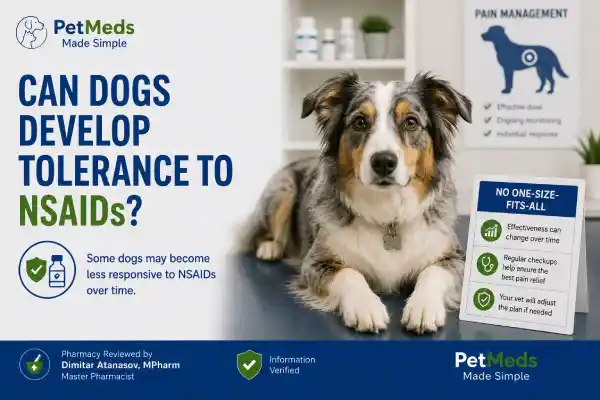
Another common concern is whether NSAIDs eventually “stop working.”
Most veterinarians do not consider true pharmacological tolerance to be a major problem with NSAIDs.
Instead, when owners believe the medication has become ineffective, the explanation is often different.
Common reasons include:
- worsening arthritis
- progression of orthopedic disease
- increased body weight
- reduced muscle mass
- development of another painful condition
In other words, the disease has progressed not necessarily the medication has failed.
This distinction is important because increasing the dose isn’t always the best solution.
Instead, veterinarians often recommend a more comprehensive pain management plan.
Why Multimodal Pain Management Is Becoming the Standard
Modern veterinary medicine rarely relies on NSAIDs alone for severe chronic pain.
Instead, veterinarians increasingly use multimodal pain management.
This means combining therapies that work through different mechanisms.
Depending on the individual patient, treatment may include:
- NSAIDs
- gabapentin
- amantadine
- physical rehabilitation
- therapeutic exercise
- laser therapy
- weight management
- omega-3 fatty acids
- joint-support supplements
This approach often improves comfort while allowing lower NSAID doses.
If your veterinarian recommends combining medications, it doesn’t necessarily mean your dog’s arthritis has become severe.
Instead, it often reflects current best practices in veterinary pain management.
Our article Can Dogs Take Gabapentin With NSAIDs? explains why these two medications are frequently prescribed together.
Can Dogs Stay on NSAIDs for Life if They Are Senior Dogs?
Senior dogs are the group most likely to require lifelong NSAID therapy because osteoarthritis becomes increasingly common with age.
Age alone, however, does not prevent long-term treatment.
Many older dogs remain on NSAIDs for years with excellent results.
Veterinarians simply monitor senior patients more carefully because aging increases the likelihood of:
- kidney disease
- liver disease
- dehydration
- multiple medications
- chronic medical conditions
With individualized monitoring and regular rechecks, many senior dogs continue enjoying an excellent quality of life while receiving NSAIDs safely.
Can Dogs Stay on NSAIDs for Life Without Taking Them Every Day?

An interesting aspect of long-term treatment is that lifelong NSAID therapy does not always mean lifelong daily dosing.
As arthritis progresses or occasionally improves after weight loss, rehabilitation, or surgery—veterinarians may adjust the treatment schedule.
Some dogs remain comfortable with:
- once-daily dosing
- every-other-day treatment
- intermittent therapy during flare-ups
- seasonal adjustments based on activity
Others continue to require daily medication because their disease causes persistent pain.
The important point is that owners should never adjust the schedule on their own.
Even if your dog appears comfortable, changing the dosing frequency without veterinary guidance can allow chronic pain to return gradually.
When Should Lifelong NSAID Therapy Be Reconsidered?
The question “Can dogs stay on NSAIDs for life?” should be revisited during every veterinary recheck.
Veterinarians continually evaluate whether the current treatment still provides more benefit than risk.
Treatment may need to be reconsidered if:
- significant side effects develop
- kidney function changes
- liver disease is diagnosed
- gastrointestinal ulcers occur
- another chronic illness develops
- pain is no longer adequately controlled
- a different medication becomes more appropriate
This doesn’t necessarily mean NSAIDs have failed.
Instead, it reflects the fact that every dog’s medical needs evolve over time.
Pain management is never static it changes as the patient changes.
What Should Owners Monitor at Home?
Veterinarians see your dog every few months.
You see your dog every day.
That makes owners an essential part of long-term NSAID monitoring.
Between veterinary visits, watch for changes in:
- appetite
- water intake
- vomiting
- diarrhea
- stool color
- activity level
- willingness to exercise
- comfort when standing
- ability to climb stairs
- behavior
- sleeping habits
Contact your veterinarian promptly if you notice:
- black or tarry stools
- repeated vomiting
- refusal to eat
- marked lethargy
- severe weakness
- collapse
- pale gums
Early intervention often prevents minor problems from becoming serious complications.
Never Give Human NSAIDs Without Veterinary Advice

One of the biggest dangers associated with long-term pain management is owners substituting veterinary NSAIDs with medications intended for people.
Human NSAIDs such as:
- ibuprofen
- naproxen
- diclofenac
can be extremely toxic to dogs, even at relatively low doses.
Likewise, owners should never increase the prescribed veterinary NSAID dose because their dog seems more painful.
If your dog’s pain appears to worsen despite treatment, the safest approach is to schedule a veterinary re-evaluation rather than changing the medication at home.
Frequently Asked Questions – Can Dogs Stay on NSAIDs for Life?
Can dogs stay on NSAIDs for life?
Yes. Many dogs with chronic conditions such as osteoarthritis remain on NSAIDs for years or even for life under regular veterinary supervision. The treatment plan is individualized and monitored closely to ensure that the benefits continue to outweigh the risks.
Can dogs stay on NSAIDs for life if they have arthritis?
Yes. Arthritis is one of the most common reasons dogs stay on NSAIDs for life because the disease is progressive and cannot be cured. Long-term pain control helps preserve mobility and quality of life.
Are NSAIDs safe for lifelong use in dogs?
For many dogs, they are. Modern veterinary NSAIDs have been extensively studied and can be used safely for long periods when prescribed appropriately and monitored with regular examinations and laboratory testing.
Do dogs taking NSAIDs for life need blood tests?
Often, yes.
Veterinarians commonly recommend periodic blood work to monitor kidney function, liver health, and overall wellness, especially in senior dogs or those receiving multiple medications.
Can dogs stay on NSAIDs for life without damaging their kidneys?
Many can.
Dogs with healthy kidneys frequently tolerate long-term NSAID therapy well. Regular monitoring helps veterinarians detect early changes and adjust treatment if necessary.
What are the most common side effects of long-term NSAIDs?
common include:
vomiting
diarrhea
decreased appetite
stomach irritation
lethargy
Serious complications are much less common when the medication is used exactly as prescribed.ю
Can veterinarians lower the NSAID dose over time?
Yes.
Many veterinarians aim for the lowest effective dose and may adjust treatment based on pain control, body weight, rehabilitation progress, and overall health.
Can NSAIDs stop working after several years?
Usually, worsening pain reflects progression of the underlying disease rather than the medication becoming ineffective. Your veterinarian may recommend additional therapies instead of simply increasing the NSAID dose.
Should owners ever stop NSAIDs suddenly?
Owners should always speak with their veterinarian before discontinuing long-term NSAID therapy. Stopping medication without an alternative pain management plan may allow chronic pain to return quickly.
Can dogs stay on NSAIDs for life and still enjoy a good quality of life?
Absolutely.
For many dogs with chronic arthritis, lifelong NSAID therapy allows them to remain active, comfortable, and engaged with their families for many years.
Bottom Line
Can dogs stay on NSAIDs for life? In many cases, the answer is yes. Dogs with chronic arthritis and other painful conditions often benefit from long-term NSAID therapy, provided they receive regular veterinary monitoring. Rather than focusing solely on the potential risks, veterinarians carefully balance those risks against the very real consequences of untreated chronic pain. With individualized dosing, routine blood work when appropriate, and ongoing follow-up visits, dogs can stay on NSAIDs for life while maintaining excellent mobility and quality of life.
Veterinarian Takeaway
When owners ask “Can dogs stay on NSAIDs for life?”, the answer is rarely a simple yes or no. Every patient is unique. Some dogs require lifelong NSAID therapy to remain comfortable, while others benefit from dose adjustments or multimodal pain management. The safest approach is regular veterinary monitoring, prompt reporting of any side effects, and individualized treatment decisions based on your dog’s overall health rather than on a fixed timeline.
Sources
- Plumb DC. Plumb’s Veterinary Drug Handbook.
- Papich MG. Saunders Handbook of Veterinary Drugs: Small and Large Animal.
- Merck Veterinary Manual. Pain Management in Dogs and Cats.
- 2022 AAHA Pain Management Guidelines for Dogs and Cats.
- WSAVA Global Pain Council Guidelines.
- BSAVA Small Animal Formulary.
- Veterinary Information Network (VIN). Clinical discussions on long-term NSAID therapy.
- Journal of Veterinary Internal Medicine.
- Frontiers in Veterinary Science. Chronic pain management and osteoarthritis reviews.
Medical Review Statement
Medical Review Statement
This article was written by Dimitar Georgiev Atanasov, MPharm, Master Pharmacist and Medication Safety Educator (Bulgarian Pharmaceutical Union, UIN: 0210000586).
The content has been pharmacy and scientific reviewed by Gergana Krasimirova Atanasova, MPharm (Bulgarian Pharmaceutical Union, UIN: 0210000587).
The veterinary information has been reviewed by Dr. Valcho Georgiev Valchev, DVM (Bulgarian Veterinary Union Registration No. 28000115).
This article is intended for educational purposes only and should never replace individualized veterinary diagnosis, examination, or treatment.
Image Disclosure
Image Disclosure: Some images used in this article may be AI-generated for educational purposes. They are intended to illustrate veterinary concepts and should not replace professional veterinary examination or diagnosis.