
Quick AnswerQ
Can dogs take gabapentin for arthritis forever? Some dogs with chronic arthritis may remain on gabapentin for months or years when their veterinarian determines that it continues to provide a meaningful benefit. There is no universal time limit after which gabapentin must automatically be stopped simply because a dog has been taking it long term.
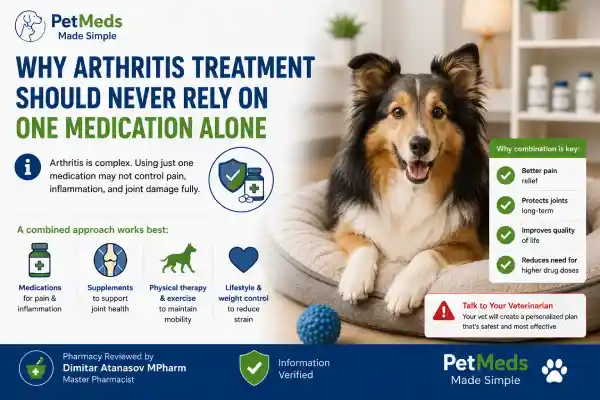
However, gabapentin should not be viewed as a medication that every dog with arthritis needs for life. Its role is usually individualized and may be most useful when a veterinarian suspects a neuropathic or sensitization component to chronic pain. Osteoarthritis management often changes as the disease progresses, and many dogs require a multimodal plan that may include anti-inflammatory treatment, weight management, appropriate exercise, rehabilitation, environmental modifications, and other therapies.
The important question is therefore not simply “How long has my dog been taking gabapentin?” but rather “Is gabapentin still helping my dog enough to justify continuing it?”
Dogs receiving long-term treatment should be periodically reassessed for pain control, mobility, sedation or other adverse effects, concurrent diseases, kidney function when clinically relevant, and overall quality of life. Owners should not abruptly change or discontinue a long-standing gabapentin regimen without discussing the plan with their veterinarian.
When Owners Start Wondering About Lifelong Gabapentin
For many families, this question does not arise when gabapentin is first prescribed.
At the beginning, the priority is usually much simpler: helping a dog that is uncomfortable.
Perhaps an older dog has started taking longer to stand after sleeping. Walks have become shorter. Stairs that were once effortless suddenly require hesitation. The dog may still want to follow the family around the house, but getting up and moving is clearly becoming harder.
A veterinarian diagnoses osteoarthritis and develops a pain-management plan that includes gabapentin.
Weeks turn into months.
The prescription is renewed again.
Then again.
Eventually, an owner looks at the medication bottle and begins wondering:
“Is my dog really going to need this for the rest of his life?”
That is where the question “Can dogs take gabapentin for arthritis forever?” usually comes from.
The concern is understandable. Long-term medication can sound inherently dangerous, particularly when treatment began without a clearly defined end date.
But chronic arthritis is fundamentally different from a temporary injury.
A short-lived muscle strain may heal. A surgical incision eventually closes. An uncomplicated acute injury may improve enough that pain medication is no longer necessary.
Osteoarthritis is different because the underlying joint disease usually remains present.
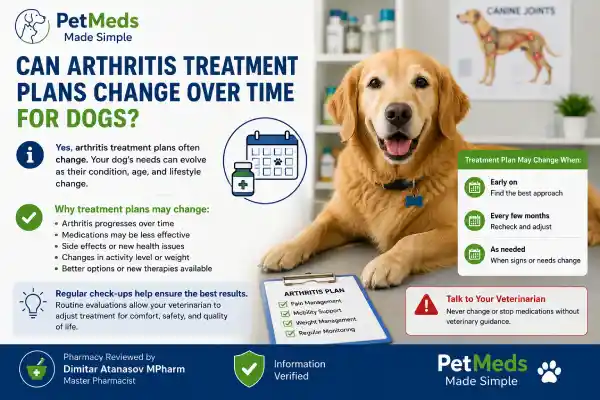
That means the need for pain management may be lifelong, although the specific medications and treatments used to achieve that goal can change substantially over time.
This distinction is important.
A dog having arthritis for life does not automatically mean that the dog must take gabapentin for life.
Likewise, using gabapentin for several years does not automatically mean treatment has continued for “too long.”
The decision should depend on the individual dog.
Our broader guide Can Dogs Take Gabapentin Long-Term Safely? looks specifically at prolonged gabapentin use beyond arthritis and is useful for owners concerned primarily about duration and medication safety.
Can Dogs Take Gabapentin for Arthritis Forever?
Why Arthritis Is Usually a Lifelong Condition
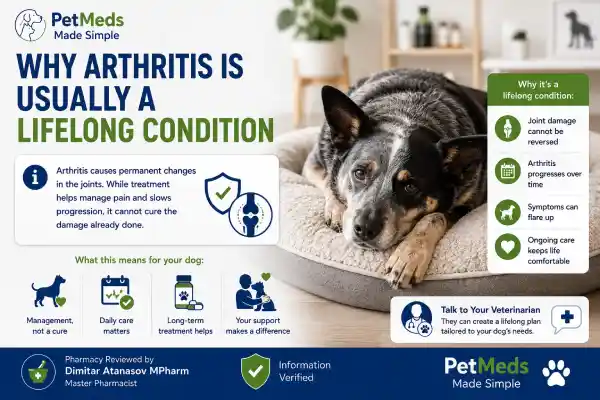
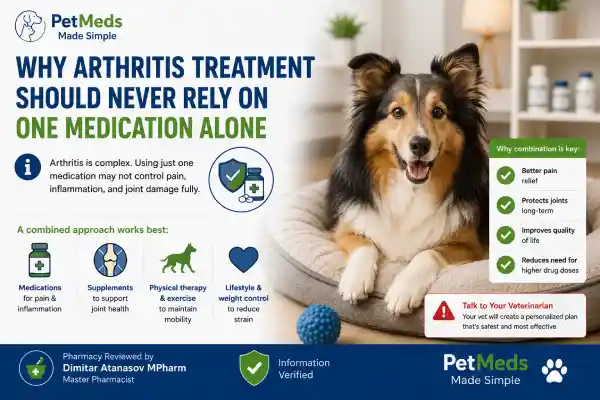
Osteoarthritis is a chronic disease involving the entire joint rather than simply an occasional episode of inflammation.
Over time, changes can occur in cartilage, underlying bone, the joint capsule, surrounding soft tissues, and the way the dog moves. Chronic pain can also become more complicated as persistent painful input affects how the nervous system processes signals.
This is one reason an arthritic dog may look relatively comfortable during one stage of the disease but require a more comprehensive treatment plan several years later.
Pain management therefore needs to evolve with the patient.
A nine-year-old dog with early osteoarthritis may have very different needs from the same dog at twelve years old.
The goal is not to eliminate every sign of aging or permanently reverse damaged joints. Instead, veterinary arthritis management generally focuses on preserving comfortable movement and maintaining activities that matter to the individual dog.
That may mean being able to:
- stand without major difficulty;
- walk comfortably enough for normal daily activity;
- sleep without repeated pain-related disturbance;
- maintain useful muscle mass;
- interact with family members;
- continue enjoying appropriate exercise.
The medication list itself is secondary to those outcomes.
Lifelong Disease Does Not Mean an Unchanging Treatment Plan
| What may remain lifelong | What may change over time |
|---|---|
| Osteoarthritis diagnosis | Gabapentin dose or schedule |
| Need for pain assessment | Other medications used |
| Need to protect mobility | Exercise recommendations |
| Weight-management importance | Rehabilitation strategy |
| Quality-of-life monitoring | Frequency of veterinary rechecks |
| Need for individualized care | Whether gabapentin remains necessary |
This is a much better way to think about lifelong arthritis treatment.
The disease may remain, while the treatment evolves.
Where Does Gabapentin Actually Fit Into Arthritis Treatment?
This is one area where the original article needs an important clarification.
Gabapentin is not an NSAID, and it does not directly treat the inflammatory joint pathology of osteoarthritis in the same way that veterinary anti-inflammatory medications do.
Its principal pharmacologic action involves binding to the α2δ subunit of voltage-gated calcium channels, which alters excitatory neurotransmitter release within the nervous system.
In practical terms, gabapentin is used primarily as an analgesic adjunct when veterinarians are trying to manage certain components of chronic or neuropathic pain.
That distinction matters because osteoarthritis pain can become more complex than inflammation alone.
A dog with long-standing joint disease may experience altered pain processing and sensitization. In selected patients, veterinarians may therefore include gabapentin as one component of a broader multimodal plan.
But owners should not interpret this to mean:
“Gabapentin treats the arthritis itself.”
It does not repair cartilage.
It does not reverse osteoarthritis.
And it should not automatically be considered a substitute for every other form of arthritis treatment.
This is precisely why the question “Can dogs take gabapentin for arthritis forever?” cannot be answered simply by looking at the medication’s duration.
We first have to ask why that individual dog is receiving gabapentin and whether it continues to improve clinically meaningful outcomes.
How Can Owners Tell Whether Gabapentin Is Actually Helping?

This is a surprisingly important question.
When a dog has taken the same medication for months, owners may lose sight of exactly what improved when treatment began.
Instead of asking only whether the dog “looks painful,” it is more useful to monitor specific functions.
For example, compare:
- how easily the dog rises in the morning;
- willingness to begin a walk;
- comfortable walking distance;
- ability to settle and sleep;
- hesitation before stairs;
- interaction with family;
- activity after exercise;
- frequency of obvious pain behaviors.
A simple diary or occasional video can make gradual changes easier to recognize.
What Meaningful Benefit May Look Like
| Observation | Possible indication |
|---|---|
| Easier rising after rest | Improved functional comfort |
| More willingness to walk | Pain may be better controlled |
| More settled sleep | Less nighttime discomfort may be present |
| Better participation in normal activities | Improved quality of life |
| No meaningful difference despite prolonged treatment | Veterinary reassessment may be appropriate |
| Increasing sedation with little functional improvement | Benefit-risk balance should be reviewed |
The last two rows are especially important.
Long-term treatment should not continue simply because “the dog has always taken it.”
The medication should have a purpose.
If owners and veterinarians can no longer identify a meaningful benefit, the treatment plan deserves reassessment.
Conversely, if gabapentin continues contributing to comfortable movement and acceptable quality of life without problematic adverse effects, the fact that treatment has lasted months or years is not, by itself, a reason to stop it.
This is the central principle we will use throughout the rest of the repaired article.
Is Gabapentin the Only Medication Used for Arthritis?
Usually, no.
One of the most important things to understand when asking “Can dogs take gabapentin for arthritis forever?” is that gabapentin is rarely the entire arthritis treatment plan.
Canine osteoarthritis is a complex chronic disease. Inflammation inside the affected joint is important, but it is not the only factor influencing how much discomfort a dog experiences. Muscle loss, reduced mobility, excess body weight, previous orthopedic injuries, altered movement patterns, and changes in pain processing can all contribute.
For this reason, veterinarians increasingly approach chronic arthritis through multimodal pain management.
Rather than expecting one medication to solve every component of pain, several carefully selected strategies may be combined.
Depending on the individual dog, a long-term plan might involve an NSAID, weight management, controlled exercise, rehabilitation, environmental modifications, nutritional support, and additional analgesic medications when appropriate.
Gabapentin may be one part of that plan.
It should not automatically be considered the foundation of treatment for every arthritic dog.
Owners interested in arthritis management may also wish to explore:
- Can Dogs Take Gabapentin With NSAIDs?
- Can Dogs Take Tramadol and Gabapentin Together?
- Can Dogs Become Dependent on Pain Medication?
- Can Gabapentin Cause Weight Gain in Dogs?
- Can Gabapentin Cause Weight Loss in Dogs?
- Can Dogs Take Gabapentin Long-Term Safely?
Why Multimodal Treatment Matters

Different therapies address different parts of the problem.
| Treatment approach | Primary purpose |
|---|---|
| Veterinary NSAIDs | Reduce inflammatory pain |
| Gabapentin | May help selected chronic/neuropathic pain components |
| Weight management | Reduces mechanical stress on joints |
| Controlled exercise | Helps preserve mobility and muscle |
| Rehabilitation | Improves strength and functional movement |
| Home modifications | Reduce slipping, jumping and unnecessary joint stress |
| Omega-3 fatty acids | May provide nutritional support for osteoarthritis management |
| Other veterinary therapies | May be considered according to the individual patient |
This is also why an owner should not assume that adding another treatment means gabapentin has “failed.”
The dog’s needs may simply have changed.
A dog receiving gabapentin may eventually require anti-inflammatory treatment, while another dog already receiving an NSAID may later benefit from an additional analgesic strategy.
We discuss this specific combination in Can Dogs Take Gabapentin and NSAIDs Together?
The important principle is that these decisions should be made according to the individual dog’s medical history rather than by adding medications at home.
Can Dogs Take Gabapentin With NSAIDs Long Term?
In appropriate patients, veterinarians may prescribe gabapentin together with a veterinary NSAID as part of multimodal pain management.
The two medication classes work differently.
NSAIDs primarily reduce inflammatory pathways associated with pain, while gabapentin acts within the nervous system and may be selected when additional analgesic support is considered useful.
That difference is important.
Using two medications with different mechanisms can sometimes be more rational than continually increasing exposure to one medication.
However, the fact that gabapentin and an NSAID can be prescribed together does not mean the combination is automatically appropriate for every dog.
A veterinarian may consider:
- the dog’s age;
- kidney and liver health;
- gastrointestinal history;
- hydration;
- other medications;
- severity of arthritis;
- response to previous treatment;
- degree of sedation;
- overall quality of life.
The complete medication list matters especially in senior dogs, which may already receive treatment for several unrelated conditions.
For owners specifically considering this combination, Can Dogs Take Gabapentin and NSAIDs Together? provides a more focused explanation.
Can Joint Supplements Be Used Alongside Gabapentin?
Joint supplements are another area where owners sometimes misunderstand the role of gabapentin.
A supplement and gabapentin generally serve very different purposes.
Gabapentin is used as a medication for pain management in selected patients. Joint supplements are usually intended as supportive components of a broader osteoarthritis strategy rather than immediate analgesics.
That means adding a supplement should not be expected to replace gabapentin overnight.
Likewise, a dog taking gabapentin does not automatically need every available joint supplement.
Product quality, ingredients, evidence, calories, concurrent medications, and the dog’s overall treatment plan should all be considered.
Omega-3 fatty acids are a common example. Owners interested in combining nutritional support with pain treatment can also read Can Dogs Take Fish Oil With Pain Medication?
The key principle remains the same:
More treatments are not automatically better treatments.
A multimodal plan should be purposeful.
Can Dogs Take Gabapentin for Arthritis Forever If It Still Works?
Potentially, yes.
There is no universal rule requiring gabapentin to be discontinued after six months, one year, two years, or another arbitrary duration solely because it has been used for a long time.
But duration alone is also not sufficient justification for continuing it.
Long-term therapy makes sense when the veterinarian and owner can still identify a favorable benefit-risk balance.
For example, imagine two dogs that have both taken gabapentin for three years.
Dog A remains active, rises more comfortably, sleeps well, experiences no problematic sedation, and clearly becomes more uncomfortable when treatment is appropriately reassessed or adjusted.
Dog B is increasingly sleepy, has severe muscle loss, struggles to walk despite treatment, and the owners can no longer identify any obvious functional improvement attributable to gabapentin.
Both dogs have taken the medication for exactly the same amount of time.
Yet their treatment decisions may be completely different.
That illustrates why the answer to “Can dogs take gabapentin for arthritis forever?” cannot be based on a calendar.
What Matters More Than the Number of Years
| Question | Why it matters |
|---|---|
| Is the dog more comfortable with treatment? | Establishes meaningful benefit |
| Is mobility being preserved? | Evaluates functional outcome |
| Is sedation interfering with normal activity? | Helps assess adverse effects |
| Have new diseases developed? | May alter medication decisions |
| Have other medications been added? | Changes the overall treatment picture |
| Has kidney function changed? | May influence gabapentin handling |
| Is the dog still enjoying normal activities? | Helps assess quality of life |
A medication can be used for a long time and still be appropriate.
Conversely, a medication can become inappropriate even after relatively short use if it provides little benefit or produces unacceptable adverse effects.
Does Long-Term Gabapentin Damage a Dog’s Kidneys?
This deserves careful wording because it is easy to confuse renal elimination with renal toxicity.
Gabapentin is substantially eliminated through the kidneys. Therefore, kidney function can influence how the drug is cleared from the body.
That does not mean gabapentin should simply be described as a medication that progressively damages healthy kidneys during normal use.
The more relevant clinical concern is that impaired renal function may reduce clearance and potentially increase exposure to gabapentin.
This becomes particularly important in older dogs because kidney function may change independently of the arthritis treatment.
A dog that tolerated a particular regimen when younger may therefore need reassessment later in life.
Possible signs that deserve discussion with the veterinarian include increased or excessive sedation, weakness, worsening coordination, or other changes appearing after the dog’s health status has changed.
Owners interested specifically in accumulation can read Can Gabapentin Build Up in a Dog’s System?
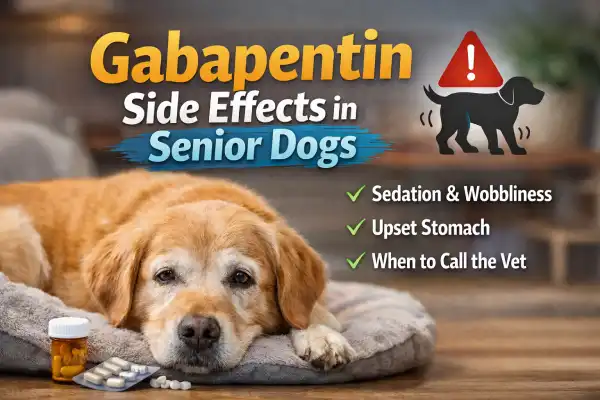
Why Senior Dogs Deserve Extra Attention
Arthritis and aging frequently occur together.
As a result, many dogs receiving long-term gabapentin are senior patients.
Older dogs are also more likely to develop:
- chronic kidney disease;
- liver abnormalities;
- endocrine disease;
- muscle loss;
- cognitive changes;
- additional orthopedic conditions;
- multiple medication requirements.
This can make interpretation difficult.
Suppose a twelve-year-old dog taking gabapentin begins sleeping considerably more.
Gabapentin could be contributing.
But the dog could also have worsening arthritis, declining muscle mass, another systemic disease, disrupted nighttime sleep, or simply a different daily activity pattern.
The correct response is therefore not automatically:
“Gabapentin has become toxic.”
Nor should the symptom simply be dismissed as:
“He’s old.”
A change from the dog’s established baseline deserves evaluation.
Our guide Are Senior Dogs More Sensitive to Gabapentin? discusses why age-related physiologic changes can make medication effects more noticeable in some older patients.
Can Long-Term Gabapentin Cause Sedation?
Sedation is one of the better-recognized effects owners may notice with gabapentin.
Some dogs become sleepy when treatment begins or after the dose is changed. Coordination may also appear different in certain patients.
These effects may become less noticeable as the dog adjusts, but this does not happen identically in every patient.
The important question is whether sedation interferes with the purpose of treatment.
A dog that is slightly calmer but walking comfortably may have a very different benefit-risk balance from a dog that spends most of the day sleeping and becomes too unsteady to participate in normal activities.
For a more detailed discussion of this effect, see Why Does Gabapentin Cause Sedation?
Sedation Should Be Judged Functionally
Owners can ask:
- Is my dog awake and engaged during normal parts of the day?
- Can my dog walk safely?
- Is coordination noticeably worse?
- Is my dog still interested in meals and family interaction?
- Did sleepiness begin after a dose change?
- Is sedation improving, stable, or worsening?
These observations provide the veterinarian with much more useful information than simply saying that the dog “seems tired.”
What If Gabapentin Seems to Stop Helping the Arthritis?
This is another major reason owners begin questioning lifelong treatment.
A dog initially improves.
Months or years later, stiffness returns.
The natural conclusion is:
“Gabapentin stopped working.”
But several other explanations may be more important.
The osteoarthritis may have progressed.
Another joint may now be affected.
The dog may have gained weight.
Muscle mass may have declined.
Activity patterns may have changed.
A new orthopedic or neurologic problem may have developed.
The pain may now require a different multimodal strategy.
This distinction matters because simply increasing gabapentin does not necessarily address the underlying change.
Our related guide Why Does Gabapentin Stop Working in Dogs? explores this situation in greater detail.
When treatment appears less effective, the best next step is usually reassessment, not an unsupervised dose increase.
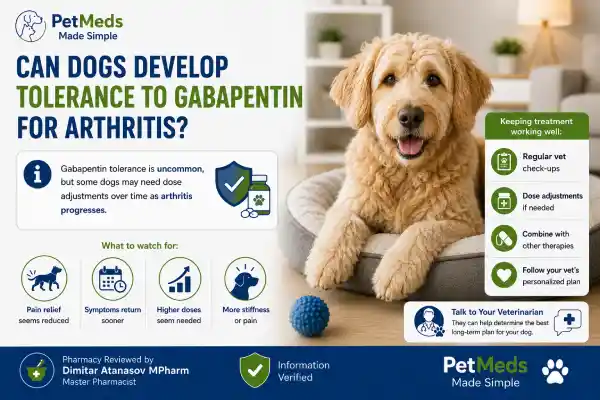
Can Dogs Develop Tolerance to Gabapentin During Long-Term Arthritis Treatment?
One concern owners sometimes have after months or years of treatment is whether their dog’s body will simply “get used to” gabapentin.
This question often appears when a dog that previously seemed comfortable begins showing more stiffness, reluctance to exercise, or difficulty getting up.
It is tempting to conclude that gabapentin has stopped working because the dog has developed tolerance.
However, returning pain does not automatically prove pharmacologic tolerance.
For a dog with osteoarthritis, several other explanations may be more important:
- the arthritis may have progressed;
- additional joints may now be affected;
- muscle mass may have declined;
- body weight may have increased;
- another orthopedic condition may have developed;
- activity levels may have changed;
- the original pain-management plan may no longer address all components of the dog’s pain.
This is why increasing the gabapentin dose without veterinary guidance is not the appropriate response.
If a dog becomes progressively less comfortable despite treatment, the entire pain-management strategy should be reassessed.
Our dedicated guide Can Dogs Develop Tolerance to Gabapentin? explores this question in greater detail.
Does a Dog Need a Higher Gabapentin Dose Over Time?

Not automatically.
A dog taking gabapentin for several years does not necessarily require progressively larger doses simply because treatment has continued for a long time.
Dose changes should be based on the individual patient’s clinical response rather than the age of the prescription.
A veterinarian may reconsider the regimen if:
- pain control appears inadequate;
- sedation becomes problematic;
- kidney function changes;
- body weight changes substantially;
- another medication is introduced;
- another painful condition develops;
- the dog’s overall treatment goals change.
Sometimes the solution is a dose adjustment.
Sometimes it is a different dosing schedule.
Sometimes another component of multimodal treatment needs to be addressed.
And sometimes the veterinarian may decide that gabapentin is no longer providing enough benefit to justify continuing it.
That is why owners asking “Can dogs take gabapentin for arthritis forever?” should think in terms of periodic reassessment rather than automatic dose escalation.
Can Dogs Become Dependent on Gabapentin?
This subject requires an important distinction between physical adaptation, withdrawal phenomena, tolerance, and addiction.
These terms are not interchangeable.
A dog receiving gabapentin over an extended period may undergo physiologic adaptation to regular exposure. This is one reason veterinarians may prefer gradual dose reduction rather than abruptly stopping a long-standing regimen.
That does not mean the dog is “addicted” to gabapentin in the way that term is commonly used in human substance-use disorders.
Likewise, withdrawal-related concerns do not prove that gabapentin has become harmful or inappropriate.
They simply mean that medication changes should be managed carefully.
For a detailed discussion, see Gabapentin Withdrawal in Dogs: What to Expect.
Should Long-Term Gabapentin Be Stopped Suddenly?

Owners should generally avoid abruptly changing a long-standing gabapentin regimen unless specifically instructed by their veterinarian.
This is particularly important when gabapentin is also being used as part of seizure management, where abrupt medication changes may carry additional concerns.
For chronic pain patients, another practical problem with sudden discontinuation is that discomfort previously being controlled may return.
An owner might then see:
- increased restlessness;
- difficulty settling;
- reduced willingness to walk;
- stiffness;
- increased sensitivity;
- changes in sleep;
- recurrence of previous pain behaviors.
Those changes do not necessarily mean the dog is “addicted.”
They may represent returning pain, medication withdrawal effects, or a combination of factors that requires veterinary interpretation.
If gabapentin needs to be discontinued after long-term treatment, the veterinarian can determine whether tapering is appropriate and how quickly it should occur.
How Often Should Dogs on Long-Term Gabapentin Be Reassessed?
There is no single monitoring schedule that applies to every dog.
A young otherwise healthy dog receiving gabapentin temporarily is very different from a fourteen-year-old dog with osteoarthritis, chronic kidney disease, muscle loss, and several concurrent medications.
Veterinarians may individualize recheck frequency according to:
- age;
- duration of therapy;
- underlying disease;
- kidney function;
- other medications;
- stability of symptoms;
- previous adverse effects;
- changes in mobility.
The purpose of these visits is not merely to decide whether another prescription should be issued.
A good long-term review asks a much more important question:
Is the current treatment still producing the best possible balance between comfort, function, and safety?
What a Long-Term Gabapentin Review May Include
| Area reviewed | What the veterinarian may evaluate |
|---|---|
| Pain control | Whether discomfort remains adequately managed |
| Mobility | Rising, walking, stairs and normal daily activity |
| Sedation | Whether sleepiness interferes with quality of life |
| Coordination | New or worsening unsteadiness |
| Body weight | Weight gain or loss affecting mobility |
| Muscle condition | Evidence of progressive muscle loss |
| Kidney health | Particularly relevant in older or medically complex dogs |
| Other medications | Potential additive effects or treatment changes |
| Quality of life | Whether the dog continues enjoying normal activities |
This type of monitoring is far more useful than applying an arbitrary maximum duration to gabapentin therapy.
Does Every Dog on Gabapentin Need Regular Blood Tests?
Not necessarily because gabapentin itself requires a universal laboratory-monitoring schedule for every patient.
However, many dogs receiving gabapentin for arthritis are older animals, and senior dogs often benefit from periodic health screening regardless of the medication.
Kidney function deserves particular consideration because gabapentin is substantially eliminated through the kidneys.
If renal function declines, drug clearance may change.
The veterinarian may therefore recommend blood work, urinalysis, or other testing based on the dog’s age, concurrent diseases, medications, and clinical condition.
This distinction matters:
Monitoring an older dog receiving gabapentin does not automatically mean gabapentin is expected to damage the kidneys.
Instead, the veterinarian wants to know whether changes elsewhere in the body could alter how safely or effectively the medication is being used.
What About the Liver?
Gabapentin differs from many medications because renal elimination is particularly important.
That does not mean liver health should be ignored.
Senior dogs can develop liver abnormalities independently of gabapentin, and the entire medication list must be considered when abnormal laboratory results occur.
An elevated liver enzyme should therefore not automatically be blamed on one medication without further evaluation.
Veterinarians interpret laboratory results together with:
- clinical symptoms;
- medication history;
- previous blood work;
- other diseases;
- physical examination findings;
- additional diagnostic testing when necessary.
This broader approach helps avoid incorrectly stopping a useful medication while also ensuring that meaningful abnormalities are investigated.
Which Side Effects Matter Most During Long-Term Gabapentin Treatment?
For many owners, the most noticeable concerns involve the nervous system rather than internal organ damage.
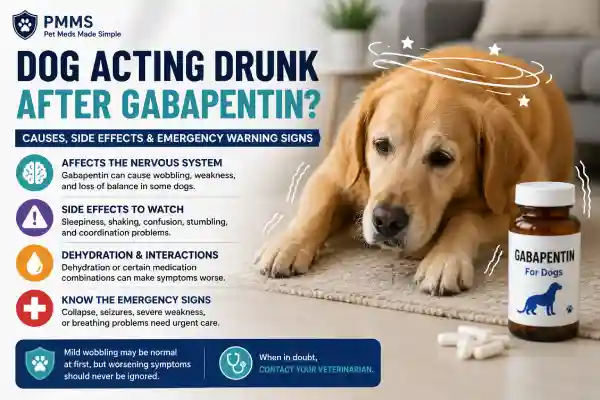
Sedation and impaired coordination can occur in some dogs.
These effects may be most obvious:
- shortly after treatment begins;
- following a dose increase;
- when another sedating medication is added;
- in particularly sensitive dogs;
- when the dog’s health status changes.
Mild sleepiness is not necessarily an emergency.
However, the degree matters.
There is an important difference between a dog that sleeps slightly more and a dog that can barely remain awake or walk safely.
Changes Worth Reporting to Your Veterinarian
| Observation | Suggested response |
|---|---|
| Mild temporary sleepiness after starting treatment | Monitor and discuss if persistent |
| Increasing sedation | Contact veterinarian |
| Noticeably worsening coordination | Contact veterinarian |
| Repeated falling | Prompt veterinary assessment |
| Major behavioral change | Veterinary evaluation |
| Severe weakness | Prompt veterinary assessment |
| Collapse or inability to respond normally | Urgent veterinary care |
Owners should pay particular attention to changes from the dog’s normal baseline.
When Should Owners Contact Their Veterinarian Immediately?
Long-term gabapentin treatment should never create a false sense that every new symptom is simply a medication side effect.
Older arthritic dogs can develop unrelated illnesses and emergencies.
Seek prompt veterinary advice if your dog develops severe or rapidly worsening symptoms such as:
- inability to stand;
- collapse;
- profound weakness;
- severe or rapidly worsening incoordination;
- repeated vomiting;
- inability to keep water down;
- major change in responsiveness;
- sudden severe pain;
- difficulty breathing;
- seizures or major neurologic changes.
These symptoms require assessment rather than waiting to see whether changing the next gabapentin dose solves the problem.
When Owners Commonly Ask This
The question “Can dogs take gabapentin for arthritis forever?” commonly appears in several situations.
“My dog has taken gabapentin for a year. Is that too long?”
Duration alone does not determine whether treatment is appropriate.
If gabapentin continues providing meaningful benefit, the dog tolerates it appropriately, and the treatment remains suitable after veterinary reassessment, one year of therapy is not automatically “too long.”
“My dog seems worse even though we haven’t changed the dose.”
Do not assume the dog simply needs more gabapentin.
Progression of arthritis, muscle loss, weight changes, another orthopedic problem, or a changing pain profile may be responsible.
“My senior dog sleeps much more now.”
Gabapentin may contribute to sedation, but age alone should not be used to explain every change either.
A noticeable change from baseline deserves discussion with the veterinarian.
“My dog looks completely normal now. Can I stop it?”
Feeling better may indicate that the treatment plan is working.
Do not use improvement alone as proof that medication is no longer necessary. Discuss any discontinuation plan with the prescribing veterinarian.
A Practical Owner Checklist for Long-Term Gabapentin
Rather than worrying about an arbitrary treatment deadline, owners can periodically ask:
| Question | Yes/No |
|---|---|
| Is my dog still enjoying normal daily activities? | ☐ |
| Can my dog rise reasonably comfortably? | ☐ |
| Is my dog willing to exercise appropriately? | ☐ |
| Does gabapentin appear to provide a meaningful benefit? | ☐ |
| Is excessive sedation interfering with normal life? | ☐ |
| Has coordination changed recently? | ☐ |
| Has body weight changed significantly? | ☐ |
| Have any new medications been started? | ☐ |
| Has my dog developed another medical condition? | ☐ |
| Have we discussed long-term treatment at recent veterinary visits? | ☐ |
If several answers begin changing, that is a useful reason to schedule a reassessment.
It does not automatically mean gabapentin must be stopped.
It means the treatment plan deserves another look.
Veterinarian Takeaway
For owners asking “Can dogs take gabapentin for arthritis forever?”, the most important principle is that long-term treatment should be individualized rather than calendar-based.
Some dogs may remain on gabapentin for extended periods when it contributes meaningfully to pain control and quality of life. Other dogs may eventually require a different dose, another medication, a broader multimodal approach, or discontinuation of gabapentin.
Gabapentin should also not be treated as a stand-alone solution for every case of canine osteoarthritis.
Long-term arthritis management is usually most successful when veterinarians repeatedly reassess the whole patient: pain, mobility, body condition, muscle strength, concurrent disease, medication effects, and quality of life.
The goal is not to keep a dog on gabapentin forever.
The goal is to keep the dog comfortably functional for as long as possible.
Bottom Line
So, can dogs take gabapentin for arthritis forever?
Some dogs can receive gabapentin for months or years, and there is no universal maximum treatment duration that automatically requires discontinuation after a specific number of months or years.
But “forever” should never mean “without reassessment.”
The decision to continue gabapentin should depend on whether:
- it still provides meaningful benefit;
- adverse effects remain acceptable;
- the dog’s health has not changed in a way that alters treatment;
- the overall arthritis plan remains appropriate;
- quality of life remains the central goal.
Owners should not independently increase, decrease, abruptly discontinue, or restart long-standing gabapentin therapy.
As arthritis changes, treatment may need to change with it.
Frequently Asked Questions
Can dogs take gabapentin for arthritis forever?
Some dogs may remain on gabapentin for months or years when their veterinarian determines that it continues to provide useful pain control and remains appropriate for the individual patient. There is no single maximum duration that applies to every dog.
Is gabapentin safe for dogs to take every day?
Gabapentin is commonly prescribed on regular schedules in veterinary medicine. Whether daily long-term treatment is appropriate depends on the individual dog, indication, response, concurrent diseases, other medications, and veterinary monitoring.
Does gabapentin cure arthritis in dogs?
No. Gabapentin does not repair damaged cartilage or reverse osteoarthritis. It may be used as one component of pain management in selected dogs.
Does gabapentin become toxic after years of use?
Long duration alone does not mean gabapentin has become toxic. However, aging, kidney-function changes, other diseases, or additional medications may alter how an individual dog responds to treatment.
Can kidney disease affect gabapentin in dogs?
Yes. Because gabapentin is substantially eliminated through the kidneys, impaired renal function can affect drug clearance. Veterinarians may adjust treatment according to the individual patient’s condition.
Can dogs develop tolerance to gabapentin?
Returning pain does not automatically indicate tolerance. Progressing arthritis, muscle loss, weight gain, another painful condition, or changes in the overall pain-management needs may also explain declining comfort.
Can I stop gabapentin if my dog’s arthritis looks better?
Do not change a long-standing regimen without discussing it with your veterinarian. Improvement may mean the current treatment is successfully controlling pain, and some dogs may require gradual medication changes rather than abrupt discontinuation.
Can gabapentin be combined with an NSAID?
Veterinarians may use gabapentin and veterinary NSAIDs together in selected dogs because they address pain through different mechanisms. The suitability of the combination depends on the individual patient’s health and complete medication regimen.
What should I do if my dog becomes very sleepy on gabapentin?
Contact your veterinarian if sedation becomes pronounced, persistent, or interferes with walking, eating, interaction, or normal daily activity. Severe weakness, collapse, or major changes in responsiveness require prompt assessment.
How do I know whether my dog still needs gabapentin?
Look at function rather than medication duration alone. Mobility, ability to rise, willingness to walk, sleep, interaction, adverse effects, and overall quality of life can help your veterinarian determine whether continued treatment remains beneficial.
Sources
Merck Veterinary Manual – Analgesics Used in Animals — for veterinary analgesic principles.
Medical Review Statement
This article was written by Dimitar Georgiev Atanasov, MPharm, pharmacy and scientifically reviewed by Gergana Krasimirova Atanasova, MPharm, and veterinary reviewed by Dr. Valcho Georgiev Valchev, DVM.
The information provided is for educational purposes and does not replace examination, diagnosis, or treatment by a licensed veterinarian. Never change your dog’s gabapentin dose or discontinue long-term therapy without discussing the plan with the prescribing veterinarian.
Image Disclosure
Image Disclosure: Some images used in this article may be AI-generated or AI-assisted for educational and illustrative purposes. They are designed to simplify complex veterinary concepts and should not replace professional veterinary advice.