Quick Answer
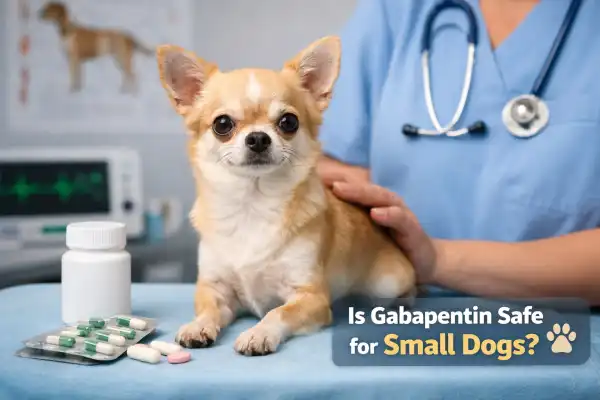
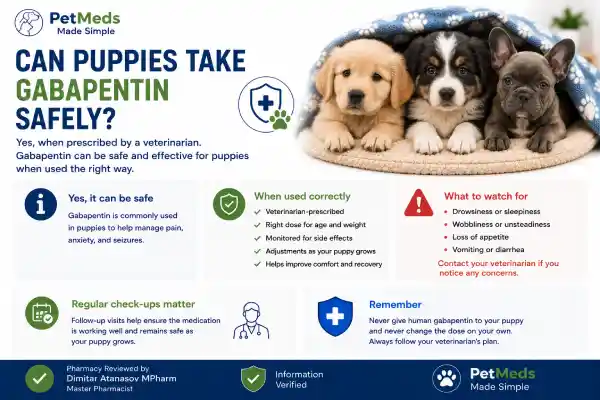
Can Puppies Take Gabapentin Safely? Yes puppies can safely receive gabapentin when it is prescribed and monitored by a veterinarian. The medication is sometimes used in young dogs to help manage pain, nerve-related conditions, seizures, or anxiety before certain procedures. Because puppies are still growing and developing, veterinarians carefully individualize the dose, monitor the response, and adjust treatment as the puppy gains weight.
When New Puppy Owners Usually Ask This Question
Few situations make new dog owners more anxious than being told their puppy needs medication.
Whether the puppy has recently undergone surgery, suffered an injury, or developed a neurological condition, owners often leave the veterinary clinic asking themselves:
“Can Puppies Take Gabapentin Safely?”
It is completely understandable.
Most people associate medications like gabapentin with older dogs suffering from arthritis or chronic pain—not energetic eight-week-old puppies.
Common concerns include:
- Is my puppy too young for gabapentin?
- Will it affect normal growth?
- Can it damage developing organs?
- Will my puppy become too sleepy?
- Is gabapentin commonly used in puppies?
- Could it interfere with vaccinations or normal development?
Fortunately, veterinary medicine has many years of clinical experience using gabapentin in carefully selected young patients when the benefits outweigh the potential risks.
Owners who understand why veterinarians prescribe gabapentin often feel much more confident about treatment.
You may also find these PMMS guides helpful throughout this article:
- Gabapentin for Dogs: Vet Guidelines, Uses, Dosage & Safety
- Can Dogs Overdose on Gabapentin?
- Can Dogs Take Gabapentin Long-Term Safely?
- Does Gabapentin Build Up in a Dog’s System?
- Can Gabapentin Cause Excessive Drooling in Dogs?
- Can Gabapentin Cause Muscle Tremors in Dogs?
- How Often Should Dogs Have Blood Tests While Taking Gabapentin?
Can Puppies Take Gabapentin Safely?
Why Veterinarians Sometimes Prescribe Gabapentin for Puppies
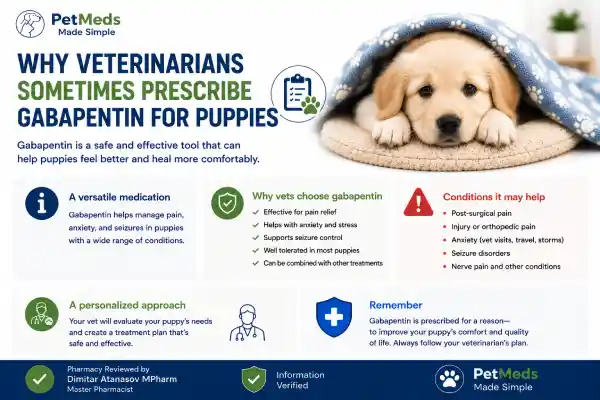
Many owners are surprised to learn that gabapentin is not reserved exclusively for senior dogs.
Veterinarians may prescribe it for puppies experiencing conditions that involve pain, abnormal nerve activity, or situations where reducing stress improves patient safety.
Possible reasons include:
- orthopedic injuries
- fractures
- postoperative pain
- congenital neurological disorders
- spinal injuries
- neuropathic pain
- seizure disorders
- anxiety before certain diagnostic procedures
The medication is always selected based on the individual puppy’s condition rather than age alone.
For some young patients, gabapentin may significantly improve comfort during recovery.
How Puppies Respond Differently Than Adult Dogs
One reason owners search “Can Puppies Take Gabapentin Safely?” is concern that young animals process medications differently.
That concern is valid.
Puppies are not simply smaller versions of adult dogs.
During the first months of life, important physiological changes continue occurring, including development of:
- the nervous system
- kidney function
- liver function
- body composition
- muscle mass
- metabolic processes
Because of these ongoing changes, veterinarians calculate medication plans carefully and may adjust them more frequently than they would for an adult dog.
As puppies grow rapidly, treatment plans often require reassessment.
Why Body Weight Matters So Much During Puppy Treatment
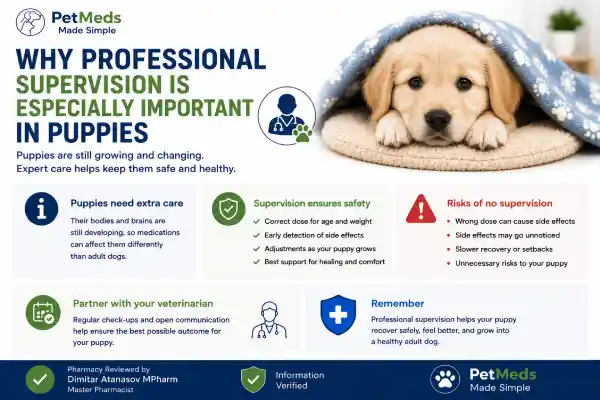
Unlike fully grown dogs whose weight may remain stable for years, puppies can gain weight remarkably quickly.
A puppy weighing:
- 4 kilograms today
- may weigh 6 kilograms only a few weeks later
- and continue growing rapidly over the following months
This rapid growth explains why veterinarians frequently reassess medication plans during puppyhood.
Rather than using the same prescription indefinitely, they evaluate:
- current body weight
- response to treatment
- overall health
- underlying condition
- expected growth
This individualized approach helps maintain both effectiveness and safety.
Is Gabapentin Commonly Used in Veterinary Medicine for Young Dogs?
Yes.
Although many people associate gabapentin with arthritis in older dogs, it is also widely used throughout veterinary medicine for younger patients when clinically appropriate.
Veterinarians may prescribe it in:
- general practice
- orthopedic surgery
- neurology
- emergency medicine
- specialty referral hospitals
- rehabilitation medicine
Its versatility is one reason gabapentin has become one of the most commonly prescribed medications for neuropathic pain in companion animals.
How Does Gabapentin Help Puppies Recover More Comfortably?
The goal of treatment is usually not simply reducing pain.
Pain itself can interfere with healing by making puppies reluctant to:
- walk
- bear weight
- sleep comfortably
- participate in gentle rehabilitation
- eat normally
- interact with their family
By improving comfort, gabapentin may allow some puppies to recover more normally after illness or surgery.
Exactly how much improvement occurs depends on the underlying condition.
Is Every Puppy a Good Candidate for Gabapentin?
No.
Although the answer to “Can Puppies Take Gabapentin Safely?” is often yes, not every puppy should receive the medication.
Before prescribing gabapentin, veterinarians consider factors such as:
- age
- current body weight
- medical history
- neurological status
- kidney function
- concurrent medications
- reason for treatment
This careful assessment helps determine whether gabapentin is the most appropriate choice or whether another therapy would better meet the puppy’s needs.
Why Professional Supervision Is Especially Important in Puppies
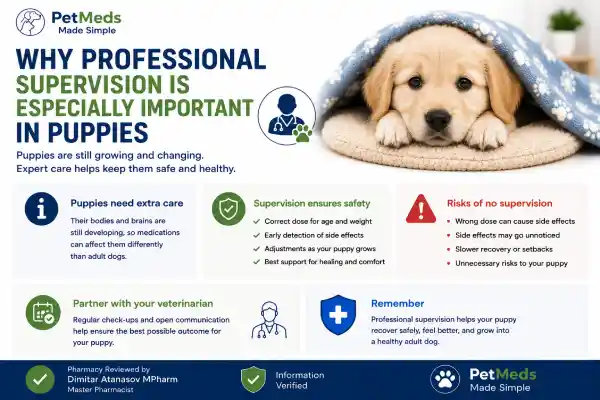
Because puppies grow so quickly, treatment rarely follows a “set it and forget it” approach.
Veterinarians may recommend follow-up appointments to evaluate:
- healing progress
- mobility
- comfort level
- appetite
- weight gain
- response to the medication
- possible side effects
These reassessments allow treatment to evolve alongside the puppy’s normal growth and development.
For most young patients, this individualized monitoring is one of the reasons gabapentin can be used safely when medically indicated.
Understanding the Difference Between Responsible Use and Self-Medication
One of the most important messages in this article is that safe use begins with an accurate diagnosis.
Two puppies showing similar signs of pain may have completely different underlying conditions.
For example:
- one may have a simple soft tissue injury
- another may have a congenital orthopedic disorder
- another may have neurological disease requiring a completely different treatment plan
For this reason, owners should never use leftover gabapentin prescribed for another pet or attempt to estimate an appropriate dose at home.
A veterinary examination ensures that the medication and the overall treatment plan—matches the puppy’s actual medical needs.
What Side Effects Should New Puppy Owners Watch For?
When owners ask “Can Puppies Take Gabapentin Safely?”, they are usually less concerned about whether the medication works and more concerned about what might happen after the first dose.
Fortunately, most puppies tolerate gabapentin well when it is prescribed appropriately.
Like all medications, however, side effects are possible.
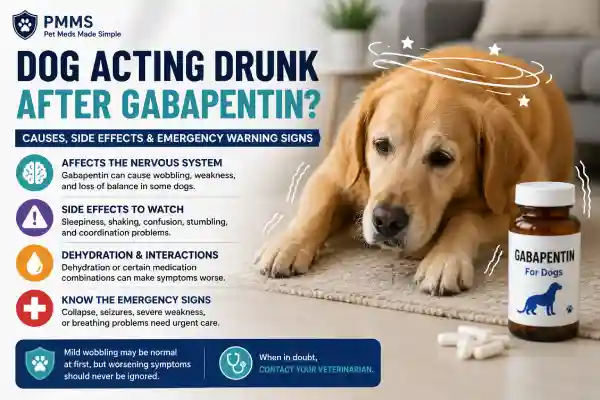
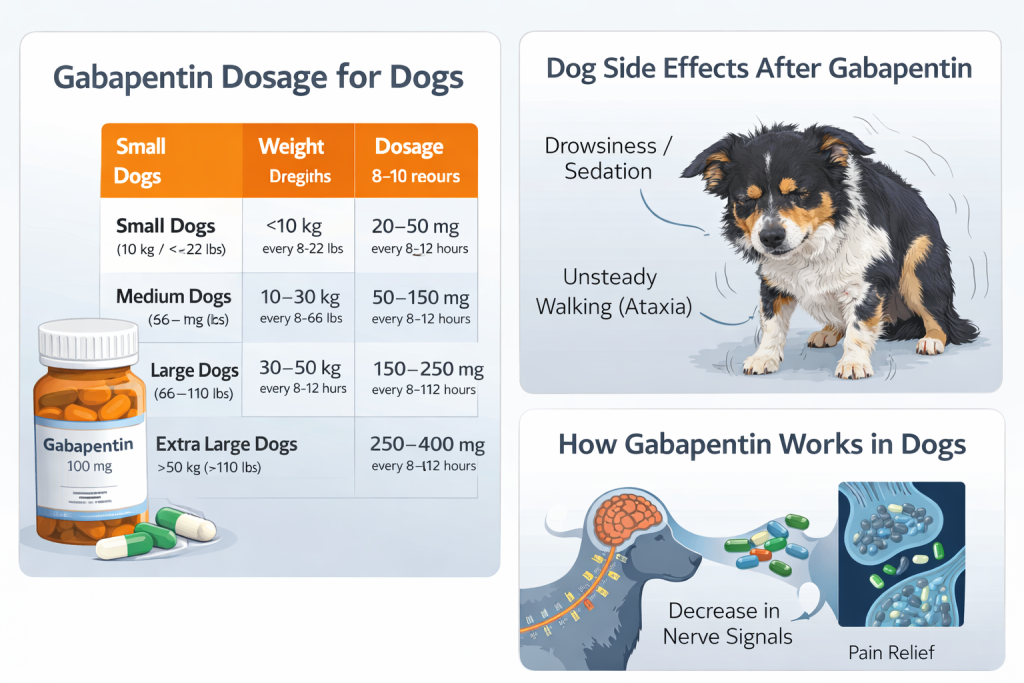
The most commonly reported effects include:
- mild sleepiness
- temporary wobbliness
- decreased activity
- slight loss of coordination
- calmer behavior than usual
These effects are often temporary and gradually improve as the medication is eliminated from the body.
Many puppies simply spend more time resting while recovering from their underlying condition.
Which Side Effects Are Considered Normal?
One reason veterinarians discuss possible side effects before treatment is to help owners distinguish expected medication effects from signs that require medical attention.
Mild effects that are commonly expected include:
- taking longer naps
- walking more slowly
- appearing quieter than usual
- temporarily showing less interest in play
- sleeping through times when the puppy would normally be active
For many puppies recovering from surgery or injury, this temporary reduction in activity may actually support healing.
As long as the puppy remains comfortable, responsive, and continues improving, these changes are generally not considered emergencies.
Which Symptoms Should Prompt an Immediate Call to Your Veterinarian?
Although serious adverse reactions are uncommon, owners should know when professional advice is needed.
Contact your veterinarian promptly if your puppy develops:
- difficulty breathing
- repeated vomiting
- collapse
- seizures
- inability to stand
- extreme weakness
- severe disorientation
- inability to wake normally
- suspected accidental overdose
These symptoms are not typical after properly prescribed gabapentin and should always be evaluated.
Fortunately, they are uncommon in puppies receiving appropriate veterinary care.
Can Gabapentin Affect a Puppy’s Growth or Development?
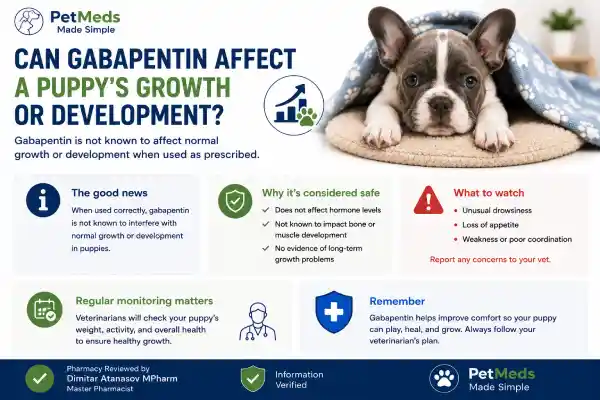
This is one of the most understandable concerns behind “Can Puppies Take Gabapentin Safely?”
Owners naturally worry that any medication given during growth could interfere with normal development.
Current veterinary evidence does not indicate that appropriately prescribed gabapentin permanently affects normal skeletal growth or development in healthy puppies.
Instead, veterinarians focus on using:
- the lowest effective dose
- the shortest appropriate treatment duration
- regular follow-up examinations
This allows puppies to receive the benefits of pain control while their recovery and development continue to be monitored.
Why Pain Control Is Important for Growing Puppies
Some owners wonder whether it would be safer to avoid medication altogether.
Unfortunately, untreated pain carries its own risks.
Pain may cause puppies to:
- avoid using an injured limb
- eat less
- sleep poorly
- become reluctant to move
- delay rehabilitation
- experience unnecessary stress
Effective pain management supports recovery by allowing puppies to move more comfortably within the limits recommended by their veterinarian.
In other words, the goal is not simply giving medication it is promoting healthy healing.
How Veterinarians Monitor Puppies Receiving Gabapentin
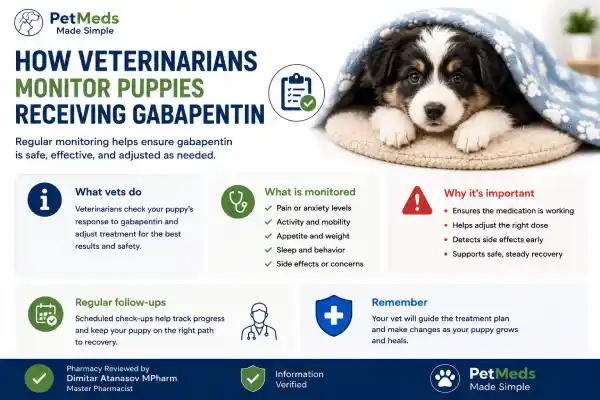
Because puppies grow rapidly, follow-up appointments are especially valuable.
During rechecks, veterinarians may assess:
- current body weight
- healing progress
- comfort level
- mobility
- appetite
- neurological status
- response to treatment
If necessary, the treatment plan can be adjusted as the puppy continues growing.
This individualized approach is one of the reasons gabapentin can be used safely in appropriate young patients.
Can Puppies Take Other Medications Along With Gabapentin?
Sometimes, yes.
Depending on the underlying condition, veterinarians may prescribe gabapentin alongside other treatments.
Examples may include:
- postoperative pain medications
- antibiotics
- anti-inflammatory medications when appropriate
- seizure medications
- supportive care
Because every medication combination is different, owners should never add over-the-counter products or supplements without veterinary approval.
Drug interactions are one reason professional supervision remains important throughout treatment.
If you’re wondering whether gabapentin can be safely combined with other pain medications, our guide on Can Dogs Take Gabapentin With NSAIDs? explains when veterinarians commonly use combination therapy and what monitoring may be required.
Does Every Puppy Need the Same Treatment Plan?
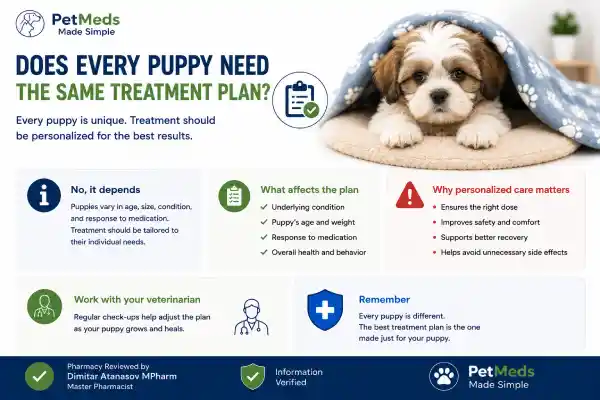
No.
Even puppies of the same breed and age may require very different medical care.
For example:
A three-month-old Labrador recovering from orthopedic surgery has very different needs than a five-month-old Border Collie being treated for a neurological condition.
Veterinarians individualize treatment based on:
- diagnosis
- age
- body weight
- growth rate
- overall health
- current medications
- expected recovery
This personalized approach is one of the reasons owners should never compare prescriptions between puppies.
Can Owners Help Puppies Recover More Comfortably at Home?
Absolutely.
Medication works best when combined with good home care.
Veterinarians commonly recommend:
- following activity restrictions carefully
- providing soft bedding
- preventing rough play during recovery
- encouraging normal eating and drinking
- monitoring urination and bowel movements
- administering medication exactly as prescribed
- attending every scheduled follow-up visit
These measures often contribute just as much to successful recovery as the medication itself.
Owners interested in medication safety may also find our articles on Can Dogs Overdose on Gabapentin?, Does Gabapentin Build Up in a Dog’s System?, and Can Dogs Take Gabapentin Long-Term Safely? helpful for understanding how veterinarians monitor treatment over time.
Can Puppies Recover Normally While Taking Gabapentin?
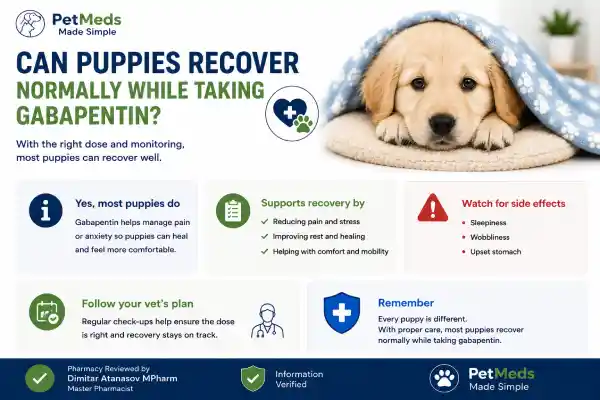
One of the biggest misconceptions surrounding “Can Puppies Take Gabapentin Safely?” is the belief that taking pain medication will somehow slow recovery.
In reality, the opposite is often true.
A puppy experiencing uncontrolled pain may be less willing to:
- stand
- walk
- eat
- sleep comfortably
- participate in gentle rehabilitation
- interact with family members
By reducing pain and improving comfort, gabapentin may help some puppies recover more normally while still following the activity restrictions recommended by their veterinarian.
The goal is never to encourage excessive activity too soon.
Instead, effective pain control allows puppies to heal while remaining comfortable throughout the recovery process.
What Questions Should New Puppy Owners Ask Before Starting Gabapentin?
Whenever a veterinarian recommends gabapentin, owners should feel comfortable asking questions.
Good communication helps ensure that treatment is both safe and effective.
Helpful questions include:
- Why is gabapentin being recommended?
- What condition is it treating?
- How long is treatment expected to last?
- What side effects are considered normal?
- When should I call the clinic?
- Does my puppy need a follow-up examination?
- Are there any medications or supplements that should be avoided?
Understanding the treatment plan often reduces anxiety and helps owners recognize what to expect during recovery.
Why Follow-Up Visits Are Especially Important for Puppies
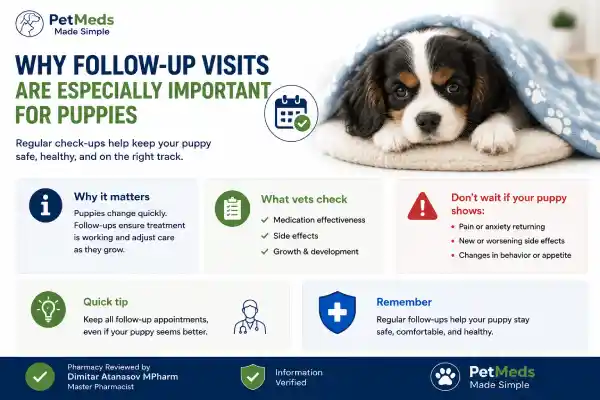
Unlike adult dogs, puppies may change dramatically over only a few weeks.
Rapid growth means that:
- body weight increases quickly
- medication requirements may change
- healing progresses rapidly
- activity levels increase
- orthopedic development continues
For these reasons, veterinarians often schedule follow-up appointments sooner for puppies than they would for mature dogs.
These visits allow them to evaluate:
- comfort
- mobility
- healing progress
- growth
- response to treatment
- whether adjustments are needed
Regular reassessment helps ensure that the treatment plan remains appropriate as the puppy develops.
Can Puppies Outgrow the Need for Gabapentin?
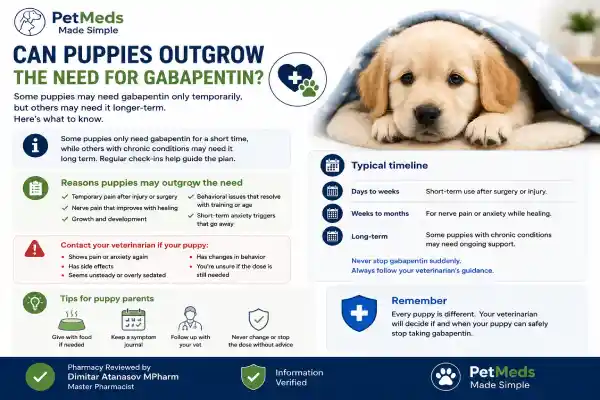
In many cases, yes.
Unlike chronic conditions such as osteoarthritis in senior dogs, many reasons for prescribing gabapentin in puppies are temporary.
Examples include:
- recovery after surgery
- healing from fractures
- soft tissue injuries
- temporary nerve irritation
Once healing has progressed, many puppies no longer require gabapentin.
However, puppies with certain neurological disorders or chronic conditions may require longer treatment under veterinary supervision.
The decision to continue or discontinue therapy should always be based on veterinary reassessment rather than an owner’s estimate that the puppy “looks better.”
Can Owners Help Improve Recovery Without Increasing Medication?
Absolutely.
Medication is only one part of successful recovery.
Simple home-care measures often make a significant difference.
Veterinarians commonly recommend:
- following exercise restrictions carefully
- preventing jumping from furniture
- using non-slip flooring
- maintaining a healthy body weight
- providing balanced nutrition appropriate for growth
- attending every scheduled recheck appointment
- administering medications exactly as prescribed
These strategies support healing while reducing the risk of reinjury.
Looking Beyond the Medication
One message worth remembering is that veterinarians rarely focus on gabapentin alone.
Instead, they evaluate the entire puppy.
Questions they consider include:
- Is healing progressing normally?
- Is pain improving?
- Is the puppy becoming more active?
- Is growth appropriate?
- Are there any unexpected side effects?
- Does the diagnosis still explain the current symptoms?
This broader perspective ensures that treatment remains individualized throughout recovery.
Veterinarian Takeaway
Can Puppies Take Gabapentin Safely?
For many puppies, yes.
Gabapentin is used throughout veterinary medicine to help manage pain, certain neurological conditions, and anxiety associated with specific procedures.
Because puppies are still growing, veterinarians carefully individualize treatment based on:
- age
- body weight
- medical condition
- expected growth
- response to therapy
Most puppies tolerate gabapentin well when it is prescribed appropriately and monitored throughout treatment.
Owners should never administer leftover medication or adjust the dose without veterinary guidance.
Bottom Line
Can Puppies Take Gabapentin Safely? Yes when prescribed by a veterinarian, gabapentin can be a safe and valuable medication for many puppies.
Although young dogs process medications differently from adults, careful dosing, regular follow-up examinations, and close observation allow veterinarians to use gabapentin safely when it is medically indicated.
Rather than focusing only on the medication itself, successful treatment depends on accurate diagnosis, individualized care, good communication, and monitoring throughout the puppy’s recovery.
For most puppies, gabapentin is simply one part of a comprehensive treatment plan designed to reduce pain, support healing, and help them return to normal puppy activities as safely as possible.
Frequently Asked Questions
Can puppies take gabapentin safely?
Yes. Many puppies can safely receive gabapentin when it is prescribed by a veterinarian and monitored appropriately.
At what age can puppies receive gabapentin?
There is no single age that applies to every puppy. Veterinarians decide based on the puppy’s medical condition, size, overall health, and expected benefits of treatment.
Can gabapentin affect a puppy’s growth?
Current veterinary evidence does not suggest that properly prescribed gabapentin permanently interferes with normal growth or skeletal development.
Why would a veterinarian prescribe gabapentin for a puppy?
Common reasons include postoperative pain, orthopedic injuries, neuropathic pain, seizure disorders, and certain neurological conditions.
Is sleepiness normal after taking gabapentin?
Yes. Mild sleepiness and temporary wobbliness are among the most common expected side effects.
Can I use gabapentin that was prescribed for another dog?
No. Puppies should never receive medication prescribed for another pet without veterinary approval.
Will my puppy need gabapentin forever?
Usually not. Many puppies receive gabapentin only during recovery from temporary conditions, although some neurological disorders may require longer treatment.
When should I contact my veterinarian?
Seek veterinary advice if your puppy develops difficulty breathing, collapse, repeated vomiting, seizures, severe weakness, or any other unexpected symptoms after receiving gabapentin.
Sources
- Plumb DC. Plumb’s Veterinary Drug Handbook. Latest Edition.
- Papich MG. Saunders Handbook of Veterinary Drugs: Small and Large Animal.
- BSAVA Small Animal Formulary.
- 2022 AAHA Pain Management Guidelines for Dogs and Cats.
- Merck Veterinary Manual – Pain Management in Dogs.
- Merck Veterinary Manual – Gabapentin.
- Veterinary Information Network (VIN).
- WSAVA Global Pain Council Guidelines.
- Grimm KA et al. Veterinary Anesthesia and Analgesia.
- Frontiers in Veterinary Science – Analgesia and Pain Management in Companion Animals.
Medical Review Statement
This article was written by Dimitar Georgiev Atanasov, MPharm, scientifically reviewed by Gergana Krasimirova Atanasova, MPharm, and independently veterinary reviewed by Dr. Valcho Georgiev Valchev, DVM. It is intended for educational purposes only and should not replace individualized veterinary diagnosis, treatment recommendations, or professional medical advice.
Image Disclosure
Image Disclosure: Some images used in this article may be AI-generated to illustrate veterinary concepts, medication safety, and puppy care. They are intended for educational purposes only and should not replace professional veterinary guidance.