Quick Answer
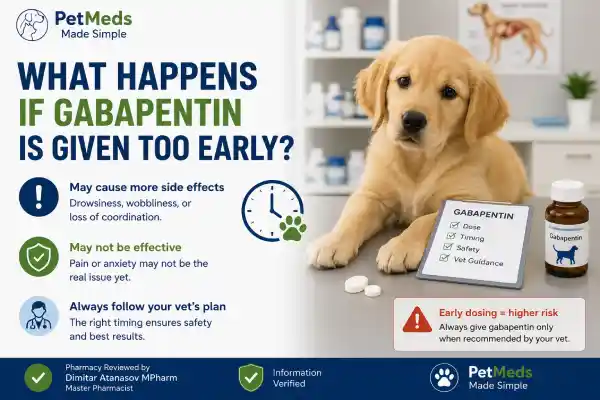
What Happens If Gabapentin Is Given Too Early? In many cases, giving one gabapentin dose slightly earlier than scheduled is not an emergency. However, the safest response depends on how early the medication was given, your dog’s prescribed dosing schedule, kidney function, overall health, and why gabapentin was prescribed. Owners should avoid giving additional doses to “correct” the mistake and contact their veterinarian if they are unsure how to safely return to the normal schedule.
Why Owners Panic After Giving Gabapentin Too Early
One of the most common medication mistakes happens during busy days.
Perhaps you normally give your dog’s gabapentin at 8:00 PM, but today you accidentally gave it at:
- 7:00 PM
- 6:00 PM
- 5:00 PM
A few minutes later you suddenly realize:
“I just gave my dog’s gabapentin too early.”
Immediately, dozens of questions appear.
- Will my dog overdose?
- Should I skip the next dose?
- Should I call an emergency veterinarian?
- Will giving it early make my dog too sleepy?
- Can one early dose cause toxicity?
- How do I get back on schedule?
Fortunately, a single early dose is not automatically dangerous, but what you should do next depends on several important factors.
Understanding those factors can help you respond calmly instead of making additional medication errors.
Throughout this guide, you may also find these PMMS articles helpful:
- Does Gabapentin Build Up in a Dog’s System?
- Can Dogs Overdose on Gabapentin?
- Can Dogs Take Gabapentin Long-Term Safely?
- How Often Should Dogs Have Blood Tests While Taking Gabapentin?
- Can Gabapentin Damage the Liver in Dogs?
- Gabapentin for Dogs: Uses, Dosage & Safety
What Happens If Gabapentin Is Given Too Early?
Why Dose Timing Matters More Than Many Owners Realize
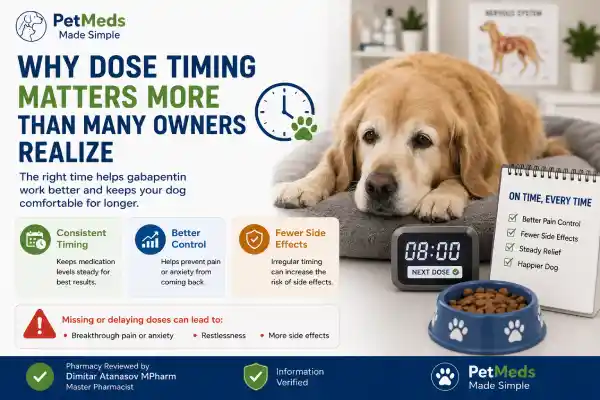
Gabapentin works best when fairly consistent intervals are maintained between doses.
Veterinarians prescribe schedules such as:
- every 8 hours
- every 12 hours
- every 24 hours
These intervals help maintain more consistent medication levels throughout the day.
When doses are given much earlier than planned, those intervals become shorter.
Although one timing mistake is often manageable, repeatedly giving doses too early can gradually increase medication exposure and may increase the likelihood of side effects in some dogs.
This is one reason veterinarians encourage owners to follow the prescribed schedule as closely as practical.
Is One Early Dose Usually Dangerous?
In many healthy dogs, one dose given slightly earlier than scheduled does not cause serious problems.
For example:
A dose administered 30 to 60 minutes earlier than usual will often have little clinical significance.
However, the situation becomes more individualized if:
- the medication was given several hours early
- the dog has kidney disease
- multiple early doses have occurred
- other sedating medications are also being used
- the prescribed doses are already relatively high
Rather than assuming every early dose carries the same level of risk, veterinarians evaluate the entire clinical picture.
Why the Amount of Time Matters
One of the biggest misconceptions is believing that all timing errors are equally important.
They are not.
For example:
Giving gabapentin 15 minutes early is very different from giving the next scheduled dose four or five hours early.
The shorter the interval between doses, the less time the body has to eliminate the previous dose.
This does not automatically mean toxicity will occur, but it explains why larger timing errors deserve more careful evaluation.
Veterinarians therefore consider:
- the prescribed dosing interval
- the size of the timing error
- the dog’s age
- kidney function
- concurrent medications
- reason for treatment
Why Dogs With Kidney Disease Need Extra Attention
Gabapentin is eliminated primarily through the kidneys.
For healthy dogs, this process usually occurs efficiently.
However, dogs with impaired kidney function may eliminate the medication more slowly.
If doses are repeatedly administered too close together, medication levels may remain elevated for longer periods.
This is one reason veterinarians sometimes adjust dosing schedules for dogs with chronic kidney disease.
Owners of dogs with kidney disease should always seek veterinary advice before making changes to the medication schedule.
What Should You Avoid Doing After an Early Dose?
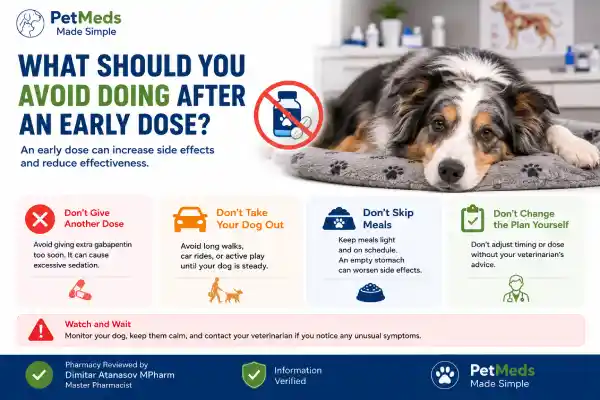
Many medication problems occur after the original mistake.
Owners sometimes panic and attempt to “fix” the schedule themselves.
Common examples include:
- giving another dose at the normal scheduled time
- skipping several doses without advice
- doubling future doses
- dramatically changing the dosing schedule
- stopping gabapentin suddenly
These reactions may create more problems than the original timing error.
Instead, the safest approach is usually to determine how significant the timing mistake actually was before making additional changes.
Why Remaining Calm Is So Important
Most medication errors happen because owners become anxious and begin making rapid decisions.
A better approach is to pause and gather the necessary information.
Ask yourself:
- What time was the previous dose given?
- What time was today’s dose given?
- How much gabapentin did my dog receive?
- Has my dog shown any unusual symptoms?
- Is my dog receiving any other medications?
Having these details available makes it much easier for your veterinarian to provide accurate recommendations.
How Veterinarians Evaluate an Early Gabapentin Dose
When an owner calls the clinic and says,
“I gave my dog’s gabapentin too early.”
the veterinarian rarely answers immediately.
Instead, they usually ask several questions first.
Common questions include:
- What strength was the capsule or tablet?
- What dose was prescribed?
- What time was the previous dose?
- What time was today’s dose?
- Why is your dog taking gabapentin?
- Does your dog have kidney disease?
- Is your dog taking any sedatives or pain medications?
- Has your dog shown any unusual symptoms?
Only after considering the entire situation can the veterinarian determine the safest plan moving forward.
Not Every Timing Error Carries the Same Risk
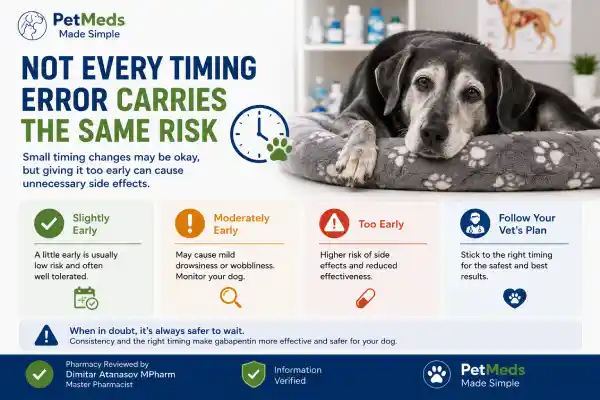
An important message throughout this article is that timing errors exist on a spectrum.
Some are unlikely to cause any meaningful problems.
Others deserve veterinary advice because of the dog’s individual medical condition.
Rather than focusing only on the clock, veterinarians evaluate the whole patient, including the medication history, underlying disease, and current clinical signs.
This individualized assessment is one of the reasons owners should avoid trying to apply advice intended for another dog to their own situation.
How to Get Back on Schedule Safely
After discovering that gabapentin was given earlier than planned, most owners immediately ask one question:
“What should I do now?”
The answer depends on several factors, including how early the medication was given and your dog’s individual treatment plan.
For many healthy dogs, the safest approach is not to panic or make additional medication changes without guidance.
Instead, veterinarians typically consider:
- how many hours early the dose was given
- the prescribed dosing interval
- your dog’s medical condition
- kidney function
- whether any symptoms have developed
- other medications being administered
Making multiple changes without professional advice can sometimes create more confusion than the original timing mistake.
Can Giving Gabapentin Too Early Cause an Overdose?
This is one of the first fears owners have after realizing a dosing mistake.
Fortunately, giving one scheduled dose slightly earlier does not automatically mean your dog has overdosed.
An overdose is usually related to the total amount of medication received, not simply the clock time.
However, if doses are repeatedly given much closer together than prescribed, medication levels may gradually increase and the risk of side effects can become higher.
This is especially important for dogs that:
- receive high doses
- have kidney disease
- take several sedating medications
- are elderly
- have significant underlying medical conditions
Although a single early dose often causes little or no harm, repeated scheduling errors deserve veterinary attention.
How Other Medications Can Change the Situation
One reason veterinarians ask about every medication your dog receives is that gabapentin is frequently used alongside other drugs.
Examples include:
- NSAIDs
- trazodone
- seizure medications
- opioids
- muscle relaxants
- certain anti-anxiety medications
Some combinations are prescribed intentionally because they improve pain control.
However, combining several medications that may cause sedation can increase sleepiness if dosing intervals become unusually short.
This does not necessarily mean the medications are unsafe together.
It simply highlights why veterinarians evaluate the entire treatment plan, not just gabapentin alone.
If your dog receives combination therapy, our article Can Dogs Take Gabapentin With NSAIDs? explains why these medications are often prescribed together and what owners should monitor.
What Signs Should Owners Monitor After an Early Dose?
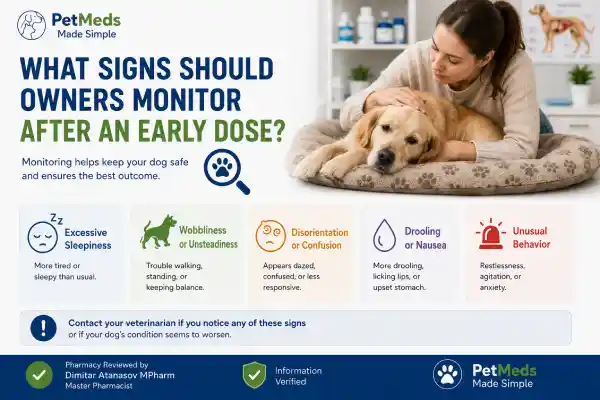
After giving gabapentin too early, owners should calmly observe their dog over the following hours.
Most dogs continue behaving normally.
However, veterinarians may recommend monitoring for:
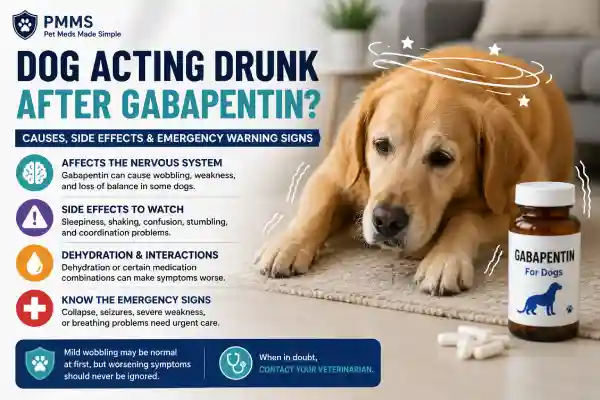
- excessive sleepiness
- unusual wobbliness
- difficulty standing
- weakness
- loss of coordination
- decreased responsiveness
- vomiting
- reduced appetite
Mild drowsiness can occur even when gabapentin is given exactly as prescribed.
The important question is whether the dog’s response appears appropriate for the prescribed medication or significantly more pronounced than expected.
When Should You Contact Your Veterinarian Immediately?
Although many early doses are not emergencies, some situations should prompt prompt veterinary advice.
Contact your veterinarian or an emergency clinic if:
- your dog received multiple doses close together
- you are unsure whether another family member also gave the medication
- the wrong strength tablet or capsule was administered
- your dog develops difficulty breathing
- your dog collapses
- your dog becomes extremely difficult to wake
- seizures occur
- another medication error happened at the same time
It is always better to ask than to guess when medication timing becomes uncertain.
Why Keeping a Medication Log Can Prevent Future Mistakes
Many dosing errors occur in busy households where several people help care for the same dog.
A simple medication log can greatly reduce confusion.
Helpful information to record includes:
- medication name
- strength
- prescribed dose
- exact administration time
- person who gave the medication
- any unusual observations afterward
Some owners also use smartphone reminders or medication tracking apps.
These small habits can prevent many accidental early or missed doses.
What If You Cannot Remember Whether the Dose Was Already Given?
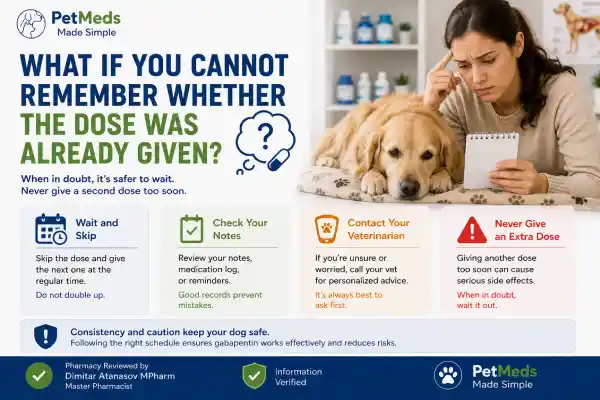
This situation is actually more common than owners realize.
You walk past the medication cabinet and suddenly think:
“Did I already give today’s gabapentin?”
Rather than guessing, try to:
- check your medication log
- ask other family members
- review any reminder app you use
- count remaining tablets if appropriate
Giving an extra dose “just in case” may create a larger problem than waiting briefly while confirming what actually happened.
Developing a consistent medication routine is one of the simplest ways to avoid this type of uncertainty.
Why Consistency Matters During Long-Term Treatment
Dogs receiving gabapentin for chronic conditions often benefit from maintaining a consistent daily routine.
Regular dosing intervals help veterinarians evaluate:
- how well the medication controls symptoms
- whether dose adjustments are needed
- whether side effects are medication-related
- how the dog responds over time
Frequent changes in administration times make these assessments more difficult.
For owners managing chronic therapy, our guides on Does Gabapentin Build Up in a Dog’s System?, Can Dogs Take Gabapentin Long-Term Safely?, and How Often Should Dogs Have Blood Tests While Taking Gabapentin? explain why consistency and regular monitoring are important during extended treatment.
One Early Dose Does Not Define Your Dog’s Treatment
Perhaps the most reassuring message is this:
Almost every experienced veterinarian has received calls from owners who accidentally administered medication earlier than planned.
These situations are common.
In many cases, they can be managed successfully without long-term consequences.
The key is avoiding additional dosing mistakes and seeking professional advice whenever there is uncertainty.
A calm, informed response is usually far more helpful than making rapid changes to the treatment schedule.
What If Gabapentin Is Given Early Before a Veterinary Visit?
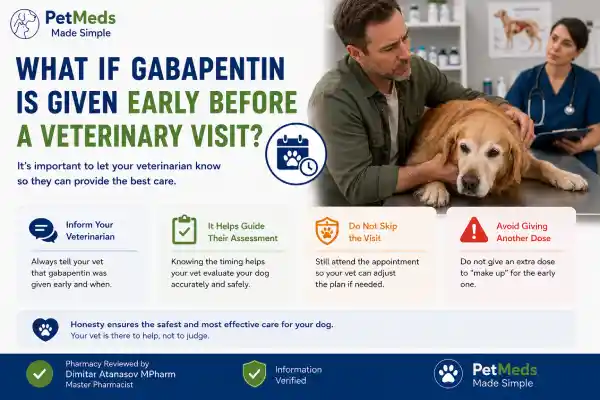
Sometimes an early dose is intentional rather than accidental.
For example, a dog has a veterinary appointment later in the day, and the owner wonders:
“Would giving gabapentin a little earlier help keep my dog calmer?”
This situation is different from an accidental dosing error.
Veterinarians occasionally recommend adjusting the timing before:
- orthopedic examinations
- neurological evaluations
- imaging procedures
- stressful hospital visits
However, these adjustments should only be made under veterinary guidance.
Changing the timing without professional advice may affect both the medication’s effectiveness and the recommended dosing schedule.
Can One Early Dose Affect Long-Term Treatment?
Many owners worry that a single mistake will permanently disrupt their dog’s treatment plan.
Fortunately, this is rarely the case.
For most healthy dogs receiving gabapentin:
- one slightly early dose does not permanently change how the medication works
- it does not usually cause long-term toxicity
- it does not mean future doses will become ineffective
The greater concern is avoiding repeated timing errors over days or weeks.
Maintaining a consistent schedule remains one of the best ways to support safe, effective long-term treatment.
Practical Tips to Prevent Future Timing Mistakes
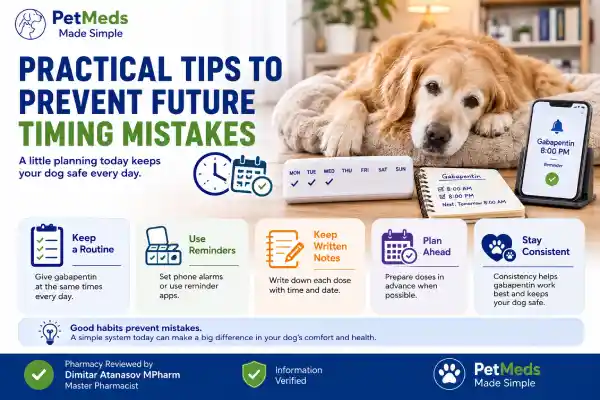
Medication schedules become easier when they fit naturally into daily routines.
Many veterinarians recommend:
- giving medication at the same times every day
- setting phone reminders
- using a weekly pill organizer when appropriate
- keeping a written medication chart
- having only one family member responsible for each scheduled dose
- recording every dose immediately after administration
These simple habits can dramatically reduce accidental early or missed doses.
Common Medication Timing Mistakes Owners Make
Not every dosing error involves giving gabapentin too early.
Veterinarians commonly receive questions about:
| Situation | Recommended Action |
|---|---|
| Dose given 30–60 minutes early | Usually monitor and follow veterinary advice if unsure |
| Two family members both gave the medication | Contact your veterinarian promptly |
| Unsure whether today’s dose was given | Check your medication log before giving another dose |
| Dose accidentally skipped | Follow your veterinarian’s missed-dose instructions rather than doubling the next dose |
| Medication schedule repeatedly changes | Discuss a more practical schedule with your veterinarian |
This table illustrates why keeping accurate records is often more valuable than relying on memory.
A Practical Example
Imagine your Labrador normally receives gabapentin every evening at 8:00 PM.
One evening you accidentally administer the medication at 6:30 PM because you mistake it for another medication.
Your dog remains:
- bright
- comfortable
- walking normally
- eating well
Although this situation understandably causes anxiety, the next step is not automatically giving another dose at 8:00 PM.
Instead, you should contact your veterinary clinic if you’re uncertain how to safely return to the normal schedule.
Responding calmly helps avoid creating a second medication error.
Veterinarian Takeaway
What Happens If Gabapentin Is Given Too Early?
In many healthy dogs, one dose given slightly earlier than scheduled is not an emergency.
The safest response depends on:
- how early the medication was administered
- the prescribed dosing interval
- your dog’s overall health
- kidney function
- concurrent medications
- whether any clinical signs develop
Owners should avoid making additional schedule changes without professional advice.
If there is any uncertainty about the timing or if unusual symptoms develop, contacting your veterinarian is always the safest choice.
Bottom Line
What Happens If Gabapentin Is Given Too Early? In most cases, a single slightly early dose does not cause serious problems, especially in otherwise healthy dogs receiving veterinarian-prescribed treatment.What Happens If Gabapentin Is Given Too Early?
However, repeated early doses, significant scheduling errors, or medication mistakes involving dogs with kidney disease or multiple medications deserve veterinary attention.
Rather than trying to “fix” the schedule independently, owners should remain calm, monitor their dog closely, keep accurate medication records, and seek professional advice whenever they are unsure how to proceed.
Consistency remains one of the most important parts of successful gabapentin therapy.
Frequently Asked Questions – What Happens If Gabapentin Is Given Too Early?
What happens if gabapentin is given too early?
For many healthy dogs, a single slightly early dose does not cause serious problems. The appropriate response depends on how early the medication was given and your dog’s individual medical condition.
Can giving gabapentin early cause an overdose?
Not automatically. An overdose usually depends on the total amount of medication received rather than the clock time alone.
Should I give the next dose at the usual time?
Do not change the schedule on your own if you are uncertain. Contact your veterinarian for individualized advice.
Is giving gabapentin one hour early dangerous?
For many healthy dogs, a one-hour difference is unlikely to cause significant problems, but every situation should be evaluated individually.
What symptoms should I watch for after giving gabapentin too early?
Monitor for excessive sleepiness, weakness, poor coordination, difficulty standing, vomiting, or other unusual changes.
Can repeated early doses become a problem?
Yes. Frequently shortening the interval between doses may increase the likelihood of medication accumulation and side effects in some dogs.
Does kidney disease make timing mistakes more important?
Yes. Because gabapentin is primarily eliminated by the kidneys, dogs with reduced kidney function may require closer monitoring and individualized dosing schedules.
How can I avoid giving gabapentin too early again?
Using medication logs, smartphone reminders, and maintaining a consistent daily routine can greatly reduce future dosing errors.
Sources
- Plumb DC. Plumb’s Veterinary Drug Handbook. Latest Edition.
- Papich MG. Saunders Handbook of Veterinary Drugs: Small and Large Animal.
- Merck Veterinary Manual – Gabapentin.
- Merck Veterinary Manual – Pain Management in Dogs.
- 2022 AAHA Pain Management Guidelines for Dogs and Cats.
- BSAVA Small Animal Formulary.
- Veterinary Information Network (VIN).
- Grimm KA, Lamont LA, Tranquilli WJ, Greene SA, Robertson SA. Veterinary Anesthesia and Analgesia.
- Frontiers in Veterinary Science – Analgesia and Chronic Pain Management in Companion Animals.
- WSAVA Global Pain Council Guidelines.
Medical Review Statement
This article was written by Dimitar Georgiev Atanasov, MPharm, scientifically reviewed by Gergana Krasimirova Atanasova, MPharm, and independently veterinary reviewed by Dr. Valcho Georgiev Valchev, DVM. It is intended for educational purposes only and should not replace individualized veterinary diagnosis, medication management, or professional treatment recommendations.
Image Disclosure – What Happens If Gabapentin Is Given Too Early?
Image Disclosure: Some images used in this article may be AI-generated to illustrate veterinary concepts and medication safety. They are intended for educational purposes only and should not replace professional veterinary advice.