
Quick Answer
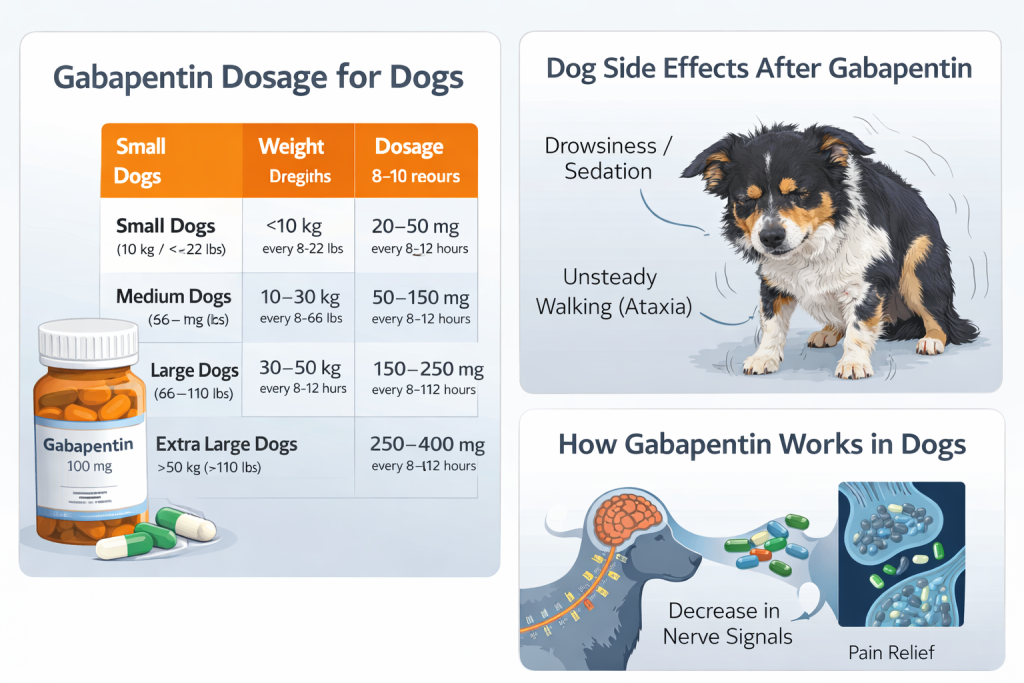
Does Gabapentin Build Up in a Dog’s System? In most healthy dogs receiving the correct dose, gabapentin does not continuously build up in the body. After each dose, the medication is gradually eliminated, primarily through the kidneys. However, accumulation can occur in dogs with significantly reduced kidney function, incorrect dosing intervals, or accidental overdosing. This is why veterinarians sometimes adjust dosing schedules for dogs with chronic kidney disease or other medical conditions.
When Owners Commonly Ask This
The question “Does Gabapentin Build Up in a Dog’s System?” is surprisingly common among owners whose dogs have been taking gabapentin for weeks or even months.
Many owners begin wondering:
- Will gabapentin keep accumulating every day?
- Can my dog eventually have too much gabapentin in its body?
- Should treatment be stopped periodically to “clear the system”?
- Can long-term treatment become dangerous?
- Does the medication stay in the body forever?
- Will older dogs eliminate gabapentin more slowly?
These concerns are understandable.
Many human medications can accumulate inside the body under certain circumstances, so owners naturally wonder whether the same thing happens with gabapentin.
Fortunately, the answer is usually reassuring.
For most healthy dogs with normal kidney function, gabapentin is continuously eliminated between doses rather than endlessly accumulating.
Understanding why this happens requires a basic understanding of how the body processes medications.
Owners may also find these PMMS articles helpful:
- Gabapentin for Dogs: Vet Guidelines, Uses, Dosage & Safety
- Can Dogs Take Gabapentin Long-Term Safely?
- How Often Should Dogs Have Blood Tests While Taking Gabapentin?
- Can Gabapentin Damage the Liver in Dogs?
- Can Gabapentin Affect Liver Enzymes in Dogs?
- Can Dogs Overdose on Gabapentin?
- Why Does Gabapentin Stop Working in Dogs?
Does Gabapentin Build Up in a Dog’s System?
Does Gabapentin Build Up in a Dog’s System During Long-Term Treatment?
The short answer is:
Usually, no.
For healthy dogs receiving veterinarian-prescribed doses, gabapentin reaches predictable concentrations in the bloodstream after each dose and is then gradually eliminated.
Instead of endlessly accumulating, the medication follows a repeating cycle:
Dose →
Absorption →
Therapeutic effect →
Elimination →
Next scheduled dose
This process repeats throughout treatment.
Because the body continuously removes gabapentin, most healthy dogs do not experience progressive drug accumulation during long-term therapy.
This is one reason gabapentin is commonly prescribed for chronic conditions such as:
- osteoarthritis
- neuropathic pain
- intervertebral disc disease (IVDD)
- chronic spinal pain
- cancer pain
- epilepsy
Many dogs receive gabapentin for months—or even years—without the medication continuously building up inside their bodies.
What Does “Drug Accumulation” Actually Mean?
One of the biggest misconceptions behind the search “Does Gabapentin Build Up in a Dog’s System?” is misunderstanding what drug accumulation actually means.
Drug accumulation occurs when:
The body receives medication faster than it can eliminate it.
When this happens, each new dose is added before enough of the previous dose has been removed.
Eventually, drug concentrations become progressively higher.
Some medications naturally accumulate because they:
- have very long half-lives
- are stored in body tissues
- undergo extensive metabolism
- are eliminated very slowly
Gabapentin behaves differently in most healthy dogs.
Instead of remaining in the body indefinitely, it is steadily removed between doses.
Why Doesn’t Gabapentin Usually Accumulate in Healthy Dogs?
Several factors help explain why Does Gabapentin Build Up in a Dog’s System? usually has a reassuring answer.
The most important reason is that healthy kidneys continuously eliminate the medication from the bloodstream.
After a dose is absorbed, gabapentin begins leaving the body almost immediately.
As blood concentrations gradually decrease, the next scheduled dose replaces the medication that has already been eliminated.
This creates relatively stable drug exposure rather than unlimited accumulation.
Veterinarians carefully choose dosing intervals to match the way gabapentin is processed by the body.
This balance allows dogs to maintain effective pain control without excessive drug buildup.
How Does Gabapentin Leave a Dog’s Body?

Understanding elimination helps answer the question “Does Gabapentin Build Up in a Dog’s System?”
After absorption, gabapentin:
- enters the bloodstream
- travels to nervous tissue
- produces pain-relieving and anticonvulsant effects
- is filtered primarily by the kidneys
- is eliminated through urine
Unlike many medications that rely heavily on liver metabolism, gabapentin is eliminated largely through renal excretion.
This pharmacokinetic profile contributes to its favorable safety record in dogs with healthy kidney function.
Owners interested in medication safety may also wish to review:
- Can Gabapentin Damage the Liver in Dogs?
- Can Gabapentin Affect Liver Enzymes in Dogs?
- How Often Should Dogs Have Blood Tests While Taking Gabapentin?
- Can Dogs Take Gabapentin Long-Term Safely?
Does Every Dose Completely Leave the Body Before the Next One?
Not necessarily.
This is another area where owners often become confused.
When a veterinarian prescribes gabapentin every 8 or 12 hours, a small amount of medication from the previous dose may still be present when the next dose is given.
This is normal pharmacology.
It does not automatically mean harmful accumulation is occurring.
Instead, veterinarians aim to achieve what is known as a steady state, where:
- medication enters the body at a predictable rate
- medication leaves the body at a similar rate
- blood concentrations remain relatively stable
Maintaining this balance provides consistent pain control while minimizing excessive fluctuations.
Does “Steady State” Mean the Drug Is Building Up?
No.
Owners frequently confuse steady state with dangerous accumulation.
They are not the same thing.
Steady state simply means:
The amount of gabapentin entering the body is approximately equal to the amount being eliminated.
Once this balance is reached, drug concentrations generally stabilize rather than continuing to rise indefinitely.
This is exactly what veterinarians want during long-term therapy.
Understanding steady state helps explain why Does Gabapentin Build Up in a Dog’s System? usually has a reassuring answer for healthy dogs receiving appropriate treatment.
Which Dogs Are More Likely to Experience Drug Accumulation?
Although most healthy dogs eliminate gabapentin efficiently, some patients require closer monitoring.
These include:
- senior dogs
- dogs with chronic kidney disease
- dogs with severe dehydration
- dogs receiving unusually high doses
- dogs taking multiple sedating medications
- critically ill patients
In these situations, veterinarians may recommend:
- dose adjustments
- longer dosing intervals
- periodic blood work
- closer clinical monitoring
Owners may also wish to review:
- How Often Should Dogs Have Blood Tests While Taking Gabapentin?
- Can Dogs Overdose on Gabapentin?
- Can Dogs Take Gabapentin Long-Term Safely?
- Can Dogs Take Gabapentin With NSAIDs?
- Can Gabapentin Cause Muscle Tremors in Dogs?
- Can Gabapentin Cause Excessive Drooling in Dogs?
Can Kidney Disease Cause Gabapentin to Build Up in a Dog’s System?

One of the most important questions behind “Does Gabapentin Build Up in a Dog’s System?” is whether certain medical conditions change the way the body eliminates the medication.
The answer is:
Yes. Chronic kidney disease is one of the main reasons gabapentin may accumulate more than expected.
Unlike many medications that are extensively metabolized by the liver, gabapentin depends primarily on the kidneys for elimination.
When kidney function declines, the medication may remain in the bloodstream longer before being removed.
This does not mean every dog with kidney disease will develop toxic drug levels.
Instead, veterinarians usually respond by adjusting the treatment plan.
Possible adjustments include:
- lowering the dose
- increasing the time between doses
- monitoring the dog’s response more closely
- repeating blood work when appropriate
This individualized approach allows many dogs with kidney disease to continue benefiting from gabapentin safely.
Owners may also wish to review:
- How Often Should Dogs Have Blood Tests While Taking Gabapentin?
- Can Gabapentin Damage the Liver in Dogs?
- Can Gabapentin Affect Liver Enzymes in Dogs?
- Can Dogs Take Gabapentin Long-Term Safely?
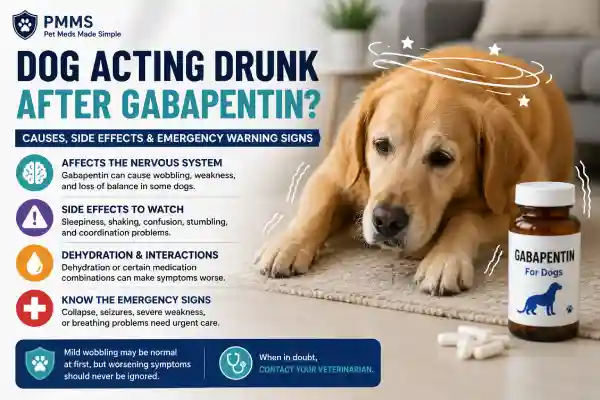
What Are the Signs of Too Much Gabapentin in a Dog’s System?
Many owners searching “Does Gabapentin Build Up in a Dog’s System?” are actually concerned about recognizing the warning signs of excessive drug exposure.
Although accumulation is uncommon in healthy dogs, excessive gabapentin levels may produce noticeable clinical signs.
Possible signs include:
- unusually severe sleepiness
- marked weakness
- difficulty standing
- stumbling
- loss of coordination
- excessive sedation
- decreased responsiveness
- confusion
- reduced appetite
These signs do not automatically mean gabapentin has accumulated.
Other illnesses—including neurological disease, kidney disease, dehydration, or interactions with other medications—can produce similar symptoms.
Veterinarians evaluate the entire clinical picture before concluding that gabapentin accumulation is responsible.
Can Giving Extra Doses Cause Drug Accumulation?
Yes.
One of the most common preventable causes of excessive gabapentin exposure is accidental overmedication.
Examples include:
- giving the next dose too early
- accidentally giving two doses
- multiple family members administering the medication
- misunderstanding the prescribed schedule
For this reason, keeping a written medication schedule is extremely helpful, especially in households where more than one person cares for the dog.
Owners should never “catch up” by doubling the next dose unless specifically instructed by their veterinarian.
Does Missing a Dose Affect Drug Levels?
Interestingly, many owners worry about the opposite problem.
If a dose is accidentally missed, owners often wonder whether the medication will suddenly disappear from the body.
The answer depends on:
- when the missed dose occurred
- the prescribed dosing interval
- the dog’s medical condition
Missing one dose generally causes drug concentrations to decrease, not increase.
However, repeated missed doses may reduce pain control or seizure protection.
Owners should always follow their veterinarian’s instructions regarding missed doses rather than creating a new dosing schedule at home.
Owners may also find these articles helpful:
- Can Dogs Suddenly Stop Gabapentin?
- Why Does Gabapentin Stop Working in Dogs?
- Gabapentin for Dogs: Vet Guidelines, Uses, Dosage & Safety
How Do Veterinarians Prevent Gabapentin Accumulation?

Fortunately, preventing accumulation is usually straightforward.
Veterinarians consider several factors before prescribing long-term gabapentin.
These include:
- body weight
- age
- kidney function
- liver health
- concurrent medications
- underlying neurological disease
- overall physical condition
Using this information, they determine an appropriate:
- dose
- dosing interval
- follow-up schedule
This individualized approach helps maintain effective pain control while minimizing unnecessary risk.
Why Dosing Intervals Matter
Many owners focus only on the number of milligrams.
However, the time between doses is equally important.
For example:
Giving a medication every 8 hours instead of every 12 hours changes the amount of time available for the body to eliminate the previous dose.
Veterinarians select dosing intervals carefully to balance:
- effective pain control
- seizure management
- medication safety
- elimination through the kidneys
Changing the schedule without veterinary advice can increase the likelihood of excessive sedation or reduced effectiveness.
Does Long-Term Treatment Increase the Risk of Accumulation?
One of the biggest myths behind “Does Gabapentin Build Up in a Dog’s System?” is the belief that simply taking the medication for months automatically causes progressive accumulation.
Current veterinary evidence does not support this idea in healthy dogs.
If kidney function remains stable and the prescribed dose remains appropriate, long-term treatment generally maintains a stable steady state rather than continuously increasing drug concentrations.
This explains why many dogs safely receive gabapentin for:
- chronic arthritis
- neuropathic pain
- spinal disease
- cancer pain
- seizure management
over extended periods.
Which Dogs Should Be Monitored More Closely?

Although accumulation is uncommon, certain patients benefit from additional monitoring.
These include:
| Dog Category | Why Closer Monitoring May Be Needed |
|---|---|
| Senior dogs | Age-related decline in organ function |
| Dogs with chronic kidney disease | Reduced drug elimination |
| Dogs receiving multiple sedatives | Increased overall sedation |
| Dogs recovering from major surgery | Temporary physiological changes |
| Dogs with chronic neurological disease | Individualized dosing requirements |
Monitoring helps veterinarians identify changes before significant complications develop.
Should Owners Be Concerned About Every Episode of Sleepiness?
Not necessarily.
Sleepiness is one of the most common and expected side effects of gabapentin.
The important question is whether the sedation is:
- mild and temporary
- progressively worsening
- interfering with normal function
- accompanied by other concerning symptoms
Most dogs become more alert as the body gradually eliminates the medication between doses.
If sedation becomes unusually severe or persistent, veterinary reassessment is appropriate.
Owners may also wish to review:
- Can Gabapentin Cause Excessive Drooling in Dogs?
- Can Gabapentin Cause Muscle Tremors in Dogs?
- Can Gabapentin Cause Weight Loss in Dogs?
- Can Gabapentin Cause Weight Gain in Dogs?
- How Often Should Dogs Have Blood Tests While Taking Gabapentin?
- Can Dogs Overdose on Gabapentin?
- Can Dogs Take Gabapentin Long-Term Safely?
- Can Dogs Take Gabapentin With NSAIDs?
Can Drug Accumulation Be Prevented During Long-Term Gabapentin Therapy?

One of the most reassuring aspects of answering “Does Gabapentin Build Up in a Dog’s System?” is that, for the vast majority of dogs, drug accumulation can be effectively prevented through proper dosing and routine veterinary monitoring.
Veterinarians prescribe gabapentin based on:
- body weight
- medical condition
- kidney function
- concurrent medications
- expected duration of treatment
When these factors are considered carefully, most healthy dogs maintain stable therapeutic drug levels without harmful accumulation.
Owners should never adjust the dose or dosing interval without consulting their veterinarian.
How Can Owners Safely Give Gabapentin Every Day?
Long-term success depends on consistency.
Owners often assume that preventing accumulation requires stopping gabapentin every few weeks to “let the body clear the medication.”
Current veterinary evidence does not support this practice for dogs receiving appropriately prescribed therapy.
Instead, veterinarians recommend:
- giving each dose at approximately the same time every day
- following the prescribed dosing interval
- avoiding missed doses whenever possible
- never giving extra doses to “catch up”
- storing medication safely to prevent accidental overdoses
- attending scheduled recheck appointments
These simple habits help maintain stable therapeutic concentrations while minimizing unnecessary fluctuations.
Owners may also find these PMMS articles helpful:
- Can Dogs Take Gabapentin Long-Term Safely?
- How Often Should Dogs Have Blood Tests While Taking Gabapentin?
- Can Dogs Suddenly Stop Gabapentin?
- Can Dogs Overdose on Gabapentin?
Should Gabapentin Be Stopped Periodically to “Clear the System”?

This is one of the most common myths surrounding “Does Gabapentin Build Up in a Dog’s System?”
The answer is:
No—not unless your veterinarian specifically recommends it.
Some owners believe that taking short “medication holidays” prevents drug accumulation.
However, interrupting treatment without veterinary guidance may lead to:
- worsening chronic pain
- recurrence of neuropathic pain
- increased anxiety
- breakthrough seizures in susceptible dogs
- unnecessary fluctuations in symptom control
Because gabapentin generally reaches a stable steady state rather than continuously accumulating, routine treatment interruptions are usually unnecessary.
Does Long-Term Treatment Become Less Safe Over Time?
Another common concern is whether months or years of treatment automatically increase the risk of toxicity.
Fortunately, current veterinary evidence suggests that duration of therapy alone does not cause gabapentin to accumulate indefinitely.
Instead, long-term safety depends on factors such as:
- kidney function
- overall health
- age
- concurrent medications
- appropriate dosing
- regular veterinary monitoring
Many dogs safely receive gabapentin for years while maintaining excellent quality of life.
Can Regular Veterinary Checkups Help Prevent Drug Accumulation?

Absolutely.
Routine examinations allow veterinarians to identify changes that may influence medication handling.
During follow-up visits they may evaluate:
- body weight
- hydration
- mobility
- pain control
- neurological status
- appetite
- laboratory results when indicated
If kidney function changes or another illness develops, the treatment plan can be adjusted before excessive drug exposure becomes a concern.
What Should Owners Monitor at Home?
Owners play an important role in recognizing changes between veterinary visits.
While taking gabapentin, monitor your dog for:
- normal appetite
- normal water intake
- energy level
- coordination
- walking ability
- excessive sleepiness
- unusual weakness
- confusion
- vomiting
- behavioral changes
Most dogs remain stable throughout treatment.
However, reporting new symptoms promptly helps veterinarians determine whether additional evaluation is needed.
Can Drug Accumulation Cause Permanent Organ Damage?
One reason owners search “Does Gabapentin Build Up in a Dog’s System?” is concern that long-term accumulation might permanently damage organs.
Current veterinary evidence does not suggest that appropriate long-term gabapentin therapy causes progressive accumulation leading to permanent organ damage in healthy dogs.
If excessive drug exposure occurs, it is usually related to factors such as:
- accidental overdose
- severe kidney disease
- inappropriate dosing
- unexpected changes in health
Early recognition and veterinary intervention generally result in an excellent outcome.
Veterinarian Takeaway
Does Gabapentin Build Up in a Dog’s System?
For most healthy dogs, the answer is no.
Gabapentin is continuously eliminated—primarily by the kidneys—and, when prescribed correctly, reaches a stable steady state rather than accumulating indefinitely.
Dogs with chronic kidney disease, advanced age, or multiple medical conditions may require individualized dosing and closer monitoring because they eliminate the medication more slowly.
Routine veterinary examinations and following the prescribed dosing schedule remain the best ways to ensure long-term treatment is both safe and effective.
Bottom Line
Does Gabapentin Build Up in a Dog’s System? Under normal circumstances, gabapentin does not continue building up indefinitely in healthy dogs receiving appropriate veterinary doses.
Instead, each dose is gradually eliminated while the next dose maintains therapeutic drug concentrations. This creates a stable balance that allows long-term pain control without continuous accumulation.
The situation may differ in dogs with chronic kidney disease or other conditions that reduce drug elimination. For these patients, veterinarians may adjust the dose or dosing interval to maintain safe drug levels.
If you are concerned about excessive sedation, worsening weakness, or possible overdose, contact your veterinarian rather than changing the medication schedule yourself.
Frequently Asked Questions – Does Gabapentin Build Up in a Dog’s System
Does gabapentin build up in a dog’s system over time?
In most healthy dogs, no. Gabapentin reaches a stable steady state during long-term therapy instead of continuously accumulating.
Can kidney disease cause gabapentin to accumulate?
Yes.
Reduced kidney function may slow elimination, which is why veterinarians often adjust dosing schedules for dogs with chronic kidney disease.
Is steady state the same as drug accumulation?
No.
Steady state means the amount of medication entering the body is approximately equal to the amount being eliminated. Harmful accumulation means drug levels continue rising over time.
Can giving extra doses cause accumulation?
Yes.
Accidentally giving doses too close together or administering duplicate doses can temporarily increase drug concentrations.
Should gabapentin be stopped periodically to clear the body?
No.
Routine “drug holidays” are generally unnecessary unless specifically recommended by your veterinarian.
Can long-term treatment become dangerous?
Long-term treatment is generally well tolerated when dosing is appropriate and the dog receives regular veterinary care.
What symptoms may suggest excessive gabapentin exposure?
Possible signs include:
excessive sleepiness
marked weakness
stumbling
poor coordination
decreased responsiveness
These signs should always be discussed with your veterinarian.
Can blood tests measure gabapentin levels?
Routine wellness blood work does not normally measure gabapentin concentrations. Instead, it evaluates your dog’s overall health, including kidney and liver function when indicated
Do healthy dogs usually eliminate gabapentin normally?
Yes.
Dogs with normal kidney function typically eliminate gabapentin efficiently between scheduled doses.
Can veterinarians adjust the dose if accumulation becomes a concern?
Absolutely.
Veterinarians may reduce the dose, extend the dosing interval, or investigate underlying medical conditions that affect drug elimination.
Sources
- Plumb DC. Plumb’s Veterinary Drug Handbook. Latest Edition.
- Papich MG. Saunders Handbook of Veterinary Drugs: Small and Large Animal.
- Boothe DM. Small Animal Clinical Pharmacology and Therapeutics.
- Grimm KA et al. Veterinary Anesthesia and Analgesia.
- Merck Veterinary Manual – Pharmacology and Therapeutics.
- Merck Veterinary Manual – Chronic Kidney Disease in Dogs.
- AAHA 2022 Pain Management Guidelines for Dogs and Cats.
- Veterinary Information Network (VIN).
- BSAVA Manual of Canine and Feline Clinical Pharmacology.
- Frontiers in Veterinary Science – Veterinary Analgesia and Drug Safety.
Medical Review Statement
This article was written by Dimitar Georgiev Atanasov, MPharm, scientifically reviewed by Gergana Krasimirova Atanasova, MPharm, and independently veterinary reviewed by Dr. Valcho Georgiev Valchev, DVM. It is intended for educational purposes only and should not replace professional veterinary diagnosis, individualized medication management, or treatment recommendations.
Image Disclosure
Image Disclosure: Some images used in this article may be AI-generated for educational illustration. They are intended to explain veterinary concepts and medication safety and should not be interpreted as actual clinical photographs.