Quick Answer
Can gabapentin cause weight loss in dogs? Gabapentin is not commonly associated with direct weight loss in dogs, but some dogs may lose weight while taking the medication because of decreased appetite, nausea, underlying illness, chronic pain, or another medical condition that develops during treatment. Weight loss is usually an indirect finding rather than a direct side effect of gabapentin. If your dog is losing weight rapidly, refuses food, or continues to lose weight despite eating normally, your veterinarian should investigate the underlying cause promptly.
Can Gabapentin Cause Weight Loss in Dogs?
When Owners Commonly Ask This
Most owners don’t search “Can Gabapentin Cause Weight Loss in Dogs?” on the first day their dog starts treatment.
Instead, the question usually appears several weeks later.
A common scenario looks like this:
Your dog begins taking gabapentin for arthritis, chronic nerve pain, intervertebral disc disease (IVDD), post-operative pain, or seizure management. At first everything seems encouraging. Your dog appears calmer, sleeps more comfortably, and seems less painful.
Then something unexpected happens.
You begin noticing that your dog’s ribs feel more prominent, the waistline becomes more visible than before, or your dog’s body weight slowly decreases despite continuing the medication.
Naturally, owners begin asking:
- Can gabapentin cause weight loss in dogs?
- Is gabapentin reducing my dog’s appetite?
- Why is my dog eating less since starting gabapentin?
- Is weight loss a normal side effect?
- Could my dog’s illness be getting worse?
- Should I stop giving gabapentin?
These are important questions because unexplained weight loss should never be ignored, even when your dog is taking a medication that is generally considered safe.
Owners experiencing other possible medication-related changes may also find these PMMS articles helpful:
- Gabapentin for Dogs: Vet Guidelines, Uses, Dosage & Safety
- Can Gabapentin Cause Weight Gain in Dogs?
- Why Is My Dog Vomiting After Gabapentin?
- Can Gabapentin Cause Excessive Drooling in Dogs?
- Why Does My Dog Sleep So Much on Gabapentin?
- Can Dogs Take Gabapentin Long-Term Safely?
Can Gabapentin Cause Weight Loss in Dogs?
The short answer is:
Yes but usually not directly.
This distinction is one of the most important concepts owners should understand.
Many owners assume that because weight loss appeared after starting gabapentin, the medication must be responsible.
However, timing alone does not prove causation.
Current veterinary evidence does not identify weight loss as one of the most common direct adverse effects of gabapentin in dogs.
Instead, veterinarians often discover that weight loss is caused by one or more indirect factors occurring during treatment.
These may include:
- decreased appetite
- nausea
- chronic disease progression
- persistent pain
- reduced calorie intake
- muscle loss caused by inactivity
- another unrelated medical condition
For this reason, veterinarians evaluate the entire patient, not simply the medication.
What Does Weight Loss Actually Mean?
Owners often focus on the number displayed on the scale.
Veterinarians think differently.
Weight loss can occur for several very different reasons, and identifying what is actually being lost is essential.
| Type of Weight Loss | Possible Explanation |
|---|---|
| Fat loss | Reduced calorie intake |
| Muscle loss | Chronic pain or inactivity |
| Fluid loss | Dehydration or illness |
| Healthy weight reduction | Controlled weight-loss program |
| Rapid unexplained weight loss | Underlying medical disease |
Not every kilogram lost represents the same medical problem.
This is why veterinarians evaluate both body weight and Body Condition Score (BCS) rather than relying on the scale alone.
Does Gabapentin Directly Cause Weight Loss?
Current evidence suggests that gabapentin itself is not considered a medication that directly causes significant weight loss in most dogs.
Unlike medications that suppress appetite or significantly alter metabolism, gabapentin primarily affects the nervous system.
Its main therapeutic actions include:
- reducing abnormal nerve signaling
- relieving neuropathic pain
- improving comfort
- reducing anxiety in selected situations
- helping control certain seizure disorders
These effects do not normally cause the body to burn fat or lose weight directly.
Instead, weight loss usually develops because another factor is affecting your dog’s food intake, digestion, or overall health.
Why Weight Loss Is Often Indirect
Owners searching “Can Gabapentin Cause Weight Loss in Dogs?” are frequently seeing the effects of another condition rather than the medication itself.
For example:
A dog suffering from spinal pain may already have a poor appetite before gabapentin is prescribed.
Although the medication helps relieve pain, the underlying disease may continue progressing.
Similarly, an older dog diagnosed with arthritis may also have early kidney disease or another chronic illness that gradually reduces appetite.
Without a complete veterinary examination, it is impossible to assume gabapentin is responsible.
Why Dogs May Lose Weight During Gabapentin Therapy
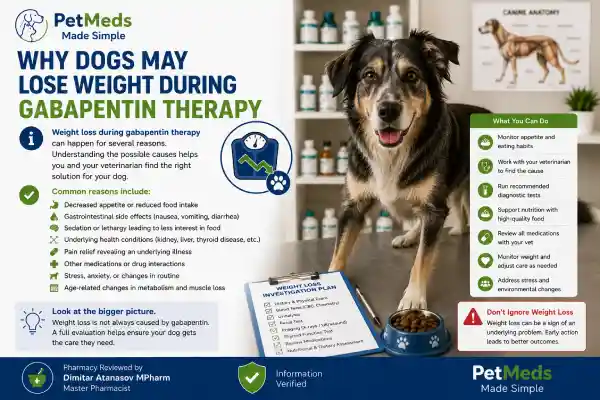
In most cases, several contributing factors work together rather than a single cause.
1. Reduced Appetite
The most common explanation is decreased food intake.
Although gabapentin is not generally considered an appetite suppressant, some dogs temporarily eat less after beginning treatment.
Possible reasons include:
- mild nausea
- feeling sleepy
- temporary gastrointestinal discomfort
- adjustment to a new medication schedule
Most dogs regain their normal appetite after several days.
However, persistent appetite loss should never be ignored.
Owners noticing appetite changes may also find these PMMS articles useful:
- Why Is My Dog Vomiting After Gabapentin?
- Can Gabapentin Cause Excessive Drooling in Dogs?
- Can Gabapentin Cause Constipation in Dogs?
2. Nausea
One of the most overlooked explanations is mild nausea.
Not every nauseated dog vomits.
Instead, some dogs show much subtler signs such as:
- refusing meals
- eating slowly
- lip licking
- repeated swallowing
- excessive drooling
- sniffing food before walking away
Over several weeks, even a modest reduction in calorie intake can produce noticeable weight loss.
This is one reason veterinarians always ask about appetite changes when owners report unexplained weight loss.
3. Chronic Pain
Ironically, some dogs continue losing weight despite receiving gabapentin because the medication alone is no longer providing adequate pain control.
Dogs experiencing persistent pain may:
- avoid eating
- move less
- lose muscle mass
- become progressively thinner
In these situations, the issue is not necessarily gabapentin itself, but rather the progression of the underlying disease.
Owners may also wish to review:
- Why Does Gabapentin Stop Working in Dogs?
- Why Is My Dog Still Limping After Gabapentin?
- Why Is My Dog Crying Despite Gabapentin?
- Can Dogs Take Gabapentin Long-Term Safely?
4. Muscle Loss Due to Reduced Activity
Another important cause of apparent weight loss is loss of lean muscle mass.
Dogs recovering from surgery, spinal disease, or orthopedic injuries often spend several weeks exercising much less than normal.
Although gabapentin helps keep them comfortable during recovery, prolonged inactivity may lead to:
- muscle wasting
- reduced strength
- thinner hind limbs
- gradual weight loss despite stable body fat
Veterinarians distinguish this from true fat loss because the treatment approach is very different.
Controlled rehabilitation and gradual increases in physical activity often help restore healthy muscle mass once your veterinarian determines it is safe.
Can Kidney Disease Cause Weight Loss While Taking Gabapentin?
Absolutely.
One of the biggest mistakes owners make when asking “Can Gabapentin Cause Weight Loss in Dogs?” is assuming that the medication is automatically responsible.
In reality, many dogs prescribed gabapentin are older pets already living with chronic diseases that commonly cause weight loss.
One of the most important examples is chronic kidney disease (CKD).
Dogs with kidney disease may gradually lose weight because they experience:
- reduced appetite
- nausea
- vomiting
- dehydration
- muscle wasting
- altered protein metabolism
If kidney disease progresses while your dog is taking gabapentin, the timing may make it appear as though the medication caused the weight loss, even when the underlying disease is actually responsible.
This is why veterinarians often recommend periodic blood tests for senior dogs receiving long-term medications.
Owners may also find these PMMS guides helpful:
- Can Dogs Take Gabapentin Long-Term Safely?
- Can Senior Dogs Take Gabapentin Safely?
- Can Gabapentin Cause Weak Back Legs?
Can Cancer Cause Weight Loss During Gabapentin Therapy?
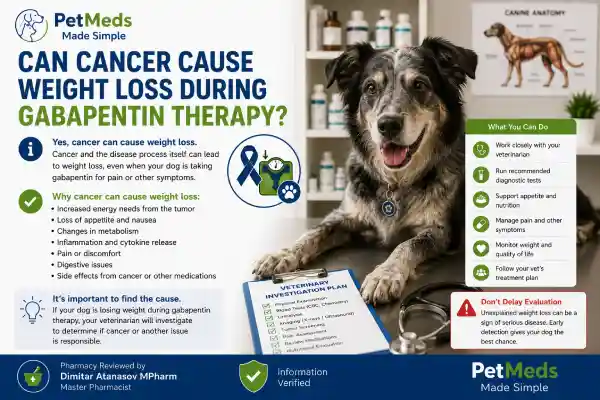
Yes.
Unfortunately, cancer is one of the most common causes of progressive weight loss in older dogs.
Many dogs receiving gabapentin are being treated for:
- bone cancer
- spinal tumors
- nerve pain
- cancer-related discomfort
In these situations, gabapentin is prescribed to improve comfort—not to treat the cancer itself.
As cancer progresses, dogs may develop:
- reduced appetite
- muscle wasting
- chronic inflammation
- increased energy requirements
- cancer cachexia
Cachexia differs from simple starvation.
Even when food intake appears adequate, the body may continue breaking down muscle tissue.
Because of this, persistent weight loss should never automatically be blamed on gabapentin.
Does Gabapentin Increase Metabolism?
Current veterinary evidence says no.
Another common concern owners have after searching “Can Gabapentin Cause Weight Loss in Dogs?” is whether gabapentin somehow speeds up metabolism.
At present, there is no convincing evidence that gabapentin directly increases metabolic rate in dogs.
Unlike medications that affect thyroid hormones or other endocrine systems, gabapentin primarily works by reducing abnormal nerve activity.
Its effects include:
- pain control
- seizure management
- reduction of neuropathic pain
- mild sedation in some dogs
None of these actions normally increase calorie burning.
If your dog is steadily losing weight, another explanation should always be investigated.
Are Senior Dogs More Likely to Lose Weight?
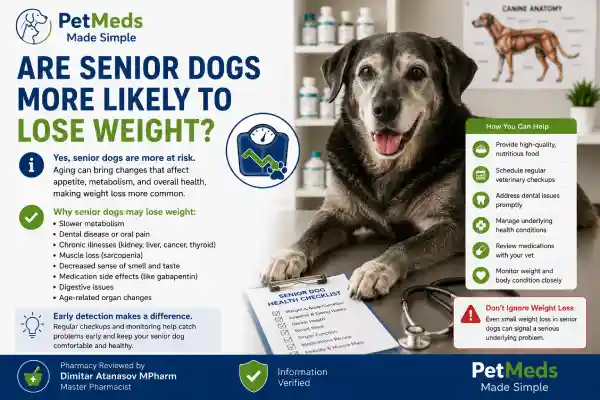
Yes.
Senior dogs deserve special attention because they often have several medical problems occurring simultaneously.
Older dogs receiving gabapentin may also have:
- arthritis
- kidney disease
- dental disease
- heart disease
- endocrine disorders
- reduced muscle mass
- decreased appetite
Because of these overlapping conditions, determining whether gabapentin causes weight loss in dogs becomes much more complex.
Veterinarians therefore evaluate the entire patient rather than focusing only on the medication.
Owners of older dogs should also read:
- Can Senior Dogs Take Gabapentin Safely?
- Why Does My Dog Sleep So Much on Gabapentin?
- Can Dogs Take Gabapentin Long-Term Safely?
Does Reduced Muscle Mass Look Like Weight Loss?
Very often.
Owners frequently notice that their dog’s hips, spine, or thighs appear thinner and immediately assume body fat is disappearing.
However, what they may actually be seeing is muscle atrophy.
Dogs recovering from:
- spinal surgery
- IVDD
- orthopedic injuries
- cruciate ligament repair
- chronic arthritis
often lose muscle because they cannot exercise normally.
Although gabapentin helps control pain, it cannot completely prevent muscle loss associated with inactivity.
This is why veterinarians assess both:
- Body Condition Score (BCS)
- Muscle Condition Score (MCS)
These two measurements together provide a much more accurate picture of your dog’s nutritional status.
Does Poor Appetite Always Mean Gabapentin Is Responsible?
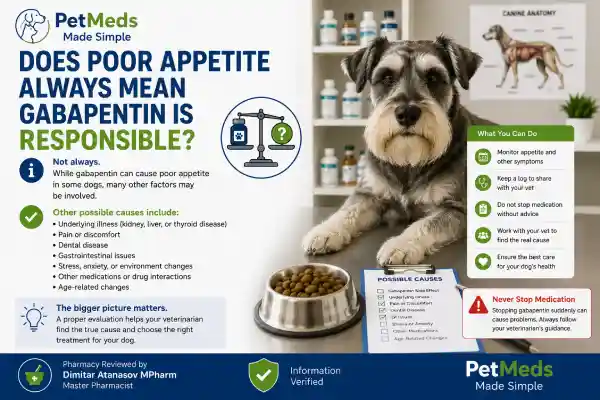
No.
Loss of appetite has many possible causes.
Veterinarians commonly investigate:
| Possible Cause | May Cause Weight Loss? |
|---|---|
| Dental disease | ✅ Yes |
| Kidney disease | ✅ Yes |
| Cancer | ✅ Yes |
| Gastrointestinal disease | ✅ Yes |
| Liver disease | ✅ Yes |
| Chronic pain | ✅ Yes |
| Medication side effects | ✅ Sometimes |
Notice that gabapentin represents only one possible explanation among many.
For this reason, veterinarians rarely discontinue the medication without first evaluating the entire clinical picture.
Can Weight Loss Occur Even When Pain Improves?
Surprisingly, yes.
Pain relief does not always mean body weight immediately returns to normal.
Some dogs continue losing weight because:
- they remain inactive
- muscle rebuilding takes time
- another disease is progressing
- calorie intake remains inadequate
- recovery from surgery requires additional energy
Owners sometimes expect rapid improvement after starting gabapentin.
However, rebuilding lost muscle often takes weeks or months, particularly in senior dogs.
How Veterinarians Investigate Weight Loss
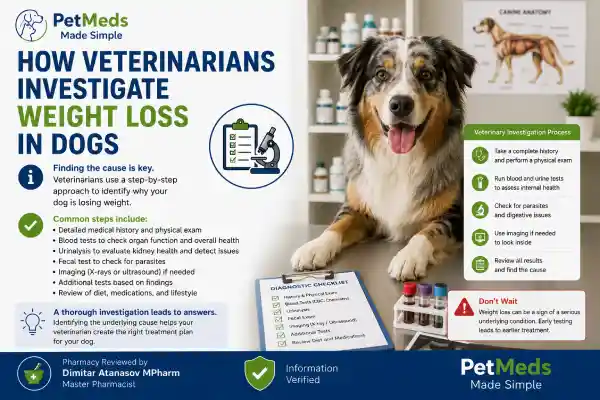
When owners ask “Can Gabapentin Cause Weight Loss in Dogs?”, veterinarians follow a structured diagnostic approach rather than assuming the medication is responsible.
Step 1: Medical History
Your veterinarian will usually ask:
- When did the weight loss begin?
- Was it present before gabapentin?
- Has appetite changed?
- Is vomiting occurring?
- Has water intake increased?
- Has activity changed?
- Is your dog receiving any new medications?
- Has there been diarrhea or constipation?
These answers often provide the first clues.
Step 2: Physical Examination
A complete physical examination includes assessment of:
- Body Condition Score
- Muscle Condition Score
- hydration status
- oral health
- abdominal palpation
- joint pain
- spinal pain
- heart and lung function
Many causes of weight loss become apparent during this examination.
Step 3: Blood Tests
If weight loss is continuing, laboratory testing is frequently recommended.
Common diagnostic tests include:
| Test | Why It Helps |
|---|---|
| Complete Blood Count (CBC) | Detects infection and anemia |
| Serum Chemistry | Evaluates liver and kidney function |
| Urinalysis | Assesses kidney health and hydration |
| Electrolytes | Identifies metabolic abnormalities |
| Thyroid Testing | When endocrine disease is suspected |
These tests help determine whether the weight loss is caused by an underlying disease rather than gabapentin itself.
Can Weight Loss Be Prevented?
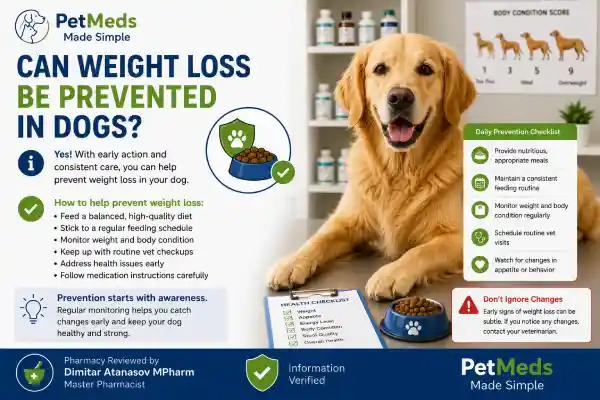
In many cases, yes.
Although Can Gabapentin Cause Weight Loss in Dogs? is a common concern, prevention focuses on maintaining overall health rather than stopping the medication.
Owners can help by:
✔ Monitoring body weight every 2–4 weeks.
✔ Recording appetite changes.
✔ Measuring daily food intake.
✔ Watching for vomiting or diarrhea.
✔ Scheduling regular veterinary checkups.
✔ Following rehabilitation plans after surgery.
✔ Reporting ongoing weight loss promptly.
Signs That Require Immediate Veterinary Attention
Contact your veterinarian promptly if your dog develops:
- rapid or severe weight loss
- complete refusal to eat for more than 24 hours
- repeated vomiting
- bloody diarrhea
- marked weakness
- collapse
- severe dehydration
- difficulty swallowing
- progressive muscle wasting
These signs suggest a potentially serious medical problem that requires prompt evaluation.
Owners may also wish to review:
- Can Gabapentin Cause Neurological Side Effects?
- Can Dogs Overdose on Gabapentin?
- Can Gabapentin Cause Muscle Tremors in Dogs?
- Can Gabapentin Cause Excessive Drooling in Dogs?
- Can Dogs Take Gabapentin and NSAIDs Together?
- What Happens If Dogs Suddenly Stop Gabapentin?
How Is Weight Loss Treated in Dogs Taking Gabapentin?
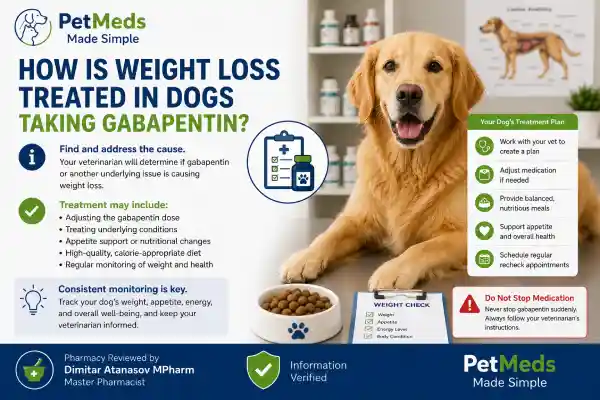
Treatment depends entirely on why the weight loss is occurring.
One of the biggest misconceptions surrounding Can Gabapentin Cause Weight Loss in Dogs? is that stopping the medication will automatically solve the problem.
In many cases, discontinuing gabapentin would do little to improve body weight because the medication is not the primary cause.
Instead, veterinarians focus on identifying and treating the underlying reason for the weight loss.
Nutritional Management
Nutrition is often the first area veterinarians evaluate.
If a dog is losing weight, simply offering more food is not always the correct solution.
Instead, your veterinarian may recommend:
- increasing calorie density
- feeding smaller, more frequent meals
- warming food to improve aroma
- adding veterinary-approved nutritional supplements
- changing to a more digestible diet
- temporarily using prescription recovery diets
The goal is to improve calorie intake without causing digestive upset.
Monitoring Appetite at Home
Owners play a major role in recognizing early appetite changes.
Rather than simply asking:
“Did my dog eat today?”
Veterinarians encourage owners to record:
| Daily Observation | Why It Matters |
|---|---|
| Percentage of meal eaten | Detects gradual appetite decline |
| Interest in treats | Helps assess nausea |
| Water consumption | May indicate kidney or endocrine disease |
| Vomiting episodes | Explains reduced calorie intake |
| Body weight | Tracks progression objectively |
Small daily changes often reveal problems long before obvious weight loss develops.
Should You Increase Your Dog’s Food?
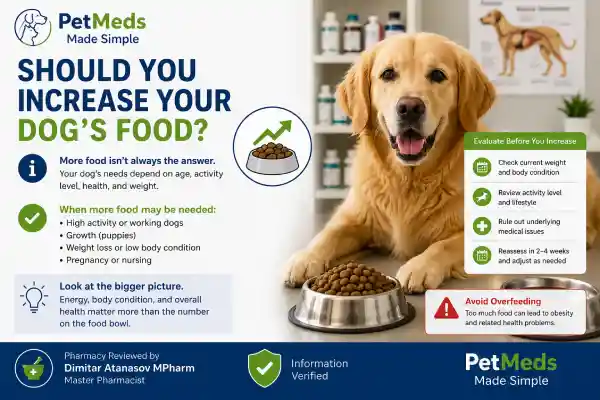
Not automatically.
If your dog is losing weight while taking gabapentin, increasing food without understanding the cause may delay diagnosis of a more serious illness.
For example:
- kidney disease
- cancer
- inflammatory bowel disease
- dental disease
- liver disease
may all require very different nutritional approaches.
This is another reason Can Gabapentin Cause Weight Loss in Dogs? should never be answered by looking only at the medication.
Can Exercise Help?
Yes—but only when appropriate.
Dogs recovering from surgery or spinal disease should always follow their veterinarian’s rehabilitation plan.
As recovery progresses, carefully increasing activity helps:
- rebuild muscle mass
- stimulate appetite
- improve mobility
- maintain healthy body condition
- improve overall quality of life
Examples of safe exercise include:
- controlled leash walks
- underwater treadmill therapy
- swimming (when approved)
- physiotherapy
- gentle strengthening exercises
Owners may also wish to review:
- Why Is My Dog Weak After Gabapentin?
- Can Gabapentin Cause Weak Back Legs?
- Can Dogs Take Gabapentin Long-Term Safely?
Should the Gabapentin Dose Be Changed?
Usually not immediately.
Many owners ask whether reducing the dose will stop the weight loss.
However, lowering the dose without veterinary guidance may actually worsen the situation if pain returns.
Uncontrolled pain often causes:
- decreased appetite
- reduced movement
- muscle loss
- poorer recovery
- lower quality of life
Instead of immediately changing the medication, veterinarians usually determine whether:
- gabapentin remains effective
- another disease is present
- nutritional support is needed
- additional pain management should be added
Owners should never stop gabapentin suddenly without veterinary advice.
How Long Does Recovery Take?
Recovery depends entirely on the underlying cause.
If mild appetite reduction occurred after starting gabapentin, improvement often develops within several days.
If weight loss resulted from surgery or temporary illness, recovery may require several weeks.
Dogs recovering from:
- spinal surgery
- orthopedic procedures
- chronic arthritis
- neurological disease
may require several months before muscle mass fully returns.
Patience is often necessary.
What Is the Prognosis?
Fortunately, the outlook is excellent for many dogs once the underlying cause has been identified.
Excellent Prognosis
- temporary appetite reduction
- mild nausea
- recovery after surgery
- controlled chronic pain
- rehabilitation-related muscle loss
Guarded Prognosis
- advanced kidney disease
- cancer
- severe neurological disease
- progressive endocrine disorders
- chronic gastrointestinal disease
The earlier the cause is identified, the better the chances of successful treatment.
Veterinarian Takeaway
Can gabapentin cause weight loss in dogs? Yes—but in most cases, the relationship is indirect rather than direct.
Current veterinary evidence does not identify gabapentin as a medication that routinely causes significant weight loss. Instead, dogs usually lose weight because of reduced appetite, nausea, chronic pain, muscle loss, underlying disease, or another medical condition that develops while they are receiving treatment.
Any dog experiencing persistent or unexplained weight loss should receive a complete veterinary examination rather than assuming the medication is solely responsible.
Bottom Line
Can gabapentin cause weight loss in dogs?
It can appear that way, but gabapentin itself is rarely the direct cause.
Most cases of weight loss are associated with reduced food intake, progression of an underlying disease, chronic pain, recovery from surgery, muscle wasting, or gastrointestinal problems rather than the medication alone.
Monitoring your dog’s body weight, appetite, Body Condition Score, and overall health—combined with regular veterinary follow-up—is the safest way to ensure successful long-term treatment.
Dogs receiving gabapentin often benefit greatly from improved pain control, and most can continue therapy safely once the true cause of weight loss has been identified and managed.
Frequently Asked Questions – Can Gabapentin Cause Weight Loss in Dogs
Can gabapentin cause weight loss in dogs even if my dog is eating normally?
Yes. Although uncommon, dogs may lose weight despite eating normally if they are experiencing muscle loss, chronic disease, cancer, kidney disease, or another medical condition affecting nutrient utilization. Your veterinarian should investigate persistent weight loss regardless of appetite.
Can gabapentin reduce my dog’s appetite?
Gabapentin is not considered a common appetite suppressant, but some dogs experience temporary decreases in appetite when first starting treatment, especially if mild nausea or sedation occurs.
How quickly can weight loss develop?
The timeline varies considerably.
Some dogs lose weight gradually over several weeks, while others experience progressive weight loss over months because of an underlying disease rather than gabapentin itself.
Should I stop gabapentin if my dog loses weight?
No.
Never stop gabapentin without veterinary guidance.
Stopping treatment abruptly may worsen pain control and reduce your dog’s quality of life. Your veterinarian should first determine whether the medication is actually responsible.
Can senior dogs lose weight more easily while taking gabapentin?
Yes.
Older dogs often have additional medical conditions—including kidney disease, arthritis, dental disease, and cancer—that make weight loss more likely. Age itself is usually a more important factor than gabapentin.
Is muscle loss the same as weight loss?
Not exactly.
Many owners notice their dog becoming thinner because muscle mass decreases during prolonged inactivity. Muscle loss and fat loss are different conditions and may require different treatment strategies.
Can kidney disease cause weight loss while taking gabapentin?
Absolutely.
Kidney disease commonly causes reduced appetite, nausea, dehydration, and gradual weight loss. This is one of the most common alternative explanations veterinarians investigate.
Does gabapentin increase metabolism?
Current veterinary evidence does not suggest that gabapentin directly increases metabolic rate or causes dogs to burn significantly more calories.
What signs mean I should contact my veterinarian immediately?
Seek veterinary attention if your dog develops:
rapid weight loss
complete loss of appetite
repeated vomiting
bloody diarrhea
severe weakness
collapse
dehydration
progressive muscle wasting
Can weight loss be prevented?
Many cases can.
Routine weight monitoring, balanced nutrition, appropriate rehabilitation, regular veterinary examinations, and early investigation of appetite changes all help reduce the risk of significant weight loss during long-term gabapentin therapy.
Sources
- Plumb DC. Plumb’s Veterinary Drug Handbook. Latest Edition.
- Papich MG. Saunders Handbook of Veterinary Drugs: Small and Large Animal.
- Boothe DM. Small Animal Clinical Pharmacology and Therapeutics.
- Grimm KA et al. Veterinary Anesthesia and Analgesia.
- Merck Veterinary Manual – Weight Loss in Dogs.
- Merck Veterinary Manual – Neurologic Disorders in Dogs.
- AAHA 2022 Pain Management Guidelines for Dogs and Cats.
- WSAVA Nutritional Assessment Guidelines.
- Veterinary Information Network (VIN).
- JAVMA – Canine Nutrition and Body Condition.
- Frontiers in Veterinary Science – Chronic Pain and Nutritional Status in Dogs.
- BSAVA Manual of Canine and Feline Clinical Nutrition.
Medical Review Statement
This article was written by a licensed Master Pharmacist, scientifically reviewed by a second licensed Master Pharmacist, and independently reviewed by a licensed veterinarian. It is intended for educational purposes only and should never replace professional veterinary diagnosis or treatment.
Image Disclosure
Image Disclosure: Some images used in this article may be AI-generated to illustrate veterinary concepts and medication safety. They are intended for educational purposes only and should not replace professional veterinary advice.