Quick Answer
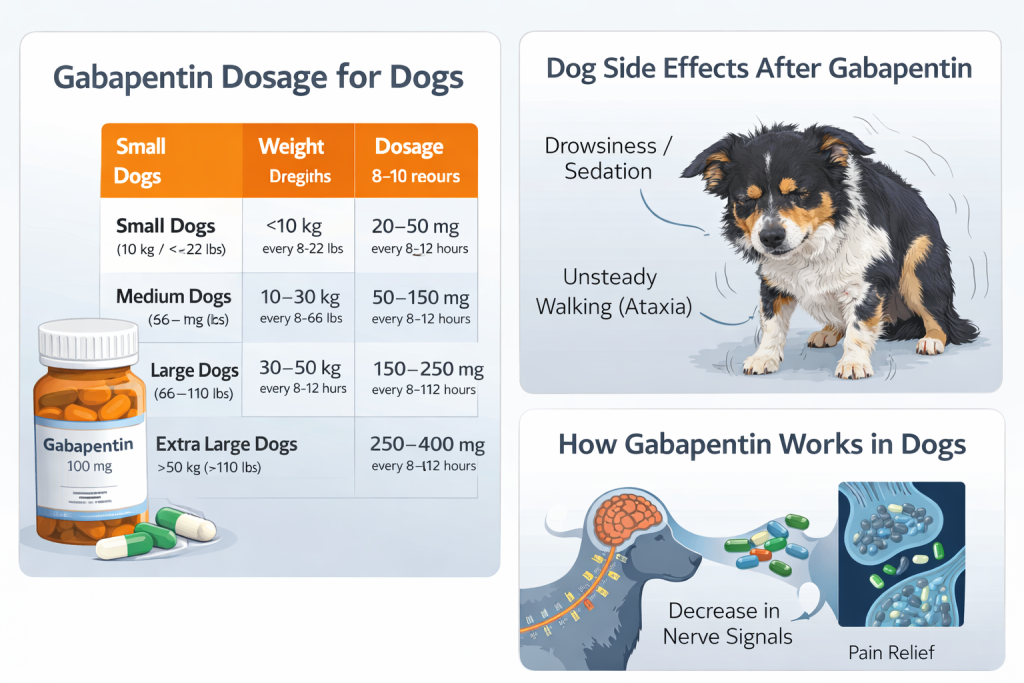
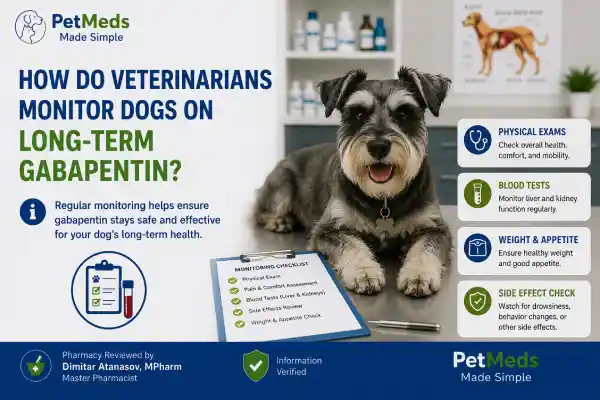
Veterinarians monitor dogs on long-term gabapentin through regular physical examinations, pain assessments, mobility evaluations, medication reviews, and when appropriate laboratory testing. The frequency of monitoring depends on your dog’s age, underlying medical condition, kidney function, concurrent medications, and overall response to treatment. Regular follow-up visits help ensure that gabapentin continues to provide benefits while minimizing the risk of side effects or unnecessary long-term medication use.
Why Long-Term Monitoring Is So Important
Many owners assume that once gabapentin is working well, nothing else needs to be done except continue giving the medication.
In reality, long-term gabapentin therapy is an ongoing process rather than a one-time prescription.
Veterinarians know that a dog’s medical condition can change over time.
A dog receiving gabapentin today may experience changes in:
- pain severity
- mobility
- muscle strength
- kidney function
- body weight
- concurrent diseases
- response to treatment
Regular monitoring allows veterinarians to recognize these changes early and adjust the treatment plan before small problems become major ones.
If you’re unfamiliar with why dogs remain on this medication for extended periods, our guide Gabapentin for Dogs: Uses, Dosage, Side Effects & Safety Guide explains when long-term treatment is appropriate.
How Do Veterinarians Monitor Dogs on Long-Term Gabapentin?
What Happens During the First Follow-Up Visit?
The first recheck appointment is often one of the most important.
Rather than simply asking whether the medication is being given correctly, veterinarians perform a much broader evaluation.
Typical questions include:
- Has your dog’s pain improved?
- Is walking easier?
- Is your dog sleeping more comfortably?
- Has activity increased?
- Has appetite changed?
- Are there any new side effects?
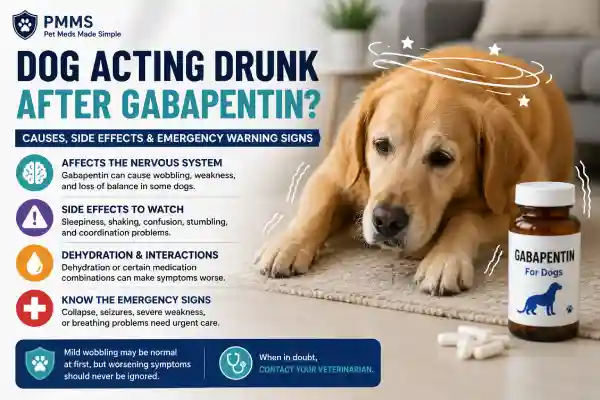
Owners sometimes worry because their dog appears sleepier than usual after starting treatment.
Fortunately, mild sedation is one of the most common and expected early side effects.
If you’re unsure whether your dog’s sleepiness is normal, our article Why Does Gabapentin Cause Sedation? explains why this occurs and when it becomes concerning.
Veterinarians also ask whether the drowsiness is gradually improving.
Most dogs become noticeably more comfortable during the first several days as their bodies adapt to treatment.
How Veterinarians Assess Pain Control
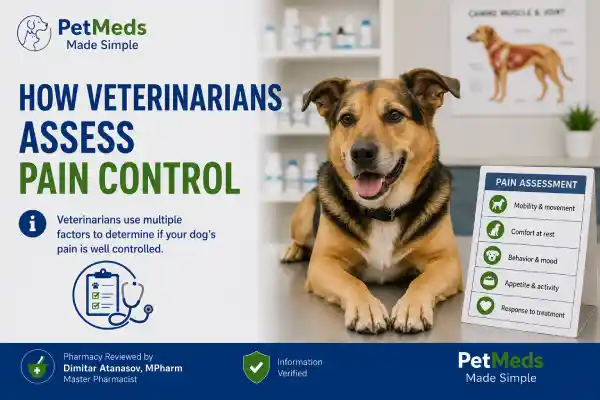
Pain relief is the primary goal of gabapentin therapy.
Unlike blood pressure or temperature, pain cannot be measured using a single number.
Instead, veterinarians combine physical examination findings with owner observations.
They evaluate whether your dog is:
- walking farther
- climbing stairs more comfortably
- getting up more easily
- resting peacefully
- playing again
- interacting normally with family members
Owners sometimes assume that because their dog seems happier, the medication is no longer necessary.
However, improvement often means the treatment is working not that the disease has disappeared.
This is why veterinarians are cautious before recommending discontinuation.
If you’ve wondered about this decision, read our guide When Should Gabapentin Be Stopped? to understand how veterinarians determine when treatment can safely end.
Monitoring Mobility Is Just as Important as Monitoring Pain
Pain and mobility are closely connected but are not identical.
A dog may appear less painful while still developing worsening arthritis or neurological disease.
During every follow-up examination, veterinarians observe:
- gait
- posture
- ability to rise
- stair climbing
- willingness to exercise
- balance
- coordination
Subtle changes often provide valuable clues about whether the underlying disease is progressing.
For dogs receiving gabapentin because of arthritis, maintaining movement is actually part of successful long-term treatment.
Our article Can Dogs Exercise After Taking Gabapentin? explains why controlled activity is often encouraged rather than avoided.
If your dog has arthritis, you may also find Can Dogs Take Gabapentin for Arthritis Forever? useful for understanding why many dogs remain on therapy for years.
Why Veterinarians Monitor Sedation Over Time
One of the biggest misconceptions is that sedation should remain exactly the same throughout treatment.
In reality, veterinarians expect many dogs to become less sleepy after the first week or two.
During follow-up visits they assess:
- alertness
- responsiveness
- interaction with family
- willingness to play
- daily activity level
If excessive sedation persists, they consider several possibilities.
The dose may simply be higher than necessary.
However, they also think about:
- kidney disease
- advanced age
- additional medications
- progression of another illness
Persistent sleepiness does not automatically mean gabapentin is the problem.
If your dog still seems unusually tired after several weeks, our guide How Long Does Gabapentin Sedation Last in Dogs? discusses what owners should expect during long-term treatment.
Some owners ask whether a dog can remain fully awake while taking gabapentin.
The answer depends on the individual patient, which we explain in Can Dogs Stay Awake on Gabapentin?
Body Weight and Muscle Condition Matter More Than Many Owners Realize

Long-term monitoring includes far more than checking pain levels.
Veterinarians carefully evaluate body condition because both weight gain and weight loss can influence treatment success.
During routine examinations they record:
- body weight
- body condition score
- muscle mass
- appetite
- hydration status
Unexpected weight gain may increase stress on painful joints, while significant weight loss may indicate another medical problem requiring investigation.
If you’ve noticed changes at home, our articles Can Gabapentin Cause Weight Gain in Dogs? and Can Gabapentin Cause Weight Loss in Dogs? explain when these changes may or may not be related to gabapentin therapy.
Why Veterinarians Review Every Medication at Each Visit
Long-term patients rarely receive gabapentin alone.
Many dogs also take:
- NSAIDs
- joint supplements
- seizure medications
- antibiotics
- anxiety medications
- heart medications
Because treatment plans evolve over time, veterinarians review every medication during each recheck.
They assess:
- whether dosages remain appropriate
- potential drug interactions
- duplicate therapies
- new prescriptions from other veterinarians
- over-the-counter supplements
Even seemingly minor changes can influence how safely medications work together.
This medication review helps prevent complications before they develop.
Do Veterinarians Perform Blood Tests on Every Dog Taking Long-Term Gabapentin?
No.
One of the biggest misconceptions among dog owners is that every dog taking gabapentin requires routine blood testing.
In reality, veterinarians decide whether laboratory monitoring is necessary based on the individual patient rather than the medication alone.
Several factors influence that decision, including:
- your dog’s age
- kidney function
- underlying medical conditions
- concurrent medications
- duration of therapy
- clinical examination findings
A young, otherwise healthy dog receiving gabapentin for several months may require little more than routine physical examinations.
In contrast, a senior dog with chronic kidney disease, arthritis, and multiple medications will usually benefit from more comprehensive monitoring.
If you’d like a detailed explanation of laboratory recommendations, see our guide How Often Should Dogs Have Blood Tests While Taking Gabapentin?
Why Kidney Function Receives Special Attention
Although gabapentin is generally considered a very safe medication, veterinarians pay close attention to kidney health because the drug is eliminated primarily through the kidneys.
Healthy kidneys remove gabapentin efficiently.
When kidney function declines, the medication may remain in the body longer, increasing the likelihood of side effects such as:
- excessive sleepiness
- weakness
- poor coordination
- prolonged recovery after each dose
This does not automatically mean gabapentin must be discontinued.
Instead, veterinarians often adjust:
- the dose
- the dosing interval
- the frequency of recheck examinations
Many dogs with chronic kidney disease continue receiving gabapentin successfully for years under careful veterinary supervision.
If you’ve wondered whether the medication accumulates in the body, our article Does Gabapentin Build Up in a Dog’s System? explains why kidney function plays such an important role.
Do Veterinarians Monitor Liver Function?
Yes—but often because of the patient’s overall health, not because gabapentin is known to be highly toxic to the liver.
Many long-term patients receive several medications simultaneously.
For example, a dog with severe arthritis may be taking:
- gabapentin
- an NSAID
- joint supplements
- additional pain medications
When multiple drugs are used together, veterinarians often include liver enzymes as part of routine wellness testing.
Monitoring may include:
- ALT
- AST
- ALP
- bilirubin
- total protein
These tests help veterinarians evaluate the dog’s overall health and identify unrelated medical problems that could influence future treatment decisions.
If you’re concerned about liver health, read Can Gabapentin Affect Liver Enzymes in Dogs? and Can Gabapentin Damage the Liver in Dogs?, where we discuss this topic in greater detail.
Monitoring Balance and Coordination During Long-Term Therapy

Neurological examinations are another important part of long-term monitoring.
Veterinarians look for changes that owners may not immediately recognize.
During each visit they evaluate:
- coordination
- paw placement
- balance
- spinal reflexes
- muscle tone
- gait quality
This is especially important in:
- senior dogs
- dogs with neurological disease
- dogs recovering from spinal surgery
Not every balance problem is caused by gabapentin.
Sometimes worsening arthritis, vestibular disease, or progression of spinal disease is responsible.
Our article Can Gabapentin Cause Balance Problems in Senior Dogs? explains how veterinarians distinguish medication effects from age-related conditions.
Why Veterinarians Ask About Behavior Changes
Many owners focus only on physical symptoms.
Veterinarians, however, also monitor behavior because changes can provide valuable information about how a dog is responding to treatment.
Questions commonly include:
- Is your dog more interactive?
- Is your dog hiding?
- Does your dog seem anxious?
- Is your dog sleeping normally?
- Has your dog’s personality changed?
- Does your dog appear confused?
Behavioral changes may reflect:
- improved pain control
- excessive sedation
- progression of neurological disease
- anxiety
- unrelated illness
Owners often assume every behavioral change is caused by gabapentin, but this is not always the case.
Our guide Why Is My Dog Acting Strange After Gabapentin? explains the many possible causes of unusual behavior during treatment.
Monitoring the Heart Is Usually About the Whole Patient
Owners sometimes become concerned after noticing changes in their dog’s pulse or breathing.
While gabapentin rarely causes significant heart problems by itself, veterinarians still evaluate cardiovascular health during routine examinations.
This includes assessing:
- heart rate
- heart rhythm
- respiratory rate
- mucous membrane color
- circulation
- hydration
These findings help determine whether symptoms are related to the medication or to another underlying disease.
If you’ve noticed changes at home, our article Can Gabapentin Affect Heart Rate in Dogs? discusses what is considered normal and when veterinary evaluation is recommended.
Why Veterinarians Review Dosing Schedules at Every Appointment
Monitoring isn’t limited to your dog’s physical condition.
Veterinarians also review how the medication is being administered at home.
Common questions include:
- Are doses given at the same time each day?
- Have any doses been missed?
- Has anyone accidentally doubled a dose?
- Has the dosing schedule changed?
- Is the medication becoming difficult to administer?
Even small inconsistencies can influence how well gabapentin controls chronic pain or neurological conditions.
Owners who occasionally struggle with timing may find these guides helpful:
- Can Dogs Take Gabapentin Every 8 Hours?
- What Happens If Gabapentin Is Given Too Early?
- What Happens If Gabapentin Is Given Too Late?
These situations are common and are often easy to manage with guidance from your veterinarian.
Monitoring Side Effects Throughout Treatment
Veterinarians understand that side effects may change over time.
Some improve as the body adapts, while others may appear months after therapy begins because of changes in health or additional medications.
During every recheck, they ask about symptoms such as:
- excessive drooling
- persistent sedation
- stumbling
- muscle tremors
- weakness
- reduced appetite
- vomiting
- diarrhea
Many of these symptoms have causes other than gabapentin, but discussing them early allows your veterinarian to determine whether further investigation is needed.
Our articles Can Gabapentin Cause Excessive Drooling in Dogs? and Can Gabapentin Cause Muscle Tremors in Dogs? explain why these symptoms should always be evaluated within the context of your dog’s complete medical history.
What Should Owners Monitor Between Veterinary Visits?

Veterinary monitoring does not stop when you leave the clinic.
Owners play a vital role because they observe their dogs every day and are often the first to notice subtle changes that may not be apparent during a scheduled examination.
Your veterinarian may recommend keeping a simple record of:
- daily activity level
- appetite
- water intake
- mobility
- sleep quality
- willingness to exercise
- comfort when standing
- any new side effects
Even small changes can provide valuable information during the next recheck appointment.
For example, if your dog gradually becomes reluctant to go for walks, your veterinarian can compare that information with previous examinations to determine whether the underlying disease is progressing or whether the treatment plan needs adjustment.
When Should Veterinarians Adjust the Treatment Plan?
Long-term gabapentin therapy is rarely “set and forget.”
Instead, veterinarians continuously evaluate whether the current treatment remains the best option.
A treatment plan may need adjustment if:
- pain is no longer well controlled
- mobility continues to decline
- side effects become more significant
- another disease develops
- kidney function changes
- additional medications are prescribed
- surgery or rehabilitation is planned
Adjustments do not always mean increasing the dose.
Sometimes veterinarians recommend:
- lowering the dose
- extending the dosing interval
- adding physical rehabilitation
- introducing another pain medication
- changing to combination therapy
- gradually discontinuing gabapentin if it is no longer needed
This individualized approach allows treatment to evolve alongside your dog’s medical condition.
Why Monitoring Quality of Life Is the Most Important Goal
Ultimately, veterinarians are not treating laboratory values they are treating your dog.
One of the most important discussions during every long-term follow-up focuses on quality of life.
Veterinarians evaluate whether your dog is still able to enjoy normal daily activities such as:
- going for walks
- climbing onto the couch
- greeting family members
- playing with toys
- eating comfortably
- sleeping peacefully
Improving quality of life is the primary reason gabapentin is prescribed.
If the medication is no longer providing meaningful benefit, your veterinarian may recommend modifying the treatment plan.
Likewise, if your dog remains comfortable and active with minimal side effects, continuing long-term therapy may be the safest and most effective decision.
Does Every Dog Need the Same Monitoring Schedule?
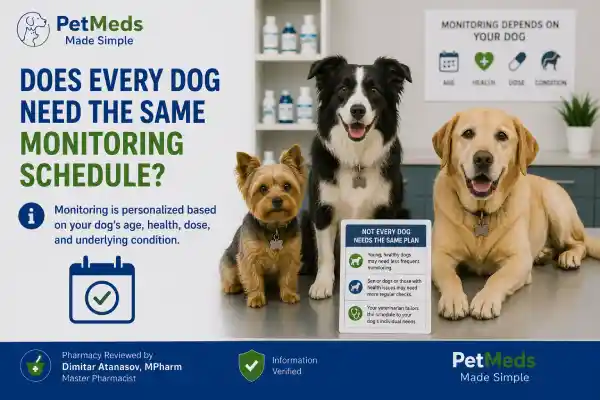
No.
There is no universal monitoring schedule that applies to every dog.
Veterinarians individualize follow-up visits based on several factors, including:
- age
- breed
- body weight
- kidney function
- underlying disease
- duration of treatment
- concurrent medications
- previous response to gabapentin
For example:
A healthy four-year-old Labrador taking gabapentin for chronic orthopedic pain may only require routine rechecks every few months.
A fourteen-year-old dog with arthritis, chronic kidney disease, and several medications may benefit from much more frequent evaluations.
This personalized approach helps avoid unnecessary testing while ensuring that higher-risk patients receive the closer supervision they need.
Frequently Asked Questions – How Do Veterinarians Monitor Dogs on Long-Term Gabapentin?
How do veterinarians monitor dogs on long-term gabapentin?
They perform regular physical examinations, evaluate pain control and mobility, review medications, monitor for side effects, and recommend laboratory testing when appropriate.
Do all dogs taking gabapentin need regular blood tests?
No.
Blood tests are recommended based on your dog’s age, overall health, kidney function, and any concurrent medical conditions rather than because gabapentin itself always requires routine laboratory monitoring.
How often should dogs taking gabapentin be rechecked?
There is no single schedule.
Some dogs are evaluated every few months, while others require more frequent follow-up depending on their medical condition and response to treatment.
What side effects do veterinarians monitor most closely?
They commonly assess:
excessive sedation
weakness
poor coordination
appetite changes
weight changes
behavioral changes
neurological abnormalities
Why is kidney function important during long-term gabapentin therapy?
Gabapentin is eliminated primarily through the kidneys.
Reduced kidney function may require dose adjustments or longer dosing intervals to prevent excessive drug accumulation.
Can veterinarians reduce the gabapentin dose over time?
Yes.
If your dog’s condition improves or if side effects develop, your veterinarian may gradually reduce the dose or modify the treatment plan.
What should I monitor at home?
Owners should observe:
mobility
appetite
activity level
comfort
sleep quality
behavior
any new side effects
Keeping a written diary can be extremely helpful during follow-up appointments.
Does long-term gabapentin always become less effective?
Not necessarily.
Many dogs remain comfortable on long-term gabapentin for years. If pain worsens, veterinarians evaluate whether the disease has progressed or whether the treatment plan needs adjustment.
Can monitoring help prevent serious complications?
Yes.
Routine monitoring allows veterinarians to identify changes early, adjust medication appropriately, and maintain the safest and most effective treatment plan possible.
Should owners ever change the dose without veterinary advice?
No.
Gabapentin dosage changes should always be made under veterinary supervision to avoid inadequate pain control or unnecessary side effects.
Bottom Line
How do veterinarians monitor dogs on long-term gabapentin? They do far more than simply renew the prescription. Regular follow-up visits include evaluating pain relief, mobility, body weight, neurological function, medication safety, and overall quality of life. Depending on your dog’s age and medical history, laboratory testing may also be recommended to monitor kidney function and general health. Careful long-term monitoring allows veterinarians to adjust treatment as your dog’s needs change, helping maximize comfort while minimizing unnecessary risks.
Veterinarian Takeaway
Long-term gabapentin therapy is most successful when it is viewed as an ongoing partnership between the veterinarian and the pet owner. Regular examinations, thoughtful medication reviews, and careful home observation allow treatment to be individualized for each dog. Rather than following a fixed schedule, veterinarians continuously assess whether gabapentin is still providing meaningful benefits and make adjustments based on your dog’s overall health, comfort, and quality of life.
Sources
- Plumb DC. Plumb’s Veterinary Drug Handbook.
- Papich MG. Saunders Handbook of Veterinary Drugs.
- Merck Veterinary Manual. Pain Management in Dogs and Cats.
- AAHA Pain Management Guidelines for Dogs and Cats.
- WSAVA Global Pain Council Guidelines.
- BSAVA Small Animal Formulary.
- Veterinary Information Network (VIN). Clinical discussions on long-term gabapentin monitoring.
- Journal of Veterinary Internal Medicine.
- Frontiers in Veterinary Science. Reviews on chronic pain management and long-term analgesic therapy in companion animals.
Medical Review Statement
Medical Review Statement
This article was written by Dimitar Georgiev Atanasov, MPharm, Master Pharmacist and Medication Safety Educator (Bulgarian Pharmaceutical Union, UIN: 0210000586).
The content has been pharmacy and scientific reviewed by Gergana Krasimirova Atanasova, MPharm (Bulgarian Pharmaceutical Union, UIN: 0210000587).
The veterinary information has been reviewed by Dr. Valcho Georgiev Valchev, DVM (Bulgarian Veterinary Union Registration No. 28000115).
This article is intended for educational purposes only and should never replace individualized veterinary diagnosis, examination, or treatment.
Image Disclosure
Image Disclosure: Some images used in this article may be AI-generated for educational purposes. They are intended to illustrate veterinary concepts and should not replace professional veterinary examination or diagnosis.