Quick Answer
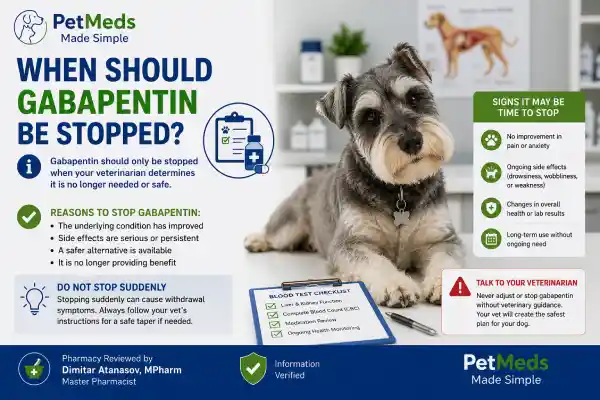
When Should Gabapentin Be Stopped? Gabapentin should only be stopped when your veterinarian determines that it is no longer needed or when the treatment plan changes. Many dogs can discontinue gabapentin after recovering from surgery or temporary injuries, while others require long-term treatment for arthritis, chronic nerve pain, or seizure disorders. In many situations, gabapentin should be tapered gradually rather than stopped suddenly to reduce the risk of withdrawal symptoms or recurrence of the underlying condition.
When Should Gabapentin Be Stopped?
One of the most common questions dog owners ask after their pet begins treatment is:
“When should gabapentin be stopped?”
The answer depends entirely on why the medication was prescribed in the first place.
Gabapentin is not a medication with a fixed treatment duration.
Some dogs only need it for:
- a few days after surgery
- recovery from an injury
- temporary pain management
Others may remain on gabapentin safely for:
- months
- years
- sometimes for life
This is especially true for dogs with:
- chronic arthritis
- neuropathic pain
- degenerative spinal disease
- epilepsy as part of combination seizure therapy
The decision to stop treatment should always be based on your dog’s medical condition not simply because the medication has been used for a certain amount of time.
When Should Gabapentin Be Stopped?
Why the Underlying Condition Determines When Gabapentin Should Be Stopped
Gabapentin treats symptoms, not every underlying disease.
For example:
A dog recovering from orthopedic surgery may only need gabapentin while tissues heal.
Once healing is complete and pain has resolved, the medication may no longer be necessary.
However, a dog with advanced osteoarthritis continues to experience joint degeneration.
Stopping gabapentin too early in these patients may result in:
- increased pain
- reduced mobility
- reluctance to walk
- decreased quality of life
Similarly, dogs receiving gabapentin for chronic neurological pain often require much longer treatment than dogs recovering from a routine procedure.
This is why veterinarians regularly reassess each patient’s condition before recommending any medication changes.
Can Gabapentin Be Stopped Once My Dog Seems Better?
Sometimes but not always.
Improvement is exactly what owners hope to see after starting gabapentin.
However, feeling better does not necessarily mean the underlying disease has resolved.
For example:
A dog with arthritis may begin:
- walking farther
- climbing stairs more comfortably
- playing again
- sleeping better
These improvements occur because the medication is successfully controlling pain.
If gabapentin is discontinued simply because the dog appears comfortable, those symptoms may quickly return.
Instead of asking:
“My dog looks better—should I stop gabapentin?”
Veterinarians usually ask:
“Is the underlying disease actually gone?”
That distinction is extremely important.
When Should Gabapentin Be Stopped After Surgery?

Many dogs receive gabapentin following:
- orthopedic surgery
- spinal procedures
- soft tissue surgery
- dental surgery
In these cases, treatment is often temporary.
As healing progresses and inflammation decreases, your veterinarian may recommend gradually discontinuing gabapentin.
The exact timing depends on several factors, including:
- the type of surgery
- pain level
- healing progress
- activity level
- whether other pain medications are still being used
Owners should never assume that every surgical patient follows the same schedule.
Some dogs recover within days, while others require several weeks of pain management.
Can Dogs Stay on Gabapentin Long-Term Instead of Stopping It?
Yes.
Many dogs remain on gabapentin safely for extended periods.
Long-term therapy is especially common for:
- chronic arthritis
- intervertebral disc disease
- neuropathic pain
- cancer-related pain
- degenerative joint disease
Veterinarians frequently reassess these patients to ensure the medication continues providing meaningful benefit.
If your dog has chronic arthritis, you may also find our guide Can Dogs Take Gabapentin for Arthritis Forever? helpful.
When Should Gabapentin Be Stopped Because of Side Effects?
Sometimes the medication must be discontinued because adverse effects outweigh its benefits.
Examples include:
- severe weakness
- inability to stand
- repeated falls
- excessive sedation
- persistent vomiting
- serious allergic reactions
- severe neurological abnormalities
Fortunately, these situations are uncommon.
Most side effects are mild and improve after:
- dose adjustment
- allowing the body to adapt
- modifying the treatment plan
Owners should never discontinue gabapentin without first contacting their veterinarian unless instructed to do so during a medical emergency.
Can Dogs Stop Gabapentin Suddenly?
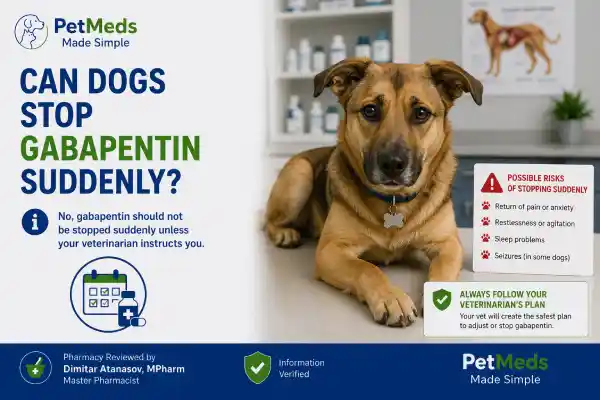
Usually, veterinarians prefer not to stop gabapentin abruptly.
Although not every dog experiences withdrawal problems, gradually reducing the medication often provides a safer transition, particularly for dogs receiving:
- high doses
- long-term treatment
- seizure medications
- chronic neurological pain therapy
Sudden discontinuation may allow the original medical problem to return quickly.
For dogs receiving gabapentin as part of seizure management, abrupt withdrawal may increase seizure risk.
Our article Can Dogs Stop Gabapentin Suddenly? explains this topic in much greater detail.
Why Veterinarians Often Reduce the Dose Gradually
Stopping medication is not always a single event.
In many situations, veterinarians recommend a tapering schedule.
Gradually reducing the dose allows them to evaluate:
- whether pain remains controlled
- whether mobility stays normal
- whether neurological symptoms return
- whether additional treatment is still necessary
A gradual reduction also minimizes the chance of confusing withdrawal effects with recurrence of the original disease.
This careful approach helps veterinarians determine whether gabapentin is truly no longer needed.
Can Owners Decide When to Stop Gabapentin?
No.
Owners should never stop gabapentin solely because:
- the prescription is almost finished
- the dog seems comfortable
- a friend suggested stopping it
- information found online recommends discontinuation
Only the veterinarian managing your dog’s condition can determine whether treatment has achieved its goal or whether continued therapy remains necessary.
Every dog’s situation is unique.
Can Gabapentin Be Stopped if My Dog’s Pain Has Completely Resolved?
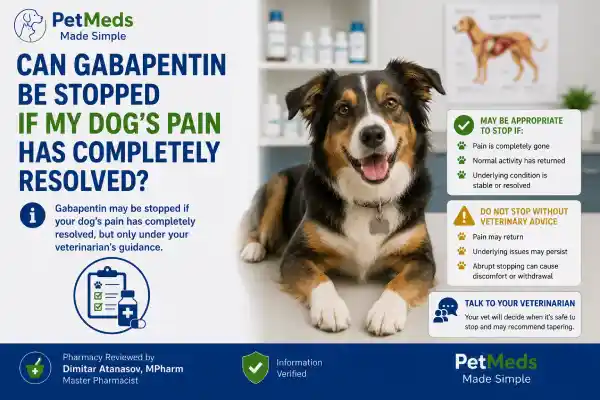
Yes in many cases.
Dogs recovering from:
- minor injuries
- soft tissue trauma
- routine surgery
- temporary nerve irritation
may no longer require gabapentin once healing is complete.
However, veterinarians rarely make this decision based on a single good day.
Instead, they evaluate whether:
- the dog continues walking comfortably
- normal activity has returned
- pain has not recurred
- the underlying injury has healed
If these goals have been achieved, your veterinarian may recommend gradually discontinuing treatment while continuing to monitor your dog’s progress.
Can Gabapentin Be Stopped if Another Medication Is Working Better?
Sometimes.
Gabapentin is frequently used as part of a multimodal pain management plan, meaning it works alongside other medications rather than replacing them.
As treatment changes, your veterinarian may decide to:
- reduce gabapentin
- replace it with another medication
- continue combination therapy
- discontinue it completely
For example, improvements in arthritis management using:
- weight reduction
- rehabilitation
- anti-inflammatory medications
- joint supplements
may reduce the need for gabapentin in some patients.
Medication changes should always occur under veterinary supervision.
Can Dogs Stay on Gabapentin Forever?
Some dogs can.
There is no universal maximum treatment duration.
Many dogs with chronic diseases remain on gabapentin for years while maintaining an excellent quality of life.
Veterinarians periodically reassess:
- comfort
- mobility
- quality of life
- medication effectiveness
- possible side effects
If the benefits continue to outweigh any risks, long-term treatment may remain the best option.
Our article Can Dogs Take Gabapentin for Arthritis Forever? discusses long-term therapy in greater detail.
What Happens if Gabapentin Is Stopped Too Soon?
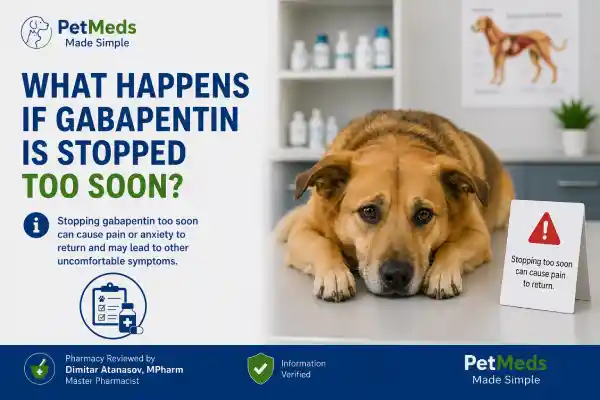
Stopping treatment prematurely may allow the original medical condition to return.
Owners may notice:
- increased pain
- limping
- reluctance to exercise
- difficulty standing
- restlessness
- vocalization
- reduced appetite because of pain
In some cases, owners mistakenly believe gabapentin has “caused” these symptoms when, in reality, the medication had simply been controlling them successfully.
This is one reason veterinarians often recommend gradual tapering rather than abrupt discontinuation.
Can Withdrawal Symptoms Occur?
Most dogs discontinue gabapentin without major problems, especially when treatment has been short-term.
However, withdrawal concerns become more important in dogs receiving:
- high daily doses
- long-term treatment
- seizure medications
- chronic neurological pain therapy
Potential withdrawal-related concerns include:
- restlessness
- anxiety
- return of pain
- increased sensitivity
- recurrence of seizures in susceptible patients
These risks are one reason veterinarians generally avoid stopping long-term gabapentin abruptly.
Can Dogs Stop Gabapentin if They Develop Kidney Disease?
Not necessarily.
Gabapentin is commonly used in dogs with kidney disease, but treatment may require adjustment.
Rather than stopping the medication completely, veterinarians often modify:
- the dose
- the dosing interval
- monitoring frequency
This individualized approach allows many dogs with reduced kidney function to continue benefiting from gabapentin safely.
Can Gabapentin Be Stopped Because My Dog Seems Sleepy?
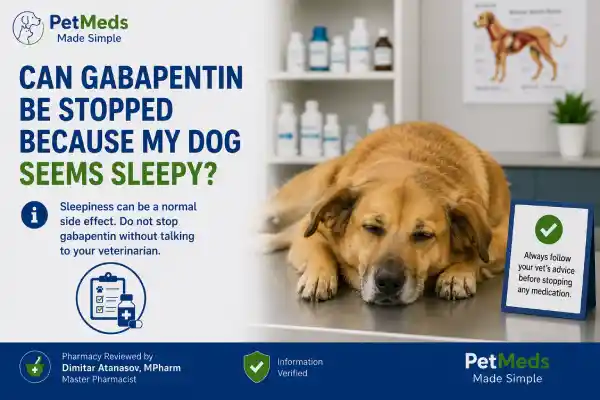
Not automatically.
Sleepiness is one of the most common side effects of gabapentin.
In many dogs, mild sedation:
- improves after several days
- becomes less noticeable over time
- does not interfere with daily life
If excessive sleepiness develops, your veterinarian may recommend:
- reducing the dose
- changing the dosing schedule
- investigating other medical conditions
- adjusting additional medications
Stopping gabapentin is only one of several possible solutions.
When Should Owners Contact Their Veterinarian Before Stopping Gabapentin?
Always seek veterinary advice before making medication changes.
Contact your veterinarian if your dog develops:
- severe weakness
- inability to stand
- repeated falls
- collapse
- breathing difficulty
- persistent vomiting
- seizures
- facial swelling
- widespread hives
- extreme behavioral changes
These situations require professional evaluation rather than simply discontinuing the medication at home.
How Veterinarians Decide Whether It’s Time to Stop Gabapentin
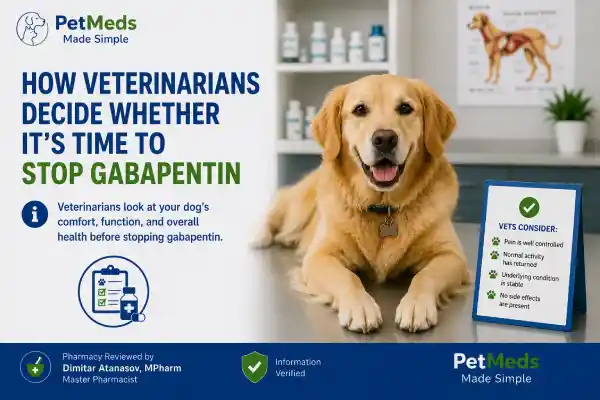
Veterinarians rarely base the decision on one factor alone.
Instead, they consider:
- the original diagnosis
- current pain level
- neurological status
- mobility
- quality of life
- response to treatment
- concurrent medications
- possible side effects
- owner observations
Only after evaluating the complete clinical picture do they determine whether tapering or discontinuation is appropriate.
This individualized approach helps prevent both unnecessary medication use and premature discontinuation.
Can Gabapentin Be Stopped Because It Doesn’t Seem to Be Working?
Sometimes—but not immediately.
One of the most common mistakes owners make is assuming gabapentin has “failed” after only a few days.
The reality is often more complicated.
Veterinarians first ask several important questions:
- Is the diagnosis correct?
- Is the current dose appropriate?
- Has the medication been given consistently?
- Is another condition causing the pain?
- Does the dog require combination therapy?
For chronic conditions such as arthritis or neuropathic pain, gabapentin may work best alongside other treatments rather than as the only medication.
If improvement is limited, your veterinarian may recommend modifying the treatment plan instead of stopping gabapentin altogether.
Can Gabapentin Be Restarted After It Has Been Stopped?
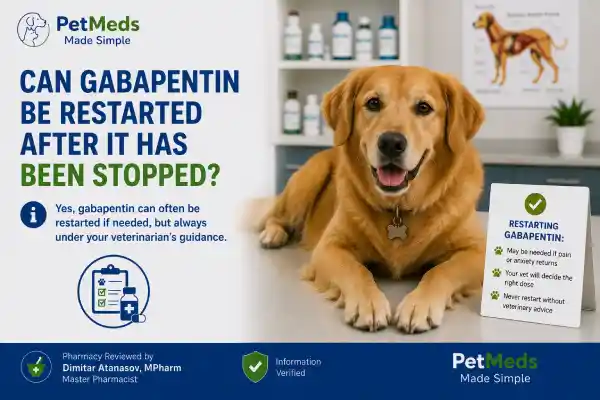
In many cases, yes.
Some dogs receive gabapentin only during periods of increased discomfort.
Examples include:
- arthritis flare-ups
- post-operative recovery
- temporary nerve pain
- stressful veterinary visits
If symptoms return months later, your veterinarian may prescribe gabapentin again if it remains an appropriate treatment.
Owners should never restart leftover medication without first consulting their veterinarian, as your dog’s condition may have changed since the original prescription.
What Should Owners Monitor While Gabapentin Is Being Reduced?
During tapering, careful observation becomes especially important.
Owners should monitor for:
- increased limping
- reluctance to walk
- difficulty standing
- reduced activity
- increased vocalization
- trembling caused by pain
- return of anxiety
- recurrence of seizures in affected dogs
Keeping a simple daily journal of your dog’s comfort, mobility, appetite, and activity level can help your veterinarian determine whether the medication is still needed.
Why Follow-Up Examinations Are Important Before Stopping Gabapentin
Many owners assume that if their dog appears comfortable, no further examination is necessary.
However, veterinary rechecks allow your veterinarian to evaluate:
- pain levels
- joint function
- neurological status
- body weight
- muscle condition
- response to treatment
- possible medication side effects
Sometimes owners believe the medication is no longer needed, while the examination reveals ongoing disease that still requires treatment.
Regular follow-up appointments help prevent unnecessary discomfort and ensure that any decision to discontinue gabapentin is based on your dog’s overall health rather than appearance alone.
Frequently Asked Questions
When should gabapentin be stopped in dogs?
Gabapentin should only be stopped when your veterinarian determines that it is no longer necessary or when another treatment plan is more appropriate. The decision depends on your dog’s medical condition rather than the length of time the medication has been used.
Can I stop gabapentin if my dog seems better?
Not necessarily.
Many dogs appear comfortable because gabapentin is successfully controlling their pain. Stopping treatment too early may allow symptoms to return
Should gabapentin always be tapered?
In many cases, yes.
Veterinarians frequently recommend gradually reducing the dose, particularly after long-term treatment or when gabapentin is part of seizure management.
Can dogs stay on gabapentin for years?
Yes.
Many dogs safely receive gabapentin for months or years when managing chronic pain, arthritis, neurological disease, or seizure disorders under regular veterinary supervision.
Can gabapentin be stopped because of side effects?
Sometimes.
Severe weakness, excessive sedation, allergic reactions, or other significant adverse effects may require treatment adjustments or discontinuation after veterinary evaluation.
What happens if gabapentin is stopped too early?
Pain, neurological symptoms, or seizures may return depending on the condition being treated.
This is why medication changes should always be supervised by your veterinarian.
CanI restart gabapentin later?
Often, yes.
Many dogs successfully restart gabapentin if pain or another medical condition returns.
However, owners should never restart old medication without veterinary advice.
Can kidney disease mean gabapentin should be stopped?
Not automatically.
Veterinarians often adjust the dose or dosing interval rather than discontinuing treatment completely.
When should I call my veterinarian?
Seek veterinary advice immediately if your dog develops:
collapse
repeated seizures
difficulty breathing
severe weakness
inability to stand
facial swelling
persistent vomiting
widespread hives
These symptoms require prompt medical evaluation.
Can I decide on my own when to stop gabapentin?
No.
Only your veterinarian should decide when treatment should end, based on your dog’s diagnosis, response to therapy, and overall health.
Bottom Line
When should gabapentin be stopped? The answer depends on why your dog is taking it. Dogs recovering from temporary injuries or surgery may eventually discontinue treatment, while those with chronic arthritis, neuropathic pain, or seizure disorders often require long-term therapy. Gabapentin should never be stopped simply because your dog appears better or because the prescription has run out. In many cases, gradually tapering the medication under veterinary supervision is the safest approach and helps prevent the return of pain or neurological symptoms.
Veterinarian Takeaway
There is no universal timeline for stopping gabapentin in dogs. Every treatment plan should be individualized according to the underlying disease, your dog’s response to therapy, and any side effects that develop. Many dogs benefit from long-term gabapentin without significant complications, while others only require short-term treatment during recovery from injury or surgery. Regular veterinary reassessment allows treatment to be adjusted safely and ensures that gabapentin is discontinued only when it is truly no longer needed.
Sources
- Plumb DC. Plumb’s Veterinary Drug Handbook.
- Papich MG. Saunders Handbook of Veterinary Drugs.
- Merck Veterinary Manual. Analgesics and Adjunctive Pain Medications in Small Animals.
- BSAVA Small Animal Formulary.
- AAHA Pain Management Guidelines for Dogs and Cats.
- WSAVA Global Pain Council Guidelines.
- Veterinary Information Network (VIN). Clinical discussions on long-term gabapentin therapy in dogs.
- Frontiers in Veterinary Science. Reviews on chronic pain management in companion animals.
- Journal of Veterinary Internal Medicine.
Medical Review Statement
Medical Review Statement
This article was written by Dimitar Georgiev Atanasov, MPharm, Master Pharmacist and Medication Safety Educator (Bulgarian Pharmaceutical Union, UIN: 0210000586).
The content has been pharmacy and scientific reviewed by Gergana Krasimirova Atanasova, MPharm (Bulgarian Pharmaceutical Union, UIN: 0210000587).
The veterinary information has been reviewed by Dr. Valcho Georgiev Valchev, DVM (Bulgarian Veterinary Union Registration No. 28000115).
This article is intended for educational purposes only and should never replace individualized veterinary diagnosis, examination, or treatment.
Image Disclosure
Image Disclosure: Some images used in this article may be AI-generated for educational purposes. They are intended to illustrate veterinary concepts and should not replace professional veterinary examination or diagnosis.